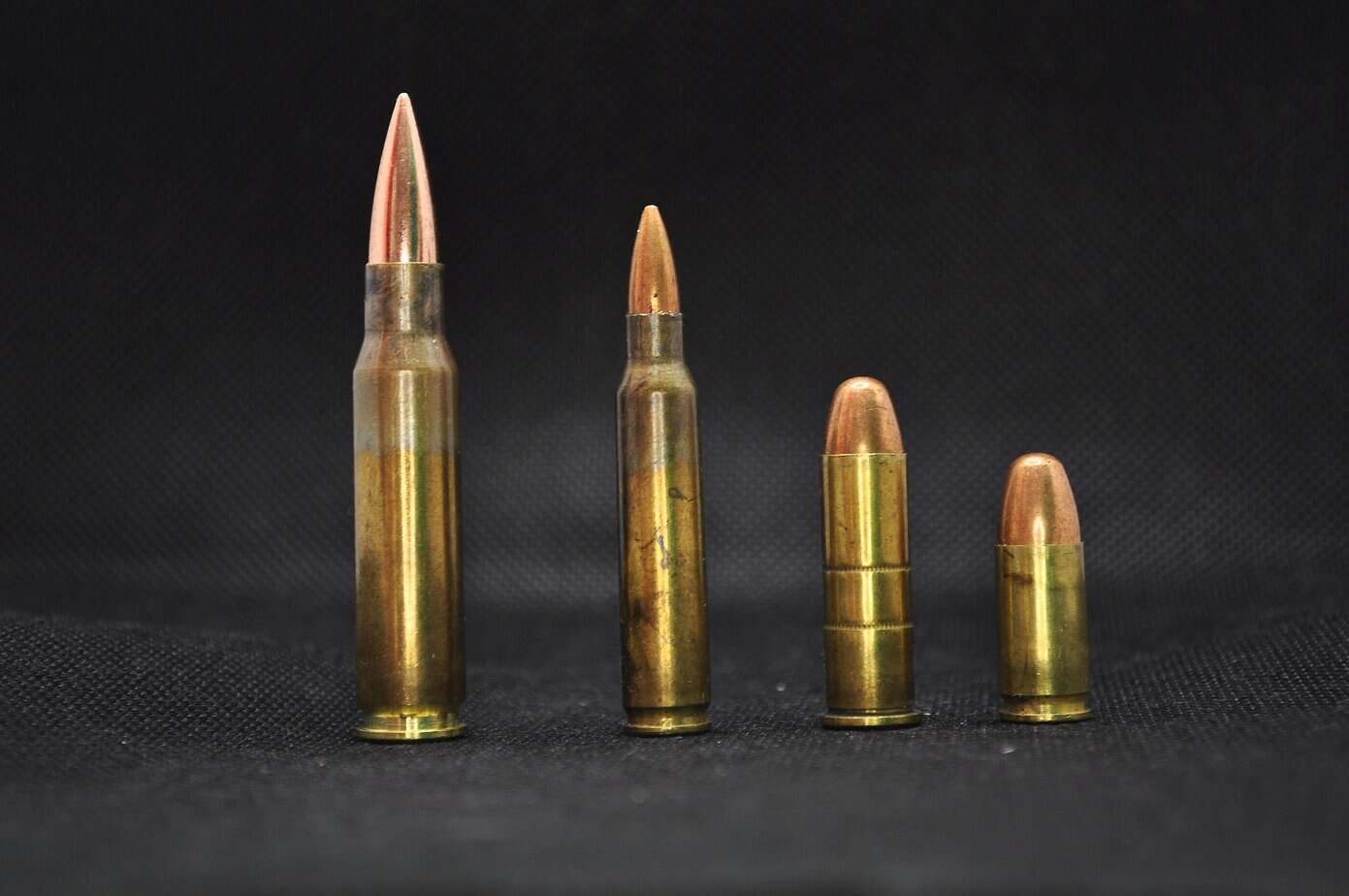
Most people who think about stockpiling ammunition are already approaching the problem backwards. They focus on numbers first, like how many rounds of 9mm, how many boxes of 5.56 or maybe a few hundred shells for a shotgun.
It sounds reasonable on paper, but it ignores the one factor that actually determines how much ammunition you need: what you expect to use it for.
In a real emergency, ammunition is not just about defense. It becomes a tool with multiple roles. It protects you, feeds you, trains you, and in some situations, it even becomes a form of currency. Treating it like a simple stockpile, something you stash away and forget about, is one of the fastest ways to end up either short when it matters or sitting on the wrong types entirely.
Another mistake is assuming that your current habits will match reality during a crisis. Right now, most people shoot occasionally, maybe a range trip once a month or even less. In a prolonged grid-down situation, that changes completely. You are no longer conserving ammo for convenience. You are using it for survival tasks that repeat daily or weekly. That includes pest control, hunting, perimeter checks, and ongoing training just to stay sharp.
This is where most emergency plans start to break down, because people underestimate consumption. They underestimate how much they’ll actually need, and rarely build their stockpile around real use cases.
The result is predictable and they run out of the calibers they depend on most. Or they hold onto ammunition that has no practical role in their environment. Worse, they realize too late that they never trained enough to use what they have effectively.
If you want to build a realistic ammunition stockpile, you need to flip the approach.
Start with a purpose and define exactly what roles your ammunition needs to fill. Then build your quantities around those roles. Only after that should you start thinking in terms of numbers.
This article breaks that down in a practical way. Not theoretical numbers, not generic advice, but a working framework you can actually use. You will see what different calibers are best suited for, how much you realistically need for each role, and how to build a stockpile that holds up beyond the first few weeks of a crisis.
Because in the end, ammunition is not gear, it is a consumable that may be spent faster than you expect. If you treat it like something that just sits on a shelf, you are setting yourself up for failure. Even official emergency preparedness guidelines emphasize the importance of building essential supplies in advance rather than relying on last-minute decisions
What Are You Stockpiling Ammo For? (And Why This Changes Everything)
Before you even start thinking about numbers, calibers, or bulk deals, you need to answer a much more important question that most people skip entirely: what exactly are you preparing to use that ammunition for?
Because in a real-world emergency, ammunition does not serve a single purpose. It is not just for defense, and it is not something you will realistically use only in rare, extreme moments. It becomes part of your daily survival toolkit, and depending on your environment, it may be used far more often than you initially expect.
This is where most stockpiles fail before they even begin. People tend to build around assumptions instead of use cases. They buy what feels right, what is popular, or what they already own, without thinking through how often that ammunition will actually be used, and for what tasks.
Once you break it down properly, four clear roles emerge, and each one has very different demands in terms of caliber, volume, and frequency of use.
Pest Control and Small Game: The Silent Workhorse (.22 LR)
This is the role that gets underestimated the most, and yet in a prolonged situation, it is often the one that consumes the most ammunition over time.
Small pests do not disappear during a crisis. If anything, they become more aggressive as sanitation breaks down and food becomes harder to store securely. Rodents, birds, and other small animals will constantly threaten your food supply, and ignoring them is not an option if you are trying to maintain any level of sustainability.
At the same time, small game becomes one of the most reliable and repeatable food sources available, especially in rural or semi-rural areas where larger game may either migrate or become heavily hunted very quickly. Rabbits, squirrels, and similar animals do not provide massive calorie returns individually, but they are consistent, and consistency matters more than occasional success.
This is where .22 LR proves its value in a way few other calibers can match. It is lightweight, easy to store in large quantities, relatively quiet compared to larger calibers, and more than capable of handling both pest control and small game hunting when used correctly.
Because of how frequently it can be used, this is also the caliber that benefits the most from buying in bulk early, while availability is high and prices are stable. You can still find bulk .22 LR options here while prices are reasonable. A few boxes will disappear faster than you expect, but a properly built reserve can last through months or even years of consistent use if managed correctly.
If you are building a stockpile with long-term sustainability in mind, this is where you start, not because it is the most powerful option, but because it is the most consistently useful.
Hunting for Food: When Calories Actually Matter
While small game provides consistency, there will always be situations where you need more substantial food sources, especially during prolonged disruptions where access to food supply chains becomes unreliable.
This is where centerfire rifle calibers come into play, and choosing the right one is less about preference and more about versatility within your environment. In many cases, calibers like 5.56 or .223 are often dismissed as being too light for hunting, but in reality, they are capable of handling a wide range of medium-sized game when used with proper shot placement. At the same time, calibers like .308 or 30-06 offer significantly more power and range, making them better suited for larger animals and longer distances.
The key point here is that hunting ammunition is not something you will use every day, but when you do need it, it needs to perform reliably. Unlike pest control, where you may take multiple shots over time, hunting often comes down to a single opportunity, and that means both your ammunition and your familiarity with it need to be dialed in.
Because of this, it makes sense to separate your stockpile into two categories: practice ammunition and hunting ammunition. Practice rounds allow you to stay proficient without burning through your higher-quality loads, while dedicated hunting rounds are kept specifically for when the outcome matters.
Sourcing reliable rifle ammunition ahead of time, rather than waiting for shortages to hit, is one of the simplest ways to avoid being locked out of the market when demand spikes. Browse available rifle calibers like .223 and .308 before availability tightens. Having access to a consistent supply, whether you are looking at .223 for versatility or stepping up to something like .308 for larger game, gives you options that you will not have once shelves start clearing out.
Self-Defense and Security: The Role Most People Overestimate and Underprepare For
This is the category that gets the most attention, yet it is often the least understood in terms of actual usage.
Most people imagine self-defense scenarios as short, isolated events, but in a prolonged emergency, security becomes an ongoing concern rather than a one-time incident. That means your ammunition is not just reserved for a single moment, but potentially for repeated situations where deterrence, presence, and readiness all play a role.
Handgun calibers like 9mm are often the foundation here, simply because they are manageable, widely available, and practical for close-range defense. Check current 9mm availability here while it’s still easy to find. At the same time, rifle platforms chambered in 5.56 provide greater reach and control in situations where distance or positioning becomes a factor. Shotguns also have their place, particularly in close quarters, although their ammunition is bulkier and less efficient to store in large quantities.
One important distinction that often gets ignored is the difference between defensive ammunition and training ammunition. High-quality defensive rounds are designed for performance and reliability, but they are not something you want to burn through during practice. At the same time, relying only on a small stash of premium ammunition without sufficient training behind it creates a false sense of preparedness.
Building a balanced stockpile means ensuring you have both, enough quality defensive rounds for actual use, and a significantly larger quantity of standard ammunition to maintain proficiency over time. Without that training component, even a well-stocked supply becomes far less effective.
Training: The Category That Quietly Consumes the Most Ammo
If there is one area where most people fall short, it is here.
Training is often treated as optional, something to do when time and money allow, but in reality, it is the foundation that makes everything else work. Without regular practice, accuracy drops, reaction times slow, and confidence disappears, all of which matter far more than having an extra few hundred rounds sitting untouched.
What surprises most people is how quickly ammunition disappears once training becomes consistent. A single range session can easily burn through a few hundred rounds, and if you are serious about maintaining skill over time, that adds up far faster than any defensive scenario ever will.
This is why experienced shooters often follow a simple rule: for every round you intend to keep for emergency use, you should have several more allocated for training. Whether that ratio is three to one or five to one depends on how often you practice, but the principle remains the same.
Bulk purchasing becomes critical here, not just for convenience, but for cost efficiency. Buying smaller quantities repeatedly will always cost more in the long run, and it increases your exposure to shortages and price spikes. Securing a steady supply of commonly used calibers while they are readily available allows you to train consistently without constantly worrying about running low.
When you step back and look at these roles together, the picture becomes much clearer. Ammunition is not a single-category resource, and treating it as such leads to imbalanced stockpiles that fail under pressure.
Once you define how each role applies to your situation, whether you are in an urban environment focused more on defense or a rural setting where hunting and pest control take priority, you can start building a stockpile that actually reflects reality instead of assumptions.
And only then does it make sense to answer the question most people start with.
How much ammunition do you actually need?
Let’s look at the numbers.
How Much Ammo You Actually Need (Realistic Numbers, Not Guesswork)
Once you understand what roles your ammunition needs to cover, the question of quantity becomes much easier to answer, because you are no longer guessing or copying numbers from generic lists, but building a stockpile that reflects actual usage over time.
The biggest mistake people make here is thinking in terms of “just in case” amounts, usually a few hundred rounds per caliber, which might sound reasonable if you imagine a short disruption, but falls apart quickly in any situation that lasts longer than a few weeks. Ammunition is not something you dip into occasionally in a prolonged emergency, it is something you consume steadily, often in small but consistent amounts that add up faster than expected.
A more realistic way to approach this is to break your stockpile into three levels: minimum baseline, serious preparedness, and long-term sustainability. Each one represents a different level of commitment and a different assumption about how long normal supply chains might be disrupted.
Serious Preparedness (Where Things Start to Get Realistic)
Once you move beyond the minimum baseline, the focus shifts from short-term readiness to sustained capability, where your stockpile is no longer just a buffer, but something that can support ongoing use without immediate resupply.
At this level, you are planning for longer disruptions, possibly months rather than weeks, and that changes how you think about consumption.
A more serious stockpile typically looks like this:
- .22 LR: 10,000 rounds or more
- 9mm: 3,000 to 5,000 rounds
- 56 / .223: 3,000 to 6,000 rounds
The reason these numbers scale up so quickly is simple. The longer a situation lasts, the more your usage patterns shift from occasional to routine. You are no longer conserving ammunition for rare events, you are integrating it into your daily or weekly survival activities.
This is especially true for .22 LR, which often becomes the most heavily used caliber in a long-term scenario due to its versatility. It handles pest control, small game hunting, and training, all while being lightweight and easy to store in large quantities.
At the same time, calibers like 9mm and 5.56 serve as your core defensive tools, and while they may not be used as frequently, they need to be available in sufficient quantities to handle repeated or extended situations without forcing you to ration prematurely.
This is also the stage where many people realize that buying a few boxes at a time is no longer practical. Consistency matters more than convenience, and securing a steady supply of common calibers becomes part of the strategy rather than an afterthought. Prices and stock levels tend to shift quickly under pressure, so having your core calibers covered ahead of time gives you a significant advantage.
Long-Term and Grid-Down Preparedness (Thinking in Years, Not Months)
This is where the conversation changes completely, because you are no longer preparing for disruption, you are preparing for the absence of normal supply chains altogether.
In this type of scenario, ammunition is not just a resource, it becomes part of your long-term survival infrastructure. It supports food acquisition, security, training, and even barter in some cases.
At this level, the exact numbers matter less than the mindset behind them, but one thing becomes very clear very quickly: there is no such thing as “too much” when it comes to the calibers you actually use.
.22 LR often becomes the cornerstone here, simply because of how many roles it can fill with minimal resource cost. Large quantities allow you to continue hunting small game, managing pests, and maintaining your shooting skills without constantly worrying about depletion.
Rifle and handgun ammunition remain critical as well, but they are typically used more selectively, reserved for situations where their advantages matter most.
Another factor that starts to come into play at this level is barter. In prolonged crises, ammunition often becomes a highly tradable commodity, especially common calibers that others rely on. While it should never replace your primary stockpile, having some surplus can provide options that go beyond your immediate needs.
Building toward this level does not happen overnight, and it does not need to. What matters is consistency, gradually increasing your reserves while availability is good, rather than trying to catch up when shortages are already in full effect.
If you are looking to build deeper reserves across multiple calibers, it makes sense to keep an eye on broader availability rather than chasing individual purchases.
The key takeaway from all of this is simple. There is no universal number that works for everyone, but there is a clear difference between guessing and planning. When your quantities are built around real use cases and realistic timelines, your stockpile stops being a random collection and becomes something you can actually rely on.
The Three Calibers That Cover Almost Everything
If you strip things down to what actually works in the majority of real-world scenarios, three calibers consistently stand out as the foundation of a practical stockpile.
The first is .22 LR, which remains one of the most useful and adaptable rounds you can have. It handles pest control, small game hunting, and training with minimal cost and minimal storage burden. Because it is lightweight and easy to shoot, it also allows for extended practice sessions without quickly depleting your reserves, making it one of the few calibers that supports both sustainability and skill development at the same time.
The second is 9mm, which serves as the backbone of most defensive setups. It is manageable, widely available, and effective within the distances where most real-world defensive encounters occur. It also benefits from high magazine capacity and relatively low recoil, which makes it practical for a wide range of users, including those with less experience.
The third is 5.56 or .223, which provides a balance between range, control, and effectiveness. It extends your reach beyond handgun distances while still allowing for manageable recoil and relatively high ammunition capacity. It also doubles as a hunting option for medium-sized game when used correctly, adding another layer of versatility.
When you focus on these three calibers, you cover the majority of realistic scenarios without overcomplicating your setup. More importantly, you make it much easier to build depth, which is what actually matters over time.
If you are still building out your core calibers, it is worth looking at what is currently available across these common categories before demand starts tightening again. Even if you are focusing primarily on 5.56, keeping an eye on related calibers can give you more flexibility when supply fluctuates.
When to Add More Calibers (And When Not To)
Once your core calibers are covered, adding additional options can make sense, but only if there is a clear reason behind it.
Calibers like .308 or 30-06 are valuable if you expect to hunt larger game or operate in environments where longer engagement distances are common. Shotguns can also play a role, especially for close-range defense or hunting birds, but they come with trade-offs in terms of weight and storage efficiency.
The mistake many people make is expanding too early, buying into multiple calibers before they have built a solid reserve in their primary ones. This leads to shallow stockpiles across the board, where you have a little of everything but not enough of anything to sustain real use.
A better approach is to treat additional calibers as a second phase. Once your primary three are well-stocked, you can gradually expand based on your specific needs, whether that is hunting, terrain, or personal preference.
Logistics Matter More Than Preference
In normal conditions, caliber choice often comes down to preference, brand loyalty, or what feels best to shoot. In a disrupted environment, those factors become secondary to logistics.
Availability, storage efficiency, and interchangeability matter far more than personal preference. The more common your calibers are, the easier they are to find, trade, and replace. This becomes especially important if you are part of a group, where sharing resources and standardizing equipment can significantly reduce complications.
Standardizing around a few widely used calibers also simplifies training, storage, and maintenance, all of which become more important as conditions become less predictable.
Depth Over Diversity Always Wins
If there is one principle that should guide your decisions here, it is this: depth beats diversity every time.
Having ten different calibers with a few hundred rounds each might look impressive, but it does not hold up under sustained use. On the other hand, having a few well-chosen calibers with deep reserves gives you consistency, reliability, and the ability to adapt without constantly worrying about running out.
This is where many people start to rethink their approach once they see how quickly ammunition can be consumed through training and regular use. Building depth takes time, but it is far more valuable than spreading your resources across too many options.
When you get this part right, everything else becomes easier. Your purchasing decisions become clearer, your storage becomes more efficient, and your overall preparedness becomes far more practical.
At this point, you are no longer guessing what to buy, you are rather reinforcing a system.
Long-Term Ammo Storage (How to Make It Last for Decades)
Stockpiling ammunition without storing it properly is one of the fastest ways to waste both money and effort, because while ammo is durable, it is not indestructible, and poor conditions will degrade it over time.
The main enemy is moisture. Even small amounts of humidity can lead to corrosion on casings, compromised primers, and unreliable performance when you need it most. Temperature swings are another issue, especially repeated cycles of heat and cold, which can slowly affect powder stability and overall consistency.
The good news is that proper storage is simple and does not require anything complicated or expensive, as long as you are consistent.
Airtight containers are the foundation. Maintaining stable conditions is critical, as temperature fluctuations and humidity are the primary factors that degrade ammunition over time. Military-style ammo cans remain one of the best options because they are durable, seal well, and stack efficiently. When paired with silica gel packs or other desiccants, they create a stable environment that keeps moisture under control even in less-than-ideal conditions.
Where you store those containers matters just as much. A cool, dry, and stable location is ideal, which usually means avoiding attics, garages, or any space exposed to temperature extremes. Basements can work if humidity is managed, but indoor storage in a climate-controlled area is always the safer choice.
Organization also plays a role. Keeping ammunition separated by caliber, clearly labeled, and easy to access helps prevent unnecessary handling and reduces the chance of mixing old and new stock without tracking it.
If stored correctly, modern ammunition can last for decades without significant degradation, which is why it makes sense to treat your stockpile as a long-term resource rather than something temporary. At the same time, it is still important to rotate your supply by using older rounds for training and replacing them with newer ones, ensuring that your reserve remains reliable over time.
The main point is simple: you do not need a complex system, but you do need a consistent one. A few basic steps done properly will protect your entire investment and make sure your ammunition performs when it actually matters.
My 2 cents
Ammunition is not something you buy once and forget about. It is a consumable resource that supports multiple roles, from defense to food procurement and ongoing training, and each of those roles requires planning, not guesswork.
Most people underestimate how much they need, delay buying until it becomes urgent, or spread their stockpile too thin across too many calibers. The result is always the same: not enough of what actually matters when it matters most.
If you focus on a few core calibers, build depth over time, and secure your supply while availability is still stable, you avoid all of those problems before they start.
The difference is not in having the most ammunition, but in having the right amounts, for the right purposes, ready when you need them.
12 gauge? Very versatile. Can be reloaded easily and while some reloaders are not necessarily fancy, they will get the job done as well as the more expensive loaders. Can be reloaded with birdshot, buckshot or slugs for small game, big game or bad game.