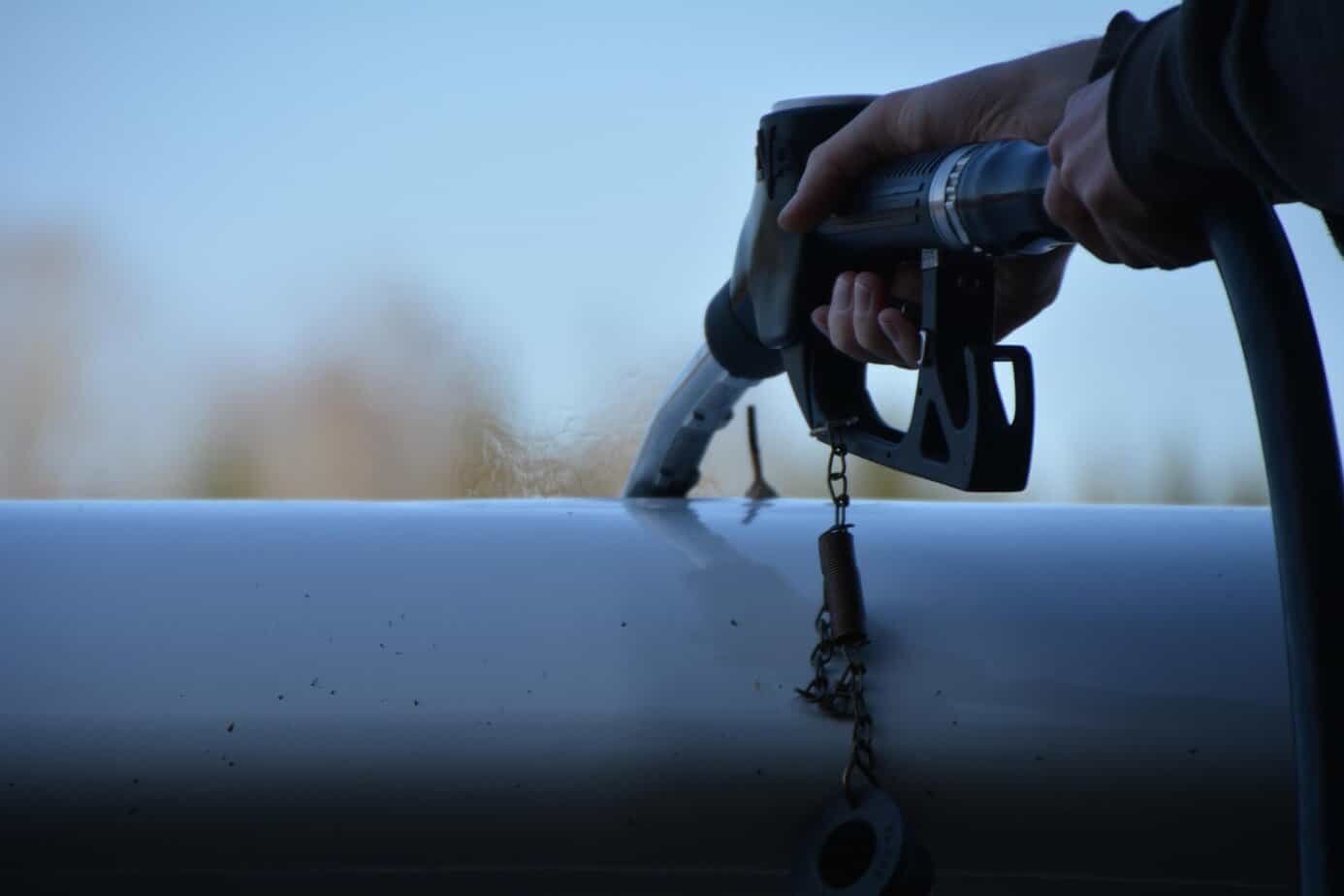
Fuel is one of those things most people assume will always be there. You pull into a gas station, swipe a card, and a few minutes later you’re back on the road. But history shows that normal supply can change quickly.
Hurricanes shut down refineries, pipelines fail, wars disrupt global oil flow, and panic buying can empty local stations overnight. When that happens, mobility becomes the first quiet casualty. Suddenly every trip matters.
That’s why preparing for fuel rationing deserves more attention than it usually gets in preparedness circles. Most preppers stock food, water, and medical gear, yet transportation planning often gets pushed aside until the last minute. The truth is simple: if you can’t move, you can’t resupply, evacuate, check on family, or reach work when things get tight.
Fuel preparedness isn’t just about storing gasoline in the garage. It’s about planning smarter trips, keeping strategic reserves, and having backup ways to get around if pumps run dry. In this article, we’ll walk through practical steps that help households stretch every gallon and stay mobile even when fuel becomes scarce.
When Gas Stops Flowing Normally
Most people imagine fuel shortages as something that happen slowly. In reality, they often unfold in just a few days. A refinery shuts down after a hurricane, a major pipeline goes offline, or rumors of shortages start circulating online. Drivers rush to top off their tanks “just in case.” Lines grow longer by the hour, and stations that looked normal in the morning can be completely dry by evening.
We’ve already seen how quickly this can happen. In 2021, the Colonial Pipeline cyberattack triggered widespread panic buying across the southeastern United States. The disruption itself lasted only a few days, but the surge in demand emptied thousands of gas stations. At the peak of the crisis, several states saw significant station outages as drivers scrambled for fuel. Events like that offer a real preview of why preparing for fuel rationing is not just theoretical planning. It’s a practical step for maintaining mobility when supply chains stumble.
Modern fuel systems are surprisingly fragile. Gas stations usually keep only a few days’ worth of fuel stored underground. Tanker trucks constantly refill those tanks to keep the system running smoothly. When transportation networks slow down or demand suddenly spikes, the balance breaks fast. According to the U.S. Energy Information Administration, regional supply disruptions can spread quickly when distribution pipelines or refineries go offline.
That’s the key mindset shift for preparedness. Instead of assuming the pump will always be there, experienced preppers plan for the moment when it isn’t. Preparing for fuel rationing starts with understanding how quickly normal fuel access can disappear, and why having a plan before shortages begin puts you several steps ahead of the crowd.
What Fuel Rationing Could Look Like in the United States
Fuel rationing isn’t just a theory. The United States has used it before, and the framework for doing it again already exists. During World War II gasoline rationing in the United States, Americans received ration books that limited how much gasoline they could purchase. Priority categories were assigned to essential workers, military support services, and transportation industries. Ordinary drivers still had access to fuel, but the amount was tightly controlled.
A modern version would likely look different, but the goal would remain the same: stretch limited supply across the entire population while keeping critical services running. Government planners have explored several possible systems over the years. Some proposals involve digital tracking through driver’s licenses or vehicle registrations. Others suggest weekly purchase limits, priority access for emergency services, and temporary restrictions based on license plate numbers.
The government even studied a formal emergency program known as the Gasoline Rationing Contingency Plan, which outlines how ration coupons or electronic allowances could be distributed during a severe energy crisis.
For everyday households, the details matter less than the reality behind them. If rationing begins, fuel becomes something you plan around carefully. Commutes change, errands get consolidated and unnecessary driving disappears almost overnight.
That’s where smart preparation comes in. Preparing for fuel rationing before policies appear gives you a huge advantage. Instead of reacting when stations impose limits, you already have a strategy for stretching fuel, storing reserves, and managing transportation needs. The next step is figuring out exactly how much driving your household actually needs, and where fuel tends to disappear without you even noticing.
Preparing for Fuel Rationing Starts With a Realistic Driving Plan
Most households underestimate how much fuel they burn every week. Work commutes, school runs, grocery trips, quick errands, weekend drives. Each one feels small on its own, but together they quietly drain the tank. That’s why the first practical step in preparing for fuel rationing isn’t buying fuel cans. It’s understanding exactly how your household uses fuel right now.
Start with a simple audit. For one week, track every trip your vehicle makes. Write down where you went, how far you drove, and whether the trip was truly necessary. Most people are surprised by what they find. A quick coffee run here, two separate grocery trips that could have been combined and a drive across town that could have waited until another errand.
Urban households often burn fuel through constant short trips and traffic delays. Rural families face a different challenge. Distances are longer, and a single grocery run might require 30 or 40 miles of driving. Either way, the goal is the same: Identify which trips are essential and which ones are simply habits.
This matters because once fuel becomes limited, flexibility disappears. If rationing allows only a certain number of gallons each week, every mile starts to count. According to the U.S. Department of Energy, aggressive driving, unnecessary trips, and poor route planning can significantly increase fuel consumption compared to efficient driving patterns.
When you break down your weekly driving patterns, something interesting happens. You begin to see opportunities to cut fuel use without changing your lifestyle dramatically. A single consolidated shopping trip instead of three, coordinating school pickups and planning errands along the same route.
These small changes may not seem dramatic, but they are exactly the type of habits that make preparing for fuel rationing practical rather than stressful. Once you understand your real driving needs, you can begin stretching every gallon much further. In the next section, we’ll look at a simple planning method many experienced preppers use to reduce fuel consumption almost immediately.
The 3-Trip Rule: How Preppers Stretch Every Gallon
Once you start paying attention to how often the car leaves the driveway, something becomes obvious. A lot of driving happens out of habit. That’s where the simple “3-Trip Rule” comes in. It’s a practical system many preparedness-minded families use when preparing for fuel rationing, and it works surprisingly well.
The idea is straightforward. Instead of making a new trip every time you need something, you try to stack at least three tasks into a single drive. For example, if you’re heading into town for groceries, that same trip becomes the moment to stop at the pharmacy, pick up hardware supplies, and handle the post office. One planned route replaces several smaller drives scattered throughout the week.
It sounds simple, but the fuel savings add up quickly. The average American driver travels more than 13,000 miles per year according to the Federal Highway Administration. A surprising portion of those miles come from short, inefficient trips. Cold engines burn more fuel, traffic patterns change, and drivers often backtrack across the same roads multiple times.
Urban drivers benefit the most from this strategy because traffic and stop-and-go driving waste fuel quickly. But rural households can use it just as effectively. If your nearest town is twenty miles away, every trip becomes valuable. Stacking errands turns a 60-mile week of scattered driving into a single well-planned loop.
Technology can help here too. Route-planning apps can organize stops in the most efficient order, reducing wasted mileage. But even a simple handwritten list works fine. The real shift is mental. Instead of asking, “Do I need to drive somewhere today?” you start asking, “What can I accomplish on the next trip?”
This type of thinking becomes second nature once fuel becomes scarce. Households that already follow habits like the 3-Trip Rule find that preparing for fuel rationing feels far less disruptive. They’ve already trained themselves to treat fuel like a resource worth managing carefully.
Of course, planning trips is only one side of the equation. The other side is building a small reserve at home, which is where smart fuel storage comes into play.

Preparing for Fuel Rationing Means Rethinking Fuel Storage at Home
Trip planning helps stretch the fuel you have, but real resilience comes from having a small reserve on hand. When people start preparing for fuel rationing, fuel storage is usually the first idea that comes to mind. The problem is that many households approach it the wrong way. They either store too little to matter or store fuel unsafely.
Gasoline and diesel are manageable if you treat them with respect. The key is using proper containers designed for fuel storage. Cheap plastic jugs or random containers from the garage are a bad idea. Certified fuel cans are built to handle pressure changes, vapor control, and accidental tipping. A solid example many folks rely on is the Wavian NATO 5-Gallon Jerry Can. These steel cans seal tightly, transport easily, and hold up for years if maintained properly.
Storage location matters just as much as the container. Fuel should always be kept in a detached shed or well-ventilated outbuilding whenever possible. Garages are common storage spots, but fumes can accumulate if containers are poorly sealed. Heat is another concern. Gasoline expands in high temperatures, which can increase vapor pressure inside the container.
Another piece many people overlook when preparing for fuel rationing is fuel lifespan. Gasoline begins degrading within months unless treated with stabilizer. Adding a stabilizer like STA-BIL Fuel Stabilizer can extend usable life significantly, especially if you rotate stored fuel regularly. Diesel fuel generally stores longer but can still develop contamination or algae growth over time.
The National Fire Protection Association provides clear safety recommendations for residential fuel storage, including container limits and safe handling practices.
For most households, fuel storage doesn’t need to be extreme. Even a modest reserve of 15–25 gallons can provide a buffer during temporary shortages. That amount might cover evacuation fuel, generator use during a power outage, or several weeks of carefully planned driving.
Once you understand how to store fuel safely, the next logical question appears pretty quickly: how much should you actually keep on hand? The answer depends on your household’s driving needs, and the numbers can be surprisingly different from one family to the next.
How Much Fuel Should a Household Actually Store?
Some preppers imagine hundreds of gallons stored away. Others keep a single gas can and hope for the best. The truth sits somewhere in the middle.
A good starting point is calculating your household’s weekly fuel usage. Look at your average miles driven and your vehicle’s fuel efficiency. If your car gets 25 miles per gallon and you typically drive 200 miles per week, you’re burning about eight gallons weekly. That number gives you a baseline for planning realistic reserves.
From there, think about what you want your fuel reserve to accomplish. Some families simply want a buffer during temporary shortages. Others want enough fuel to handle an evacuation, operate a generator for a few days, and still maintain limited transportation. The more roles fuel plays in your preparedness plan, the larger your reserve needs to be.
Another factor people forget is generator fuel. During extended outages, generators can burn several gallons per day depending on size and load. For example, a portable generator like the Westinghouse WGen7500 Portable Generator can run many household essentials but may consume close to a gallon of gasoline per hour under heavier loads. That kind of demand changes your storage calculations quickly.
The U.S. Department of Energy emphasizes that fuel consumption varies widely depending on driving habits, vehicle type, and maintenance conditions. That’s why personal calculations matter more than generic advice.
For many households, a practical reserve falls somewhere between 20- and 60-gallons total, rotated regularly throughout the year. That amount provides flexibility without turning your property into a miniature fuel depot.
When preparing for fuel rationing, the goal isn’t hoarding massive quantities of gasoline. It’s building a manageable reserve that keeps your household mobile when supply becomes unpredictable. Once your storage plan is in place, the next advantage comes from choosing transportation options that stretch each gallon as far as possible.
Vehicles That Stretch Fuel the Furthest
When people talk about preparedness vehicles, the conversation often jumps straight to big trucks, lifted suspensions, and heavy off-road capability. Those vehicles certainly have their place, especially in rural environments. But when it comes to preparing for fuel rationing, efficiency often matters more than raw power.
Smaller vehicles stretch limited fuel supplies dramatically. A compact car getting 35–40 miles per gallon can travel nearly twice as far on the same fuel as a large pickup. When gasoline becomes restricted or expensive, that difference quickly becomes a strategic advantage. A vehicle that sips fuel allows you to maintain mobility even when weekly allowances are tight.
Motorcycles and scooters push that efficiency even further. Many small motorcycles easily reach 60–80 miles per gallon, which means a few gallons can cover an entire week of essential travel. Scooters are particularly useful for short urban trips where parking is tight and traffic is heavy. They won’t haul lumber or tow trailers, but for commuting or supply runs they can dramatically extend fuel reserves.
Diesel vehicles also deserve attention. Diesel fuel stores longer than gasoline and diesel engines often deliver excellent mileage under steady driving conditions. That combination makes them attractive for long-distance travel or rural logistics. The U.S. Department of Energy Alternative Fuels Data Center notes that diesel engines typically operate more efficiently than gasoline engines, especially in heavier vehicles and highway driving.
For households that want to maximize efficiency, vehicle maintenance also matters. Something as simple as properly inflated tires can improve fuel economy noticeably. Tools like the AstroAI Digital Tire Pressure Gauge make it easy to keep tire pressure in the optimal range, which reduces rolling resistance and saves fuel over time.
All of these factors play into preparing for fuel rationing. The most capable vehicle during a fuel shortage isn’t always the biggest one in the driveway. Sometimes it’s the one that quietly travels twice as far on every gallon.
Of course, even the most efficient vehicle still depends on fuel. That’s why smart preparedness plans include something else entirely: transportation options that don’t rely on gasoline at all.
Backup Transport When Gasoline Becomes Scarce
Even the most efficient vehicle still depends on one thing: fuel. And if a crisis drags on long enough, gasoline may become extremely limited regardless of how carefully you plan. That’s why experienced preppers think beyond vehicles when preparing for fuel rationing. The goal is simple. Maintain the ability to move even when gas stations stop being reliable.
One of the most practical solutions is the modern electric bike. E-bikes allow riders to travel long distances with very little energy. Most models can cover 20 to 60 miles per charge depending on terrain and assist level. Charging them requires only a fraction of the electricity needed for an electric car, which makes them surprisingly useful during power disruptions if you have access to small solar setups or backup generators. A solid example is the EUYBIKE 3000W Peak Motor Electric Bike which many preparedness-minded riders like because it folds for storage and carries cargo incredibly well.
Cargo bikes are another overlooked option. These bikes are built to haul groceries, tools, or even small loads of supplies. In dense urban areas they can sometimes move faster than cars stuck in traffic. Rural households can benefit too, especially for short trips to neighbors or nearby farms.
Traditional bicycles still deserve a place in preparedness planning as well. They require no electricity, minimal maintenance, and can travel surprisingly far with basic conditioning. According to the U.S. Department of Transportation, cycling infrastructure and personal bicycles provide resilient transportation options during fuel shortages or natural disasters.
For rural homesteads, backup transport may also include livestock. Horses, mules, and even sturdy farm carts were reliable transportation long before gasoline engines existed. They obviously require care and feed, but they represent a type of mobility that doesn’t depend on global supply chains.
All of these options reinforce a simple principle behind preparing for fuel rationing. Mobility should never rely on a single system. Gasoline vehicles might handle long-distance travel, but bikes, e-bikes, and other alternatives keep daily movement possible when fuel becomes scarce.
Of course, one situation where fuel shortages become especially dangerous is during large-scale evacuations. When thousands of drivers hit the road at once, limited fuel supplies disappear quickly. That’s where evacuation planning becomes critical.
Preparing for Fuel Rationing During Evacuations
Evacuations are where fuel shortages become dangerous very quickly. When a hurricane approaches, a wildfire spreads, or authorities issue evacuation orders, thousands of drivers often leave at the same time. Gas stations along major highways can empty in hours. Anyone who waits until the last minute may find themselves stuck in traffic watching the fuel gauge drop. That’s why evacuation planning is a critical part of preparing for fuel rationing.
The first rule is simple: never let your vehicle run low when a crisis is developing. Many experienced preppers follow the “half-tank rule.” If the tank drops below half, it gets refilled. This habit alone dramatically reduces the chances of being caught with an empty tank when evacuation becomes necessary.
Another important factor is route planning. Most people rely on the same major highways during evacuations, which quickly become gridlocked. Secondary roads and rural routes often remain open longer and may have smaller gas stations that still have fuel available. Mapping these alternatives ahead of time can make a major difference if traffic jams stretch for miles.
Fuel reserves at home also play a huge role here. Even a small reserve can provide the extra range needed to bypass crowded stations or reach a safer location. Portable siphon pumps like the GasTapper Fuel Transfer Pump make it much easier to transfer stored fuel into vehicles quickly when time matters.
The Federal Emergency Management Agency (FEMA) also advises households to maintain enough fuel for evacuation vehicles and to plan routes and meeting points ahead of disasters.
When you look at real evacuation disasters, one pattern appears again and again. Drivers who prepared early left sooner, used less fuel sitting in traffic, and reached safety faster. Those who waited often faced closed stations, stalled traffic, and empty tanks.
That’s why preparing for fuel rationing isn’t just about everyday driving. It’s also about making sure that when you truly need to move quickly, you have the fuel and the plan to do it. But individual planning is only part of the picture. Communities can also stretch fuel supplies when neighbors begin working together.
Community Fuel Strategies Most People Forget
Preparedness often focuses on individual households, but communities can stretch fuel supplies much further when people cooperate. In fact, one of the most overlooked parts of preparing for fuel rationing is realizing that neighbors don’t all need to burn fuel separately to accomplish the same tasks.
Carpooling becomes one of the simplest solutions. If three neighbors work in the same general area, one vehicle can handle the commute while the others stay parked. Instead of three cars consuming fuel every day, only one vehicle does the job. Over weeks or months, that difference can save hundreds of gallons across a small neighborhood.
Errand coordination works the same way. One person heading into town can pick up supplies for several households at once. Rural communities have relied on this system for generations, especially in areas where the nearest store may be twenty or thirty miles away.
Fuel sharing and bartering can also appear during shortages. A neighbor with extra gasoline may trade a few gallons for fresh produce, mechanical work, or generator time during a power outage. These informal exchanges often help communities function when supply chains slow down.
The American Red Cross emphasizes the importance of community cooperation during emergencies, noting that neighbors working together can dramatically improve resilience and resource management.
For preparedness-minded households, this means relationships matter. Knowing who has a truck, who owns a trailer, who has mechanical skills, and who can store extra supplies creates a local support network that becomes incredibly valuable during shortages.
This mindset shifts the way people think about preparing for fuel rationing. Instead of every household trying to solve the problem alone, communities can pool transportation resources and reduce overall fuel demand.
Of course, cooperation works best when households are also managing their own fuel use wisely. That’s where small daily habits start making a big difference in how long your fuel reserves actually last.
Small Habits That Quietly Save Gallons Every Month
One of the most practical parts of preparing for fuel rationing has nothing to do with buying gear or storing gasoline. It comes down to everyday driving habits. Small changes behind the wheel can quietly save dozens of gallons over the course of a year, which becomes extremely valuable when fuel access becomes limited.
Speed is one of the biggest factors. Vehicles burn significantly more fuel at higher speeds because aerodynamic drag increases quickly. Many drivers don’t realize that cruising at 75 mph instead of 60 mph can noticeably reduce fuel efficiency. Slowing down slightly on highways may feel minor, but over time it stretches every tank much further.
Idling is another hidden fuel drain. Letting a vehicle sit running while waiting for someone or warming up unnecessarily burns fuel without moving the car a single mile. Modern engines don’t need long warm-up periods, and shutting the engine off during longer stops can preserve more fuel than most people expect.
Vehicle maintenance also plays a big role. Dirty air filters, worn spark plugs, and underinflated tires force engines to work harder. The Environmental Protection Agency notes that proper vehicle maintenance and efficient driving habits can improve fuel economy and reduce fuel waste over time.
Some drivers also find that monitoring fuel use helps reinforce better habits. Devices like the Bluetooth Pro OBDII Scan Tool for Cars plug into a vehicle’s diagnostic port and provide real-time vehicle data and maintenance alerts. Tools like that can help drivers catch small issues before they quietly reduce fuel efficiency.
The point isn’t perfection. No one drives efficiently every single trip. But when households adopt even a few of these habits, fuel consumption drops noticeably. Over time, those savings become another quiet advantage when preparing for fuel rationing, because the fuel you already have simply lasts longer.
And when you step back and look at the bigger picture, something becomes clear. Fuel preparedness isn’t really about gasoline alone. It’s about protecting your ability to move when movement suddenly becomes difficult. That final idea ties everything together.

Fuel Preparedness Is Really About Mobility
After looking at trip planning, storage strategies, efficient vehicles, and backup transportation, a bigger picture starts to appear. Preparing for fuel rationing isn’t really about gasoline itself. It’s about protecting your ability to move when everyone else suddenly can’t.
Mobility affects almost every part of daily life. If fuel becomes limited, simple tasks like grocery shopping, commuting to work, checking on family, or getting medical supplies become much harder. The households that struggle the most during shortages are usually the ones that assumed fuel would always be available.
Preppers tend to look at the problem differently. Instead of relying on a single system, they build layers. A primary vehicle for long-distance travel. A small fuel reserve stored safely at home. More efficient transportation options for short trips. Even bicycles or other alternatives that require no fuel at all. Each layer provides another way to stay mobile if one part of the system fails.
This layered approach is exactly what emergency planners encourage. The Department of Homeland Security stresses that resilient households prepare multiple options for transportation and evacuation before disasters occur.
And that brings us back to the core idea behind preparing for fuel rationing. It’s not about hoarding gasoline or expecting the worst-case scenario tomorrow. It’s about thinking ahead while fuel is still cheap, easy to access, and largely taken for granted.
Because if history has shown anything, it’s that fuel shortages rarely give much warning. When they happen, the people who planned ahead won’t just have extra fuel in the shed. They’ll have something far more valuable.
Suggested resources for preppers:
Emergency Fuel Storage for Apartments: A No-Nonsense Guide to Bug-In Power and Cooking
The #1 food of Americans during the Great Depression