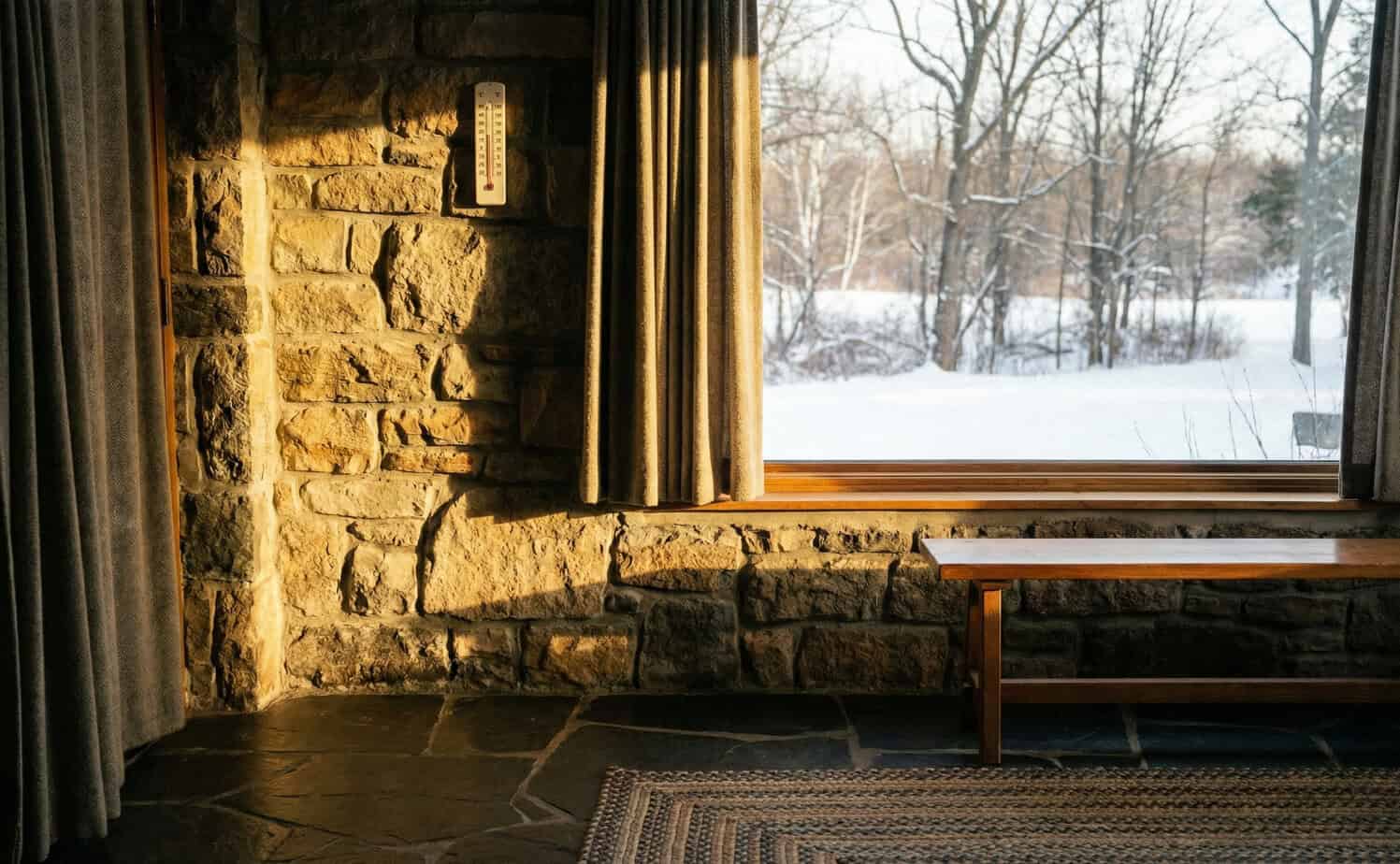
Most people do not think seriously about home heating until the power fails during a hard winter storm. That realization usually arrives in January, when the temperature drops fast and the house starts losing warmth by the minute.
The wind is loud, the roads are dangerous, and outage maps spread across the country faster than reassurance ever does. Electric space heaters become useless, fuel deliveries slow down or stop entirely, and indoor temperatures begin falling whether you like it or not. In those moments, staying warm stops being about comfort and starts becoming a real safety concern.
This is where passive heating systems for homes stop sounding like a design trend and start looking like common sense. Passive heating is not about gadgets, smart thermostats, or equipment that depends on a working electrical grid. It relies on basic physical realities that keep functioning whether utilities are available or completely gone.
Sunlight entering a building, insulation slowing heat loss, airtight construction, and materials that store warmth all work together quietly. Most modern houses perform poorly in this area because they were designed around constant, cheap energy rather than resilience. When the furnace shuts off, the structure itself offers very little resistance to the cold.
Passive heating systems for homes focus on slowing that heat loss instead of endlessly creating new heat. The goal is not tropical comfort during a blizzard but stability over time. A house that cools slowly gives you options, margin, and breathing room during an outage.
In real winter conditions, homes designed or modified with passive heating in mind often stay fifteen to thirty degrees warmer than outside temperatures. They do this without burning fuel, running generators, or relying on any external system. That difference matters when outages stretch from hours into days or even weeks.
The encouraging part is that passive heating does not require tearing down your house or starting from scratch. Some of the most effective improvements are boring, affordable, and well within reach for normal homeowners. Others take more effort and planning but continue paying dividends every winter afterward.
For anyone who takes winter preparedness seriously, passive heat deserves a hard look. It works quietly in the background, asking for nothing while everything else struggles. When the grid fails, houses that can hold heat keep people safer, calmer, and far more capable.
When the Power Fails, Heat Becomes Survival
Winter power outages expose a truth that most homeowners never test under calm conditions. When electricity disappears during deep cold, a house reveals whether it was designed for comfort or for survival.
During a short outage, stored heat and residual warmth mask structural weaknesses for a few hours. When the outage stretches overnight or into multiple days, indoor temperatures tell the real story fast. Walls bleed heat, windows radiate cold, floors pull warmth out of your body, and every draft becomes obvious.
This is why winter blackouts feel different from summer outages. Cold attacks from every surface, not just the air. A house that cannot hold heat becomes unlivable long before food spoils or water runs low.
Most people respond by thinking about heat sources first. They picture wood stoves, propane heaters, kerosene units, or generators humming outside. Those tools matter, but they are only part of the equation.
If your house loses heat faster than you can replace it, every fuel source becomes a losing battle. You burn more wood, consume more propane, and drain batteries faster than planned.
This is where passive thinking changes the outcome. Homes that retain heat well buy time without consuming anything. They reduce how hard backup systems have to work and how fast supplies disappear. That advantage compounds every hour the grid stays down.
One simple way people first notice this difference is by tracking indoor temperature decline during outages. A basic indoor thermometer placed away from vents and windows shows how fast warmth disappears after the heat shuts off. Many folks keep a simple digital indoor thermometer buried among normal household items rather than treated as special equipment.
What surprises most homeowners is how quickly a poorly performing house approaches outdoor temperatures. In some cases, indoor air can drop twenty degrees or more within a single winter night. That rate of loss turns inconvenience into danger faster than expected.
According to the U.S. Department of Energy, space heating accounts for the largest share of household energy use in cold regions, which explains why homes cool so quickly once systems shut down. When that constant energy input disappears, the structure itself is left to fend for you.
Passive heating systems for homes shift the fight away from constant energy consumption and toward structural resilience. Instead of reacting to cold, the house resists it by design. That resistance becomes the difference between shelter and liability during a winter failure.
Section one sets the stage because survival decisions begin with honest assessment. If your home cannot slow heat loss, every other winter prep becomes harder. Understanding that reality is the first step toward fixing it.
What Passive Heating Systems for Homes Actually Mean in the Real World
Passive heating systems for homes sound complicated until you strip away the buzzwords and design jargon. At its core, passive heating simply means using the structure of the house to collect, hold, and slow the loss of heat without relying on powered equipment.
There are no switches to flip and no systems to maintain. Nothing hums, burns fuel, or needs replacement parts to function. If the sun rises, the walls exist, and insulation stays intact, passive heat keeps doing its job.
This is where many people get confused and dismiss the idea too quickly. They assume passive heating means exotic architecture, massive glass walls, or expensive custom builds. In reality, every house already has passive heating elements, even if they are poorly implemented.
Windows already allow sunlight inside, whether you planned for it or not. Walls and floors already store some amount of heat, even if they lose it too quickly. Air already moves through cracks and gaps, usually in ways that work against you.
Passive heating systems for homes are about controlling those forces instead of fighting them constantly. You decide where sunlight enters, how long warmth stays inside, and how slowly it escapes overnight. That control happens through orientation, materials, insulation, and air sealing rather than machinery.
One of the biggest mindset shifts is understanding that passive heating is always working, even when active heat is off. A furnace only helps while it runs, but passive features keep performing around the clock. That makes them especially valuable during outages, fuel shortages, or grid instability.
People often underestimate how much heat comes from everyday sources. Sunlight through a south-facing window, body heat from occupants, cooking, and even electronics all add warmth.
In a poorly designed house, that heat vanishes almost immediately. In a better-performing house, those small inputs accumulate instead of disappearing. Thermal mass absorbs warmth during the day and releases it slowly overnight. Insulation and airtight construction stretch every degree as far as possible.
Many homeowners start understanding this concept after using an infrared thermometer to identify cold spots and heat loss paths. A simple handheld infrared thermometer often reveals how unevenly heat moves through walls, ceilings, and floors. Seeing temperature differences visually tends to change how people think about their homes.
Passive heating systems for homes are not about perfection or extremes. They are about stacking small advantages until the house behaves differently under stress. Each improvement reduces dependence on fuel, power, and emergency fixes.
Once this concept clicks, winter preparedness shifts from panic planning to structural planning. Instead of asking how to make more heat, you start asking how to waste less. That shift sets the foundation for everything that follows.
The Real Enemy Is Heat Loss, Not Cold
Cold weather does not defeat most homes by force, but by exposure over time. The problem is rarely how cold it gets outside, but how quickly warmth escapes from the inside.
Heat always moves toward cold, and it never gets tired of doing so. If your house offers easy paths outward, warmth takes them immediately. Every crack, thin surface, and uninsulated cavity becomes a quiet exit ramp.
Most homeowners underestimate how many of those exit points exist. Air leaks around windows, doors, sill plates, attic hatches, and electrical penetrations add up fast. Even newer houses often leak enough air to replace their entire interior volume multiple times per hour.
Insulation problems compound the issue even when air sealing looks decent. Compressed batts, missing sections, thermal bridging through studs, and poorly insulated floors quietly drain heat all winter. The furnace hides these flaws by brute force until it shuts off.
When active heat stops, the house reverts to its true performance level. That performance level determines how long the indoor environment remains livable. In many cases, the answer is far shorter than people expect.
Windows deserve special mention because they fail in two different ways. They leak air when seals degrade, and they radiate heat outward even when airtight. Large glass areas without winter strategy act like open drains for warmth.
Floors often go unnoticed until feet start feeling cold long before the air does. Uninsulated crawlspaces, garages beneath living space, and slab edges pull heat downward constantly. That loss continues day and night without any dramatic signs.
One reason heat loss causes so much trouble is that it creates a feedback loop. As the house cools, surfaces get colder and draw more heat from occupants. People feel colder even at the same air temperature, which increases stress and fatigue.
Many preppers begin addressing this reality by testing how their house behaves during mild outages. They shut off heat intentionally for several hours and track indoor temperature drop. This kind of test often changes priorities faster than any checklist ever could.
Tools that help identify heat loss do not need to be complicated or expensive. Smoke pencils, incense sticks, and even a candle flame can reveal air movement around leaks. That visual feedback makes abstract concepts feel real very quickly.
Passive heating succeeds or fails based on this section alone. If heat loss is uncontrolled, no amount of sunlight or thermal mass will save you. Stopping the bleeding always comes before trying to store more warmth.
Understanding where and how your house loses heat sets the stage for every improvement that follows. Once you see the exits, you can start closing them on your terms.

Using The Winter Sun Without Turning Your House into a Greenhouse
The winter sun is free heat, but only if you let it in at the right time and keep it from escaping at night. A lot of homeowners accidentally do the opposite by blocking the sun during the day and bleeding warmth after dark.
The basic idea is simple, even if the execution takes some attention. In most of the United States, south-facing windows receive the most useful winter sunlight because the sun sits lower in the sky. East windows can help in the morning, west windows can help late in the day, and north windows mostly behave like cold holes.
If you want passive heating to feel real, you start treating sunlight like fuel. You open the “valve” during the day by letting sun hit floors and interior surfaces. You close the “valve” at night by insulating the glass so stored heat does not radiate back outdoors.
This is where people mess it up with good intentions. They add big windows for “solar gain,” then forget that glass is still a weak insulator when the sun goes away. A sunny room can feel amazing at noon and still be the coldest room at midnight.
A practical approach looks boring, and boring is usually what works. You keep south-facing glass as your main collector, you avoid shading it during winter daylight, and you plan night insulation like it actually matters. If your windows are decent but still feel like ice at night, insulated cellular shades can cut that glass chill a lot more than thin curtains ever will.
You can test solar gain without buying anything, which is always the best first move. On a clear winter day, you can measure indoor temperature changes in a sunny room versus a shaded room, and the difference often surprises people. If your sunny room heats up noticeably, then your job becomes capturing that heat and slowing down how fast it leaves.
For night control, the easiest upgrade is usually better window coverings in the rooms you actually live in. A set of thermal blackout curtains can reduce nighttime radiant loss when you close them before the temperature drops. That move is not fancy, but it is the kind of simple habit that stacks results over a full winter.
Solar gain is not magic, and it is not a replacement for insulation and air sealing. It is a heat source you can harvest when conditions cooperate, and it pairs extremely well with thermal mass and tight construction. Once you get sunlight working for you instead of against you, passive heating starts feeling less like theory and more like a routine.
Thermal Mass: The Unsung Hero of Passive Heating
Thermal mass is one of the least understood parts of passive heating, yet it is often the difference between short-term warmth and lasting comfort. It refers to materials inside the home that absorb heat when temperatures rise and release it slowly as temperatures fall.
Concrete, brick, stone, tile, and thick masonry all behave this way naturally. Water also works extremely well as thermal mass, even though most people never think of it that way. These materials act like a heat battery that charges during the day and discharges overnight.
Without thermal mass, solar gain tends to be flashy but short-lived. A sunny room heats up quickly, feels great for a few hours, and then dumps that warmth as soon as the sun disappears. That swing creates discomfort and wastes much of the heat you just captured.
With enough thermal mass, those temperature swings flatten out noticeably. Sunlight warms floors, walls, or heavy objects, and that stored energy leaks back into the room slowly. The result feels steadier, calmer, and far more livable during cold nights.
Many people assume thermal mass only applies to purpose-built homes with concrete floors and masonry walls. In reality, existing homes can add meaningful mass without structural changes. Tile floors, brick hearths, thick countertops, and even interior stone accents all contribute.
Water-based thermal mass is especially flexible for retrofits. Large aquariums, water storage containers, or sealed barrels placed in sunny areas absorb surprising amounts of heat. Because water has a high heat capacity, it holds warmth longer than many solid materials.
The key is placement rather than volume alone. Thermal mass only works if sunlight or warm air actually reaches it. Hiding heavy materials behind insulation or in shaded corners limits their usefulness.
Some homeowners experiment by placing dense objects in sunlit rooms and monitoring temperature changes overnight. Even small additions can slow nighttime cooling if they are exposed properly. Over time, these small gains stack into noticeable improvements.
If you want to experiment cheaply, dark-colored water containers placed near south-facing windows are an easy starting point. Sealed water jugs or purpose-made containers allow flexibility without permanent commitment. They can be repositioned seasonally or removed entirely if needed.
Thermal mass does not create heat on its own, and that point matters. It only stores what you capture from sunlight, internal activity, or supplemental heating. That makes it a multiplier rather than a standalone solution.
When paired with good insulation and controlled air movement, thermal mass becomes extremely effective. It stretches every degree of heat longer into the night. That slow release is what keeps passive heating systems feeling reliable instead of fragile.
Retrofitting Passive Heating Systems for Homes Without Tearing Everything Apart
Most people assume meaningful passive heating upgrades require a full remodel or a custom-built house. In reality, many of the biggest gains come from targeted retrofits that work with the structure you already have.
The first priority is always reducing uncontrolled heat loss before trying to capture more warmth. Air sealing, insulation improvements, and smarter interior layouts change how a house behaves immediately. These upgrades are not glamorous, but they outperform flashy solutions every time.
Windows are often the most obvious weakness in existing homes. If replacing them is not realistic, improving how they behave seasonally still matters a lot. Nighttime insulation for glass often delivers more benefit than people expect.
Interior storm panels, shrink film, and tight-fitting thermal curtains reduce radiant heat loss significantly. These upgrades also improve comfort by warming interior surfaces, not just the air. Rooms feel calmer when walls and windows stop radiating cold.
Floors are another overlooked opportunity, especially in homes with crawlspaces or garages underneath. Insulating beneath floors and sealing rim joists cuts heat loss while improving comfort underfoot. Cold floors drain body heat faster than cold air ever will.
Interior layout changes can also improve passive performance without construction. Closing off unused rooms during winter concentrates heat where people actually live. Zoning with doors, curtains, or even temporary barriers keeps warmth from spreading thin.
One retrofit many homeowners underestimate is adding thermal mass inside living spaces. Tile overlays, masonry features, and water-based mass can be added gradually. These changes slow temperature swings without touching structural framing.
For renters or cautious homeowners, temporary upgrades still matter. Draft-blocking door snakes, removable window insulation, and portable thermal curtains all reduce heat loss.
These improvements can be installed and removed seasonally without permanent changes. A simple infrared thermometer remains one of the best tools for guiding retrofit decisions. It shows which surfaces bleed heat fastest and which upgrades pay off immediately. This kind of feedback prevents wasted effort and money.
If you want a straightforward starting point, removable magnetic window insulation kits are popular because they install without tools and improve winter performance quickly. They are not permanent, but they demonstrate how much difference window control makes.
For authoritative retrofit guidance grounded in building science, the U.S. Department of Energy provides detailed recommendations on insulation and air sealing that apply to existing homes. Their guidance reinforces a simple principle that passive heating depends on retention before collection.
Retrofitting passive heating systems for homes is about stacking modest improvements until the house behaves differently. No single upgrade fixes everything, but each one slows heat loss incrementally. Together, they turn fragile winter performance into something far more forgiving.
Once these retrofits are in place, solar gain and thermal mass start working much harder for you. The house becomes less reactive and more stable under cold stress. That stability is what makes passive heating practical instead of theoretical.
Cabins, Homesteads, and Rural Builds That Stay Warm on Purpose
Rural homes and cabins have an advantage that suburban houses rarely enjoy. They offer freedom of orientation, layout, and exterior modification without neighbors or zoning pressure.
When land is available, the building itself becomes part of the heating strategy. Orientation alone can determine whether a house fights winter or works with it. A structure aligned to face true south captures more usable winter sunlight than most people realize.
Many older cabins accidentally get this right because they were built for practicality. Front doors faced away from prevailing winds, and living spaces clustered toward the warmest side. Mudrooms and enclosed porches acted as buffers instead of wasted square footage.
Modern rural builds sometimes forget these lessons in favor of views or aesthetics. Big north-facing windows might look great, but they punish heat retention all winter. In cold climates, design mistakes show up quickly on the fuel bill.
Earth contact becomes another powerful tool in rural settings. Berms, partially buried walls, and slab-on-grade foundations reduce exposed surface area. Soil temperature stays more stable than winter air, which slows heat loss dramatically.
Even simple windbreaks matter more than people expect. Tree lines, outbuildings, and fencing reduce wind pressure on exterior walls. Less wind means fewer drafts and less heat pulled from surfaces.
Interior layout choices also matter more in cabins than in larger homes. Open floor plans bleed heat upward and outward faster than compartmentalized designs. Lower ceilings and defined living zones help heat stay where people actually live.
Wood stoves often anchor rural passive strategies, even when they are technically active heat sources. Their real value comes from pairing them with tight construction and thermal mass.
A stove working inside a heat-holding structure uses far less wood for the same comfort. Many cabin owners enhance this effect by placing masonry, stone, or water-based mass near the stove. Heat absorbed during active burning continues radiating long after the fire dies down. That approach stretches fuel supplies during long winters.
For off-grid or seasonal cabins, monitoring interior temperature trends becomes especially important. A simple battery-powered thermometer lets you see how fast heat disappears overnight. That data guides decisions better than guesswork ever could.
If you want a durable, low-tech upgrade for rural builds, cast iron heat-storing accessories near wood stoves are popular. A cast iron steamer or heat-retaining kettle adds thermal mass while improving indoor humidity during dry winter months. Small additions like this often outperform complex solutions over time.
Cabins and homesteads that stay warm on purpose rarely rely on a single trick. They stack orientation, insulation, mass, layout, and wind control into one coherent system. That intentional design is what makes winter living feel manageable instead of exhausting.
The farther you live from services and utilities, the more these choices matter. Passive heating becomes less about efficiency and more about resilience. In rural settings, a warm house is not a convenience but a requirement.
Apartments, Mobile Homes, and Rentals: Making Bad Design Work for You
Renters and mobile home owners often feel locked out of serious heating improvements. They assume passive strategies only apply to homeowners with full control over structure and materials.
That assumption leaves a lot of heat on the table every winter. Even poorly designed living spaces can perform better with the right approach and expectations. The goal is not perfection but damage control and smarter heat retention.
Apartments usually lose heat through windows, exterior walls, and shared ventilation pathways. You cannot rebuild those systems, but you can reduce how aggressively they work against you.
Nighttime window insulation often delivers the biggest improvement for the least effort. Removable window inserts, thermal curtains, and interior storm panels all slow radiant heat loss. These upgrades also make rooms feel warmer because surfaces stop pulling heat from your body. Comfort improves even when air temperature barely changes.
Mobile homes face a different but equally challenging problem. Thin walls, exposed undercarriages, and poor air sealing allow cold to attack from every direction. Heat loss downward through floors is often worse than wall loss.
Skirting becomes one of the most effective upgrades for trailers in cold climates. Blocking wind under the structure dramatically reduces heat loss and cold air infiltration. Even temporary skirting can change how the home behaves during winter storms.
Interior layout adjustments matter more than people expect in small spaces. Closing off unused rooms concentrates heat where you actually spend time. Curtains or temporary barriers can create microclimates that stay warmer overnight.
Humidity control also plays a quiet role in perceived warmth. Dry air makes rooms feel colder and pulls moisture from your skin. Adding humidity slightly improves comfort without raising thermostat settings.
For renters looking for non-permanent upgrades, insulated window panels are often the best return. Foam board inserts cut to size and sealed gently with removable tape block cold effectively. They are ugly but extremely effective when appearance matters less than warmth.
If you want a cleaner look with easy removal, tension-mounted thermal curtain rods paired with heavy curtains work well. That flexibility makes passive improvements realistic even in strict rentals.
Apartments and mobile homes will never behave like earth-bermed houses. That reality matters, and expectations should stay grounded. Still, reducing heat loss changes how livable these spaces feel during outages.
Passive improvements in rentals are about stacking small wins quietly. Each layer slows heat loss and reduces reliance on active systems. That margin can be the difference between riding out a winter outage and needing to leave.
Old-School Methods That Still Outperform Modern Gadgets
Long before cheap electricity and forced-air furnaces became normal, people built homes that survived winter by necessity. Those designs were not optimized for comfort in the modern sense, but they excelled at holding heat with limited resources.
Many of these methods look primitive until you understand the logic behind them. They worked with materials that were heavy, durable, and slow to give up warmth. That approach aligns perfectly with passive heating principles, even today.
Earth contact remains one of the strongest examples of this thinking. Homes partially buried into hillsides or bermed on the north and west sides lose far less heat to wind. Soil temperature changes slowly, which stabilizes indoor conditions during long cold spells.
Root cellars demonstrate the same concept on a smaller scale. They stay above freezing in winter and cool in summer because the earth buffers temperature swings. That same buffering effect scales up when applied to living spaces.
Thick masonry walls were another historical advantage. Stone, brick, and adobe absorbed heat during the day and released it slowly overnight. These walls reduced reliance on constant fires, which mattered when fuel was scarce or labor-intensive.
Even interior design reflected heat retention priorities. Ceilings were lower, rooms were smaller, and living areas clustered around heat sources. Heat stayed where people needed it instead of drifting into unused space.
Modern homes often reject these ideas in favor of openness and lightness. Open floor plans and lightweight materials look appealing but shed heat quickly. That tradeoff becomes obvious during extended winter outages.
Some old methods translate directly to modern retrofits with minimal compromise. Adding interior masonry near heat sources, reducing ceiling height visually with fabric or shelving, and creating buffer zones all echo historical design logic. These changes improve performance without abandoning modern living standards.
Water storage as thermal mass also has deep historical roots. Large containers placed near heat sources were common in older homes and workshops. They absorbed heat during active burning and released it slowly after fires died down.
If you want a simple way to experiment with this concept, sealed water containers placed near sunny windows or heat sources work surprisingly well. Purpose-made water storage containers like these stackable water bricks from Amazon are easy to move and adjust seasonally. They let you test thermal mass benefits without permanent changes.
Old-school methods succeed because they accept winter rather than fighting it aggressively. They slow heat loss, reduce exposure, and stretch limited resources over time. That mindset still outperforms many modern gadgets when the grid stops cooperating.
Learning from these designs is not about going backward. It is about borrowing solutions that already survived harsh conditions. When passive heating borrows from history, it usually gets more reliable, not less.
Passive Heating Systems for Homes vs. Wood Stoves, Propane, and Generators
Most winter preparedness discussions jump straight to heat sources instead of heat behavior. That instinct is understandable, but it skips an important comparison that shapes long-term outcomes.
Active heat sources create warmth on demand, but they all depend on something external. Wood stoves need fuel and physical labor. Propane heaters depend on deliveries and storage. Generators require fuel, maintenance, and functioning equipment.
Passive heating systems for homes operate under a different set of rules entirely. They do not create heat on command, but they dramatically reduce how much heat you need to create. That difference becomes critical when outages stretch longer than expected.
A wood stove inside a poorly performing house works far harder than it should. Heat pours out through walls, windows, and ceilings almost as fast as it is produced. People respond by burning more fuel and staying closer to the stove.
The same stove inside a house with good passive performance behaves completely differently. Heat stays in the structure longer, spreads more evenly, and remains useful overnight. Fuel consumption drops, and comfort increases without extra effort.
Propane heaters show the same contrast even more clearly. In leaky houses, they cycle constantly and drain tanks quickly. In tighter homes, they run less often and maintain stable temperatures longer.
Generators perform the worst in this comparison during winter conditions. They create electricity, not heat, and they do it inefficiently for space heating. Using generators to power electric heaters burns fuel fast and delivers poor results.
Passive heating systems do not compete with these tools. They change how effective those tools are. Think of passive heat as the foundation and active heat as reinforcement.
When passive performance is strong, active systems become backups instead of lifelines. That shift reduces stress, noise, fuel anxiety, and maintenance demands. It also increases margin during unpredictable conditions.
This layered approach is backed by building science rather than opinion. The National Renewable Energy Laboratory explains that reducing building heat loss is often more cost-effective than adding heating capacity, especially in cold climates. Their research reinforces the idea that demand reduction beats supply expansion during energy constraints.
For people relying on wood heat, small efficiency upgrades often deliver outsized returns. Heat-powered stove fans improve air circulation without electricity and help distribute warmth evenly. They can improve comfort without increasing fuel use.
The comparison becomes even clearer during multi-day outages. Homes with passive advantages remain livable with minimal intervention. Homes without them require constant attention just to stay safe.
Choosing between passive and active heat is a false choice. The real decision is whether your house fights you or works with you. When passive systems do their job, every other heating method performs better under pressure.
The Myths About Passive Heat That Leave People Freezing
Passive heating attracts a lot of bad advice because it sounds simple on the surface. That simplicity causes people to assume any sunlight or insulation automatically solves winter problems.
One common myth is that passive heating only works in mild climates. While extreme cold demands more attention, passive strategies matter more as temperatures drop. The colder it gets, the more valuable heat retention becomes.
Another myth claims that passive homes overheat constantly in winter sun. That problem usually comes from poor design rather than the concept itself. Thermal mass and proper shading prevent temperature swings when used correctly.
Some people believe newer houses are automatically good at passive heating. Modern construction often prioritizes speed and cost over airtightness and thermal performance.
Age matters less than how carefully a structure was built and maintained. There is also a persistent belief that passive heating eliminates the need for backup heat entirely. That expectation sets people up for disappointment and unsafe planning. Passive systems reduce demand but do not replace active heat in severe conditions.
Internet advice often exaggerates the impact of single upgrades. One window, one curtain, or one wall change rarely transforms an entire house. Passive heating works through accumulation rather than miracles.
Reflective materials cause confusion as well. Foil products get marketed as heat solutions when they only work in specific conditions. Without proper air gaps, they often deliver little benefit.
Another myth is that thermal mass must be massive to matter. Even modest additions can slow temperature swings when placed correctly. Placement and exposure matter more than sheer weight.
Many people avoid passive upgrades because they assume they are expensive. In reality, air sealing and strategic insulation often cost less than heating fuel over time. The return shows up every winter instead of only during emergencies.
To separate myth from reality, building science offers clarity. The Building Science Corporation publishes research explaining how air sealing, insulation, and thermal mass interact in cold climates. Their work reinforces that passive heating succeeds through fundamentals, not gimmicks.
Testing assumptions inside your own home is often the fastest teacher. Short-term experiments reveal what actually changes comfort and temperature stability. That feedback prevents chasing myths that sound good but fail in practice.
If you want a simple way to validate improvements, logging indoor temperature trends helps. A basic data-logging thermometer shows how quickly your home cools overnight. Seeing slower temperature decline builds confidence in what actually works.
Passive heating fails most often because expectations drift away from reality. When myths guide decisions, results disappoint. When fundamentals guide decisions, homes stay warmer longer with less effort.

Building a Layered Winter Heat Plan Around Passive Heating Systems for Homes
Once the myths are stripped away, passive heating starts fitting into a bigger picture. It works best when treated as the foundation of a layered winter strategy rather than a standalone solution.
Passive heating systems for homes handle the slow, constant work of resisting cold. They reduce how fast heat escapes and smooth out temperature swings over time. That baseline performance changes how every other heating decision plays out.
Active heat sources then become tools instead of crutches. Wood stoves, propane heaters, and backup systems work less often and under less stress. Fuel lasts longer, maintenance demands drop, and failures feel less catastrophic.
A layered plan usually starts with structural priorities. Air sealing, insulation, window control, and thermal mass come first. These upgrades quietly shape how the house behaves no matter what happens outside.
The next layer focuses on heat distribution and zoning. Keeping warmth where people actually live matters more than heating unused space. Curtains, doors, and room-by-room habits often outperform mechanical solutions here.
Backup heat sources come after the structure is doing its share. A modest wood stove in a tight house often outperforms a large stove in a leaky one. That difference saves fuel and reduces the physical workload during winter.
Emergency planning also changes when passive performance improves. You gain more time to respond instead of reacting immediately to dropping temperatures. That margin reduces panic and poor decision-making during outages.
Monitoring plays an important role in layered strategies. Knowing how fast your home cools overnight tells you when intervention is actually needed. That awareness prevents burning fuel unnecessarily out of fear.
Many people build simple routines around temperature thresholds rather than schedules. They add heat only when indoor temperatures cross a planned line. This approach stretches resources and keeps conditions predictable.
For people managing multiple heat sources, organization matters more than gear. Keeping tools, fuel, and accessories accessible reduces friction when conditions worsen. Small efficiencies compound during long winter events.
Layered planning accepts that no single system is perfect. Passive heating covers the background work while active systems handle peaks. That balance keeps homes livable instead of barely survivable.
When everything works together, winter stops feeling like a constant fight. The house holds heat, backup systems last longer, and stress drops noticeably. That calm is the real payoff of building around passive heating systems for homes.
The Quiet Advantage of a House That Holds Heat
The biggest benefit of passive heating rarely shows up on spreadsheets or gear lists. It shows up in how a house feels when winter turns hostile and systems begin failing.
Homes that hold heat behave differently under stress. They cool slowly, respond predictably, and give occupants time to think clearly. That stability changes how people act during outages more than most realize.
When indoor temperatures drop gradually, decisions stay deliberate instead of reactive. People are less likely to overburn fuel, overload backup systems, or panic too early. That calm preserves both resources and morale.
There is also a physical comfort advantage that goes beyond air temperature alone. Warm surfaces matter just as much as warm air in cold conditions. Walls, floors, and furniture that stay warmer reduce the constant drain on the human body.
This effect becomes especially noticeable at night. Sleeping in a house that holds heat feels different from sleeping in one that sheds it quickly. Rest improves, fatigue drops, and cold stress becomes manageable rather than exhausting.
Psychologically, passive performance removes a layer of background anxiety. You are not constantly watching the thermometer or listening for equipment noise. The house itself carries part of the load without demanding attention.
This advantage matters even when active heat is available. A wood stove in a stable house feels like support rather than a lifeline. That shift reduces burnout during long winters.
Research backs up this experience across different climates. The Lawrence Berkeley National Laboratory has documented how airtight construction and insulation improve thermal comfort and resilience during power outages. Their findings reinforce that comfort and safety improve together when heat loss slows.
Passive heating also changes how people prioritize upgrades over time. Instead of chasing new equipment, attention shifts toward maintaining building performance. That mindset tends to be cheaper, quieter, and more reliable in the long run.
For people who track preparedness closely, documenting performance helps reinforce confidence. Keeping notes on indoor temperature behavior during storms builds trust in your setup. That trust reduces unnecessary interventions later.
A simple wall-mounted temperature and humidity monitor can support this awareness year after year. Devices that run on batteries continue working during outages without effort.
The quiet advantage of passive heating systems for homes is not dramatic. There are no alarms, engines, or emergency routines attached to it. It simply works in the background while everything else tries to fail.
When winter stretches long and systems strain, that quiet reliability becomes invaluable. A house that holds heat keeps people safer, steadier, and more capable. That is the kind of advantage you only notice when you really need it.
Author Bio
Bob Rodgers is a lifelong outdoorsman, herbalist, and seasoned prepper with over 20 years of real-world survival experience. As the founder of PreppersWill.com, he shares practical advice on self-reliance, off-grid living, and disaster preparedness. No hype, just hard-earned lessons from decades of hands-on prepping.
Recommended resources:
Raising livestock for self-sufficiency
How To Make Bread without Yeast, Fire, or Electricity