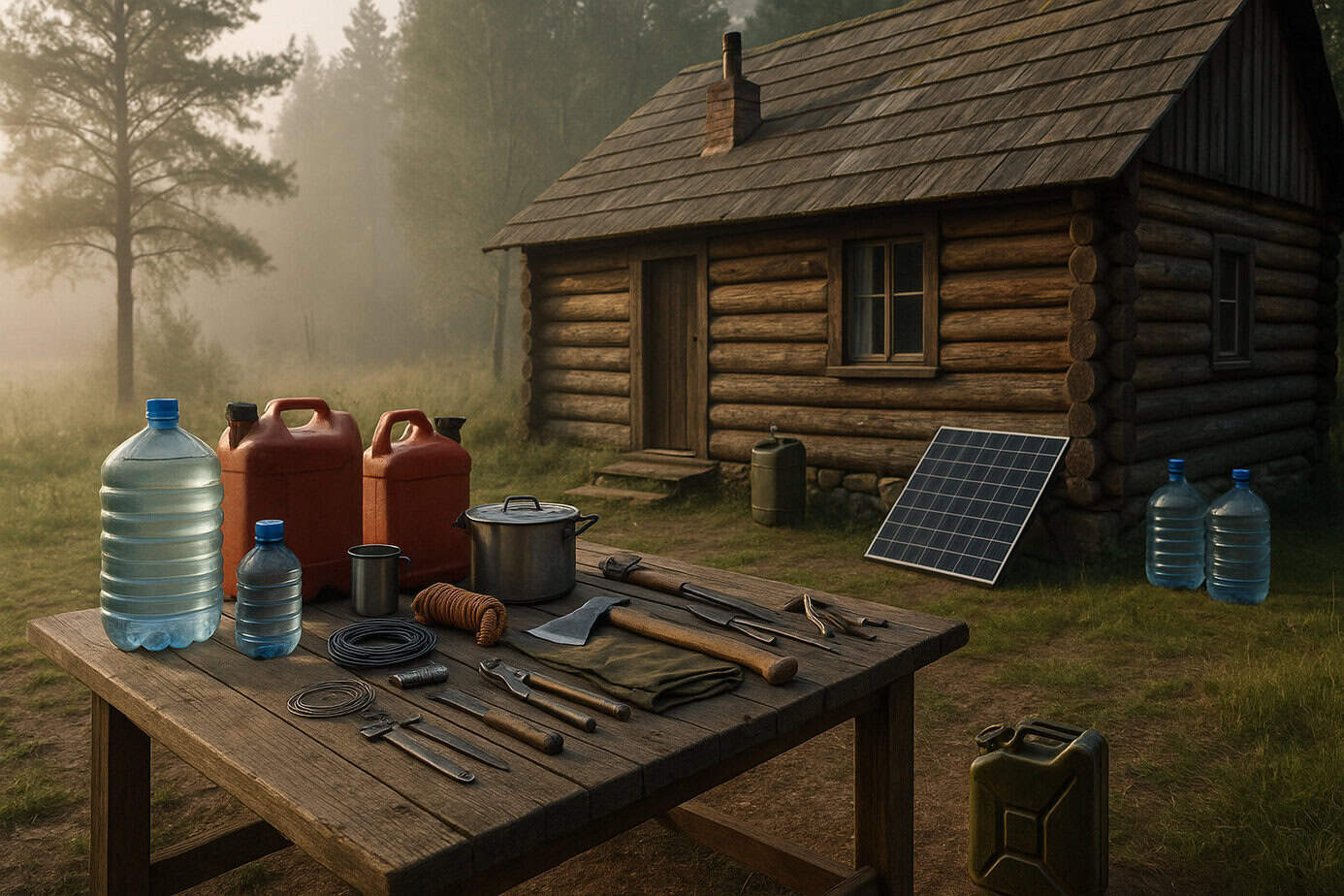
When disaster hits, you won’t rise to the level of your plan, you’ll fall to the level of what you forgot. That’s the cold truth no one likes to admit when they start building their bug out location.
We spend months fine-tuning the big stuff, the land, the shelter, the guns, the storage, but when the clock’s ticking and the world’s falling apart, it’s the small, overlooked gear that decides whether you make it through the first week.
When the Clock Runs Out: Why Your Bug Out Location Is Only as Strong as Its Weakest Item
The reality is, most preppers don’t fail because they’re lazy. They fail because they assume “I’ve got that covered.” That mindset is deadly and when you finally pull the trigger on a bug out, there’s no supply run, no quick Amazon order, and no neighbor to borrow from. That’s when every forgotten detail, the missing lighter, the cracked gasket, the extra filter you swore you packed, suddenly becomes a problem that can’t be fixed.
That’s why a real prepper’s insurance policy isn’t just land and ammo. It’s a bulletproof set of bug out location checklist items that have been tested, rotated, and refined through actual use. Think about it, the power goes out, roads are jammed, panic spreads, and you’re running purely on what you’ve already packed. That’s when every piece of overlooked gear starts screaming at you.
Maybe you remembered your rifle but forgot spare batteries for your optic. Maybe you’ve got five gallons of stored water but no purification tablets when it runs low. Maybe your first aid kit’s stocked but your prescription meds are sitting back at home. These aren’t rookie mistakes, they’re the same blind spots that even seasoned preppers make because they underestimate how fragile “ready” really is.
A lot of folks focus on the fantasy side of bugging out, the image of retreating to the woods and living free off the land. That’s fine for YouTube. In real life, bugging out is messy, exhausting, and fast-paced. If your gear isn’t tight, if your systems aren’t simple, and if your list isn’t double-checked, your “safe haven” can turn into a liability overnight.
And here’s the thing: your bug out location checklist items aren’t just about what’s inside your bins or shelves, they reflect your entire mindset. They’re a mirror showing how serious you actually are. A well-built list means you’ve stress-tested your setup under pressure, not just on paper.
So, before you read any further, ask yourself this: if you had to leave right now, no warning, no time to think, could you trust every piece of your bug out location gear to work as planned? If the answer’s “I think so,” then it’s time to tighten things up. Because when the grid goes down or chaos hits your street, hesitation costs more than gear ever will.
The Rule of Redundancy: Why One of Anything Is as Good as None
If there’s one law every seasoned prepper learns the hard way, it’s this: one is none, two is one. That saying exists because things fail, batteries die, blades snap, seals crack, and Murphy’s Law doesn’t take a day off. Yet you’d be surprised how many bug out locations are stocked like a department store shelf, one of each item, neatly lined up, as if the first week of chaos will politely respect inventory limits. That’s not survival, that’s fantasy.
When building your bug out location checklist items, redundancy isn’t a luxury, it’s the backbone of reliability. A second water filter isn’t overkill; it’s insurance against grit clogging your only one. Two lighters aren’t excessive; they’re peace of mind when the wind won’t cooperate. Redundant gear buys you breathing room when your luck runs out.
It’s not just about duplicates either, it’s about diverse redundancy. Don’t rely on three of the same tool; mix it up. A Bic lighter, a ferro rod, and stormproof matches cover you against different failures. That’s smart prepping, not stacking clones, but covering variables.
The same rule applies to communication, power, and defense. One radio? That’s none. One flashlight? Good luck when it flickers out. Even something as simple as having extra duct tape or a backup knife sheath can keep your setup functional when things go sideways. When you’re reviewing your bug out location checklist items, think like a pessimist. Assume everything will break, leak, or vanish when you need it most. Because the moment you depend on just one of anything, that’s the moment it fails.

Water: The Forgotten Weight in Every Prepper’s Plan
Water isn’t optional, it’s survival’s first currency. Yet, it’s the most underestimated category in nearly every prepper setup. Most people focus on food and fire, but when the taps run dry, nothing else matters. You can live weeks without eating, but try lasting more than three days without clean water and you’ll understand why this belongs at the top of your bug out location checklist items.
Here’s the problem: water looks simple on paper. A few barrels, maybe a filter or two, and you think you’re set. But water is heavy, awkward, and dirty once it sits. Plastic jugs leak, algae grows, seals fail and if you haven’t checked your containers in a while, odds are you’ve already got problems waiting to happen.
A real prepper plans in layers, stored water, renewable water, and portable purification. Start with durable containers: BPA-free barrels, stackable cubes, or even old-school metal drums if you can find them. Then add redundancy, filters like Sawyer or Katadyn, purification tablets for backup, and boiling as your last resort.
Don’t forget the overlooked tools: pre-filter screens, replacement gaskets, spare O-rings, and collapsible bladders for transport. Those are the quiet heroes of your system, small, cheap, and irreplaceable once the stores are gone.
And here’s the kicker, water needs rotation just like food. Every six months, refresh it, inspect your seals, and check for sediment or odor. If you wouldn’t drink it now, you won’t want it when it counts.
When building your bug out location checklist items, remember this: water isn’t just another line on the list, it’s your first line of defense against panic, dehydration, and bad decisions.
Fuel and Fire: The Cold Reality of Keeping Warm and Cooking Off-Grid
You can’t fake heat. When the temperature drops and the grid’s gone, you’ll find out fast whether your setup’s ready or if you just liked the idea of being ready. Fire isn’t romantic when you’re freezing, wet, and trying to light damp tinder with numb hands. That’s why fuel and fire prep aren’t just about comfort; they’re survival in its rawest form.
Most preppers underestimate how much fuel real off-grid living eats up. Propane tanks empty faster than you think. Wood piles shrink overnight. Gas goes bad if you ignore stabilizers. And when it comes to fire-starting tools, redundancy is everything. In your bug out location checklist items, you’d better have at least three ignition methods: lighters, ferro rods, and waterproof matches, all stored separately, all tested.
Backup fuel storage is another blind spot. If you’re using gasoline or diesel, stabilize it and rotate every few months. Propane tanks should be inspected for leaks and corrosion. For wood, make sure it’s seasoned, covered, and elevated off the ground, wet wood is just dead weight.
Then there’s cooking. Having a camp stove is good, but having multiple fuel options is better. Think dual-fuel stoves, solar ovens, even a basic rocket stove setup. When the propane runs dry, you’ll be glad you practiced with sticks and scrap wood.
Fire is life, but it’s also danger. Carbon monoxide, burns, flare-ups, they’re all real risks when you’re exhausted and desperate. Keep extinguishers, gloves, and ventilation gear listed among your bug out location checklist items. Because staying warm should never come at the cost of waking up dead.
Critical Bug Out Location Checklist Items for Food and Cooking Survival
Food isn’t just fuel, it’s morale. You can survive on calories alone, but without flavor, warmth, and routine, your head starts to crack long before your body gives out. That’s why food prep is more than stacking cans, it’s about making sure every part of the process, from storage to cooking, actually works when you need it most.
Start with the basics: shelf-stable foods that don’t require refrigeration, rice, beans, pasta, oats, canned meats, and freeze-dried meals. But here’s what most people forget when building their bug out location checklist items: it’s not what you store, it’s what you can prepare. You might have enough food for a year, but if you don’t have a manual can opener or a reliable way to cook, it’s worthless.
Cooking gear should be rugged and redundant. Cast iron cookware works on open flame or stovetop. A propane stove is convenient, but when that runs out, you’ll want a rocket stove or grill setup ready to go. Add utensils, cutting boards, and fire-safe pots, real tools, not flimsy camp junk.
Then come the small comforts: salt, spices, coffee, sugar, hot sauce, the little things that keep you human when everything else feels mechanical. Don’t underestimate morale because it’s as important as protein.
And don’t forget protection since your food supplies won’t be safe for long. Rodents and bugs love your food as much as you do. Store everything in airtight, rodent-proof containers and check for leaks or chew marks regularly.
When reviewing your bug out location checklist items, ask yourself this: could you cook three hot meals a day for two weeks straight without power? If not, it’s time to tighten the system before hunger does it for you.
Power and Communication: When Silence Becomes Dangerous
When the lights go out, it’s not the dark that kills you, but the silence. No power means no updates, no warnings, and no way to know what’s coming next. Most people think they’ll adapt fast, but when you lose the hum of electricity and the glow of screens, isolation hits harder than hunger. That’s why power and communication should be non-negotiable pillars in your bug out location checklist items.
First rule: don’t rely on a single source of power. Generators are great until they choke on bad fuel or run dry. Solar panels help, but only if you’ve tested them, cleaned them, and stored them properly. A balanced setup includes multiple layers, generator, solar, rechargeable batteries, and manual options like hand-crank chargers. Redundancy buys time; silence steals it.
Then there’s communication. You can’t count on cell towers when the grid collapses. You need analog tools that work when everything else quits, hand-crank radios, CBs, or HAM setups. Even a cheap Baofeng handheld, properly programmed and shielded, can be a lifeline. Store extra antennas, batteries, and cables in EMP-resistant bags, another must on your bug out location checklist items.
And don’t overlook the small stuff. Charging cables, adapters, power inverters, and spare fuses seem minor until you can’t recharge your lights or radio. Keep everything labeled, tested, and stored where it won’t corrode or freeze.
Power isn’t just convenience, it’s awareness and that’s what keeps you alive. When everyone else is in the dark, you’ll be the one hearing the world move. Because silence, when the world’s burning, is never a good sign.
Security Gear and Bug Out Location Checklist Items You’ll Kick Yourself for Forgetting
Security doesn’t start with firepower, it starts with awareness. A rifle’s useless if you don’t see trouble coming. Too many preppers think defense begins at the trigger, but it really begins with planning, placement, and the small, often-overlooked details that make an intruder think twice.
When you build your bug out location checklist items, don’t stop at locks and firearms. Think about layers since they provide distance, visibility, barriers, and alerts. Motion sensors, solar-powered floodlights, tripwire alarms, and simple bells on gates can buy you the seconds you need to react. Those seconds are worth more than ammo when someone’s already at your door.
Your perimeter should tell you a story before you even step outside. Is there a broken branch where there shouldn’t be? Fresh footprints in soft soil? A tripped wire? Security is as much about observation as it is about force. Even a dog’s behavior is intel if you know what to look for.
Inside, redundancy still matters. Keep spare batteries for optics, night vision, flashlights, and communication gear. A broken headlamp or dead optic in the middle of the night can turn confidence into panic. Add backup locks, heavy-duty hasps, and a few low-tech barriers, wire, chain, or even simple deterrents like thorn hedges.
And let’s be honest: no one likes to think about defending their property. But pretending it won’t be necessary is the biggest mistake of all. Security gear belongs on your bug out location checklist items not because it’s glamorous, but because fear is paralyzing and preparedness kills fear before it starts.
Health and Hygiene: The First Comforts to Disappear
Nobody likes to talk about hygiene when planning for collapse, but when it’s gone, you’ll miss it fast. You can go hungry, you can go cold, but when you can’t stay clean or treat a wound, things unravel quick. Infections, sickness, low morale, they all creep in when hygiene slips. That’s why health and sanitation should be near the top of your bug out location checklist items.
Start with medical gear. A solid first aid kit isn’t enough but it’s a good foundation. Add trauma supplies, extra gauze, antiseptic wipes, splints, and antibiotics if you can legally store them. Rotate prescription meds and over-the-counter essentials like painkillers, antihistamines, and anti-diarrheals. One untreated infection can end what you’ve built.
Then, hygiene. Trash bags, toilet paper, soap, toothbrushes, razors, feminine care, and water-efficient cleaning tools, these aren’t luxuries, they’re survival gear. When the plumbing stops, sanitation becomes life-or-death. Portable toilets, bleach, and baking soda belong in your bug out location checklist items right alongside your ammo and food.
Don’t forget morale. A clean body boosts mental clarity and confidence. Even something small like a washcloth bath or a few drops of essential oil, can make camp feel civilized when everything else feels like hell.
And plan for waste. Have a system for disposal: burnable, compostable, and contaminated. Disease spreads faster in filth than in firefights. Keep gloves, sanitizer, and spare liners handy.
Prepping for hygiene isn’t about comfort, it’s about control. When everything else collapses, cleanliness is proof that you’re still in charge. That mindset alone can keep you steady when the world stinks, literally and otherwise.

Tools, Repairs, and the “Fix It or Forget It” Factor
Stuff breaks and that’s not pessimism, it’s physics. Metal rusts, wood rots, seals dry out, and tools fail when you push them hard. Out in the field, there’s no warranty, no spare parts store, and no YouTube tutorial to bail you out. That’s why repair gear belongs high on your bug out location checklist items, because when your setup fails, you either fix it or you’re done.
Every prepper loves gear, but few think about maintenance. That shiny solar generator? Worthless if the fuse blows and you don’t have a spare. That sturdy knife? Useless once it’s dull and you’ve lost your sharpener. The best setups are built around self-sufficiency, the ability to keep things running long after replacements are gone.
Start with the basics: duct tape, paracord, wire, zip ties, nails, screws, and adhesives. Then go deeper and include a real tool kit: hammers, wrenches, pliers, saws, sharpening stones, and a sewing kit for fabric or tarp repairs. Hand tools win in a grid-down world because they don’t rely on power or fragile components.
And here’s what separates amateurs from the old hands, they practice repairs now. Replace a handle, patch a tarp, fix a leaking pipe. Build calluses while mistakes are still cheap. Skills last longer than gear.
When you review your bug out location checklist items, ask: can I repair what I depend on? Because everything from your roof to your rifle will eventually break. And when it does, it won’t wait for good timing.
In a collapse, broken things don’t get thrown away, they get fixed or they become dead weight. Choose which kind of prepper you’ll be before the choice is made for you.
Shelter Maintenance: The Slow Killer of Every Safe Haven
Shelters don’t collapse in one day and they rot, leak, and crumble piece by piece while no one’s paying attention. It’s the slow killer that sneaks up on every prepper who thinks “set it and forget it” is a survival strategy. When your bug out location turns into a damp, drafty wreck, no amount of food or firepower will make it livable. That’s why shelter care belongs front and center in your bug out location checklist items.
Start with structure. Check your rooflines, seams, and foundations regularly. A single leak can ruin supplies, weaken walls, and invite mold. Seal gaps with expanding foam, caulk, or tar as needed. Keep gutters clear, a clogged runoff turns every rainstorm into a structural test you’ll probably fail.
Next, control your climate because insulation isn’t just for comfort; it’s for survival. In winter, heat loss can drain fuel reserves fast. In summer, poor ventilation makes food spoil and tempers snap. Add thermal blankets, weather stripping, and backup heat sources to your bug out location checklist items, they’ll pay for themselves the first time the temperature swings twenty degrees overnight.
Then there’s pest control. Mice, ants, wasps, and snakes can destroy supplies and make life miserable. Store food in sealed containers, use traps, and walk your perimeter often. Don’t assume you’re alone just because you’re off the grid.
And never forget maintenance supplies: tarps, nails, sealant, replacement hinges, and spare screens. A bug out shelter isn’t a trophy, it’s a living system that needs care. Ignore it, and nature reclaims it fast. A safe haven isn’t what you build, it’s what you maintain. Prep like you plan to live there forever, because one day, you might have to.
The Human Factor: Mental Fatigue, Cabin Fever, and Trust Issues
Most preppers spend years building their gear piles and months stocking supplies, but barely an hour thinking about their headspace. Survival isn’t just about food and ammo. It’s about grit, patience, and trust, the human elements that decide who makes it and who cracks under pressure. That’s why psychological resilience belongs on your bug out location checklist items, even if you can’t pack it in a crate.
Isolation does strange things to people. When the routine vanishes and every day feels like the same fight for firewood, even the strongest minds start to slip. Cabin fever, paranoia, burnout, they hit quietly, and by the time you see them, they’re already wrecking morale. That’s why mental health gear matters just as much as physical prep. Books, cards, board games, even a notebook for journaling, they’re small, but they keep your brain moving when the world outside stands still.
Then there’s trust. If your bug out location includes others, family, friends, or a small group, conflicts are inevitable. Stress amplifies everything: bad moods, small mistakes, unspoken fears. That’s why part of your bug out location checklist items should be clear communication tools and simple group protocols. Decide who does what before chaos begins.
Don’t underestimate the morale factor either. A small comfort, good coffee, a clean shirt, music from a hand-crank radio, can snap you out of despair faster than any pep talk.
Survival is more mental than mechanical. You can patch a roof or fix a leak, but repairing trust or morale? That’s harder. So, pack for the body, but prepare for the mind because it’s what’ll keep everything else standing.
Final Reality Check: The Inventory Audit You Should’ve Done Yesterday
You can read every book, watch every prepper video, and fill every shelf, but if you don’t know exactly what you have, you’re gambling with your life. Prepping isn’t about how much gear you own; it’s about how ready that gear really is. The difference between confidence and chaos is one solid habit: the inventory audit. It’s the backbone of all your bug out location checklist items, the proof that you’re not just collecting, you’re preparing.
Here’s the truth: gear ages faster than you think. Batteries corrode, seals dry out, and food quietly expires in the back of a bin you haven’t opened since last year. A full audit isn’t exciting work, but it’s the kind that saves you when reality hits. Set a schedule, quarterly, semiannual, whatever you’ll actually follow, and check everything. Rotate food, test filters, fire up your generators, and make sure every lighter still sparks.
Label everything. Document your supplies, old-school notebook and you’ll catch shortages before they become emergencies. And here’s the brutal part: if something’s missing, broken, or outdated, don’t shrug it off. Fix it, replace it, or upgrade it now. Because when you’re forced to bug out for real, there’s no grace period.
The best preppers aren’t paranoid, they’re disciplined. They don’t just collect; they maintain, inspect, and adapt. That’s the mindset that separates survivors from statistics.
So, pull out your bug out location checklist items tonight. Go through it line by line. It’s tedious, sure, but it’s the kind of work that buys peace of mind when the sky goes dark and everyone else is panicking.
For your convenience I’ve provided a downloadable checklist in .PDF format. Hit the button bellow to download it, then print it and start checking the boxes.

🪶About the Author
Bob Rodgers is an lifelong outdoorsman, herbalist and seasoned prepper with over 20 years of real-world survival experience. As the founder of PreppersWill.com, he shares practical advice on self-reliance, off-grid living, and disaster preparedness, no hype, just hard-earned lessons from decades of hands-on prepping.
Suggested resources for preppers:
Why Mapping Bug Out Routes Is Vital
The #1 food of Americans during the Great Depression
How To Defend A Bug Out Location
If you see this plant when bugging out, don’t touch it!

i think that mental fatigue is going to be the downfall of many, that and the lack of clean water. many will just give up under austere conditions.