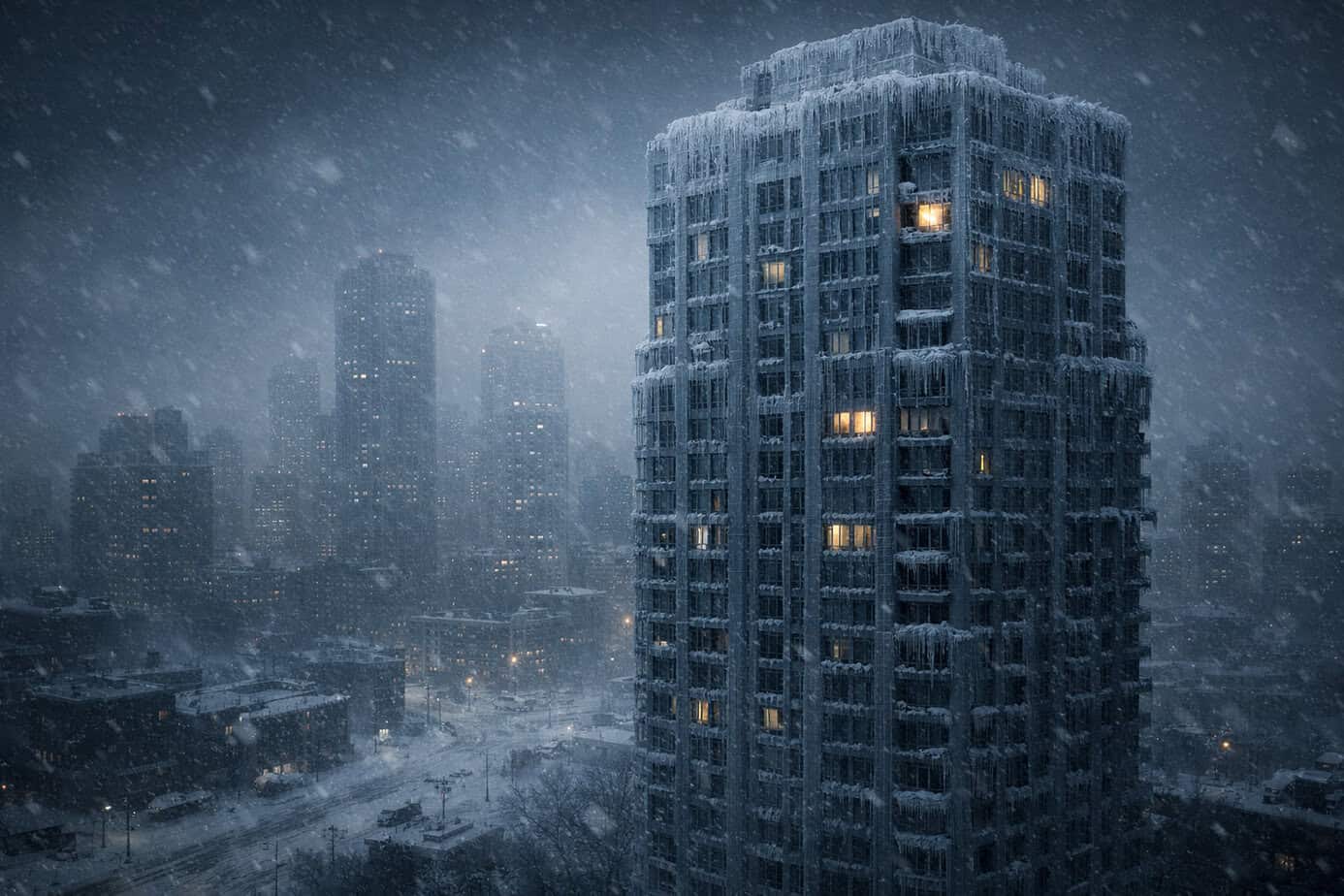
Most people assume cities are safer in winter. More buildings, more people and more services. All the conveniences you can think of in one place. Heat, power, water, and emergency response. It feels logical, but it’s also wrong.
Urban winter survival starts with understanding that cities don’t fail slowly in cold weather. They fail all at once.
Why Cities Become Cold Traps When Winter Hits
Urban life depends on shared systems, like shared power grids, heating infrastructure, water pressure and shared maintenance crews. When winter stress hits those systems, whether from extreme cold, ice storms, fuel shortages, or simple overload, the failure isn’t localized. It spreads across thousands or millions of people at the same time.
In rural areas, cold usually means inconvenience. In cities, cold becomes a bottleneck problem. Too many people drawing heat at once and too many buildings bleeding warmth through thin walls. Too many elevators, boilers, and substations relying on uninterrupted electricity. When one piece falters, everything downstream starts freezing.
Another problem is behavioral. City residents are trained to wait because someone will fix it. The landlord will handle it, the utility company will restore service and the city will open warming centers. That assumption works right up until it doesn’t. And when it breaks, it breaks during the coldest hours of the night, not conveniently at noon.
Winter exposes the illusion of redundancy in cities. There are backups on paper, but they’re shared too. When demand spikes everywhere at once, those backups don’t stretch far.
Cold doesn’t care how modern your building looks. It only cares about heat retention, calories, and time. Cities strip away personal control over all three. That’s why people freeze indoors, surrounded by concrete, neighbors, and infrastructure that was never designed to work without the grid.
This is the reality check most urban dwellers never get until winter makes it unavoidable.
If you live in a city apartment, your heat is probably not yours in any meaningful sense. Your water supply is shared, your electricity is shared, and your ability to stay warm in winter depends heavily on systems you do not control. Urban winter survival starts when you stop assuming those systems will always work when you need them most.
Most apartment buildings rely on centralized infrastructure that serves dozens or even hundreds of units at the same time. A single boiler often feeds an entire building, and when it fails, every unit begins losing heat together. Electrical rooms are shared across floors, which means a single outage can darken and chill an entire section of a building without warning. Water mains and risers serve whole stacks of apartments, so one frozen or burst pipe can shut off water access for everyone.
The real danger is not just failure, but timing. Utility crews are stretched thin during extreme cold events, especially when outages happen across an entire city. Repairs that might take a few hours in mild weather can stretch into days when temperatures stay below freezing. According to the U.S. Department of Energy’s winter preparedness guidance, extreme cold places unusual stress on power generation and distribution systems, increasing the likelihood of cascading failures that affect heating and water at the same time.
Another overlooked problem is human behavior inside shared systems. When temperatures drop suddenly, many residents turn thermostats up at the same time, which pushes aging boilers and electrical systems beyond their limits. One unit trying to stay warm harder can help trigger failure for the entire building. When heat goes out, frozen pipes often follow, and water shutoffs quickly make the situation worse.
This is why city winter emergencies escalate so fast. Heat loss leads to plumbing damage, plumbing damage leads to water loss, and water loss pushes people toward unsafe heating and cooking choices indoors. The systems fail first, but the real danger comes from how people respond once they realize they have no control.
Because you cannot fix a boiler or restore grid power yourself, your best defense is slowing heat loss inside your own space. Simple insulation measures can buy critical time when shared utilities fail. Heavy thermal curtains, can reduce heat loss through windows and help stabilize indoor temperatures during outages.
Understanding shared utilities is not about fear. It is about accepting dependency and planning around it before winter exposes how fragile city systems really are.
Thin Walls, Drafty Units, and the Myth of “Modern” Apartments
Many people assume newer city apartments are automatically safer in winter because they look modern and feel well sealed. That assumption gets people in trouble fast. Urban winter survival is not about how new a building looks, but about how well it holds heat when the systems feeding it stop working.
City apartments, especially newer construction, are often built for efficiency on paper rather than resilience in reality. Thin walls, lightweight materials, and cost-cutting insulation choices all allow heat to escape quickly once indoor temperatures start dropping. These buildings rely on constant heat input to stay comfortable, which works fine right up until the power or boiler shuts down.
Older buildings have their own problems, but they often contain heavier materials like brick, plaster, and masonry that retain heat longer. Many newer units cool down faster because there is less thermal mass to slow the temperature drop. When outside temperatures fall into the teens or lower, indoor temperatures can follow surprisingly fast.
Windows are another weak point that city residents underestimate. Large panes, sliding glass doors, and poorly sealed frames bleed warmth continuously during cold weather. Even double-pane windows lose effectiveness when wind chill and prolonged cold set in. Adding insulation to windows is one of the few improvements renters can make without tools or permanent changes. Simple window insulation film kits, like the widely used shrink-wrap style kits available on Amazon, can dramatically reduce drafts when applied correctly and removed cleanly after winter.
Drafts also come from places most people never check. Electrical outlets on exterior walls, gaps under doors, bathroom vents, and kitchen exhausts all allow cold air to seep in. When the heat is running, you barely notice. When it stops, those small leaks become constant drains on your body heat and calorie reserves.
The myth of the modern apartment is comfort without effort. Winter strips that myth away and your survival depends on how well you can slow heat loss, not how nice the unit looked when you signed the lease.
When the Power Goes Out in Winter and No One Has Answers
The moment power goes out during winter, the clock starts ticking in a city apartment. Heat systems shut down, elevators stop moving, and communication becomes unreliable faster than most people expect. Urban winter survival during a blackout is not about comfort, but about how quickly your indoor environment begins to work against you.
In cold weather, indoor temperatures can drop several degrees per hour once heat is lost, especially in apartments with exterior-facing walls. Refrigerators stop cycling, sump pumps fail, and building-wide boilers often rely on electricity even if they burn gas. What feels like a temporary inconvenience during the first hour can become a serious cold exposure risk by the second night.
One of the biggest mistakes people make is assuming outages will be brief. In winter, restoration times stretch because ice, wind, and snow slow repair crews and damage equipment across large areas. The Federal Emergency Management Agency warns that winter power outages frequently last longer than expected and often coincide with dangerous indoor cold exposure, particularly for apartment residents who lack alternative heat sources.
As temperatures fall, people start making dangerous adjustments. They cluster into smaller rooms, block vents incorrectly, or attempt to use unsafe heat sources indoors. At the same time, lighting becomes an issue, which increases the risk of falls, fires, and poor decision-making. Reliable, low-heat lighting becomes more important than most people realize. A simple rechargeable LED lantern, provides light without adding fire risk or draining batteries quickly.
Another overlooked issue during winter outages is information loss. Without power, internet routers die, phones drain faster in cold conditions, and updates become harder to access. People waste energy and time waiting for instructions that never come, instead of adapting early.
When the grid goes down in winter, clarity matters more than optimism. The faster you accept that help may be delayed, the faster you shift into survival mode instead of waiting mode.

Urban Winter Survival and the Deadly Mistakes People Make for Heat
When cold settles into an apartment, people start improvising, and that is where urban winter survival turns dangerous fast. The instinct to create heat overrides caution, especially when indoor temperatures drop and children or elderly residents are involved. Unfortunately, many of the most common heat fixes used in cities are also the most lethal.
Candles are one of the first things people reach for, because they feel harmless and familiar. A single candle produces very little heat, but several clustered together create open flame in enclosed spaces with limited airflow. Fires started by candles during winter outages kill far more people than hypothermia inside homes. The same logic applies to improvised oil lamps and decorative burners that were never designed for emergency heating.
Portable propane heaters and charcoal grills are even worse indoors. These devices consume oxygen and release carbon monoxide, which builds up silently in apartments with closed windows and sealed doors. Many victims never realize what is happening because carbon monoxide poisoning causes confusion, fatigue, and sleepiness before loss of consciousness. People often think they are just tired or cold until it is too late.
Space heaters deserve special mention, because they are widely marketed as safe. In reality, many apartment fires start when space heaters are placed too close to furniture, bedding, or curtains. During blackouts, some residents attempt to run electric heaters on generators or overloaded extension cords, which creates serious fire risk inside dense buildings. If you rely on electric heat at all, modern oil-filled radiators with tip-over protection, are among the safer options when power is available.
The pattern is always the same. Cold pushes people toward flame, flame leads to fire or gas buildup, and the confined nature of apartments turns small mistakes into fatal ones. Surviving winter in the city means resisting the urge to create heat at any cost and focusing instead on retaining the heat you already have.
Hypothermia Indoors: How People Freeze Without Snow or Wind
Most people picture hypothermia as something that happens outside during blizzards or mountain storms. In reality, urban winter survival often fails quietly indoors, where people underestimate how cold a building can become without heat. Apartments cool slowly enough that danger feels distant, even as the body begins losing heat faster than it can generate it.
Hypothermia begins when core body temperature drops below normal, and this can happen inside homes when indoor temperatures fall into the low sixties or below for extended periods. Elderly residents, young children, and anyone with limited mobility are especially vulnerable, but healthy adults are not immune. Cold exposure indoors is dangerous because it dulls judgment, slows movement, and reduces the urge to take corrective action.
According to the Centers for Disease Control and Prevention, many cold-related deaths occur inside homes during winter power outages, particularly in residences without adequate heating or insulation. The CDC notes that early symptoms of hypothermia include uncontrollable shivering, confusion, slurred speech, and fatigue, which often cause people to misjudge their own condition and delay response.
One reason indoor hypothermia is so dangerous is that people try to conserve energy by staying still. Movement feels uncomfortable in the cold, but inactivity accelerates heat loss by reducing circulation. Layering correctly matters more than most people realize. Clothing that traps air and manages moisture keeps body heat from bleeding away through skin contact with cold surfaces. Thermal base layers help maintain core warmth when apartments lose heat.
Another overlooked factor is dehydration. Cold air is dry, and people drink less water when they are not sweating, which reduces circulation and makes hypothermia worse. Combined with low calorie intake, dehydration speeds up heat loss and fatigue.
Freezing indoors is not dramatic or loud. It is slow, quiet, and deceptive, which is why recognizing the signs early is critical for surviving winter in a city environment.
Staying Warm Without Firewood: Urban-Legal Heat Reality
When heat fails in a city apartment, the problem is not a lack of cold weather knowledge but a lack of legal options. Urban winter survival in dense housing means working within fire codes, lease agreements, and physical space limits while still keeping your body temperature stable. Firewood, stoves, and open flames are simply not realistic for most urban residents.
The most reliable heat source you control is your own body. That sounds simplistic, but it is the foundation of every safe indoor survival strategy. Heat retention becomes more important than heat generation when fire is not an option. Layering clothing correctly traps warm air close to your skin and slows heat loss through convection and conduction.
Room selection matters more than people think. Smaller rooms are easier to keep warm, especially those without exterior walls or large windows. Closing doors, sealing drafts, and concentrating activity into one living space reduces the volume of air your body needs to heat. Floor insulation also plays a major role, because cold rises from uninsulated surfaces and drains warmth continuously.
Sleeping arrangements are critical during cold nights. Many people underestimate how much heat they lose while resting. A quality cold-weather sleeping bag rated for low temperatures can be used indoors to retain body heat safely without relying on electricity or flame. Compact sleeping bags designed for emergency or winter use fit well in apartments and store easily when not needed.
Humidity control also affects warmth. Dry air makes cold feel sharper and increases heat loss from skin and lungs. While you should avoid unsafe moisture sources, simply boiling water when power is available or clustering breathing spaces can slightly improve perceived warmth.
Urban winter warmth is about discipline, not comfort. The people who survive are the ones who slow heat loss, reduce exposed space, and work with the limits of city living instead of fighting them.
Water, Pipes, and Why Winter Infrastructure Fails Fast in Cities
Most people think about heat first during winter emergencies, but water loss often becomes the real crisis. Urban winter survival depends just as much on plumbing as it does on temperature, because cities move water through long, exposed systems that do not tolerate freezing well. When pipes fail in cold weather, the impact spreads quickly and unpredictably.
City plumbing relies on constant pressure and flow to prevent freezing. When power outages shut down pumps or when buildings lose heat, pipes begin to freeze from the inside out. A single frozen section can burst, flooding units below and forcing entire buildings to shut off water to prevent further damage. Once water is shut off, toilets stop flushing, faucets run dry, and basic hygiene becomes a challenge.
Municipal systems are not immune either. Water mains can freeze or rupture during prolonged cold, especially when demand spikes and temperatures stay low for days. According to the Environmental Protection Agency, winter weather increases the risk of drinking water disruptions due to frozen pipes, power outages at treatment facilities, and infrastructure stress across distribution networks.
The danger compounds because people are rarely prepared for water loss in winter. Snow is not a reliable substitute, and melting it safely requires heat and clean containers. Dehydration becomes a hidden problem, because cold suppresses thirst while increasing fluid loss through respiration. Lack of water also limits food preparation, sanitation, and the ability to stay warm through proper hydration.
One of the simplest defenses is storing potable water before winter emergencies hit. Stackable water containers designed for indoor storage make it possible to keep several days of water without taking up much space. Compact water storage containers like these BPA-free jugs commonly used for apartment emergency prep can be tucked into closets or under beds until needed.
Frozen pipes and water loss do not announce themselves politely. They happen overnight, often during the coldest stretch of an outage. Treating water as a primary survival concern, not an afterthought, is one of the most important shifts urban residents can make before winter turns systems against them.
Calories, Cold, and Why Winter Hunger Hits City Dwellers First
Cold changes how the body uses energy, and many people underestimate how fast calories disappear in low temperatures. Urban winter survival depends on maintaining body heat, and that process burns fuel constantly, even when you are resting indoors. When food intake drops, staying warm becomes harder with each passing hour.
In winter emergencies, grocery stores empty quickly, delivery services stop, and restaurants close without notice. City dwellers are used to just-in-time food access, which works fine until snow, ice, or power outages break the system. When shelves are bare, people realize too late that they have very little stored energy available in their own homes.
Calorie needs increase in cold conditions because the body works harder to maintain core temperature. Shivering alone can double or triple energy expenditure, and layered clothing does not eliminate that demand. Dieting, skipping meals, or relying on low-calorie foods during winter emergencies accelerates fatigue and cold sensitivity.
The type of food you have matters as much as the amount. Fats and carbohydrates provide faster and longer-lasting energy than protein alone. Shelf-stable foods that require little or no cooking become especially valuable when power or gas service is disrupted. High-calorie emergency food bars dense energy without refrigeration or preparation.
Hunger in winter is quiet. It shows up as weakness, poor judgment, irritability, and increased sensitivity to cold. People often misinterpret these signs as stress or fatigue, rather than fuel depletion. In cities, where physical movement is limited and heating options are constrained, calories become one of the few resources you can fully control.
Staying warm without enough food is nearly impossible. Urban winter survival requires treating calories as heat, not comfort, and planning food storage accordingly before winter exposes the gap.
Urban Winter Survival in High-Rises vs Ground-Level Units
Not all city apartments fail the same way in winter, and elevation changes the risk profile more than most people expect. Urban winter survival looks very different on the twentieth floor than it does in a ground-level unit, especially when power and heat systems stop working.
High-rise residents face immediate mobility problems during winter outages. Elevators shut down, stairwells become cold air channels, and carrying water, food, or supplies turns into a physically demanding task. Cold air sinks through stairwells, making upper floors colder over time, while wind exposure increases heat loss through exterior walls. Emergency services also reach upper floors more slowly during storms, especially when streets are blocked or building systems fail.
Ground-level units avoid some mobility issues, but they face their own set of problems. These apartments are more vulnerable to flooding from burst pipes, snowmelt, and blocked drains. Cold seeps in through foundations, basements, and poorly insulated floors, making it harder to retain heat. Ground units are also more exposed to drafts from entryways and shared corridors that open frequently during emergencies.
Building design amplifies these differences. According to this guidance from the National Fire Protection Association, high-rise buildings present unique challenges during winter emergencies because of evacuation limits, reliance on powered systems, and increased fire risk when residents improvise heating. Their recommendations emphasize preparation that accounts for building height and access limitations rather than assuming uniform safety across all units.
Sleeping and resting arrangements should adapt to your elevation. High-rise residents benefit from consolidating supplies into one room to reduce movement and heat loss. Ground-level residents should focus on insulating floors and sealing drafts aggressively. Insulated foam sleeping pads, like these compact closed-cell pads commonly used for cold-weather camping, work just as well indoors by reducing conductive heat loss to cold floors.
The mistake many city residents make is assuming that all apartments behave the same in winter. Height, exposure, and access change everything. Urban winter survival improves when you prepare for how your specific unit fails, not how you wish it would perform.
What to Prep for Urban Winter Survival in Small Apartments
Space is the main limitation that stops city residents from preparing for winter emergencies. Closets are small, storage is limited, and many people assume serious preparation requires a garage or basement. Urban winter survival in an apartment is not about stockpiling massive quantities of gear, but about choosing items that do multiple jobs without taking over your living space.
Clothing is the first and most important layer of preparation. Extra cold-weather layers store easily and provide immediate protection when heat fails. Blankets, hats, gloves, and socks take up little room but dramatically reduce heat loss. The goal is not comfort, but maintaining core temperature when indoor heat disappears.
Water and food should be compact and accessible. A few days of shelf-stable calories and stored water can fit under beds or on closet floors without being visible. Items that require no cooking or minimal preparation become especially valuable when utilities fail. Organization matters, because digging through clutter wastes energy and time in the cold.
Lighting and communication are often overlooked. Headlamps and lanterns allow hands-free movement in dark apartments, which reduces accident risk during outages. Battery management becomes critical in winter, because cold drains power faster than most people expect. A compact power bank designed for emergency use can keep phones and small devices running long enough to receive updates or call for help. Portable battery packs like this high-capacity model from Jackery commonly used for blackout preparedness store easily and provide multiple recharges when the grid is down.
Prep placement matters as much as prep quantity. Supplies should be distributed so that a single leak, flood, or collapsed shelf does not destroy everything. Keeping essentials in more than one location within the apartment reduces risk and improves access.
Urban winter survival is about quiet readiness. When space is limited, every item should earn its place by solving more than one problem without creating new ones.
The Hard Truth About Urban Winter Survival
 The hardest part of urban winter survival is accepting that cities do not protect individuals during prolonged winter emergencies. Systems are designed for efficiency, not resilience, and personal comfort disappears the moment those systems fail. When heat, power, or water go down, responsibility shifts immediately to the individual, whether they are ready for it or not.
Cities create a false sense of security because help is usually nearby. Police, fire departments, utilities, and emergency services are visible parts of daily life, which trains people to expect intervention. Winter emergencies break that expectation by overwhelming every service at the same time. Response times stretch, resources thin out, and officials focus on life-threatening situations first, not comfort or convenience.
Federal emergency guidance makes this clear, even if it is rarely emphasized. The Department of Homeland Security advises that individuals should be prepared to be self-sufficient for several days during winter emergencies, especially during widespread power outages and severe cold events. Their preparedness guidance highlights that assistance may be delayed or unavailable when infrastructure is stressed by extreme weather.
The people who survive winter emergencies in cities are not the ones with the nicest apartments or the newest buildings. They are the ones who understand how quickly warmth, water, and calories disappear when systems fail. They prepare quietly, without drama, and they adjust early instead of waiting for instructions that may never come.
Urban winter survival is not about fear or paranoia. It is about realism. Cold does not care where you live, how modern your building looks, or how close help usually feels. Preparation turns winter from a threat into a problem you already know how to manage.
Author Bio
Bob Rodgers is a lifelong outdoorsman, herbalist, and seasoned prepper with over 20 years of real-world survival experience. As the founder of PreppersWill.com, he shares practical advice on self-reliance, off-grid living, and disaster preparedness. No hype, just hard-earned lessons from decades of hands-on prepping.
Other resources:
What you should know about survival foods with decades of shelf life
The Foods that helped the pioneers survive crop failures and hard times
Survival Foods of the Native Americans
If you plan to build a storage room and equip it with everything needed > Start Here!
