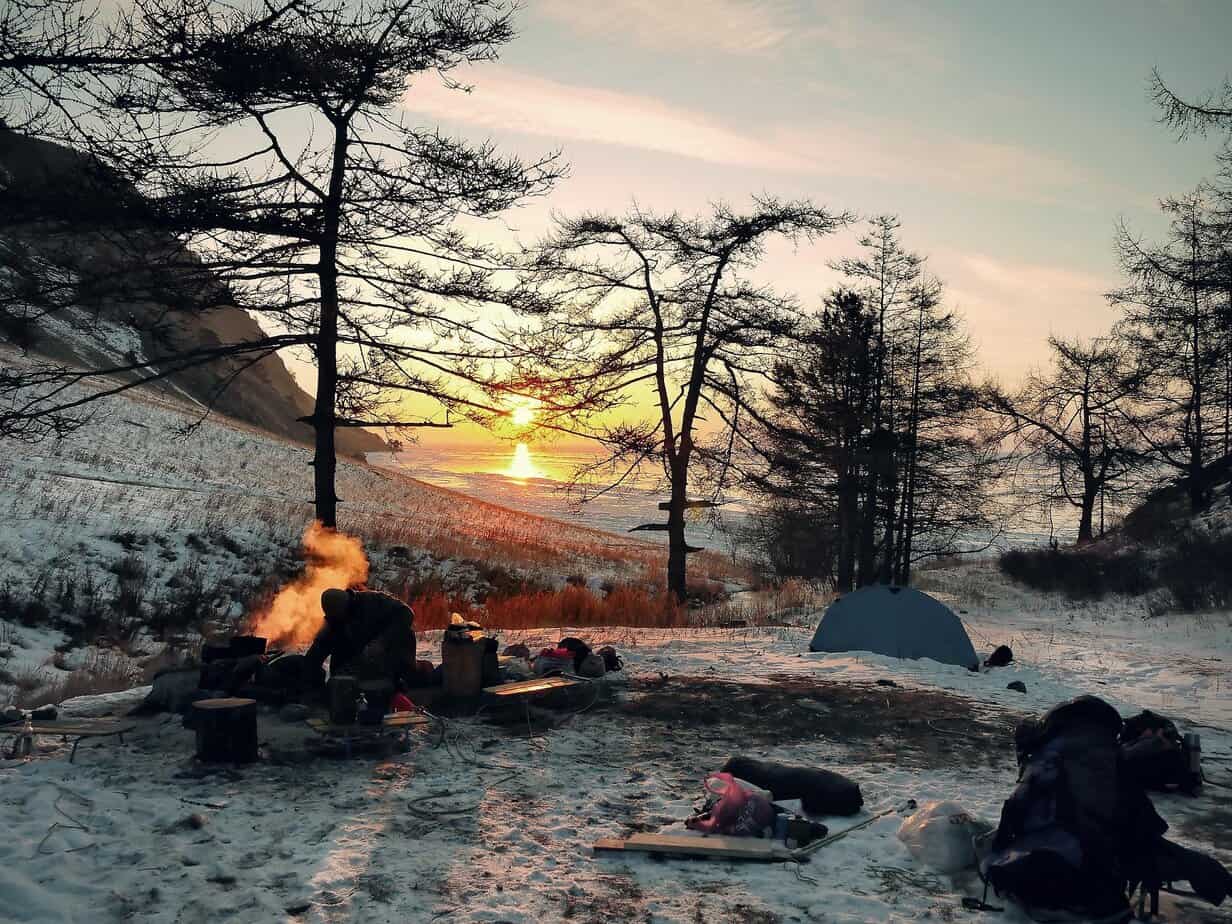
Here’s the lie that gets people killed: “Cold weather is dangerous, but I’m experienced.” That mindset is where most winter disasters start.
The truth is ugly and winter camping dangers don’t usually pick off first-timers first. They nail confident intermediates. The folks who’ve slept outside in October, done a couple snowy weekends, and now think they’ve got winter “handled.” That confidence lowers caution without you noticing. Shortcuts creep in. “We’ll eat later.” “It’s not that windy.” “We don’t need to stop yet.”
That’s how winter wins.
And cold doesn’t behave like heat, slapping you with pain and urgency. It drains you and it dulls your thinking, ultimately making bad choices feel reasonable. The National Park Service’s winter weather guidance is blunt about cold-related illness risk and the need to recognize and respond before you’re in trouble.
A lot of people think gear alone solves winter risk. And for them a beefy four-season tent, a premium sleeping bag, “real” boots, feels like insurance. It isn’t because gear buys margin, not immunity. If you mismanage moisture, calories, or timing, expensive equipment just slows the clock. This is why experienced campers still die with decent gear on them.
And here’s a small, common setup that turns deadly: you bring a reliable cold-weather stove, but you delay using it because you “don’t feel that bad yet.” Meanwhile you’re burning fuel just staying warm, sweating under layers, and sipping
Hypothermia Isn’t Fast or Peaceful, It’s Slow and Stupid
Most people picture hypothermia as collapsing dramatically into the snow, teeth chattering, speech slurred, lights out. That version is comforting because it feels obvious, but real hypothermia is neither fast nor obvious. It’s slow, boring, and fueled by denial. This is where winter camping kills experienced people.
Hypothermia usually starts hours before anyone notices. You’re still walking, still setting camp, still cracking jokes. You’re just colder than you should be, a little clumsy and perhaps a little quiet. You fumble with zippers and you stop caring about small details. That’s the danger zone.
According to the CDC’s cold stress guidance, hypothermia often develops when people underestimate wetness, wind, and fatigue, not just low temperatures. This is why winter camping dangers related to hypothermia rarely look dramatic and almost always look preventable in hindsight.
What makes hypothermia deadly is that it sabotages the very thing you need to fix it: judgment. As your core temperature drops, your brain becomes convinced everything is fine. You delay stopping and you delay eating. You delay changing wet layers and you delay building shelter. Every delay makes the next decision worse.
And no, shivering is not a reliable warning sign. By the time violent shivering stops, you’re already in serious trouble.
One of the most common mistakes intermediate winter campers make is trusting their sleeping bag to “fix” hypothermia overnight. It won’t because sleeping bags don’t generate heat. They trap what you already have. If you crawl in cold, underfed, and damp, you’re just slowing heat loss while your core keeps dropping.
This is why small, unsexy gear choices matter more than marketing specs. For example, a lightweight closed-cell foam sleeping pad stacked under an inflatable pad can be the difference between stabilizing and spiraling. People obsess over bag ratings and ignore ground insulation. They aren’t glamorous, but they’re effective, and they work even when inflatables fail or lose R-value in extreme cold.
Here’s the blunt truth: most hypothermia deaths aren’t caused by extreme cold. They’re caused by poor timing. People wait too long to stop and too long to eat. They wait too long to change clothes and way too long to admit something’s wrong. Winter doesn’t usually overpower you. It waits for you to make enough small, dumb decisions that recovery is no longer possible.
Carbon Monoxide: The Silent Killer of Winter Camps
If hypothermia is slow and stupid, carbon monoxide is fast and unforgiving. It doesn’t care how experienced you are, how tough you feel, or how cold it is outside. It just shuts you off. This is one of the most lethal winter camping dangers because it feels like a smart decision at first.
You’re cold. The wind is ripping and you want to warm the tent before sleep. Maybe you’re running a stove inside the vestibule “just for a minute,” or a propane heater with the door cracked. You’ve done it before and nothing bad happened last time. That’s how carbon monoxide deaths start.
Carbon monoxide is colorless, odorless, and invisible. You don’t feel it coming and you don’t smell danger. You just get sleepy, a headache, followed by dizziness and confusion. Then you stop waking up. The Centers for Disease Control and Prevention states clearly that fuel-burning devices used in enclosed or poorly ventilated spaces are a leading cause of CO poisoning, especially in cold weather.
Tents are not ventilated spaces and snow caves are worse. Vehicles, ice fishing shelters, and enclosed tarps are worse still. Even cracking a zipper or vent does not make it safe. In calm winter air, exhaust gases linger instead of dispersing.
This is where people misunderstand risk and they assume danger only exists if the stove is running all night. In reality, short exposure in a confined space can be enough to knock you unconscious. Once that happens, it’s over because you won’t be able to “notice” and fix it.
A simple piece of gear dramatically changes the odds here: a battery-powered carbon monoxide detector designed for RVs or cabins. It’s one of the few winter items that actively warns you before you lose the ability to save yourself. These aren’t heavy, they aren’t expensive, and they don’t care how experienced you are.
This isn’t paranoia, but rather pattern recognition. Search-and-rescue reports are full of cases where campers were found peacefully positioned, with stoves nearby, no signs of struggle. That’s carbon monoxide doing exactly what it does.
Here’s the hard rule experienced winter campers follow: no open flame, no fuel-burning device inside an enclosed shelter, ever. Not to warm up and not to dry gloves. Not to “just take the edge off.” If it burns fuel, it stays outside, period.
Cold can be managed but carbon monoxide can’t be negotiated with. It doesn’t give second chances, and it doesn’t care how prepared you think you are.

Winter Camping Dangers Nobody Trains For: Dehydration and Calorie Collapse
Ask most winter campers what kills people, and they’ll say hypothermia. Ask search-and-rescue teams quietly, and you’ll hear a different answer: people run out of energy before they realize it. Dehydration and calorie collapse don’t feel dangerous and that’s why they’re deadly.
Cold suppresses thirst and because you’re not sweating like summer, you stop drinking. Melting snow feels like a chore, so you ration water without admitting it. At the same time, your body is burning calories just to stay warm. Add movement, wind, and stress, and you’re burning through energy at a rate most people underestimate.
The U.S. Forest Service has repeatedly warned that cold-weather dehydration is common and dangerous because it accelerates fatigue, confusion, and hypothermia risk.
Here’s how this actually kills people. You get a little behind on fluids, then a little behind on food. That leads to fatigue and fatigue leads to sloppy movement and poor decisions. Poor decisions lead to exposure, falls, and delayed shelter. Hypothermia isn’t the first domino. It’s the last one.
A lot of intermediate campers think they’re “eating enough” because they brought plenty of food. But cold-weather nutrition isn’t about volume, it’s about calorie density and timing. Waiting until camp to eat a big meal is a mistake. By then, the deficit is already baked in.
This is where boring gear quietly saves lives. An insulated wide-mouth bottle keeps water from freezing and makes drinking less of a hassle, which means you actually do it. Something like a double-wall stainless insulated bottle is worth the weight because it removes friction from hydration.
The same applies to calories and easy-access fats and carbs matter more than elaborate meals. If food is buried deep in your pack or requires a full stop to prepare, you’ll eat less than you need. That’s how energy debt sneaks up.
Winter camping dangers don’t always show up as emergencies. Sometimes they look like “I’m just tired” or “I’ll deal with that later.” In winter, later is often too late. People don’t freeze because they forgot how cold it is. They freeze because they forgot to drink, forgot to eat, and forgot that winter demands constant fuel.
Fire Kills More Winter Campers Than Freezing
Fire feels like the solution to winter and that’s exactly why it becomes a problem.
When people imagine winter camping deaths, they picture frostbite and snowstorms. What they don’t picture are burn injuries, tent fires, and stove flare-ups, even though those incidents happen with disturbing regularity. Fire spreads faster in winter shelters, and the consequences are harsher. This is one of those winter camping dangers that feels controllable right up until the moment it isn’t.
Synthetic tents burn hot and fast. Cold, numb hands knock over stoves and fatigue leads to sloppy setups. One bad move and you’re not “cold” anymore, you’re on fire in an environment where escape is slow and medical help is far away.
The U.S. Fire Administration has documented that portable heating and cooking equipment are major contributors to cold-season fire injuries and deaths, especially in temporary or improvised shelters:
This is where winter compounds mistakes. Gloves reduce dexterity and headlamps distort depth perception. Wind pushes flames unpredictably, and because everything around you is flammable, a small mistake becomes catastrophic in seconds.
One overlooked risk is refueling stoves in the cold. Spilled fuel doesn’t evaporate quickly in winter and it pools. It soaks into gloves, snow, and tent floors. Then one spark turns the whole area into a flash fire. People don’t expect it because it doesn’t happen in summer.
A simple preventative measure is carrying a stable, low-profile stove base or heat-resistant mat that creates a defined, non-flammable cooking zone. It’s not glamorous, but it reduces tip-overs and keeps fuel away from fabric.
Fire also creates panic, and panic kills. People tear open tents, run barefoot into snow, and lose critical gear in seconds. Even if you survive the flames, you may be left exposed without shelter in subfreezing conditions.
Here’s the blunt rule: fire should never feel casual in winter. Every flame deserves respect. Cook deliberately and refuel away from shelters. Assume numb hands will betray you, because eventually, they will.
Sleep Systems Failures That Turn Cold Nights Fatal
Most people who get into trouble didn’t fail during the day. They failed when they stopped moving and trusted their sleep system to fix everything. This is where a lot of winter deaths happen, not because conditions were extreme, but because the setup was wrong.
The biggest mistake is believing that a warm-rated sleeping bag guarantees survival. It doesn’t because sleep systems work as a system, and when one part fails, the whole thing collapses.
Moisture is the main killer here. Sweat trapped in base layers, damp socks, breath freezing inside the bag. That moisture slowly strips insulation value and by midnight, the bag that felt fine at 9 p.m. is no longer keeping up. People wake up cold, assume it’s normal, and try to ride it out, but that’s the point of no return.
Another common failure is ground insulation. Cold doesn’t just come from the air, it comes from below. Snow and frozen ground suck heat relentlessly. Campers obsess over sleeping bag ratings and ignore pad R-values, then wonder why they’re cold all night.
Clothing mistakes compound the problem. Sleeping in the same damp layers you wore all day feels efficient but it isn’t. Dry sleep layers are non-negotiable because the body needs dry insulation to recover heat debt. If you skip that step, your core temperature continues to drop all night.
Here’s the hard truth: most people don’t freeze to death while walking. They freeze while lying still, hoping morning comes soon. Sleep systems don’t fail dramatically and they fail gradually, and by the time you realize it, getting up to fix it feels impossible.
Weather Turns Ordinary Mistakes Into Death Traps
Most winter deaths don’t happen during epic blizzards. They happen during “manageable” weather that lulls people into pushing a little farther than they should.
Wind is the quiet multiplier. A mild temperature on paper becomes dangerous when wind strips heat faster than your body can replace it. Add poor visibility, flat light, or blowing snow, and suddenly navigation errors stack up. You miss a turn. You overshoot camp. You burn energy backtracking.
This is where winter camping dangers stop being about survival skills and start being about timing. One more mile, one more ridge and one more hour of daylight that doesn’t actually exist. Those decisions feel small, but in winter, they’re lethal.
Whiteouts are especially dangerous because they erase reference points. Depth perception collapses and terrain flattens visually. People walk past obvious landmarks and don’t realize it until they’re exhausted and disoriented. At that point, stopping feels scarier than moving, even when stopping is the correct call.
A basic navigational backup becomes critical here. Phones die fast in cold, and touchscreens don’t work with gloves. A simple, liquid-filled baseplate compass weighs almost nothing and still works when electronics don’t. This is the kind of redundancy that prevents a small navigation error from turning fatal.
Weather doesn’t need to be extreme to kill you. It just needs to push you slightly off plan when you’re already tired, slightly dehydrated, and slightly behind schedule. Winter turns ordinary mistakes into traps because it narrows your margin for correction. Once you’re off pace, cold makes recovery slower, harder, and less likely.
Winter Camping Dangers Related to Exhaustion and Bad Decisions
Winter doesn’t usually overpower people physically. It wears them down until they start making choices they would never make on a warm day.
Exhaustion in cold weather isn’t just about sore muscles. It’s metabolic, neurological, and emotional. You burn more energy, sleep worse, and recover slower. As fatigue builds, your brain shifts into conservation mode. Decision-making narrows. You stop evaluating options and start defaulting to whatever feels easiest.
This is where ego sneaks in and you ignore early warning signs because admitting them means changing plans. You don’t want to be the one who says, “We need to stop” and you don’t want to turn around. So, you push through while your decision-making ability quietly collapses.
A classic winter failure pattern looks like this: you skip a break because you’re cold, which makes you more tired. Being tired makes you colder and being colder makes you rush. Rushing leads to mistakes and mistakes demand more energy to fix. The spiral tightens.
One of the simplest tools to interrupt this cycle is forced pacing. Something as basic as a wristwatch with a timer or alarm lets you schedule food, water, and layer checks before your judgment degrades. You don’t wait until you feel bad. You act because the timer says it’s time. Even a cheap digital watch can save your life this way.
This isn’t about weakness, but rather about physiology. Cold stress narrows your mental bandwidth and when that happens, systems and habits matter more than motivation. Winter camping dangers often don’t look dramatic. They look like quiet stubbornness combined with growing fatigue. And winter always wins that argument.
Falls, Ice, and Trauma Nobody Plans For
Cold kills slowly, but trauma kills immediately, and winter makes even small injuries catastrophic. Most campers don’t think of falls as a winter camping dangers, but they should. Ice, packed snow, hidden rocks, and numb feet turn routine movement into a gamble. Ankles roll and knees blow out. Heads hit hard ground, and unlike summer, you don’t get to limp it off.
Here’s the part people underestimate: injury changes everything instantly. A twisted ankle means slower movement and slower movement means more heat loss. Pain makes you rush and rushing leads to another fall. Suddenly the problem isn’t the injury, it’s the cold closing in while you’re immobilized.
Head injuries are especially dangerous in winter because helmets aren’t common for hiking, and bulky hats reduce situational awareness. A mild concussion that would be manageable in summer becomes lethal when confusion meets freezing temperatures.
This is where traction matters more than toughness and microspikes or light traction cleats dramatically reduce fall risk on packed snow and ice. They’re one of those items people skip because they feel optional, until the ground proves otherwise. If you’re not already carrying traction, this is the kind of gear that quietly prevents disaster.
Another overlooked factor is how winter gear shifts your center of gravity. Heavy packs, stiff boots, and layered clothing all increase fall risk. Combine that with fatigue and low light, and the odds turn ugly fast.
Winter doesn’t forgive injuries and what starts as a simple fall often ends as exposure, shock, or an inability to self-rescue. In cold weather, staying upright is survival.

The Gear That Actually Prevents Winter Deaths (And the Stuff That Doesn’t)
Here’s the uncomfortable truth: most winter camping deaths don’t happen because people forgot gear. They happen because they trusted the wrong gear to save them and there’s a difference between comfort gear and survival gear, and winter punishes anyone who confuses the two.
High-end sleeping bags, ultralight tents, and expensive clothing systems feel reassuring. They also create a false sense of security. None of them fix dehydration and none of them correct bad timing. None of them override poor decisions. Gear doesn’t save you by existing. It saves you by changing behavior.
The gear that actually prevents winter deaths tends to be boring. Redundant insulation. Simple navigation backups. Items that force you to stop, eat, drink, or reassess before you’re in trouble.
For example, an extra insulating layer that never leaves your pack unless things go wrong is more valuable than a lighter jacket you wear all day. That layer isn’t about comfort. It’s about buying time when plans fall apart. A packable synthetic puffy or heavyweight fleece does exactly that, even when damp.
Likewise, simple signaling and emergency items matter more in winter than any luxury. A headlamp with fresh batteries a whistle and fire-starting redundancy. These aren’t dramatic and they don’t make Instagram photos. They make rescue and self-recovery possible when something breaks.
What doesn’t help as much as people think? Extreme temperature ratings without context. Ultralight systems with no backup. Gear that only works when everything goes right. Winter is the season when things don’t go right.
The people who survive winter mishaps aren’t the ones with the most advanced equipment. They’re the ones who planned for failure, slowed down early, and carried gear that supported conservative decisions.
That’s the real lesson behind winter camping dangers. Cold doesn’t demand heroics. It demands humility, discipline, and respect. Ignore that, and winter will teach it the hard way.
Author Bio
Bob Rodgers is a lifelong outdoorsman, herbalist, and seasoned prepper with over 20 years of real-world survival experience. As the founder of PreppersWill.com, he shares practical advice on self-reliance, off-grid living, and disaster preparedness. No hype, just hard-earned lessons from decades of hands-on prepping.
Recommended reading:
Medicinal Plants You Can Find And Use In Winter
Busting 7 Winter Myths To Ensure Proper Survival
Survival Foods That Became Our Legacy
Strategies for Preventing and Managing Winter Slips and Falls