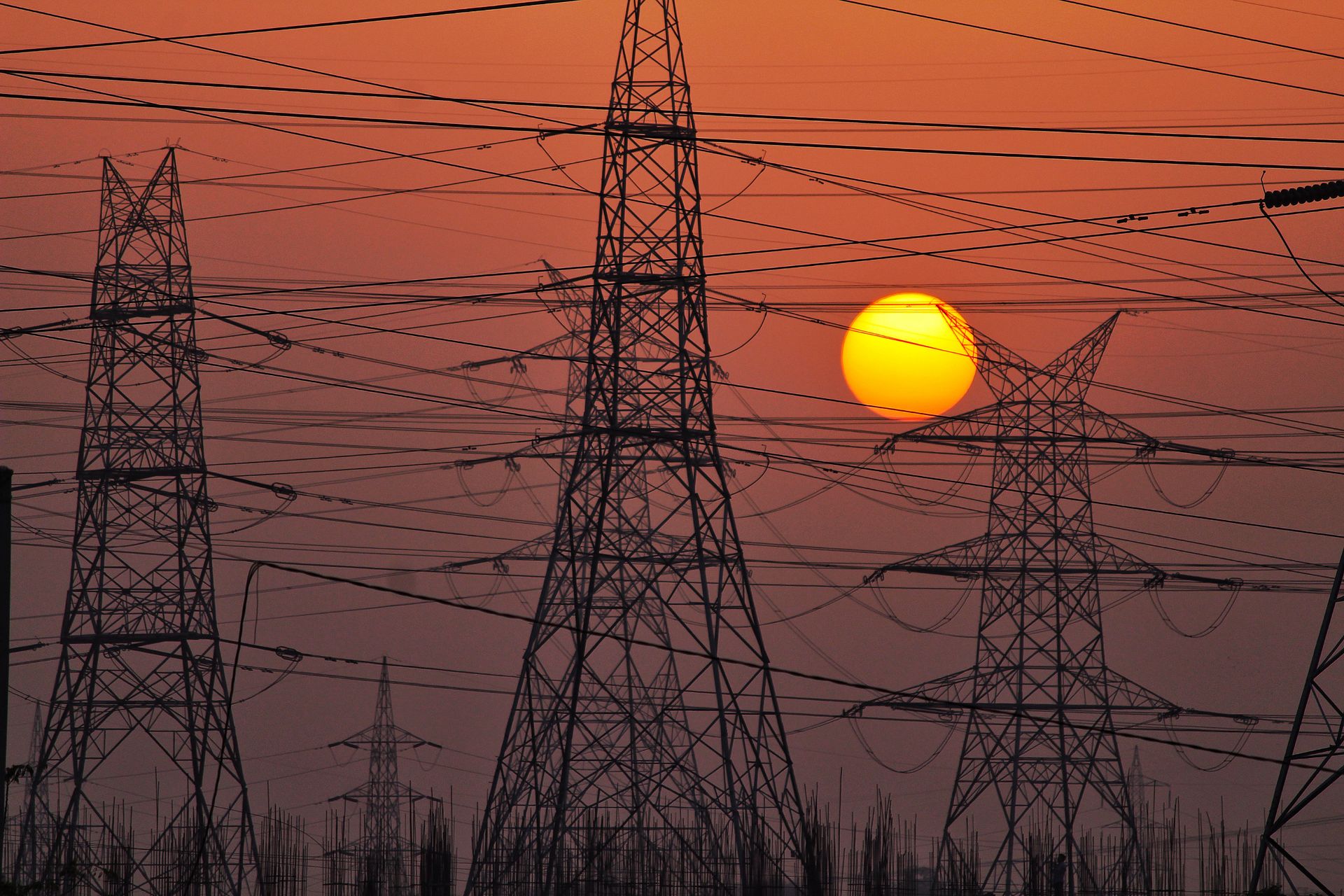
Every blackout movie follows the same script. A hooded figure types a few lines of code, a map of North America goes dark in a tidy wave rolling from coast to coast, and the hero watches the skyline wink out one neighborhood at a time. It looks fantastic on screen, but it also bears almost no resemblance to the way power grid cascading failures move through a real transmission network.
If you have spent any serious time preparing for a long outage, there is a decent chance you absorbed a piece of that Hollywood picture without ever deciding to believe it. The image sticks because it is dramatic and because the alternative explanation involves relay coordination, reactive power, and frequency stability, which nobody puts in a trailer. The real mechanism is faster, dumber, and far more geographically stubborn than the films suggest, and once you understand it, your shopping list changes.
Real cascades happen at machine speed. The decisive part of a large collapse is usually over in seconds rather than hours, carried out by automatic protection equipment doing exactly what engineers told it to do decades earlier. By the time a control room has a clear picture of events, the lights are already out. Cascades also tend to stop, and they stop for reasons that have nothing to do with luck.
What follows is a practical walk through the mechanics: why a line trips, what the relays are protecting, how the system breaks itself into islands, why the restart takes so long, and which downstream systems fail right behind the grid. The goal is to replace the movie in your head with something closer to the engineering, because the engineering is what determines how long you are actually on your own.
What Hollywood Gets Wrong About a Grid Going Down
The most common cinematic error is direction. Films show blackouts spreading like a fire moving across dry grass, city by city, at a pace the eye can follow. Actual power grid cascading failures do not travel geographically in any way that maps neatly onto a road atlas. They travel along electrical paths, which means the next thing to fail might be two hundred miles away while a substation five miles down the road stays energized the whole time. The grid is a network of impedances, not a set of dominoes lined up in a row.
The second error is speed, and it cuts both ways. The buildup to a major event is often slow and boring. Hours of small problems, a few lines running hot, a piece of monitoring software that stopped updating, operators working from stale data. Then the actual collapse arrives compressed into a window so short that no operator intervention is possible. There is no tense countdown, no dramatic decision at a console. The system simply protects itself and a very large number of customers find themselves in the dark simultaneously.
The third error is scope. Movies imply a continental blackout is the default outcome of any serious grid problem. In practice, the overwhelming majority of outages you will ever experience are distribution problems, meaning something failed on the local wires between the substation and your house. The Energy Information Administration tracks this with a metric called SAIDI, and the average American customer spends only a handful of hours per year without power, with most of that concentrated in storm events. A tree falling on the line at the end of your road is a vastly more likely reason for your lights going out than anything happening at the transmission level.
The Physics Behind Power Grid Cascading Failures
Electricity on a transmission grid does not follow a dispatcher’s plan. It follows the path of least impedance, splitting across every available route in proportion to the electrical characteristics of those routes. When you take one line out of service, the power it was carrying does not vanish and it does not wait politely for instructions. It redistributes instantly across the remaining lines, and the neighbors that pick up the load are determined by physics rather than by geography or by contract.
This redistribution is the entire engine behind power grid cascading failures. A transmission line has a thermal limit, because current heats the conductor, heat makes aluminum expand, and expansion makes the line sag closer to whatever is underneath it. When a line inherits a big slug of redirected power, it heats up and sags. If it sags into a tree, it faults, and its protection opens the circuit. Now that line’s load redistributes too, onto an even smaller set of remaining paths, each one already carrying more than it was designed to carry. The loop tightens with every step.
Voltage collapse runs alongside the thermal problem and is arguably nastier. Transmission systems need reactive power to hold voltage up, and reactive power does not travel well over distance. As lines drop out and the remaining ones load up, they consume more reactive power than they produce, voltage sags across the region, and the current required to deliver the same amount of real power climbs. Higher current means more heating and more voltage drop, which is a feedback loop that can run away in under a minute. Frequency instability is the third mechanism, and it appears when generation and load fall out of balance badly enough that generators begin to lose synchronism with each other.
How One Overgrown Tree Took Down Eight States in About Seven Minutes
The August 2003 Northeast blackout remains the best documented example of the whole sequence, and the joint United States and Canada investigation produced a report that anyone serious about this topic should skim at least once. It reads less like a technical postmortem and more like an accident chain, which is exactly what power grid cascading failures always turn out to be.
The afternoon started with a monitoring failure. A software process at the utility’s control center stopped refreshing, alarms quit functioning, and operators lost their live picture of the system without realizing anything was wrong. Meanwhile, a generating unit had already tripped offline and the remaining lines around Cleveland were running warm on a hot day. At about 3:05 in the afternoon a 345-kilovolt line sagged into a tree that had been allowed to grow into the right of way and tripped out. Half an hour later a second line did the same thing. Then a third.
Each of those trips pushed more current onto the survivors, and each survivor sagged a little further into whatever vegetation was underneath. A little after 4:05 a fourth heavily loaded line went out, and at that point the region no longer had a stable path for the power it was importing. The real cascade started there. Over the next seven- or eight-minutes lines and generators across Ohio, Michigan, Ontario, Pennsylvania and New York tripped in rapid succession, with the final stage playing out in a matter of seconds. Roughly fifty million people lost power. The initiating event was a tree that nobody trimmed.
Protective Relays Are What Actually Turn Off Your Lights
Here is the part that surprises most people who come to this subject from the preparedness side. During power grid cascading failures, most of the equipment that goes offline is not broken. It removed itself from service on purpose, because a protective relay measured a condition outside its settings and opened a breaker in a few cycles. A cycle is about sixteen milliseconds. Protection acts faster than a human blink and considerably faster than a phone call.
Relays exist because transmission equipment is expensive and slow to replace. A large power transformer can take a year or more to procure, and a generator that gets pulled out of synchronism can destroy its own shaft. Given a choice between an interrupted region and a permanently damaged fleet of generators, the protection philosophy chooses the interruption every single time. Distance relays watch the apparent impedance on a line and trip when it looks like a fault. Under frequency relays shed load when frequency drops. Out of step protection separates generators that are no longer swinging together.
The practical consequence for you is that a wide area blackout does not automatically imply wide area destruction. In the 2003 event, the great majority of what tripped was undamaged and available for restoration within hours. That is a completely different situation from the scenario many preparedness writers describe, where a cascade physically wrecks the machinery and the region is dark for a year. Physical destruction happens, and it is the reason engineers worry so much about the handful of events that bypass protection entirely, but the ordinary cascade leaves a bruised system rather than a broken one.
Why Power Grid Cascading Failures Usually Stop Sooner Than Preppers Expect
If redistribution keeps overloading the next line, why does the whole continent not go dark every time? Because North America runs as three separate synchronous interconnections, the Eastern, the Western, and the Texas system, joined to each other only through a small number of direct current links that refuse to pass instability along. A disturbance in Ohio cannot propagate into Arizona through the alternating current network, because there is no alternating current network connecting them. That single design fact caps the geographic reach of power grid cascading failures more effectively than any control scheme.
Inside an interconnection, the system also tears itself into electrical islands as the cascade proceeds. When enough lines between two regions open, the regions stop being electrically connected and start behaving as independent grids. Some islands have more generation than load and see frequency rise. Some have the opposite problem and shed load automatically until the balance holds. An island that stabilizes survives, keeps its customers energized, and stops passing the disturbance along. This is why the 2003 map looked so ragged, with dark counties adjacent to bright ones for no reason a layperson could see.
Winter Storm Uri in February 2021 is worth studying precisely because it shows the other failure mode, where operators deliberately shed twenty thousand megawatts of load to keep the system from collapsing into an uncontrolled cascade. Rolling blackouts that stopped rolling and left millions without heat for days were the controlled alternative to a collapse, chosen deliberately by people watching frequency fall, and for the households involved that distinction was entirely academic.
Islanding, Black Start, and the Slow Crawl Back to Normal
Restoration is where the timeline gets genuinely uncomfortable, and it is the phase that deserves most of your planning attention. A grid that has collapsed cannot simply be switched back on, because most generating plants need electricity to start. Coal plants need power for coal handling, feedwater pumps, and induced draft fans. Gas plants need power to run compressors and control systems. The plant that produces electricity is also a substantial consumer of it.
The answer is a black start unit, usually a hydro station or a diesel or gas turbine sized to start from a dead bus with nothing but its own battery bank and a small engine. That unit energizes a transmission path to a larger plant, the larger plant comes up, and the two of them together support the next one. Operators build the system back in careful increments, matching generation to load at every step, because an island that gets ahead of itself in either direction will simply trip again and send the crew back to the beginning.
For a straightforward cascade with undamaged equipment, this process runs from several hours to a couple of days. In 2003 most customers were back within sixteen to thirty hours, though pockets took longer. When physical damage is involved, or when the fuel supply chain has also failed, the timeline stretches badly. The pattern worth internalizing is that the collapse phase of power grid cascading failures is measured in seconds and the restoration phase is measured in days, so every dollar you spend should be aimed at the second number rather than the first.
The Water, Fuel and Gas Systems That Fail Right Behind the Grid
For a homesteader or an off-grid household, the direct loss of utility power is frequently the least of the problem. What matters is the set of systems that depend on the grid and fail on their own schedule after it goes down. Municipal water usually goes first. Treatment plants and booster stations run on electricity, and most have generators, but those generators have a fuel tank that gets measured in hours rather than weeks. Pressure in the mains drops, boil notices go out, and if you are on a well with an electric pump you lost your water at the same instant the power went.
Fuel supply comes apart next. Gas station pumps are electric, and very few stations have transfer switches. The propane delivery truck needs a dispatcher with working systems and a terminal with working pumps. Natural gas distribution usually keeps flowing because the pipeline system carries its own pressure, but compressor stations do draw grid power in places, and the Uri investigation documented exactly that problem when well heads and processing plants lost electricity and starved the generators that needed the gas. Interdependence is the theme of modern power grid cascading failures, and the fuel chain is where it bites hardest.
Communications go third and they go quietly. Cell sites carry batteries good for a few hours and generators at the larger ones only. Cable internet dies when the neighborhood node loses power. Point of sale terminals stop working, which means cash becomes the only functioning payment method inside of an afternoon. All of it happens quietly, and the cumulative effect is a steady erosion of your ability to coordinate, resupply, and gather accurate information at the exact moment you need all three.
Reading the Warning Signs Before Power Grid Cascading Failures Reach You
You cannot predict the specific trigger, but you can absolutely read the conditions that make a region fragile, and the information is public. The North American Electric Reliability Corporation publishes a Long-Term Reliability Assessment every year that grades each region on its risk of supply shortfall, and recent editions have flagged a growing share of the continent as elevated or high risk during extreme weather. Seasonal assessments come out before each summer and winter with a narrower view. Reading the pages for your own region takes twenty minutes and tells you more than a year of forum speculation.
Shorter term signals are easier still. Your regional operator, whether that is ERCOT, PJM, MISO, or another balancing authority, publishes real time reserve margins and issues conservation appeals when things get tight. A conservation appeal is a meaningful signal, because it means the operator is already working the problem and the buffer between normal operation and emergency procedures has narrowed. Weather that combines extreme temperature with low wind and high demand is the classic setup, and it is visible several days out on any decent forecast.
The conditions that precede power grid cascading failures tend to cluster in the same seasons and the same weather patterns every year. Deep cold snaps in February, heat domes in July and August, ice storms in the shoulder seasons. If you top off fuel, run your generator under load, fill water storage, and charge every battery in the house whenever one of those windows appears in the forecast, you will have done ninety percent of the useful preparation for ninety percent of the events that will actually affect you.

Building a Home Power System That Does Not Care What the Grid Is Doing
Set your design goal as running the household normally for a week or two while the utility works through its restoration sequence, then doing the same thing again three months later when the next storm arrives. Power grid cascading failures end quickly enough that hardening your house against the event itself buys you almost nothing, while capacity and endurance pay out every single time the lights go off for any reason at all.
Start with a battery and inverter system sized to your actual critical loads. A well pump, a chest freezer, a refrigerator, lighting, and device charging is a very manageable list, and a large portable power station such as an EcoFlow Delta Pro will carry it comfortably while being simple enough that nobody in the house needs a wiring diagram to use it. For a permanently installed system, lithium iron phosphate batteries have effectively replaced lead acid for this application, and a bank built from Battle Born or similar 100-amp hour LiFePO4 units will tolerate deep cycling for thousands of cycles without complaint.
Solar is what turns a battery into a power system rather than a very expensive flashlight. Even a modest array will recharge a critical loads bank daily in most seasons, and a Renogy panel kit with a decent MPPT controller is a reasonable starting point that expands cleanly as budget allows. Keep a generator as the bad weather backstop rather than as the primary plan, and strongly prefer a dual fuel inverter model so you can run propane when gasoline is unavailable and gasoline when propane is. Whatever you buy, install a proper interlock or transfer switch, exercise the whole system under real load twice a year, and never run an engine anywhere near an enclosed space.
Homestead Priorities for the First 72 Hours and the First Three Weeks
The first seventy-two hours are about information and stabilization. Confirm whether this is a local distribution problem or something regional, because the two call for completely different responses. A hand crank or battery radio with NOAA weather band is still the most reliable way to get that answer when the cell network is saturated or down, and a Midland ER310 or similar unit belongs in every household regardless of how much other gear you own. Keep freezers closed, get water storage filled while any pressure remains, and resist the urge to burn generator fuel on non-critical loads during the first day.
The three-week horizon is a different exercise, and it is mostly about food, water, sanitation, and heat. Water is the binding constraint for most homesteads, so a manual backup for your well, whether that is a hand pump, a deep well bucket, or stored capacity, pays for itself the first time you need it. Sanitation planning is unglamorous and gets skipped constantly, which is why it causes so many problems in real events. FEMA’s outage guidance covers the basics of food safety, generator placement, and carbon monoxide risk in plain language, and it is worth reading once with your own house in mind.
Livestock deserve a line of their own, because they do not care about your fuel budget. Electric waterers freeze, milking equipment stops, and ventilation fans in closed barns become a genuine welfare emergency within hours. Work out the manual fallback for each of those before you need it. Households that come through extended outages in good shape tend to share one trait, which is that somebody already decided what happens at hour six, at hour sixty, and at day twelve. Power grid cascading failures leave very little room for improvisation once they have already run their course, so the thinking has to be done in advance.
Concluding
The preparedness community spends too much energy on the collapse and not nearly enough on the recovery. The cascade itself is a fascinating piece of engineering and it is almost entirely outside your control. It will be over before you know it started. What you can control is whether your household can run a well pump, keep food cold, stay warm, and get accurate information for two weeks without any help, and that is a solvable problem with ordinary equipment and a bit of discipline.
I would also gently push back on the idea that a grid down event automatically means a year in the dark. The protection systems that cause blackouts are the same systems that keep the machinery from destroying itself, and the record shows restoration in hours or days for the overwhelming majority of large events. Prepare for the long tail by all means, but build for the common case first.
So, do the boring things first. Trim the trees around your own service drop, run the generator under load before storm season, keep two weeks of water on hand, and read your region’s reliability assessment once a year. That unremarkable list will carry you through more real outages than the movie version ever will.
Stephen Harris has written this article for Prepper’s Will.
Suggested resources for preppers:
What you should know about survival foods with decades of shelf life
The Foods that helped the pioneers survive crop failures and hard times
Survival Foods of the Native Americans
If you plan to build a storage room and equip it with everything needed > Start Here!

Great article – well done!