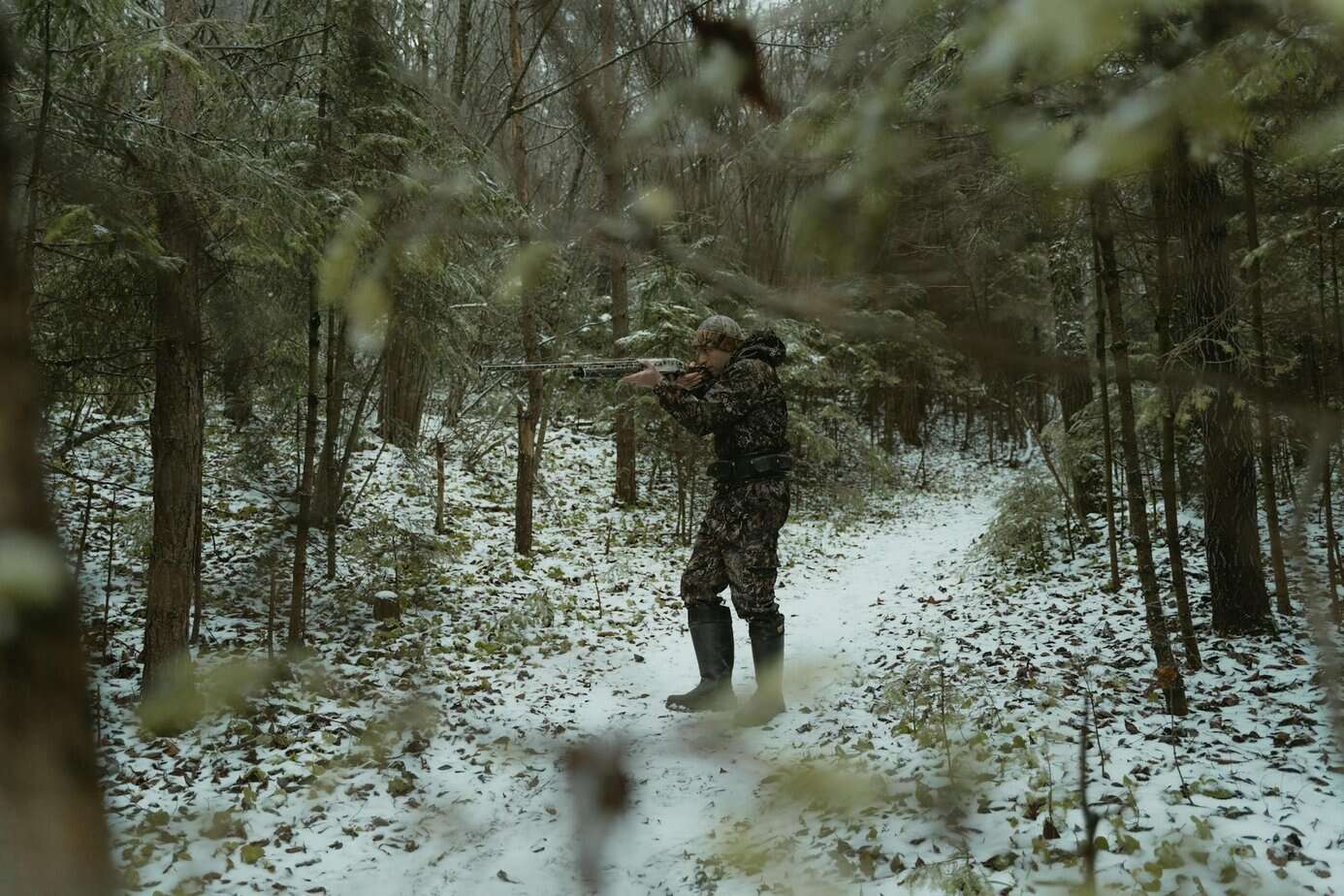
Winter changes the rules long before you ever see a track in the snow. Anyone learning how to hunt for survival in winter has to respect how temperature, daylight, snowpack, and animal behavior shift into a completely different operating mode once the cold settles in.
If you treat winter like an extended version of fall hunting, you’ll burn calories too fast, move too loudly, and overlook the small signs that actually guide you toward game.
How to Hunt for Survival in Winter ALWAYS Begins With Understanding Seasonal Challenges
The biggest challenge is energy loss, both yours and the animal’s. Cold air drains body heat quickly, which means every mistake you make in layering or pace costs you more calories than you realize. Animals are facing the same problem, so they move less, feed conservatively, and stick close to reliable shelter. That’s why hunting pressure, noise, or a poor entry route pushes them deeper into cover where visibility drops and tracking gets harder.
Snowpack adds another layer of work. Crisp, cold snow gives away every step you take, while wet or crusted snow forces you to lift your feet higher, burning even more fuel. The cold also changes scent patterns. With dense air sitting low to the ground, your scent doesn’t rise the way it might in warmer seasons. This makes wind direction non-negotiable because a sloppy approach ruins your chances before you even start glassing.
Reduced daylight is another problem. You have fewer hours to track, observe, move, and harvest. That compresses your decision-making into tighter windows. When you’re tired, cold, and hungry, that’s when poor choices creep in. Keep your pace controlled, and give yourself a clear turnaround time so you’re not hiking out at dusk while exhausted.
Finally, survival hunting requires a grounded respect for legality. Seasons, tags, and land-use rules matter unless society has genuinely collapsed. Practicing winter hunting within legal limits ensures you’re prepared for real hardship without creating one prematurely. State agencies like the U.S. Fish and Wildlife Service provide clear seasonal guidelines and wildlife data you can build into your preparation.
How Wildlife Behaves Differently Once Temperatures Drop
Understanding how animals shift their habits in freezing conditions is one of the most reliable ways to predict movement, find feeding areas, and avoid wasting energy. When you’re learning how to track efficiently in winter, you can’t rely on the same assumptions you’d use in early fall. Cold weather forces animals to conserve calories, change travel routes, and stick to specific shelter patterns that rarely shift unless they’re pressured or starving.
The first major change is movement frequency and most game animals tighten their daily range in winter. Deer, elk, and smaller mammals often bed closer to food sources because the cost of long-distance travel is simply too high. They’ll move only when necessary, and usually at predictable times centered on conserving warmth. That means fewer random wanderings and more patterned behavior you can exploit if you’re patient and observant.
Thermal cover becomes a priority and species gravitate toward thickets, low conifer stands, south-facing slopes, and areas protected from wind. Dense pine or cedar bedding areas create pockets of warmer air, sometimes several degrees higher than the exposed surroundings. If you’re not checking these zones, you’re missing the core of winter wildlife behavior.
Food patterns also change and many animals shift to bark, twigs, buds, and any remaining mast. Others search out exposed vegetation along water sources or disturbed soil. Smaller game such as rabbits and squirrels concentrate near reliable shelter where food remains within quick reach. Predators follow these patterns closely, creating a web of movement you can read once you learn the signs.
Another overlooked factor is water because even in snow-covered terrain, animals still seek liquid water sources because metabolizing snow alone burns excess energy. Tracks often funnel toward spring-fed creeks, seeps, or areas where ice has thinned.
Human presence impacts winter wildlife even more than in warmer months. Loud movement, scent mismanagement, or poorly timed entry routes push animals deep into cover. Winter survival hunting demands quieter travel and greater awareness of approach angles.
For species-specific behavior patterns, seasonal studies from state wildlife departments offer clear insights into winter habits.
How to Hunt for Survival in Winter by Reading Tracks and Fresh Sign Correctly
Interpreting tracks in winter is one of the most reliable ways to locate game without burning excessive calories. Snow gives you a clean, readable surface, but it also introduces distortions that can mislead you if you’re not careful. Anyone learning how to hunt for survival in winter needs to read sign with precision, because a bad interpretation wastes daylight, warmth, and energy you can’t afford to lose.
Start with track shape and depth. Fresh tracks have sharp edges, crystallized snow inside the print, and a consistent outline that hasn’t been rounded by wind or sun. Even small temperature changes alter track quality. A print made at dawn can soften noticeably by mid-morning if sunlight reflects off crusted snow. Conversely, tracks made in the afternoon can harden overnight as temperatures drop, giving the appearance of being older than they are.
Stride length and gait tell you more than footprint size. Long, steady strides typically indicate calm movement. Short or erratic tracks suggest the animal is alert, feeding, or has recently detected pressure. Drag marks can appear when snow is deep, especially with deer or elk, but in shallow snow they may suggest an injured or exhausted animal. Reading these small details prevents you from following the wrong sign.
Wind can blur track edges or create a frosting effect on older prints. Melt-out is another common problem. As snow warms and refreezes, tracks widen and lose definition, making animals appear larger than they really are. Beginners often mistake a distorted rabbit track for a fawn deer or small coyote. Look for the overall pattern, not just the footprint.
Other signs matter just as much and fresh droppings, clipped twigs, urine spots, scraped bark, and disturbed snow patches all tell you how recently an animal passed through. The colder it is, the quicker these clues freeze, giving you a fairly accurate timeline, often within an hour or two.

Using Snow, Wind, and Thermals to Control Scent and Movement
Cold-air thermals, shifting winds, and noisy snow determine whether you stay hidden or get busted long before you see the animal. Anyone practicing winter tracking skills or refining how to hunt for survival in winter must learn how the environment carries scent and sound differently once temperatures drop.
Cold air sinks fast, especially at dawn and dusk. That means your scent tends to pool low to the ground instead of lifting away. If you walk downhill with even a light breeze at your back, your scent flows straight into bedding areas. Move diagonally across slopes or contour along ridges to reduce the risk of pushing game ahead of you. When possible, travel with the wind crossing your face rather than coming from behind.
Snow noise is another factor. Powdered snow is quiet enough for slow movement, but crusted or icy surfaces crack under every step. That’s why flexible, insulated boots matter. Models like the Muck Arctic Pro or Baffin Impact reduce foot slap and keep your stride consistent. Pair them with Woolpower 400 socks to prevent moisture buildup that leads to noisy steps.
Thermals rise once the sun hits slopes, even in freezing temperatures. That’s a short window where scent rises instead of sinking. You can use it to slip into position if you’ve located fresh sign earlier in the morning. Just remember that this window closes fast once shadows return. When temperatures drop again, scent pools immediately.
Wind direction changes more than most beginners expect. Gusts bounce off bluffs, timber pockets, and drainages, creating swirling zones that make scent control tough. Lightweight wind-checkers help, but in freezing temperatures, powders sometimes clump. A better winter option is a small squeeze bottle of unscented talc or even a lightweight feather tied to your jacket zipper. Both move in subtle currents that powder rarely detects.
For detailed explanations of wind behavior, thermals, and topography effects, this guide is reliable and easy to apply.
Finding Game When Food And Water Sources Are Scarce
Locating animals in winter is mostly about understanding what they’re eating, where they’re bedding, and how far they’re willing to travel between the two. Snow hides some food sources while exposing others, and the colder it gets, the more predictable wildlife becomes. Anyone refining their winter strategy or practicing how to hunt for survival in winter needs to narrow the landscape to the few places that still offer calories and shelter.
Start with browse. When acorns, grains, and soft vegetation disappear, deer and elk shift to woody stems, buds, and evergreen tips. Look for patches of young saplings, fresh twig nips, and clusters of tracks circling shrubs. Browsing sites are easy to misread because snow sometimes covers the feeding damage. Brush aside the top layer and check for clean, fresh cuts.
Next, identify thermal cover. South-facing hillsides with sunlight, low conifer stands, cedar swamps, and thick undergrowth all trap pockets of warmer air. Animals bed in these spots to conserve heat. If the weather is brutal or wind is high, expect game to stay tighter to this cover for longer stretches of the day.
Water sources matter even when snow is everywhere. Eating snow costs energy, so animals search for liquid water they can access quickly. This makes year-round springs, small creeks, and seepage points high-value locations. Learn to look for these during warmer seasons so you know where to check once everything freezes.
When moving through these areas, binoculars with strong low-light performance help you scan without wasting steps. Options like the Vortex Diamondback HD 10×42 or Nikon Prostaff 7S give you enough clarity to pick out movement in thick cover or dim winter light. Pairing glassing with slow, methodical scanning prevents unnecessary calorie burn.
Pay attention to terrain funnels. Saddles, narrow draws, and creek-bottom corridors often become travel routes because they offer protection from wind and reduce uphill exertion. If sign is present in these chokepoints, set up and wait rather than trying to chase movement across open ground.
Essential Winter Hunting Gear That Won’t Fail in Subzero Temperatures
Winter gear isn’t about comfort. It’s about maintaining the mobility, warmth, and reliability you need to function when calories drop, daylight shrinks, and equipment starts to stiffen or freeze. Anyone studying how to hunt for survival in winter learns quickly that good gear prevents costly mistakes far more effectively than brute willpower ever will.
Start with boots. Insulated, moisture-resistant models reduce heat loss and help keep your steps quiet. Boots such as the ones previously mentioned are a great investment if you spend time outdoors during the winter months, regarding if you’re a hunter or not. Pair them with Darn Tough heavyweight socks to manage sweat and prevent conductive heat loss.
Layering is the next priority and you need to avoid cotton entirely. A solid winter system uses a merino wool or synthetic base, an insulating mid-layer, and a wind-resistant outer shell. Jackets like the Sitka Kelvin Lite or First Lite Chamberlin retain warmth even when damp, and synthetic puff layers stay functional if snow melts into them.
Gloves matter more than most people expect. Thin gloves allow dexterity but freeze fast. Thick gloves protect warmth but limit handling. A practical approach is a two-layer system: lightweight merino liners under insulated shooting mitts. Mitts such as Hot Shot Predators keep your hands warm until it’s time to take the shot.
Knives and cutting tools also need cold-proof reliability. Stainless-steel blades with rubberized grips perform well, but in freezing conditions, look for models like the Morakniv Companion Heavy Duty or Buck 119. Both stay functional even when the sheath stiffens.
Fire-starting tools are non-negotiable and ferro rods outperform lighters when temperatures drop, though carrying both is smart. The Light My Fire ferro rod or Exotac fire starters offer consistency even with gloves on.
Navigation tools round out your essentials. Remember that cold drains batteries quickly, so a physical compass and laminated topo map should always ride in your pack. GPS units are useful, but keep them warm inside an inner pocket so the screen and battery don’t freeze.
A personal note: This gear is used and recommend by the author, I cannot personally let you know how well it works, since I use different gear. I can, however, vouch for the knives and fire rods.
Practicing Survival Hunting Skills While Staying Legal and Ethical
Before any prepper sharpens their winter skillset, it’s important to accept one reality: legality still applies. Until the circumstances truly shift into a survival-only scenario, every hunter must follow state regulations, seasons, land-access rules, and ethical standards. Even when practicing how to hunt for survival in winter, your training has to respect the laws in place. This protects wildlife populations, prevents fines, and keeps you prepared without creating your own crisis.
Start with land access. Public land is open for legal hunting during defined seasons, but practicing tracking, sign reading, and winter navigation is allowed year-round on most tracts. Use off-season time to study terrain, locate bedding zones, observe winter ranges, and learn snow behavior without disturbing game. Private land requires written permission for scouting and hunting. That applies even when you’re just studying tracks or evaluating cover.
Next, understand seasonal limits. Every state publishes detailed regulations on which species are in season, what methods are allowed, and what tagging requirements must be followed. Practicing winter-oriented skills such as tracking, wind reading, or gear refinement doesn’t require a tag. However, carrying a weapon out of season without proper authorization is not only unethical but illegal. Always separate skill practice from hunting action unless it’s within legal dates.
Ethics matter just as much as regulations. Winter is a stressful period for wildlife, and unnecessary pressure drains their already limited energy reserves. When scouting, keep your distance, observe quietly, and avoid repeatedly pushing animals out of bedding areas. In-season hunting should follow clean-shot principles. Cold weather complicates shot placement because layers add bulk, and cold-stiff muscles slow your draw or trigger control. Tools like the Caldwell Lead Sled or compact Primos shooting sticks help steady your aim for responsible shooting.
Respect carcass use as well and if you harvest an animal legally during winter, process it fully and avoid waste. Field dressing must be done quickly to prevent freezing in the cavity, which complicates later butchering.
For clear, state-specific rules, the U.S. Fish & Wildlife Service remains the most reliable starting point.
Critical Mistakes Folks Make When Hunting in Winter Conditions
Most winter failures come from preventable errors. Cold weather punishes small mistakes harder than any other season, and many preppers focus so heavily on tools or tactics that they overlook the fundamentals. Anyone studying how to hunt for survival in winter needs to correct these issues early, because in freezing conditions the margin for error is thin.
One of the most common mistakes is moving too fast. Winter terrain hides obstacles under snow, exposes you to slippery surfaces, and amplifies sound. Rushing burns calories, overheats your layers, and leaves a crunchy trail behind you. Slow, controlled movement preserves strength and keeps your noise footprint low.
Layering mistakes run a close second. Some hunters overdress at the start, sweat heavily, and then get chilled once they stop moving. Others underdress, thinking they’ll warm up during a long hike. Both approaches drain energy. A proper system means breathable base layers, a warm mid-layer, and an outer layer you can open or vent. Gloves and socks must also be managed actively. Carrying a backup pair of merino liners and heavyweight socks prevents moisture from becoming a cold sink.
Another mistake is ignoring calorie intake and folks should keep in mind that winter burns energy fast, even when you’re standing still. Pack high-fat and high-protein foods such as jerky, nut mixes, freeze-dried meat, or bars like Clif Builders or Probar Meal. Treat food as fuel, not a convenience.
Many hunters also misread snow sign. Melt-out, windblown edges, and distorted tracks can suggest fresh activity when the animal is long gone. Spending time studying how snow conditions evolve through the day prevents hours of wasted tracking.
Navigation errors are also common. Low clouds, falling snow, or flat light can disrupt visibility. Electronics freeze quickly, so keep GPS units warm inside your inner layer and carry a physical compass as a backup. A compact model like the Suunto A-10 offers reliable direction even when batteries fail.
Finally, some preppers underestimate wind and thermals. Even a small shift can push scent into bedding areas or feeding routes. Monitoring the wind constantly prevents blown stalks and unnecessary pressure.
Final Prep: How to Hunt for Survival in Winter When You Truly Need the Skill
When conditions get harsh and calories matter more than comfort, you need a system, not guesswork. Understanding how to hunt for survival in winter comes down to applying the same steps every time: locate sign, judge freshness, monitor wind, move quietly, and conserve energy. Winter rewards discipline far more than aggression. When temperatures drop, every decision either preserves strength or drains it.
The first part of your preparation is pacing. Winter hunts shouldn’t feel rushed. You start slow, watch the terrain, and let the landscape show you its patterns. Tracks, beds, droppings, feeding marks, and worn travel corridors build a map in your mind. You’re not chasing animals; you’re intercepting them. This is where binoculars help you scan without taking unnecessary steps.
Your second priority is temperature management. Every break, glassing session, or slow stalk changes your heat level. Use vented zippers, layer adjustments, and hand warmers carefully. Chemical hand warmers such as HotHands are helpful, but don’t depend on them fully. In extreme cold, ferro rods, matches, or compact fire kits need to be ready for a fast ignition if you must warm up or cook.
Third, think in terms of positioning rather than pursuit. Winter animals won’t run unless forced. They conserve energy, so they move through predictable funnels. Set up downwind of bedding-to-feeding routes, watch edges of evergreen cover, and monitor low-pressure corridors like creek bottoms or saddles. If you find fresh tracks heading into a dense thicket, don’t storm in blindly. Circle wide, check wind, and approach from the quietest angle.
Fourth, maintain your kit. Snow freezes optics, stiffens straps, and reduces battery life. Keep knives in accessible sheaths, store electronics close to your body, and check your boots for ice buildup that causes noise. The colder it gets, the more your equipment becomes part of your survival system, not just part of the hunt.
State wildlife agencies provide seasonal insights on winter movement and habitat use. For example, this resource on mule deer is worth a read.

Concluding
Winter hunting isn’t about dramatic moments or sudden breakthroughs. It’s about stacking skills the right way so your effort, calories, and time work in your favor. When you step back and look at everything covered so far, the pattern becomes clear: understanding how winter changes the landscape, how animals behave under cold stress, how to read tracks, and how to move safely all tie together into one system. Without this foundation, learning how to hunt for survival in winter turns into a series of difficult, energy-draining attempts instead of a reliable process.
Your readiness comes down to consistency. Winter rewards those who pay attention to the details: the sharpness of a track edge, a fresh nip on a sapling, a shift in the wind, the slight temperature rise on a south-facing slope. None of these signs mean much by themselves, but together they point you toward predictable routes and sustainable decisions. You’re not just looking for animals; you’re interpreting the environment that influences every move they make.
Gear plays a role, but it’s not the backbone of your success. Boots, insulation, knives, fire kits, and optics matter only when the fundamentals are already in place. When you know where bedding areas lie, how thermals shift during the day, and how pressure alters wildlife habits, your equipment becomes a support system rather than your primary advantage. That’s the mindset winter demands.
Ethics and legality remain part of the equation. Practicing within the rules protects game populations and keeps you focused on skill development instead of shortcuts. When conditions deteriorate or circumstances push you toward real survival, you’ll rely on precise tracking, quiet movement, and smart positioning, not on luck.
This concludes the foundational side of winter survival hunting. You now have the tools to understand the land, interpret sign, approach efficiently, and prepare yourself and your equipment for cold-weather demands.
If you’re ready to continue your training, make sure to check out Part 2, where we go deeper into the practical elements that complete the process: weapons that function reliably in subzero conditions, traps that still fire when ice forms, techniques for field dressing and processing in freezing weather, and ways to preserve calories when your energy is running low.
Author Bio
Dan Mowinski is a lifelong outdoorsman, hunter, and homesteader with Native American (Piqwacket), English, and Polish roots. With decades of off-grid survival and traditional land stewardship experience, he teaches sustainable living and works closely with the Prepper’s Will community to preserve practical wilderness skills.
Other resources worth checking out:
Drinking Water Survival Myths You Should Know
How to obtain water from the air
The Impacts of Water Scarcity in Major Cities
Knowledge to survive any medical crisis situation during a major disaster