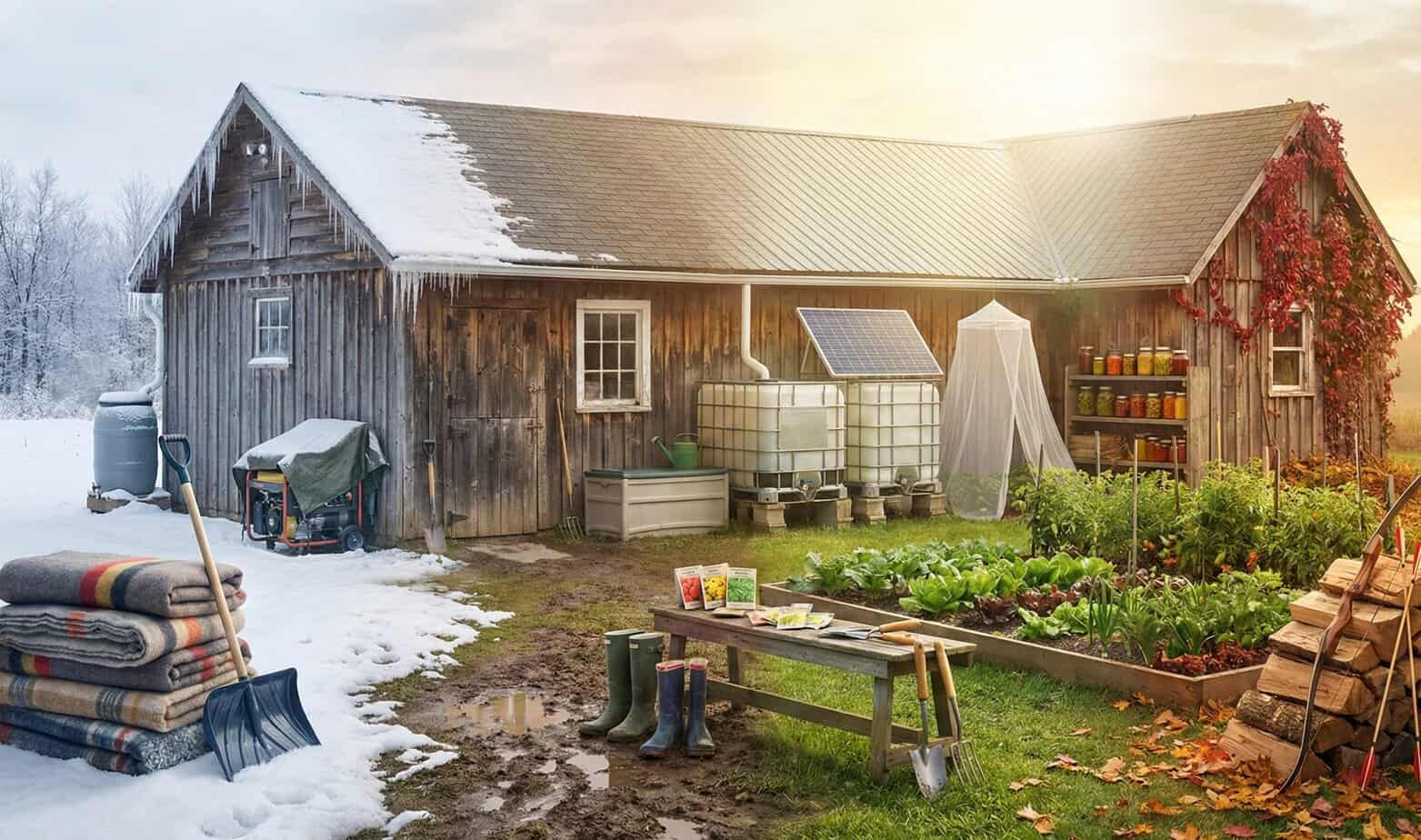
Most people do not fail at preparedness because they lack concern or awareness. They fail because they try to do too much too fast, get overwhelmed by choices, and eventually abandon the effort altogether.
One stressful weekend turns into a cart full of random gear, followed by months of neglect, poor storage habits, and equipment they never properly learned how to use. That pattern creates the illusion of readiness while leaving real vulnerabilities untouched.
A year-round prepping plan corrects this by imposing structure, pacing, and clear priorities. Instead of reacting emotionally to headlines, social media fear cycles, or seasonal shortages, preparation is spread intentionally across twelve focused months. Each phase builds on the last in a logical order that mirrors how problems actually unfold. Skills are developed before tools are expanded, essentials are secured before redundancies are added, and planning replaces impulse.
This method also reflects how real crises tend to develop in the United States. Disruptions usually arrive in layers rather than all at once. Power failures strain daily life before food becomes scarce. Fuel availability tightens before financial systems fully seize up. Medical access becomes inconsistent long before supply chains completely fail. A well-built year-round prepping plan follows that slow pressure curve instead of assuming a single dramatic collapse scenario.
Budget reality is another reason this approach works. Prepping from zero becomes prohibitively expensive when people rush the process. Spreading preparation across an entire year allows for smarter purchasing, fewer duplicates, and better long-term decisions. You learn what fits your lifestyle, storage space, and risk profile whether you live in an apartment, a suburban neighborhood, or on rural land.
Perhaps the most overlooked benefit is mental stability. A year-round prepping plan removes the constant feeling of being behind or unprepared. There is always a clear next step, but never the pressure to do everything immediately. By the end of twelve months, the result is not just deeper supplies, but stronger confidence, practical skills, and the calm that comes from knowing you are ready for disruptions long before they arrive.
January: Inventory First, Ego Second
January is where a year-round prepping plan either becomes grounded in reality or collapses under false confidence. Winter stress has a way of stripping away assumptions, especially across the United States where cold snaps, ice storms, and grid strain tend to expose weak points fast. This month is not about expanding your setup yet. It is about figuring out what actually works when conditions are uncomfortable instead of convenient, which is the foundation of any year-round prepping plan built from zero.
Begin with a full inventory that is detailed enough to be uncomfortable. Count calories instead of eyeballing shelves, test batteries instead of trusting packaging, and verify expiration dates instead of assuming long shelf life means permanent reliability. This process often reveals that people own far more “stuff” than usable supplies. A year-round prepping plan only works when you know the difference between ownership and readiness.
Cold-weather resilience deserves immediate attention during this audit, because heat loss and exposure compound other failures. Even inside a home, a prolonged outage can turn dangerous quickly. Many intermediate preppers rely on a properly rated sleeping bag as a passive survival layer that works without fuel or power.
The Coleman North Rim 0°F Big & Tall Sleeping Bag is a practical example, widely available on Amazon and designed for sustained cold conditions, which makes it a sensible correction purchase if your inventory shows a gap. This type of gear fits naturally into a year-round prepping plan because it solves a problem without creating new dependencies.
About halfway through your inventory, it helps to pressure-test your conclusions against an external benchmark. The federal guidance at Ready.go provides a clear baseline for water, food, lighting, and basic emergency needs. Comparing your supplies to that list often reveals blind spots, especially in water storage and lighting redundancy, two areas people routinely underestimate when building a year-round prepping plan.
By the end of January, the goal is not excitement or momentum. The goal is clarity and you should know what you have, what works, what fails under cold stress, and what needs attention next. That clarity prevents wasted money later and turns the rest of your year-round prepping plan into deliberate progress instead of reactive scrambling.
February: Medical Readiness and Physical Resilience
February is where the prepping plan shifts from gear on shelves to the condition of the person relying on it. Supplies matter, but medical gaps end plans faster than empty pantries. Winter is still stressing the healthcare system in many parts of the U.S., pharmacies are inconsistent, and weather delays can stretch minor problems into serious ones. This month is about tightening those vulnerabilities before they become emergencies.
Start with medical inventory the same way you approached food and gear in January, but with even less room for denial. Check expiration dates on medications, inspect bandages and antiseptics, and confirm that you actually know how to use what you own. Many intermediate preppers discover they have trauma supplies they have never practiced with, which turns confidence into liability. A year-round prepping plan only works when skills and supplies grow together.
Prescription continuity deserves special attention. If you rely on daily medication, build buffer time wherever possible and document alternatives with your provider. Even common over-the-counter items like pain relievers, allergy meds, and electrolyte solutions become critical during disruptions. February is a smart time to standardize these items into one medical kit instead of scattered drawers.
Training is the other half of this month. A well-stocked kit without knowledge creates hesitation when seconds matter. Many preppers choose to reinforce their skills with a structured trauma kit that mirrors what they train with. The MyMedic Pro First Aid Kit is a popular option because it includes tourniquets, pressure bandages, and organized compartments that support realistic practice. Integrating a kit like this into your year round prepping plan encourages repetition and familiarity instead of guesswork.
Physical resilience matters just as much as supplies. February is ideal for rebuilding basic conditioning, mobility, and cold-weather tolerance while routines are still indoors. You do not need extreme fitness, but you do need functional strength, endurance, and the ability to work while tired or stressed. Small daily habits compound faster than expensive equipment.
By the end of February, your year-round prepping plan should include medical depth, personal capability, and fewer unknowns. When health is stabilized early, every other prep category becomes easier to manage and far less fragile.
March: Water Security Before You Need It
March is where the plan starts dealing with the fastest way modern life falls apart, which is the loss of clean, reliable water. Early spring creates a dangerous illusion of abundance. Snowmelt, rain, and rising rivers make people feel safer, but this is also when contamination, flooding, and infrastructure failures spike across the U.S. If water is not handled deliberately, everything else in your year-round prepping plan becomes irrelevant.
The first priority is understanding your real water baseline. How much potable water do you have right now that requires no power, no treatment, and no assumptions? Many people overestimate this badly. Cases of bottled water disappear fast, and relying on “I can always filter later” ignores how stress and time pressure actually work during disruptions. A solid plan treats stored water as the first layer, not the last resort.
This is a good month to correct storage gaps with containers designed for long-term use instead of reused jugs that degrade or leak. A product like the Reliance Aqua-Tainer 7 Gallon Water Container, commonly available on Amazon, gives you stackable, durable storage that works in apartments, garages, and sheds. Adding containers like this strengthens your year-round prepping plan without locking you into complex systems.
Filtration and purification come next, but they should be layered, not singular. Gravity filters, chemical treatment, and boiling all have roles depending on conditions. Spring flooding often introduces agricultural runoff and bacteria, which means not all sources are equally safe even if they look clear. This is where authoritative guidance matters.
The Centers for Disease Control and Prevention maintain clear, up-to-date recommendations on emergency water treatment, and comparing your methods to their standards helps keep your year round prepping plan grounded in reality.
By the end of March, you should know exactly how many days your household can function without running water, what methods you trust under stress, and where your weakest assumptions still live. Water security built early removes panic later, and it gives your year-round prepping plan a foundation that does not crack when everything else gets shaky.
April: Calorie Math, Not Comfort Food
April is where your prepping plan starts separating emotional food choices from survival reality. By now, you should have a clearer picture of your storage space, budget limits, and actual needs. This is the right moment to build a food foundation based on calories, protein, and longevity instead of snacks that merely feel reassuring. Comfort food has a place later, but it cannot be the backbone of a year-round prepping plan built from zero.
The biggest mistake at this stage is confusing variety with adequacy. A pantry full of random items does not guarantee sustained energy under stress. April is about doing the math. How many calories does each adult need per day under light to moderate labor? How much protein is required to maintain strength and immune function over weeks instead of days? When you run the numbers honestly, most pantries come up short, even if they look full at a glance.
Dry staples are the quiet workhorses here. Rice, beans, oats, pasta, and shelf-stable proteins stretch budgets while delivering reliable calories. This is also the month to standardize storage methods so food does not quietly degrade. Oxygen, moisture, and pests ruin more prepper food than crises ever will. Many intermediate preppers use food-grade buckets with proper sealing systems to lock in shelf life and simplify rotation.
Rotation matters just as much as storage. April is an ideal time to build a simple eat-what-you-store rhythm that fits normal life instead of creating a separate “prepper pantry” you never touch. When food cycles naturally, waste drops and confidence rises.
By the end of April, your year-round prepping plan should include a clear calorie baseline, dependable staple foods, and a storage system that preserves value instead of leaking it away. This is not exciting work, but it is the kind that keeps people functional when stress lasts longer than expected.
May: Food Production Without the Fantasy
May is where the prepping plan often drifts into fantasy if you are not careful. Spring energy kicks in, seed catalogs look optimistic, and it becomes easy to believe that a few raised beds will replace a grocery store. The reality is less romantic. Food production is valuable, but only when it is grounded in realistic yields, local conditions, and the time you can actually commit. This month is about starting smart instead of starting big.
The first step is choosing production methods that fit your living situation. Containers, small raised beds, balconies, and backyard plots can all contribute, but none of them work without soil quality, sunlight, and water planning. A year-round prepping plan treats food production as a supplement at first, not a miracle solution. Herbs, greens, and calorie-dense crops like potatoes or squash deliver more return than novelty plants that only look impressive.
Tools matter here, but only when they support consistency. A basic, durable setup beats an overbuilt system you abandon by July. Knowledge is the real force multiplier this month. Understanding frost dates, planting windows, and expected yields prevents wasted effort. The USDA’s planting zone map is a reliable reference for matching crops to your actual climate, not the one you wish you lived in. Cross-checking your plans against this guidance keeps your year-round prepping plan rooted in reality.
May should end with dirt under your nails and expectations properly adjusted. You are not trying to feed your household entirely yet. You are learning soil behavior, plant timing, and how food production fits into your daily life. Those lessons compound over time, and they turn gardening from a hobby into a dependable layer of your year-round prepping plan.
June: Power, Fuel, and Summer Grid Failure
June is when your plan has to account for the strain summer puts on the electrical grid. Heat waves drive demand through the roof, rolling blackouts become more common, and storms take down lines when everyone needs power the most. This month is not about comfort upgrades alone. It is about keeping critical systems running when the grid becomes unreliable instead of nonexistent.
Start by identifying what truly needs electricity in your household. Refrigeration, medical devices, communications, and basic cooling usually sit at the top of the list. Many people assume generators solve everything, but fuel storage, noise, and maintenance complicate that assumption fast. A year-round prepping plan works best when power solutions are layered, starting with low-draw devices and moving upward only as needed.
Battery-based systems deserve serious attention in June because they scale well and work indoors. Rechargeable power stations paired with fans, lights, and small appliances can stretch comfort and safety during outages without fuel dependency. Many preppers add something like the Jackery Explorer 1000 Portable Power Station into their setup because it supports refrigeration cycling, medical gear, and device charging with minimal learning curve. Integrating a portable power station into your year-round prepping plan buys time and flexibility rather than forcing immediate generator use.
Fuel planning still matters, even if you avoid generators at first. Gas stations rely on electricity, and summer evacuations drain supplies quickly. If you store fuel, rotate it properly and store it safely. If you avoid fuel entirely, understand the limits that choice imposes during extended outages.
Heat management is the quiet killer in summer disruptions. Simple steps like blackout curtains, ventilation planning, and low-wattage fans reduce strain on both people and equipment. A year-round prepping plan that ignores heat assumes problems only arrive in winter, which is rarely true.
By the end of June, you should know exactly how long you can maintain critical functions without grid power, what systems you trust most, and where your limits are. That clarity prevents panic purchases later and keeps your prepping plan balanced instead of power-obsessed.
July: Mobility, Vehicles, and Get-Home Reality
July is where a year-round prepping plan gets tested against movement, distance, and heat, all at the same time. Summer travel, road construction, and vacation traffic create conditions where small problems turn into long delays fast. If something disruptive happens while you are away from home, mobility becomes the difference between inconvenience and real danger. This month is about making sure you can get where you need to go, even when plans fall apart.
Start with your vehicle, because most preppers quietly overestimate its readiness. Heat is brutal on batteries, tires, hoses, and fluids. A year-round prepping plan treats vehicles as life-support systems, not just transportation. Basic maintenance, spare fluids, and realistic fuel habits matter more than tactical accessories. Half a tank should feel low, not acceptable, especially in summer when evacuations and outages can empty stations within hours.
Get-home planning is the next layer, and it needs to be realistic instead of cinematic. How far do you typically travel for work or family obligations? What does that route look like on foot in extreme heat? Your bag should support hydration, foot care, sun protection, and navigation more than novelty tools.
Many preppers rely on a durable, heat-friendly backpack as the backbone of this setup. Inside that bag, water capacity matters more than almost anything else in July. Bladders, bottles, and electrolytes should be chosen for heat tolerance and ease of access. Navigation tools should work without cell service, because summer events overload networks quickly.
By the end of July, your year-round prepping plan should account for where you are most likely to be when something goes wrong, not just where you wish you were. Mobility planning removes a major blind spot, and it ensures that distance does not become the weak link that unravels everything else you have built so far.
August: Security, Awareness, and Low-Profile Defense
August is where a year-round prepping plan starts addressing personal and home security without drifting into paranoia or overexposure. Late summer has a long track record of increased social tension, property crime, and strained local resources, especially during heat waves and economic stress. This is the month to harden your everyday posture quietly, rather than bolting on aggressive measures that attract attention or complicate normal life.
The first layer of security is awareness, not hardware. Knowing what is normal in your area, who belongs there, and what feels out of place prevents more problems than any single tool. A year-round prepping plan prioritizes habits like controlled access points, consistent lighting patterns, and predictable routines that reduce surprise. These steps work whether you live in an apartment, a suburban neighborhood, or a rural setting.
Physical security upgrades should be boring and effective. Reinforcing doors, improving locks, and adding motion-triggered lighting create friction for opportunistic threats without advertising that you are prepared. This is also a good time to standardize personal safety tools that you actually train with.
Many preppers integrate a compact, high-lumen flashlight into their daily carry because light controls space and attention in low-visibility situations. The Streamlight ProTac HL-X 1000-Lumen Tactical Flashlight is a commonly chosen option on Amazon due to its durability and simple interface. Adding a tool like this supports a year-round prepping plan by enhancing awareness without escalating encounters.
Training and legal awareness matter just as much as tools. Understanding local self-defense laws and use-of-force standards prevents well-meaning decisions from turning into long-term problems. The National Conference of State Legislatures maintains up-to-date summaries of self-defense and use-of-force laws, which is a valuable reference when aligning your year-round prepping plan with legal reality.
August should end with improved situational awareness, subtle physical upgrades, and a clearer understanding of how to protect yourself without standing out. Security that blends into daily life lasts longer, works under stress, and strengthens a year-round prepping plan without creating new risks of its own.
September: Food Preservation and Bulk Strategy
September is where your prepping plan starts locking in value instead of just acquiring supplies. Harvest season, bulk sales, and cooler temperatures make this the most efficient month to preserve food for long-term use. If earlier months built the foundation, September is where you stretch that foundation forward, reducing future dependence on fragile supply chains.
Preservation is about extending calories, not chasing perfection. Freezing, dehydrating, and canning all have roles, depending on your space and lifestyle. The mistake many preppers make is trying to master every method at once. A year-round prepping plan works best when you choose one technique, get competent with it, and expand only after it becomes routine.
Dehydration is often the easiest entry point because it reduces weight, space, and spoilage risk without requiring constant energy input. Many preppers add a mid-range dehydrator that can handle produce, meat, and herbs reliably.
Bulk buying strategy matters just as much as preservation method. September sales can be tempting, but storage space, rotation plans, and packaging must come first. Buying in bulk without a clear use plan often leads to waste instead of resilience.
This is a good month to cross-check food safety practices to avoid accidental losses. The National Center for Home Food Preservation provides science-based guidelines on safe dehydration, freezing, and canning at, and aligning your methods with their recommendations keeps your year round prepping plan safe as well as efficient.
By the end of September, your year-round prepping plan should feel heavier in a good way. Calories are preserved, shelves are fuller with intention, and you are less exposed to seasonal price spikes or sudden shortages that catch unprepared households off guard.
October: Cold-Weather Prep Before Everyone Else Wakes Up
October is where a year-round prepping plan gains a serious advantage over last-minute scrambling. Temperatures drop, daylight shortens, and winter storms start appearing in forecasts long before most people act. This month is about getting ahead of cold-weather failures while supplies are still available and prices have not yet spiked from panic demand.
Heating resilience comes first. Even in modern homes, grid failures during winter can turn uncomfortable into dangerous quickly. A year-round prepping plan focuses on backup heat that is safe, simple, and realistic for your living situation. For many households, that means portable, indoor-safe heaters paired with ventilation awareness and carbon monoxide monitoring.
One commonly used option is the Mr. Heater Portable Buddy MH9BX Indoor-Safe Propane Heater, available on Amazon, because it provides reliable radiant heat without requiring electricity. Adding a heater like this strengthens your year-round prepping plan by reducing dependence on a single heating source.
Fuel planning and storage follow closely behind. Propane, firewood, or alternative fuels should be rotated, protected from moisture, and stored within safety guidelines. October is also the right time to check insulation gaps, seal drafts, and verify that windows and doors actually retain heat. Small fixes here often outperform expensive gear upgrades.
Cold-weather clothing deserves attention as well. Layering systems, not bulky single items, provide flexibility during outages or when moving between indoor and outdoor tasks. Gloves, socks, and head coverings are often overlooked but critical for maintaining body heat during extended cold exposure.
Testing matters just as much as buying. This is the month to run heaters, check alarms, and simulate a cold night without primary heat while conditions are still manageable.
By the end of October, cold should feel manageable instead of threatening. When winter finally hits hard, your year-round prepping plan will already be working quietly in the background, long before most people realize they waited too long.
November: Financial Resilience and Trade Skills
November is where a year-round prepping plan shifts away from physical supplies and starts reinforcing the systems that keep everything else functioning. As the year winds down, spending increases, travel ramps up, and economic stress becomes more visible. This is the right time to harden your financial position and develop skills that retain value even when money becomes unreliable.
Start with financial clarity, not fear. Know exactly what your fixed expenses are, how much cash you can realistically keep on hand, and where you are most exposed to disruption. A year-round prepping plan does not require hoarding money, but it does require flexibility. Small cash reserves help when electronic payments fail, while reducing unnecessary debt lowers long-term pressure during unstable periods.
Diversification matters here just as much as it does with supplies. Relying on a single bank, a single income stream, or a single payment method creates fragility. November is a good month to test alternatives, whether that means maintaining a second account, budgeting on paper, or practicing living slightly below your means to create margin. These habits strengthen a year-round prepping plan quietly, without requiring dramatic lifestyle changes.
Trade skills are the other half of this month, and they are often more valuable than stored goods. Skills that solve everyday problems tend to trade well in any environment. Basic repairs, medical assistance, food preservation, and mechanical troubleshooting all carry weight when systems strain. Learning does not require formal schooling. It requires repetition and usable tools.
By the end of November, your year-round prepping plan should include reduced financial fragility and at least one practical skill you are actively improving. Supplies eventually run out, but skills compound, trade well, and continue working long after shelves go empty.

December: Stress Testing the Year-Round Prepping Plan
December is where a year-round prepping plan stops being theoretical and starts proving whether it actually works. You have spent eleven months building systems, stacking supplies, and learning skills, and now it is time to see how those pieces function together under controlled pressure. This month is not about buying more gear. It is about deliberately introducing friction while consequences are still manageable.
Stress testing does not require dramatic scenarios or extreme behavior. It starts with small, intentional disruptions. Turn off your main heat source for an evening and rely on your backups. Cook meals only from stored food for several days. Limit yourself to stored water for basic tasks. These exercises reveal weak links far faster than checklists ever will. A year-round prepping plan becomes stronger every time it survives a test and gets adjusted afterward.
Communication and coordination matter here as well. If you live with others, December is the right time to align expectations and responsibilities. Who handles water, food, heat, or medical issues during an outage? Who knows where critical supplies are stored? Confusion under stress wastes energy and time. A functional year-round prepping plan removes guesswork before it becomes costly.
Lighting is often overlooked until failure makes it obvious. Winter darkness compounds stress and increases injury risk during outages. Many preppers standardize on a durable, rechargeable lantern that can light a room without draining batteries quickly. Adding reliable lighting supports a year round prepping plan by improving safety and morale at the same time.
December is also a mental reset. Take notes on what worked, what failed, and what caused unnecessary stress. Fix only the most important issues now, and list the rest for next year’s cycle. Preparedness is not a finish line. It is a process that improves through honest review.
By the end of December, your year-round prepping plan should feel lived-in rather than theoretical. You should trust your systems because you have used them, not because you read about them. That confidence is the real payoff, and it is what carries you forward into the next year without panic or complacency.
Closing Thoughts: Turning a Year Into Readiness
A year-round prepping plan works because it replaces urgency with intention. Instead of reacting to fear or headlines, you built capability one month at a time, stacking skills, supplies, and confidence in a way that actually holds up under stress. By moving slowly and deliberately, you avoided burnout and learned what truly fits your life, your space, and your limits.
The real value of this approach is not the gear on your shelves or the systems in your home. It is the clarity you now have about what matters first when things go wrong. You know your weak points, you know your strengths, and you have already tested both. That knowledge reduces panic and sharpens decision-making when conditions become uncertain.
Preparedness does not end here. A year-round prepping plan is meant to cycle, refine, and adapt as circumstances change. Each year makes the next one easier, cheaper, and more effective. The goal is not perfection or isolation, but quiet readiness that supports you and the people who depend on you, no matter what kind of disruption comes next.
Author Bio
Bob Rodgers is a lifelong outdoorsman, herbalist, and seasoned prepper with over 20 years of real-world survival experience. As the founder of PreppersWill.com, he shares practical advice on self-reliance, off-grid living, and disaster preparedness. No hype, just hard-earned lessons from decades of hands-on prepping.
Suggested resources for preppers:
How to find Food in any Environment
The #1 food of Americans during the Great Depression