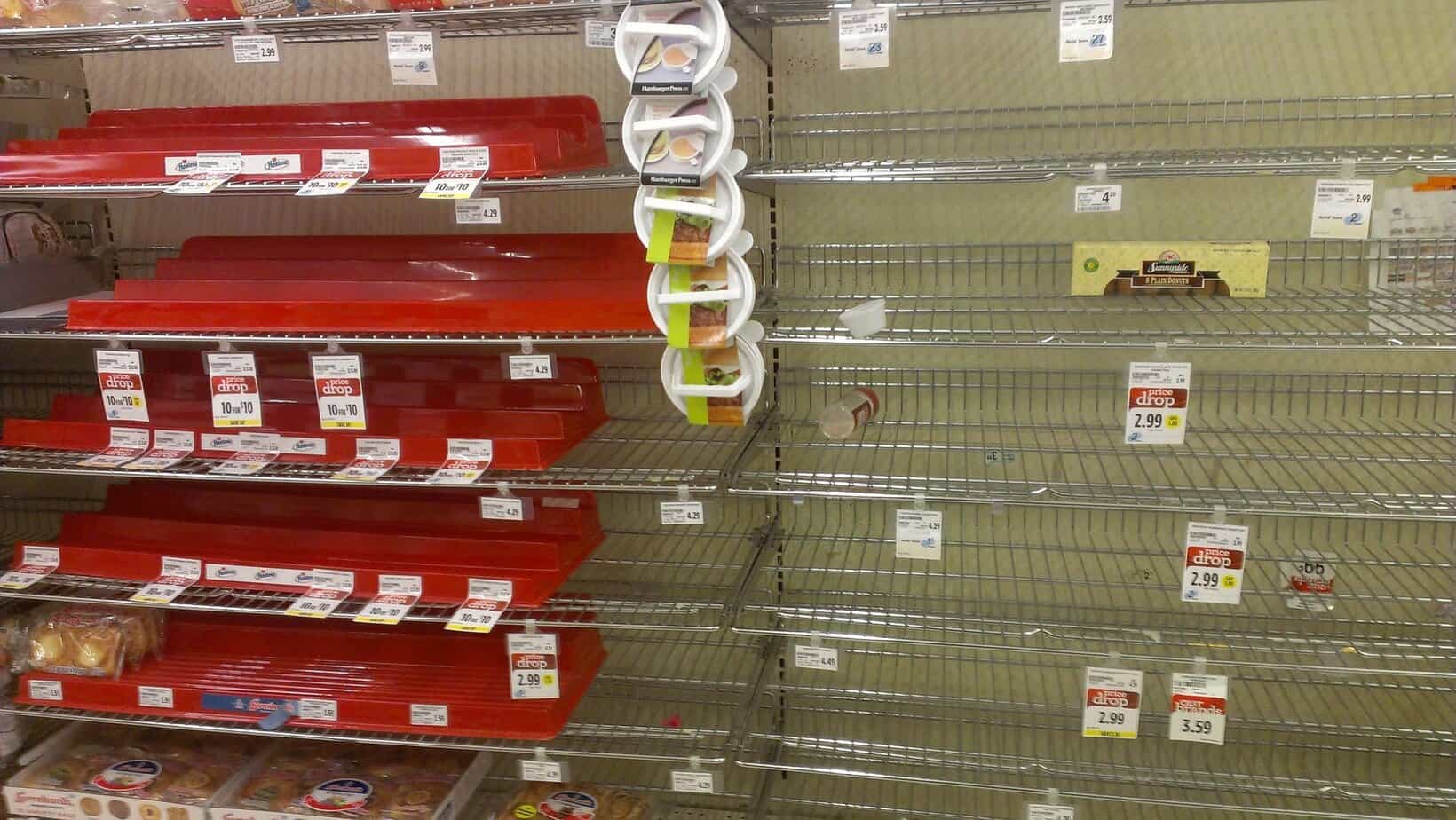
Walk through any supermarket in America and it feels like food is unlimited. Shelves stretch from floor to ceiling, pallets of bottled water sit in the aisles, and refrigerated cases hum with milk, eggs, and fresh produce.
It gives the impression that the food supply is massive, stable, and always waiting just behind the swinging doors in the back. That impression isn’t entirely true.
Modern grocery stores operate on speed and constant delivery, not huge stockpiles. When something interrupts that flow, the results can be surprisingly fast. A single grocery stores supply chain disruption can ripple through trucking routes, warehouses, and distribution centers, leaving store shelves empty long before most people realize there’s a problem.
Understanding why this happens matters. Once you see how the system actually works, the sudden appearance of empty shelves starts to make a lot more sense.
The Illusion of Abundance: Why Full Grocery Stores Aren’t as Secure as They Look
Walk into a typical American supermarket and everything feels stable. Bright lighting, long aisles, shelves stacked with pasta, canned soup, cereal, and snacks. It gives the impression that grocery stores are backed by massive reserves of food somewhere behind the building. They aren’t.
In reality, the modern supermarket is more like a distribution point than a warehouse. Most grocery stores only keep a small amount of inventory on hand. What you see on the shelves is often the majority of what the store currently has available. Once those items are purchased, the store depends on the next scheduled delivery to refill the gaps.
This becomes obvious during a grocery stores supply chain disruption.
Many high-volume items such as bread, milk, eggs, and fresh produce are delivered daily or several times a week. Stores expect those trucks to arrive exactly on schedule. When they do, the system looks smooth and effortless. Employees restock the shelves, customers keep buying, and the cycle continues without anyone thinking much about it. However, the illusion falls apart quickly when deliveries slow down.
Even a short delay can leave empty spaces where popular products used to sit. It doesn’t mean food has disappeared from the country. It simply means the pipeline feeding that specific store paused for a moment.
The United States Department of Agriculture has repeatedly pointed out that modern food systems prioritize efficiency and rapid distribution over large retail stockpiles.
That approach keeps food prices lower and reduces spoilage, but it also means grocery stores are operating with far thinner buffers than most people realize. And once shoppers start noticing those empty spaces, things can move even faster. People begin grabbing extra items “just in case,” which drains the remaining stock even quicker.
From the outside, grocery stores look like endless food warehouses. In reality, they’re just the final stop in a constantly moving system.
Grocery Stores Supply Chain Disruption: The Hidden System Behind Every Shelf
Every item in a grocery store has traveled a long road before it reaches the shelf. Shoppers rarely think about it, but the modern food system is a layered network of farms, processors, warehouses, trucking routes, and distribution hubs. When everything is running smoothly, the system is almost invisible.
But during a grocery stores supply chain disruption, that hidden network suddenly becomes very visible.
Take something simple like a jar of pasta sauce. Tomatoes may be grown in California, they’re harvested, then sent to a processing facility where they’re cleaned, cooked, and canned. The finished jars are packaged, palletized, and shipped to regional distribution centers. From there, they’re loaded onto trucks and delivered to individual grocery stores across several states. If you think about it, that’s a lot of moving pieces for one product.
Multiply that by tens of thousands of items in a typical supermarket, and you start to see how complex the supply chain really is. Each step depends on workers, machinery, transportation, fuel, packaging materials, and scheduling systems all functioning at the same time.
If one link slows down, the entire chain feels it.
For example, if a food processing plant loses workers or shuts down temporarily, fewer products reach distribution warehouses. A few days later, stores begin receiving smaller shipments. Soon after that, customers start noticing empty shelf spaces.
What makes the situation more fragile is how centralized the system has become. Instead of each store sourcing products locally, large grocery chains rely on massive regional distribution centers that supply hundreds of stores at once. If a single distribution hub experiences problems, the impact spreads quickly across entire regions.
According to the Food Industry Association, the typical grocery supply chain relies heavily on centralized distribution and high-frequency deliveries to maintain inventory levels. That efficiency keeps food flowing during normal conditions.
But when a grocery stores supply chain disruption hits anywhere along that path, even a minor problem can ripple outward and become something much bigger by the time it reaches the shelves.
Understanding that hidden system is the first step toward understanding why shortages sometimes appear so quickly.
Just-In-Time Inventory: The Reason Stores Don’t Stockpile Food
If you ask most shoppers why grocery stores run out of things during emergencies, you’ll often hear the same assumption: stores just didn’t prepare enough inventory.
The truth is simpler and a little more uncomfortable. Grocery stores aren’t designed to store large amounts of food at all. Instead, they rely on a logistics model called just-in-time inventory. This system keeps shelves stocked by scheduling frequent deliveries from distribution centers rather than storing large reserves in the building.
Under normal conditions, it works extremely well.
Trucks arrive every day or every few days carrying fresh shipments. Employees unload pallets, roll them into the back room, and restock the aisles. Products move quickly from truck to shelf to shopping cart. Inventory turnover is fast, efficient, and profitable.
But during a grocery stores supply chain disruption, the weakness of this system becomes obvious.
Because stores keep minimal extra inventory, there isn’t much buffer if deliveries stop or slow down. If a truck shipment gets delayed, the store doesn’t have a hidden warehouse full of backup products waiting in the back.
Once the shelves empty, that’s it until the next delivery arrives.
For example, bread and milk often have some of the fastest turnover in the store. These products move quickly and require frequent restocking. If deliveries are interrupted for just a couple of days, those sections can look bare surprisingly fast.
The same thing happens with shelf-stable foods when demand spikes.
During periods of uncertainty, experienced preppers often build their own small buffer at home rather than depending entirely on retail inventory. Long-term staples like rice, dried beans, pasta, and dehydrated meals store well for years when packaged properly.
Many people store these foods in sealed containers or preservation systems designed for long-term storage, such as heavy-duty Mylar bags with oxygen absorbers.
The idea is simple: if stores operate on just-in-time inventory, households can create their own just-in-case inventory.
Because when a grocery stores supply chain disruption slows deliveries even briefly, the shelves you depend on every week may empty faster than expected.

Grocery Stores Supply Chain Disruption: How a Small Problem Becomes Empty Shelves
One of the most misunderstood parts of modern logistics is how quickly small problems can grow into large shortages. A delay that seems minor inside the supply chain can spread outward in ways most shoppers never notice until the shelves start looking thin. That’s the cascading nature of a grocery stores supply chain disruption.
Imagine a trucking company that normally delivers food to several regional distribution centers. If a sudden driver shortage hits, shipments begin arriving late. At first, warehouses might only receive part of their normal inventory. They adjust by sending smaller loads to individual stores.
Store managers might not panic yet. After all, deliveries are still coming in. But customers notice something different. Maybe the pasta aisle only has a few brands left. Maybe the canned soup section looks half empty. These small gaps often appear before people realize a grocery stores supply chain disruption is underway.
Once shoppers start noticing missing products, behavior changes quickly.
Some people begin buying extra items, thinking supplies might get worse. That sudden increase in demand puts even more pressure on the system. The distribution center, already receiving smaller shipments, now has to fill larger store orders.
It can’t.
The result is what many people saw during the early days of the pandemic. Shelves emptied far faster than supply chains could refill them. It wasn’t that the country ran out of food overnight. The system simply couldn’t adjust fast enough to both a supply slowdown and a demand spike at the same time.
Transportation delays make this even worse. Trucks stuck in storms, port backups, mechanical breakdowns, and labor shortages can all create bottlenecks. Because modern supply chains are tightly scheduled, even a short disruption can ripple through the entire network.
For households that want a small buffer against sudden shortages, many preparedness-minded shoppers keep a rotating pantry and a simple stock of emergency foods like long-shelf-life freeze-dried meal kits.
The goal isn’t hoarding. It’s recognizing that when a grocery stores supply chain disruption begins somewhere in the system, the effects can reach your local supermarket faster than most people expect.
Panic Buying: The Multiplier That Drains Grocery Stores Overnight
Supply problems alone don’t always empty store shelves. In many cases, what really drains a grocery store is human behavior.
When people sense uncertainty, buying habits change almost immediately. Instead of picking up a week’s worth of groceries, shoppers start filling carts with far more than they normally would. It’s a natural reaction. No one wants to be the person who waited too long.
But panic buying acts like gasoline on a fire during a grocery stores supply chain disruption.
A store that normally sells twenty bags of rice per day might suddenly sell two hundred. Paper products, bottled water, canned foods, and shelf-stable meals disappear first. Within hours, shelves that looked completely normal that morning can look stripped down by evening.
This doesn’t necessarily mean the supply chain has collapsed. It means the rate of purchasing suddenly exceeded the rate of restocking.
One of the clearest examples happened during the early months of the COVID-19 pandemic. Grocery stores across the United States saw entire aisles emptied in a matter of days. The country still had factories producing toilet paper and food, but the just-in-time retail system wasn’t designed to handle that level of sudden demand.
According to research from the National Bureau of Economic Research, panic buying during crises can dramatically increase short-term shortages even when overall supply remains stable.
That behavior feeds on itself. Once shoppers see empty shelves, they assume supplies are disappearing and buy even more during their next trip. The cycle continues until deliveries catch up or buying habits return to normal.
This is one reason experienced preparedness-minded households quietly build small reserves before a crisis begins. Having a few weeks of food stored at home removes the pressure to rush to the store when everyone else suddenly decides they need the same items.
Simple preparedness tools like airtight food storage buckets designed for bulk grains and dry foods help extend the shelf life of pantry staples.
When panic buying collides with a grocery stores supply chain disruption, the result is something we’ve all seen before: empty shelves that appear almost overnight.
Real-World Disruptions That Emptied Shelves in the United States
If someone still thinks grocery shortages are just a theoretical problem, recent history says otherwise. The United States has already experienced several events that triggered visible grocery stores supply chain disruption across the country.
The most obvious example is the COVID-19 pandemic in 2020.
When lockdowns began and uncertainty spread, grocery stores saw massive spikes in demand. Staples like flour, yeast, rice, pasta, and canned food vanished from shelves. At the same time, food processors were dealing with labor shortages and temporary plant shutdowns. Trucking schedules were disrupted. Distribution centers struggled to keep up.
The food itself didn’t disappear. The system simply couldn’t adapt fast enough to the sudden shift in buying behavior.
Another example happened in May 2021 when a ransomware attack shut down the Colonial Pipeline, a major fuel pipeline supplying much of the East Coast. Gas shortages began appearing across several states as people rushed to fill their tanks. That fuel disruption affected trucking routes and distribution logistics, briefly increasing pressure on regional supply chains.
Severe weather can cause similar problems. Winter storms, hurricanes, and flooding regularly slow transportation routes across the country. If highways close or trucks can’t reach distribution centers, deliveries to grocery stores stall. Within a few days, the effects start appearing in stores that rely on those shipments.
Food processing plants are another vulnerable link. Many products depend on a small number of large facilities. When one of those plants slows down or temporarily shuts down, it can trigger a grocery stores supply chain disruption that spreads through multiple states.
This happened with meat processing plants during the pandemic, when outbreaks forced several facilities to reduce production. Grocery stores quickly saw shortages of certain cuts of beef and pork.
These events highlight something important. Modern food supply chains are incredibly efficient, but they are also tightly interconnected. When one part of the system struggles, the effects travel quickly through warehouses, trucks, and retail stores.
For households that want a small buffer against disruptions like these, many preppers keep a portion of their emergency food supply in long-term freeze-dried storage meals designed to last for years.
The lesson from recent history is simple: grocery stores supply chain disruption isn’t hypothetical. It has already happened, and it will happen again.
Grocery Stores Supply Chain Disruption and the Fragility of Modern Logistics
Modern logistics systems are incredibly efficient. That efficiency is what keeps grocery prices relatively stable and store shelves filled across a country as large as the United States. But efficiency often comes with a trade-off: resilience.
Over the past several decades, the food industry has streamlined operations aggressively. Warehouses have been consolidated, food processing plants have grown larger and distribution networks have been centralized to serve hundreds of stores from a single hub.
This system moves enormous volumes of food quickly, but it also creates vulnerabilities that can amplify a grocery stores supply chain disruption.
For example, a single large distribution center may supply hundreds of grocery stores across multiple cities. If that facility loses power, suffers a cyberattack, or shuts down because of labor shortages, the effects ripple outward immediately. Trucks stop leaving the warehouse, stores stop receiving deliveries and shelves begin thinning out within days.
The same issue exists in food processing.
Many everyday products come from only a handful of major facilities nationwide. Meat processing, dairy packaging, and grain milling have all seen significant consolidation over the past few decades. When one of those plants slows down or closes temporarily, production drops sharply.
Transportation is another weak point.
The entire grocery supply chain depends heavily on trucking. If there aren’t enough drivers, or if fuel distribution becomes unstable, deliveries begin falling behind schedule. Even small disruptions can throw off the tightly scheduled logistics that grocery retailers depend on.
Because these systems are optimized for speed, they often lack extra capacity to absorb shocks. That’s why a grocery stores supply chain disruption can spread so quickly once something goes wrong.
Prepared households often look at this fragility and make small adjustments at home. Instead of relying completely on weekly grocery trips, they build a modest pantry buffer that can cover several weeks of basic food needs.
Some also keep backup cooking options like compact propane camp stoves that can be used if power outages accompany a larger disruption.
None of this requires extreme preparation. It simply acknowledges an uncomfortable reality: modern logistics systems are powerful, but they’re not invincible.
Urban vs Rural Supply: Why Some Areas Run Out of Food First
Not every community experiences shortages the same way. When a grocery stores supply chain disruption begins, geography often determines how quickly empty shelves appear.
Urban areas are usually the most dependent on constant deliveries.
Large cities consume enormous amounts of food every day. Grocery stores in dense areas often have limited storage space, which means they rely heavily on daily or near-daily truck shipments. If deliveries slow down for even a couple of days, store managers may start seeing gaps in inventory almost immediately.
Population density also accelerates demand.
When a store in a busy city neighborhood begins running low on certain products, hundreds or even thousands of shoppers may visit that location in a single day. That level of traffic can drain remaining stock rapidly once people start buying extra items.
Suburban stores often have slightly more flexibility. They may have larger back rooms or access to multiple distribution routes. But they still depend heavily on regional warehouses and trucking networks. If those hubs experience problems, suburban stores quickly feel the impact of the same grocery stores supply chain disruption.
Rural areas sometimes experience shortages differently.
Smaller towns may have fewer grocery stores, which means fewer deliveries overall. If trucks are delayed, restocking might take longer simply because shipments are less frequent. However, rural communities sometimes benefit from something cities lack: proximity to local food producers.
Farm stands, local butchers, and regional agriculture can provide alternative food sources when retail supply chains slow down.
That doesn’t mean rural areas are immune to disruption. Many still rely on the same large distributors supplying major grocery chains. When those networks experience a grocery stores supply chain disruption, the effects eventually reach small-town stores as well.
Because supply timing can vary so much depending on location, some preparedness-minded households store a portion of their pantry in durable, airtight food storage containers designed to keep grains, beans, and other staples fresh for long periods.
It’s a simple way to reduce dependence on a supply chain that may behave very differently depending on where you live.
What Preppers Notice That Most Shoppers Miss
Most shoppers only notice problems once shelves are already empty. By that point, a grocery stores supply chain disruption is usually well underway.
People who pay closer attention to supply patterns often see the warning signs much earlier.
One of the first clues is reduced product variety. A shelf that normally carries eight different brands of pasta might suddenly have only three. The section isn’t empty yet, but the selection is noticeably smaller. That usually means stores are receiving partial shipments instead of their full inventory orders.
Another early signal is slower restocking.
Normally, a popular item that sells out in the morning might be refilled by the afternoon or the next day. During a developing grocery stores supply chain disruption, those empty spaces stay empty longer. Store employees may even place other products in the gap just to make the shelves look fuller.
Package size changes can also be a quiet indicator of supply strain.
Manufacturers sometimes reduce the size of products rather than raising prices immediately. You may see cereal boxes get thinner or snack packages contain slightly fewer servings. This tactic, often called shrinkflation, can appear when manufacturers are dealing with higher costs or unstable supply chains.
Another subtle sign is price volatility.
When transportation costs rise or production slows down, retailers may adjust prices quickly to reflect new supply conditions. Small price jumps across multiple food categories can hint that something deeper in the supply chain is shifting.
People who track these signals aren’t being paranoid. They’re simply paying attention to the logistics behind the shelves.
Because once a grocery stores supply chain disruption reaches the point where entire aisles are empty, the window for quiet preparation has already passed.

What Empty Shelves Teach Us About the Future of Food Security
When people see empty grocery shelves, the first reaction is usually shock. Stores are supposed to be reliable. Food is supposed to always be there. But the reality is that modern grocery systems depend on constant motion, and a grocery stores supply chain disruption exposes just how thin that margin really is.
The system itself isn’t broken.
In fact, the U.S. food distribution network is one of the most productive logistics systems ever built. It moves enormous amounts of food across thousands of miles every single day. Under normal conditions, it works so smoothly that most people never think about the farms, processing plants, warehouses, and trucks operating behind the scenes.
But that efficiency comes with tradeoffs.
Because the system prioritizes speed and low costs, it operates with very little slack. There aren’t massive reserves sitting behind most grocery stores. There aren’t weeks of extra inventory waiting in the back rooms. Instead, the system depends on deliveries arriving exactly when they’re scheduled.
When something interrupts that flow, a grocery stores supply chain disruption can quickly ripple through the retail level where shoppers see it.
The lesson isn’t that grocery stores will suddenly stop working altogether. History shows that supply chains usually recover after disruptions. Factories reopen, trucks catch up, and store shelves eventually refill.
The real lesson is about timing.
Short disruptions can create temporary shortages long before the larger system stabilizes. Those brief gaps are where many households feel the pressure. When everyone suddenly rushes to buy the same items at once, the just-in-time model struggles to keep pace.
That’s why many preparedness-minded households think differently about food security.
Instead of depending entirely on weekly grocery trips, they maintain a modest pantry buffer at home. Nothing extreme. Just a rotating supply of shelf-stable foods that can cover a few weeks if deliveries slow down or stores run temporarily short.
Because once you understand how quickly a grocery stores supply chain disruption can travel from a processing plant or distribution hub to your local supermarket, the idea of keeping a little extra food on hand stops sounding unusual. It just starts to sound practical.
Other resources:
What you should know about survival foods with decades of shelf life
The Foods that helped the pioneers survive crop failures and hard times
Survival Foods of the Native Americans
If you plan to build a storage room and equip it with everything needed > Start Here!