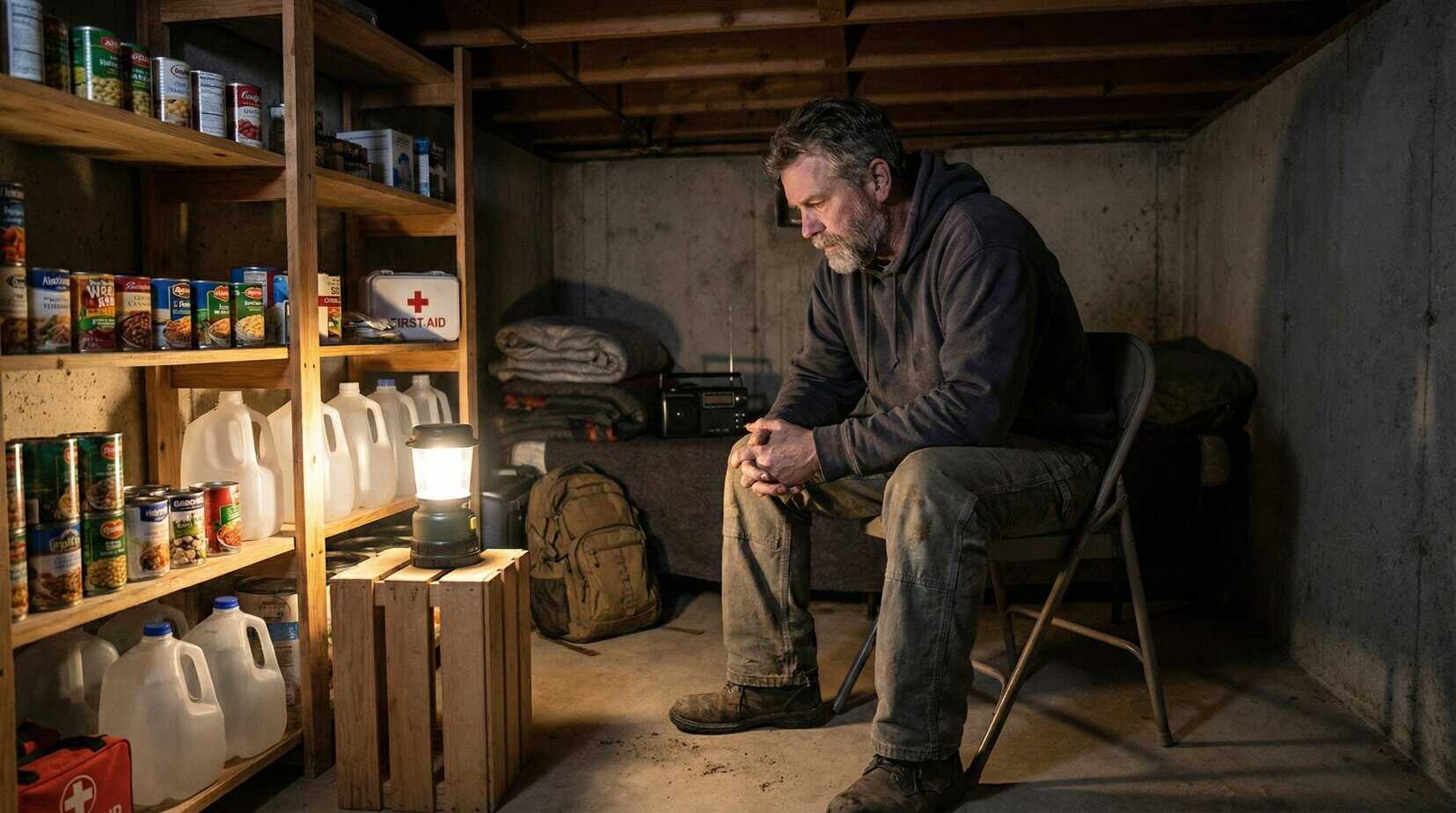
Most preppers spend years thinking about food, water, security, and power, yet far fewer seriously prepare for what long shelter-in events do to the human mind. Extended confinement doesn’t just test your supplies, it slowly wears down patience, discipline, and emotional control as days blur together and routines start to erode.
Anxiety builds in the background, small frustrations feel heavier than they should, and even strong families can find themselves struggling with motivation, communication, and focus as isolation stretches from weeks into months.
That’s why mental health prepping tips deserve the same level of respect as stored calories or backup power. Mental stability is survival gear, plain and simple. When anxiety, boredom, anger, or burnout go unmanaged during long shelter-in periods, the cracks start small but spread fast, affecting decision-making, relationships, and overall safety.
This article takes a straight-talk approach to maintaining psychological well-being during extended isolation, helping you avoid breakdowns, reduce conflict, and stay functional when leaving the house is no longer an option.
Mental Health Is Survival Gear, Whether You Like It or Not
Preppers are good at preparing for visible problems. Empty shelves, power outages, fuel shortages, storms that don’t move on when they’re supposed to. Mental strain doesn’t look like a threat at first, which is exactly why it catches people off guard. During long shelter-in events, psychological stress works quietly in the background, influencing decisions, shortening patience, and slowly degrading judgment even in households that are otherwise well supplied.
Mental health isn’t a luxury item you deal with after the crisis. It’s part of your core survival stack, right alongside food, water, and security. When stress runs unchecked, people make sloppy choices. They stop maintaining routines and they lash out at family members over small things. They also withdraw, shut down, or fixate on worst-case thinking that serves no practical purpose. Over time, those patterns don’t just make life miserable, they increase real-world risk inside the home.
This isn’t a fringe opinion or prepper philosophy, it’s well documented. The American Psychological Association has repeatedly outlined how prolonged stress and isolation impair cognitive function, emotional regulation, and interpersonal behavior, especially during extended emergencies and disasters. Their guidance on disaster-related stress makes it clear that untreated psychological strain directly affects safety, cooperation, and recovery potential.
What matters for preppers is understanding that resilience is not just about toughness or willpower. It’s about systems. You plan water because dehydration sneaks up on people. You plan mental health for the same reason. Ignoring it doesn’t make you stronger, it just delays the moment when cracks start showing under pressure.
If you treat mental stability as optional, long shelter-in events will expose that weakness fast. If you treat it as survival gear, you give yourself a much better chance of staying sharp, functional, and in control when the outside world stays closed longer than anyone expected.
What Long Shelter-In Events Actually Do to the Human Brain
Most people underestimate how deeply routine, movement, and social feedback regulate the brain. When those inputs disappear or shrink during a long shelter-in event, the mind doesn’t simply “get used to it” in a clean, linear way. Instead, stress responses stay partially activated while normal release valves like variety, novelty, and casual social contact are cut off. This is where mental health prepping tips stop sounding abstract and start becoming practical, because what follows isn’t about attitude, it’s about biology.
One of the first changes is how time is perceived. Days begin to blend together, motivation becomes harder to summon, and tasks that once felt simple start to feel heavier than they should. This isn’t laziness or weakness, it’s a brain responding to reduced stimulation and prolonged uncertainty. When the future feels undefined, the mind has trouble prioritizing effort, which is why people drift toward endless scrolling, sleeping too much, or zoning out instead of maintaining routines they know matter.
Fear also behaves differently during extended confinement. In the early stages of an emergency, fear can sharpen focus and push people to act. Over time, constant low-level anxiety becomes exhausting. The brain looks for certainty, and when it can’t find it, it fills the gaps with speculation, worst-case scenarios, or obsessive news consumption. That mental noise drains energy and makes it harder to think clearly, even when no immediate danger is present.
Social friction is another predictable outcome. Humans are wired for both connection and personal space, and shelter-in conditions distort that balance. Too much proximity without relief increases irritability, while too little outside interaction can amplify feelings of isolation, even in full households. Small disagreements take on emotional weight they wouldn’t normally carry, and people may react more strongly than they expect, then feel confused or frustrated afterward.
Understanding these effects matters because they’re not personal failures. They’re normal neurological responses to abnormal conditions. Preppers who recognize this early stop blaming themselves or their family members and start adjusting systems, expectations, and routines to work with the brain instead of fighting it. That awareness is what turns knowledge into resilience and sets the stage for the practical strategies that come next.
Mental Health Prepping Tips Start Before the Doors Close
One of the biggest mistakes people make is assuming mental strain is something you deal with once the shelter-in order starts. By then, you’re already reacting instead of preparing. The reality is that most psychological breakdowns during long confinement don’t come from the event itself, they come from mismatched expectations. People tell themselves it won’t be that bad, that they’ll “figure it out,” or that stress will somehow stay manageable on its own. That optimism fades fast once normal routines disappear.
Preparation starts with accepting an uncomfortable truth: long shelter-in events are mentally dull, emotionally grinding, and socially restrictive, even when you’re safe and well supplied. Planning for that reality ahead of time changes how you experience it later. When you expect boredom, frustration, and mood swings, they stop feeling like personal failures and start feeling like conditions to manage. That shift alone reduces panic and self-blame, which are two of the biggest stress amplifiers in isolation.
Expectation-setting also matters at the household level. Everyone under the same roof needs a shared understanding that emotions will fluctuate and that bad days don’t mean the plan is failing. This is especially important for families with kids or teens, who often internalize stress without knowing how to articulate it. Mental health prepping tips aren’t just about coping skills, they’re about creating a psychological buffer before stress hits full force.
Authoritative research backs this up. The Centers for Disease Control and Prevention has emphasized that preparedness, routine planning, and realistic expectations significantly reduce anxiety and emotional distress during prolonged emergencies and quarantines. Their guidance on coping with isolation highlights that mental outcomes improve when people plan ahead rather than improvise under pressure.
This kind of preparation doesn’t require therapy jargon or complicated systems. It requires honest conversations, basic planning for downtime and routine, and a clear understanding that mental strain is predictable, not shameful. When the doors close and the days start stacking up, the households that planned for the mental load are the ones that stay functional instead of just enduring.

The Silent Killers: Cabin Fever, Irritability, and Mental Fatigue
Cabin fever isn’t just restlessness or boredom, it’s a slow buildup of sensory deprivation, monotony, and suppressed stress that leaks out sideways. People expect it to feel dramatic, but most of the time it shows up quietly through short tempers, sarcasm, overreactions, and a constant feeling of being “on edge” without a clear reason. That’s what makes it dangerous. By the time someone realizes what’s happening, the household dynamic has already shifted.
Mental fatigue plays a big role here. During long shelter-in events, the brain never fully powers down. Even when nothing is actively wrong, uncertainty keeps the stress response partially engaged. That background tension drains emotional bandwidth, which means less patience for noise, clutter, mistakes, or other people’s habits. The same behaviors you ignored before confinement can suddenly feel intolerable, not because they changed, but because your capacity to absorb them shrank.
Irritability also feeds on itself. One sharp comment leads to defensiveness. Defensiveness leads to withdrawal or escalation. Over time, people stop addressing small issues because they don’t want conflict, but unspoken frustration doesn’t disappear, it accumulates. Eventually it surfaces as an argument that feels out of proportion to the trigger, leaving everyone wondering how things got so heated so fast.
This is where many preppers get tripped up by mindset alone. Telling yourself to “stay positive” doesn’t fix mental fatigue. Grit without systems just turns into burnout. What actually helps is recognizing early warning signs and intervening before tension becomes the default atmosphere. That means building in pressure release, not waiting for things to boil over.
Cabin fever doesn’t mean your plan is failing. It means you’re human and operating under unnatural conditions for an extended period. The households that stay stable aren’t the ones that never get irritated, they’re the ones that notice it early and adjust before irritation turns into resentment. In the next section, we’ll talk about one of the most effective tools for doing exactly that: daily structure that holds even when motivation doesn’t.
Daily Structure Beats Motivation Every Time
When people talk about staying mentally strong during long shelter-in events, they usually focus on motivation, willpower, or attitude. That’s backwards. Motivation is unreliable under stress and isolation, and it gets worse the longer confinement drags on. Structure, on the other hand, keeps working even when you don’t feel like it. That’s why daily routines are one of the most underrated survival tools in extended shelter-in situations.
The human brain likes predictability, especially when the outside world feels uncertain. A loose but consistent daily framework reduces anxiety by removing constant decision-making. You’re not waking up every morning asking yourself what you should do or how you’re supposed to feel. You already know. That predictability frees up mental energy for problem-solving and emotional regulation instead of wasting it on indecision and drift.
Structure doesn’t mean rigid schedules down to the minute. In fact, overly strict plans tend to collapse after a few bad days. What works better is anchoring the day with non-negotiables. Wake time, meals, physical movement, chores, quiet time and some form of connection or shared activity. When those anchors stay consistent, everything else becomes easier to manage, even if sleep was poor or moods are low.
This matters because boredom and aimlessness feed mental fatigue. Without structure, days stretch out in an unbroken blur, which amplifies cabin fever and increases conflict. People feel restless but unmotivated at the same time, which is a miserable place to live mentally. A predictable rhythm breaks that cycle by giving the day shape, even when the outside world offers none.
Preppers who rely on motivation tend to burn out quickly. Preppers who rely on structure stay functional longer than they expect. You don’t need to feel driven to follow a routine, you just need to respect it enough to show up. Over weeks or months, that consistency becomes a stabilizing force that protects mental health without requiring constant effort.
Conflict Under One Roof: Keeping Families From Turning on Each Other
Long shelter-in events don’t create new personality problems, they amplify existing ones. Stress lowers patience, confinement removes escape valves, and familiar people start seeing each other at their worst moments, day after day. Even strong families can feel blindsided by how quickly tension builds, especially when everyone is trying to hold it together while quietly running on empty.
One of the biggest drivers of conflict is the loss of personal space. Humans need psychological breathing room, not just physical distance. When there’s no clear boundary between work, rest, responsibility, and downtime, people feel crowded even in large homes. That pressure often comes out as irritation over small things like noise, mess, or habits that never mattered before. The argument isn’t really about the dishes or the volume of the TV, it’s about overstimulation and lack of control.
Another issue is role overload. During shelter-in periods, people take on multiple responsibilities at once: provider, parent, teacher, caretaker, planner, emotional support. Without intentional role separation, resentment builds fast. Someone feels like they’re carrying more weight than others. Someone else feels criticized or micromanaged. Left unaddressed, these feelings harden into patterns that make cooperation harder instead of easier.
The fix isn’t pretending everyone should get along all the time. That’s unrealistic and sets people up to feel like they’re failing. What helps is normalizing tension and giving it safe outlets. Scheduled alone time, even if it’s short. Clear division of responsibilities so expectations don’t stay fuzzy. Agreed-upon rules for arguments, including when to pause instead of pushing through just to “get it over with.”
Families that stay functional don’t avoid conflict entirely. They manage it before it turns personal or explosive. When people feel heard, respected, and given space to decompress, disagreements lose their edge. In the next section, we’ll look at how different age groups process shelter-in stress differently, and why ignoring that reality creates problems that no amount of discipline can fix.
Kids, Teens, and Elderly Family Members: Different Brains, Different Risks
One of the fastest ways a shelter-in situation goes sideways is assuming everyone experiences stress the same way. Adults often expect kids to be resilient because they seem adaptable, teens to be difficult because they always are, and older family members to simply “cope” because they’ve lived through hard times before. None of those assumptions hold up under prolonged confinement, and relying on them creates blind spots that lead to preventable problems.
Children tend to absorb stress indirectly. They may not understand the situation, but they feel changes in routine, tone, and emotional availability immediately. When adults are distracted, anxious, or short-tempered, kids often respond with regression, acting out, clinginess, or emotional outbursts that don’t seem to match the moment. Discipline alone doesn’t fix this because the behavior isn’t about defiance, it’s about insecurity and lack of predictability.
Teenagers face a different set of pressures. Isolation hits them harder socially, even if they don’t say it out loud. Loss of peer contact, canceled milestones, and a sense of stalled progress can turn into anger, withdrawal, or reckless behavior inside the home. Teens also test boundaries more aggressively under stress, not because they want conflict, but because control feels scarce and autonomy matters more at that stage of life.
Elderly family members often get overlooked in shelter-in planning. Many already deal with reduced mobility, health concerns, or isolation, and confinement can intensify feelings of uselessness or depression. At the same time, some older adults resist changes to routine or authority shifts within the household, which can create friction if roles aren’t clearly defined and respected.
The key across all age groups is adjustment, not uniformity. Different people need different kinds of structure, reassurance, and autonomy. Preppers who account for those differences early reduce tension across the entire household. When everyone’s needs are acknowledged instead of flattened into a one-size-fits-all approach, stress levels drop, communication improves, and the home becomes more stable under pressure.
Movement, Sunlight, and the Body–Mind Connection Preppers Forget
When shelter-in events drag on, mental health often gets treated like a purely psychological problem. Think better thoughts, stay positive, manage stress. That framing misses a critical reality: the brain is part of the body, and when the body stagnates, the mind follows. Lack of movement and reduced exposure to natural light quietly undermine emotional stability, sleep quality, and stress tolerance long before people recognize what’s happening.
Physical movement is one of the fastest ways to regulate mood under confinement. It burns off excess stress hormones, improves sleep, and restores a sense of agency that isolation tends to erode. This doesn’t require a home gym or intense workouts. Walking laps, bodyweight exercises, stretching, or even regular chore rotation all signal to the nervous system that you’re active, capable, and not trapped. When movement disappears, irritability and low mood tend to spike, even in people who don’t see themselves as “exercise types.”
Sunlight matters just as much. Extended time indoors disrupts circadian rhythms, which affects sleep, focus, and emotional regulation. Poor sleep then feeds anxiety, impatience, and fatigue, creating a feedback loop that feels mental but starts with biology. Opening blinds, spending time near windows, or getting outside briefly when possible helps anchor the body’s internal clock. When natural light isn’t available, consistent wake times and intentional lighting choices become even more important.
Public health research backs this connection strongly. The National Institutes of Health has documented how physical activity and light exposure directly influence mental health, stress response, and resilience during periods of confinement and reduced mobility. Their findings emphasize that movement and circadian regulation are foundational, not optional, for psychological well-being.
Preppers often focus on conserving energy during shelter-in events, which makes sense physically, but conserving too much movement costs you mentally. A body that never gets taxed lightly starts to feel heavy and sluggish, and the mind mirrors that state. Maintaining even modest physical routines helps preserve emotional balance and keeps days from blending into an exhausting blur.
Passing Time Without Rotting Your Brain
Boredom isn’t harmless during long shelter-in events. Left unmanaged, it turns into irritability, restlessness, and a sense that time is being wasted, which quietly feeds resentment and low mood. Many people default to passive distractions like endless phone scrolling or binge-watching, not because they’re relaxing, but because they require the least effort. The problem is that passive consumption rarely leaves you feeling better afterward, especially when it becomes the main way you pass the day.
What actually helps is intentional engagement. Activities that involve light challenge, creativity, or shared participation give the brain something to chew on without overwhelming it. This is where low-tech entertainment earns its place in preparedness planning. Card games, board games, puzzles, drawing, journaling, simple crafts, or learning a small new skill all help mark the passage of time in a way that feels meaningful instead of empty.
Shared activities matter even more. When people do something together, even something trivial, it creates emotional checkpoints in the day. A nightly card game, a shared movie ritual, or a weekly project gives structure to time and reduces the sense that every day is the same. These moments don’t have to be deep or sentimental to be effective. Consistency is what matters, not intensity.
There’s nothing wrong with using tools that make this easier. A couple of well-chosen board games, decks of cards, puzzle books, or art supplies can go a long way toward preventing boredom from turning into mental drag. These aren’t luxury items, they’re pressure valves. Used intentionally, they help keep morale steady without turning into mindless avoidance.
The goal isn’t to stay constantly entertained. That’s unrealistic and exhausting. The goal is to avoid mental stagnation. When your days include small points of interest, light challenge, and shared engagement, time stops feeling like something you’re trapped inside. That shift alone reduces frustration and helps households stay emotionally functional over the long haul.
Mental Health Prepping Tips for Weeks or Months of Isolation
The hardest part of long shelter-in events usually isn’t the beginning, it’s the middle. The initial urgency fades, adrenaline drops off, and the situation becomes a grind rather than a crisis. This is where burnout sets in. People stop feeling alert and start feeling worn down, even though nothing dramatic is happening. Motivation dips, routines feel heavier, and emotional resilience gets thinner without an obvious trigger.
What changes after the short-term phase is the sense of time. Early on, people think in days. Later, they start thinking in vague stretches, which makes it harder to measure progress or feel a sense of accomplishment. Without intentional markers, weeks slide together and morale quietly erodes. That’s why long-duration mental health prepping tips focus less on intensity and more on sustainability. You’re not trying to power through, you’re trying to last.
Burnout often shows up as emotional flatness rather than panic. People feel numb, disengaged, or indifferent. Others become unusually cynical or irritable, snapping over things they know don’t matter. These reactions are easy to misinterpret as personal failure or bad attitude, but they’re often signs that the mental load has gone on too long without adjustment. When this happens, the answer isn’t pushing harder, it’s changing pace.
This is where flexibility becomes critical. Routines that worked in week two may need adjustment by week six. Goals should shrink, not expand. Rest needs to be treated as a requirement, not a reward. Rotating responsibilities, introducing small changes in daily rhythm, or planning minor events to look forward to can reset mental energy without disrupting stability.
Preppers who plan only for short-term endurance often struggle here. The ones who think in phases, acknowledging that mental needs evolve over time, maintain better emotional balance and decision-making ability. Long shelter-in events aren’t won by toughness alone, they’re managed by adaptation. In the next section, we’ll look at how belief systems, purpose, and perspective help people stay grounded when timelines disappear entirely.
Faith, Philosophy, and Meaning When the Days Blur Together
When shelter-in events stretch on without a clear end date, practical routines can keep you functional, but they don’t always answer the deeper question people start asking quietly: what is this all for? When timelines disappear, morale doesn’t just depend on comfort or entertainment, it depends on meaning. People need a reason to keep showing up to the day, even when nothing seems to change.
For some, that meaning comes from faith. Prayer, scripture, or spiritual routines provide structure and perspective that don’t depend on external conditions. They offer continuity when the outside world feels unstable and remind people that suffering, uncertainty, and patience aren’t new human experiences. Faith-based practices also create natural pauses in the day, moments of reflection that help regulate emotion and reduce mental noise.
For others, philosophy fills that role. Stoic ideas about focusing on what you can control, accepting what you can’t, and treating hardship as a test of character resonate strongly during long confinement. Purpose can also be practical. Protecting family, maintaining the household, staying mentally sharp for what comes next. When people frame their daily actions as service to something larger than immediate comfort, stress becomes more tolerable.
What matters isn’t which belief system you choose, it’s that you have one. Without meaning, shelter-in life can feel like pointless waiting. With it, even repetitive or difficult days feel anchored to something intentional. Preppers who account for this dimension don’t just survive confinement, they stay mentally oriented toward the future.
Warning Signs You or Someone Else Is Slipping
One of the most dangerous assumptions during long shelter-in events is believing you’ll clearly recognize when something is wrong. Mental decline under stress is rarely dramatic at first. It tends to show up as subtle shifts in behavior that are easy to rationalize away, especially when everyone is tired and conditions are already abnormal. The problem isn’t missing a single bad day, it’s ignoring patterns that quietly settle in.
Withdrawal is one of the earliest warning signs. Someone stops engaging in shared activities, avoids conversation, or spends excessive time sleeping or isolating. On the other end of the spectrum, increased agitation can signal trouble just as clearly. Snapping over minor issues, constant negativity, or disproportionate anger often indicate emotional overload rather than personality flaws. When these behaviors persist, they deserve attention, not dismissal.
Changes in routine are another red flag. Skipping basic hygiene, abandoning responsibilities, or losing interest in things that previously helped pass the time can point to depression or burnout. For some people, the warning sign is the opposite. Overcontrol, rigid behavior, or obsessive focus on rules and preparedness tasks can be a way of coping with anxiety that’s spiraling underneath the surface.
Substance use deserves special attention here. Increased reliance on alcohol, medications, or other numbing behaviors is a common but risky coping strategy during confinement. It often starts as a way to take the edge off and slowly becomes a crutch that worsens mood instability, sleep problems, and conflict. Left unchecked, it can escalate into a safety issue, not just a health concern.
The key is early, calm intervention. You don’t need to diagnose anyone or turn every mood change into a crisis. You do need to notice trends and respond with curiosity instead of accusation. Simple check-ins, adjustments to routine, or temporary relief from responsibilities can make a significant difference if applied early. Ignoring these signs doesn’t make them go away, it just allows them to harden into something more difficult to manage.

The Long View: Re-Entry, Recovery, and Mental Aftershocks
When a long shelter-in event finally ends, most people expect relief to be immediate and complete. In reality, re-entry often feels awkward, disorienting, or emotionally flat. After weeks or months of living in a contained, highly controlled environment, returning to normal movement, social interaction, and external noise can overwhelm the nervous system. Some people feel anxious leaving the safety of routine, while others feel strangely detached from a world that moved on without them.
This phase catches many preppers off guard because it doesn’t fit the usual crisis narrative. You survived. You managed. You held things together. So why doesn’t it feel like a victory? The answer is that prolonged stress doesn’t shut off cleanly. The brain adapts to confinement, vigilance, and reduced stimulus, and it needs time to recalibrate. Crowds, decisions, and even casual social interaction can feel draining at first, not because something is wrong, but because your baseline shifted.
There can also be emotional fallout once the pressure lifts. During confinement, people often suppress feelings just to function. When the situation ends, those emotions finally surface. Exhaustion, irritability, sadness, or even grief for lost time and missed milestones are common. Families may argue more after the event than during it, simply because they’re no longer in survival mode and have the mental space to process what they went through.
The mistake here is rushing the transition. Just as routines were essential during shelter-in life, gradual re-entry helps stabilize mental health afterward. Maintaining some structure, limiting overstimulation, and giving yourself permission to feel out of sync for a while all support recovery. This is also the moment to reflect honestly on what worked, what didn’t, and where mental strain showed up, because those lessons matter for the next disruption.
Long shelter-in events don’t end cleanly at the door. They taper off mentally, often in uneven ways. Preppers who understand that don’t judge themselves harshly for needing time to readjust. They treat recovery as part of preparedness, not an afterthought.
Final Reality Check: Preppers Who Ignore Mental Health Pay for It
There’s a hard truth that doesn’t get talked about enough in preparedness circles. You can have a full pantry, backup power, solid security, and a detailed plan, and still watch everything unravel if mental health collapses under pressure. Long shelter-in events don’t reward toughness alone. They reward adaptability, emotional regulation, and the ability to live with uncertainty without turning on yourself or the people around you.
Mental strain doesn’t announce itself with alarms. It shows up as poor decisions, unnecessary conflict, burnout, and slow erosion of discipline. It’s the prepper who stops rotating food because motivation dried up. The family that starts fighting over minor issues because no one has the bandwidth left to de-escalate. The individual who mentally checks out and drifts because the days stopped feeling meaningful. None of that looks dramatic in the moment, but it carries real consequences.
The mistake is thinking mental health is something you either have or don’t. In reality, it’s something you maintain. Just like water storage, it requires planning, systems, and regular attention. Ignore it, and it degrades. Support it, and it quietly holds everything else together. The preppers who stay functional during long shelter-in periods aren’t special, tougher, or emotionally immune. They simply planned for the mental load instead of pretending it wouldn’t matter.
If there’s one takeaway from this entire guide, it’s this: mental stability is not a bonus feature of preparedness, it’s a foundational one. Treat it with the same seriousness you give food, water, and security, and your chances of coming through long confinement intact increase dramatically. Ignore it, and even the best-laid plans can fail in ways no checklist will catch.
That’s the difference between enduring a shelter-in event and actually surviving it.
Other Useful Resources:
Planning To Evacuate The City When The SHTF
Find Out What’s the Closest Nuclear Bunker to Your Home
Five Reasons Why Most Preppers Won’t Survive A SHTF Event
Knowledge to survive any medical crisis situation during a major disaster