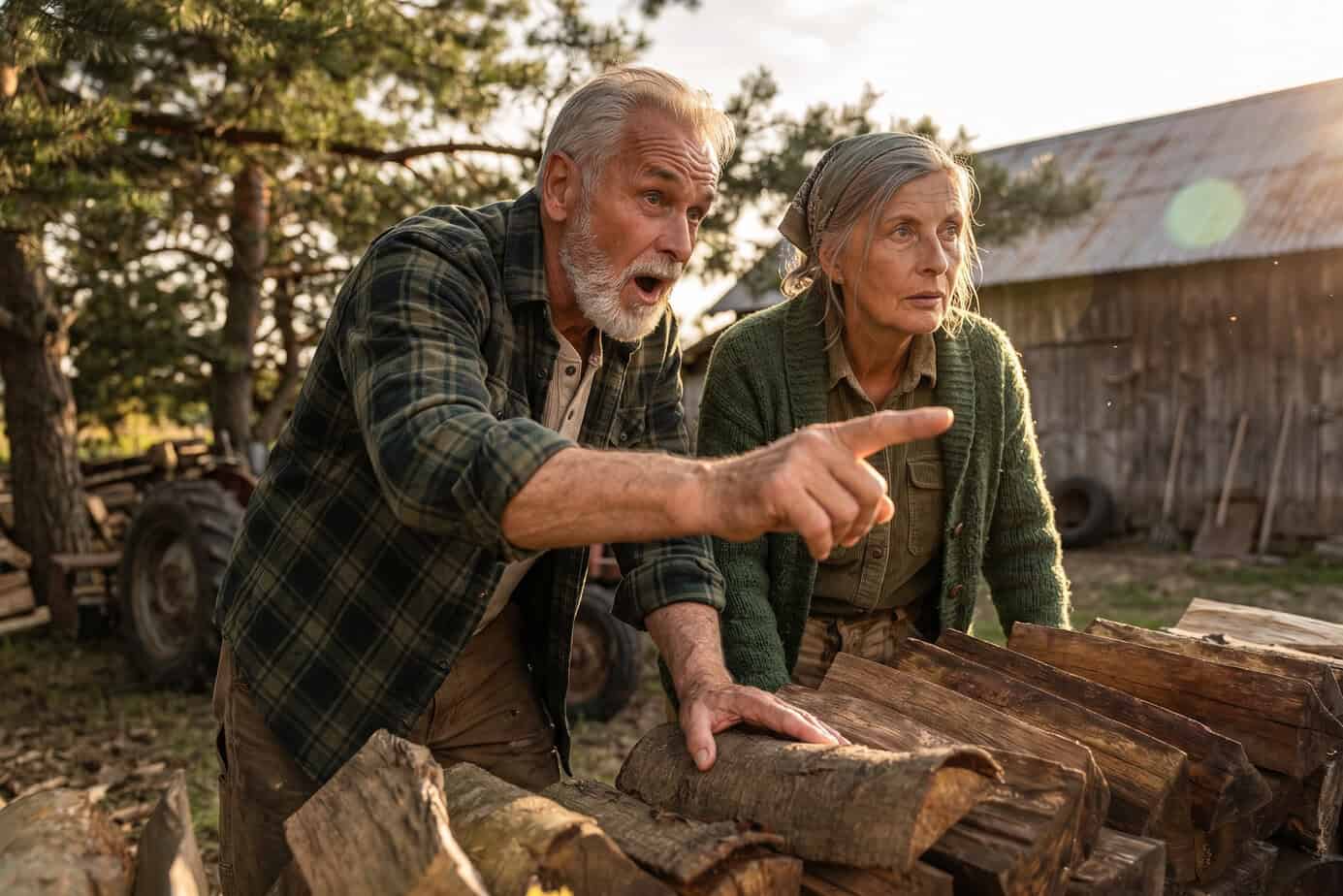
Living out past the pavement gives you room to stockpile, garden, raise livestock, and store fuel without a homeowners association breathing down your neck. It also gives you neighbors who notice everything, from the extra chest freezer humming away in your garage to the pallet of canned goods that showed up on your porch last Tuesday.
Rural prepper OPSEC is the practice of managing what those neighbors, delivery drivers, repairmen, and casual acquaintances actually learn about your preparedness efforts, and for most rural preppers, that practice is a lot weaker than they assume.
In a small town, information travels faster than most social media algorithms, passed along at the feed store counter, the church potluck, or while waiting in line at the gas station. You might believe you have kept your food storage, your firearms, and your emergency plans quiet, but there is a good chance that half the county already has a rough idea of what you have squirreled away out back.
This article walks through the everyday ways rural preppers accidentally advertise their preparedness, from loose talk with contractors to visible stockpiles that catch the eye of anyone driving past on the county road. It also covers practical habits that tighten up your rural prepper OPSEC without turning you into a recluse or damaging the community relationships that matter most during an actual emergency.
Security through obscurity only works when the obscurity is real, and in a rural setting, that takes a lot more intention than most people assume when they first start prepping.
What Rural Prepper OPSEC Actually Means
Operational security started as a military concept, formalized after planners realized that adversaries could piece together seemingly harmless details and use them to predict what a unit intended to do next.
The federal government still defines the process the same way today: identify your critical information, figure out who might want it, look at how that information could leak, weigh the risk, and then apply countermeasures, a framework laid out clearly by the National Institute of Standards and Technology.
Rural prepper OPSEC borrows that same structure and applies it to homesteads, hobby farms, and rural properties where the “critical information” is your food reserves, your water sources, your firearms, and the fact that you are more ready for a disruption than most of your neighbors. The goal is not paranoia. It is simply recognizing that every purchase, every delivery, and every conversation is a small data point, and enough small data points add up to a fairly complete picture of what you have on hand.
What makes this tricky in a rural setting is scale. A city apartment dweller with a stocked closet has one door, one hallway, and a handful of neighbors who might notice anything at all. A rural property has a driveway visible from the road, outbuildings, livestock, a mailbox that fills up with packages, and a web of local relationships that stretches from the volunteer fire department to the church choir.
Applying rural prepper OPSEC properly means walking your own property and your own routines the way a stranger with bad intentions would, then asking honestly what conclusions that stranger could draw. Most people skip this step entirely and simply assume that because nobody has said anything to their face, nobody has noticed. In practice, silence usually just means the information has not become relevant yet, not that it was never collected in the first place.
The Small-Town Grapevine: Why Everyone Already Knows Your Business
Rural communities run on relationships in a way that suburban subdivisions never do, and that closeness is usually a genuine asset. People check on each other, share equipment, and show up when a barn roof needs fixing. The flip side is that this same network moves information at a speed that would embarrass most marketing departments.
A neighbor mentions to the mail carrier that your propane tank got topped off twice this month, the mail carrier mentions it to someone at the post office counter, and within a week half the township has a working theory about your winter plans.
Practicing rural prepper OPSEC in this environment means accepting that total secrecy is unrealistic and focusing instead on limiting the details that actually matter, such as exact quantities, storage locations, and the specific triggers that would cause you to bug in or bug out.
This grapevine effect gets stronger the smaller the town becomes, since the number of shared meeting points shrinks along with the population. In a place with one gas station, one diner, and one school, the same twenty- or thirty-people cross paths constantly, comparing notes without ever intending to compile a dossier on anyone. A comment about a new fence line, a rumor about a root cellar being dug, or an offhand remark about who was seen buying extra ammunition at the sporting goods counter can circulate for weeks.
Rather than fighting this dynamic head on, effective rural prepper OPSEC treats the grapevine as a known variable, something to plan around rather than something to eliminate, since eliminating it entirely is simply not realistic for anyone who wants to remain part of the community.
Deliveries, Trucks, and the Paper Trail You’re Leaving Behind
Bulk orders of freeze-dried meals, ammunition, water storage barrels, or generator parts all arrive the same way most rural packages do, on a delivery truck that stops at your mailbox in plain view of the road.
Drivers notice patterns even when they are not trying to, and a driveway that sees three or four large pallet deliveries a month stands out compared to the house next door that gets the occasional Amazon box. Freight companies delivering bulk grain, feed, or fuel often need someone home to sign, which means a real conversation happens at your door about what exactly is being unloaded.
Good rural prepper OPSEC involves staggering large purchases when possible, having items shipped in plain packaging, and considering a locked mailbox or a rural post office box for smaller high-value items rather than leaving everything sitting in the open where a passing vehicle can see it.
It also helps to think about timing. A pallet of canned goods that arrives the same week as a widely reported winter storm warning tells a very different story than one that arrives quietly in the middle of an ordinary June. Spreading large orders out across the calendar, rather than making one massive purchase right before a predicted emergency, keeps your buying pattern from lining up so neatly with events that a neighbor or driver might connect the dots.
Rural prepper OPSEC also extends to how you dispose of the packaging itself, since flattened boxes with the logos of ammunition manufacturers or long-term food storage companies sitting at the end of your driveway on trash day are essentially a public announcement, easily solved by breaking boxes down small or burning them in a burn barrel where that is legal and already part of normal rural life.
Social Media Slip-Ups That Blow Rural Prepper OPSEC Wide Open
Preppers tend to be proud of the work that goes into building a stocked pantry, a solar setup, or a well-organized bug out bag, and that pride often ends up on Facebook or Instagram. The trouble is that this kind of oversharing does more than tip off strangers online.
Research on burglary patterns has repeatedly shown that a large share of former offenders admit to using social media posts to identify targets and figure out when a home will be empty, a pattern documented by outlets covering both UK and US case studies.
In a rural setting, the risk compounds because your online followers likely overlap heavily with people who already know exactly where you live. Posting a photo of a newly stocked shelving unit, a fresh gun purchase, or a “heading out for the weekend” update undermines rural prepper OPSEC just as much as leaving your barn door wide open, and it does so to a much wider audience than the people driving past your property.
Local Facebook groups make this problem worse rather than better, since they combine the reach of social media with the tight geographic focus of small-town life. A post asking fellow group members where to find bulk rice or a good deal on ammunition cans is essentially a public announcement to your entire county that you are stocking up, and unlike a passing comment at the feed store, that post stays searchable indefinitely.
Location tagging compounds the exposure further, since geotagged photos of a new root cellar or a freshly poured concrete pad for a storage container can be traced back to a specific parcel with very little effort. Strong rural prepper OPSEC treats every public post as a permanent record rather than a fleeting update, and applies the same discretion online that a careful person would apply in a face-to-face conversation with someone they barely know.
The Loose-Lipped Feed Store and Farm Supply Run
Feed stores, farm co-ops, and rural hardware stores are some of the friendliest places left in American retail, and that friendliness comes with a cost for anyone trying to stay quiet. Clerks remember regulars, and regulars who suddenly start buying extra propane cylinders, cases of ammunition, or pallets of canning lids get noticed and talked about.
This is not malicious gossip most of the time, it is simply small-town curiosity, but it still chips away at rural prepper OPSEC one purchase at a time. Spreading out large purchases across several stores, paying with cash when it makes sense, and keeping small talk about your buying habits vague are simple habits that reduce how much of a footprint any single supplier ends up holding on your preparedness activities.
Loyalty programs and store accounts add another layer that many people overlook. A co-op membership tied to your name and address creates a purchase history that ties every bag of feed, box of shotgun shells, or roll of fencing wire directly back to your property over time, and that history can be pulled up by an employee or shared casually in conversation without any bad intent behind it.
Rural prepper OPSEC benefits from occasionally paying without triggering a loyalty scan, rotating which counter clerk you deal with when a store has more than one, and resisting the urge to explain exactly why you need forty pounds of rice or three cases of mason jars. A simple answer about canning season or feeding extra livestock usually satisfies curiosity without inviting further questions.

Visible Stockpiles: Sheds, Gardens, and Livestock That Give You Away
A garden that could feed forty people, a chicken coop built for two hundred birds, or a row of fuel drums lined up next to the barn all send a message to anyone who drives by slowly enough to look. Rural crime research consistently shows that agricultural properties are attractive targets precisely because of this visibility, with victimization studies finding that a large majority of surveyed farmers report being targeted by theft or trespassing at some point, according to research compiled by the Department of Justice’s Office of Justice Programs.
Screening outbuildings with tree lines or fencing, storing fuel and bulk feed out of direct sightlines from the road, and resisting the urge to build every project at maximum visible scale all support stronger rural prepper OPSEC. A well-placed trail camera near the tree line or driveway entrance also gives you a record of who has been slowing down to look at your property, which is useful information in its own right.
Solar panel arrays, satellite internet dishes, and oversized generators mounted outside a home tend to draw the same kind of attention, since they signal a level of self-sufficiency that stands out from typical rural infrastructure. Positioning this equipment behind a structure, painting exposed components a flat neutral color, or fencing the area with something as simple as livestock panels can cut down on how much a passerby actually registers at a glance.
The same logic applies to raised bed gardens and orchards planted right along a fence line facing the road, which can be shifted further back on the property or interspersed with ordinary landscaping plants. None of these changes require hiding your entire operation, they simply reduce the number of details a stranger can absorb in the few seconds it takes to drive past, which is really the whole point of rural prepper OPSEC applied to physical layout.
Talking to Contractors, Repairmen, and Well Drillers Without Oversharing
Anyone who works on your well, your septic system, your roof, or your electrical panel is going to see parts of your property that neighbors never will, and that access naturally invites conversation. A well driller who notices a hand pump backup or a hardened cistern is going to ask about it, and it is human nature to want to explain the reasoning behind your setup.
Good rural prepper OPSEC does not require you to be rude or evasive, but it does mean keeping answers general rather than detailed. You can explain that you like having a backup water source without walking a stranger through your entire water storage capacity, your filtration setup, and how many months your family could go without a municipal supply. Vetting contractors through referrals rather than random listings also reduces the number of people who end up with firsthand knowledge of your property’s layout.
It also pays to think about which areas of the property a given tradesperson actually needs to enter. An electrician working on the barn does not necessarily need a tour of the root cellar, and a roofer does not need to walk past the ammunition storage area to reach a ladder. Simple logistics, like unlocking only the gates or doors relevant to the job and keeping unrelated outbuildings secured during a visit, limit exposure without requiring any awkward conversation at all.
Rural prepper OPSEC in this context is mostly about planning ahead of the appointment rather than reacting in the moment, deciding beforehand what a visitor will and will not see before their truck ever pulls into the driveway.
Building Rural Prepper OPSEC Habits That Actually Stick
Habits outlast good intentions, and rural prepper OPSEC works best when it becomes a set of default behaviors rather than something you only think about occasionally. That starts with compartmentalizing information on a need-to-know basis, even within your own household, so that children and extended family are not casually repeating details to classmates or coworkers.
FEMA’s own guidance on building an emergency kit acknowledges that preparedness is meant to be practical and personal rather than performative, which is a useful reminder that you do not need public recognition for doing this well. Keeping receipts and paperwork for major purchases filed privately, using a dedicated email or a low-profile screen name for prepper forums, and avoiding matching everyone else’s tactical gear at the local range are all small adjustments that add up to meaningfully better security over time.
A short monthly review helps these habits stay consistent instead of fading after the first few weeks of enthusiasm. Sit down and think through what has changed on the property, who has visited, what has been purchased, and what conversations happened that might have revealed more than intended. This does not need to be a formal document, a quick mental walkthrough or a few notes in a private journal is usually enough.
Families who prep together benefit from agreeing on a short list of topics that stay inside the household, covering things like exact food quantities, firearm counts, and cash reserves, so that everyone is working from the same understanding of what rural prepper OPSEC actually requires rather than guessing at the boundaries individually.
Community Trust vs. Operational Security: Finding the Balance
There is a real tension between staying quiet and staying connected, and leaning too hard into secrecy can backfire during an actual disaster. Rural areas have a long tradition of organized watch programs, including Farm Watch initiatives that coordinate neighbors and local law enforcement to deter theft and trespassing on agricultural property.
Cutting yourself off from that kind of network in the name of rural prepper OPSEC can leave you more isolated and, ironically, more vulnerable, since neighbors who know nothing about you are also neighbors who will not notice if something is wrong at your place. The better approach is selective trust, building a small circle of neighbors or family who know enough to help in a real emergency while keeping the broader community aware of only what they need to know.
Think of this circle in layers rather than a single all-or-nothing decision. The outer layer, made up of casual acquaintances and business relationships, gets friendly conversation and nothing more. A middle layer of trusted neighbors might know that you keep extra supplies and a generator without knowing exact quantities or storage locations. An inner layer of close family or a couple of longtime friends might know considerably more, since these are the people you would actually call on or shelter with if conditions turned serious.
Structuring relationships this way lets rural prepper OPSEC coexist with genuine community involvement, rather than forcing a choice between being fully open and being completely closed off from the people around you.
My Two Cents
After all the checklists and countermeasures, the honest truth is that perfect secrecy in a rural community is not a realistic goal, and chasing it too hard can cost you the neighborly relationships that actually matter when things go sideways. What is realistic is trimming the obvious mistakes, the loose talk at the feed store, the vacation posts, the stockpile visible from the road, and replacing them with quieter habits that still let you be a good neighbor.
Rural prepper OPSEC works best as a mindset rather than a rulebook, something you apply naturally to purchases, conversations, and property choices without turning every interaction into an interrogation. I would rather have a handful of trusted neighbors who know roughly what I am capable of and would help in a pinch than a fortress nobody wants to come near.
Tighten up the details that genuinely put you at risk, stay reasonably private about specifics, and do not lose sleep over the fact that Gladys at the post office has a general idea you keep extra propane on hand. That is just rural life, and it has been that way long before prepping had a name.
Author Bio
Bob Rodgers is a lifelong outdoorsman, herbalist, and seasoned prepper with over 20 years of real-world survival experience. As the founder of PreppersWill.com, he shares practical advice on self-reliance, off-grid living, and disaster preparedness, no hype, just hard-earned lessons from decades of hands-on prepping.
Suggested resources for preppers:
Food preps when you lack money
The #1 food of Americans during the Great Depression
Survival Foods of the Native Americans
If you see this plant when foraging, don’t touch it!
