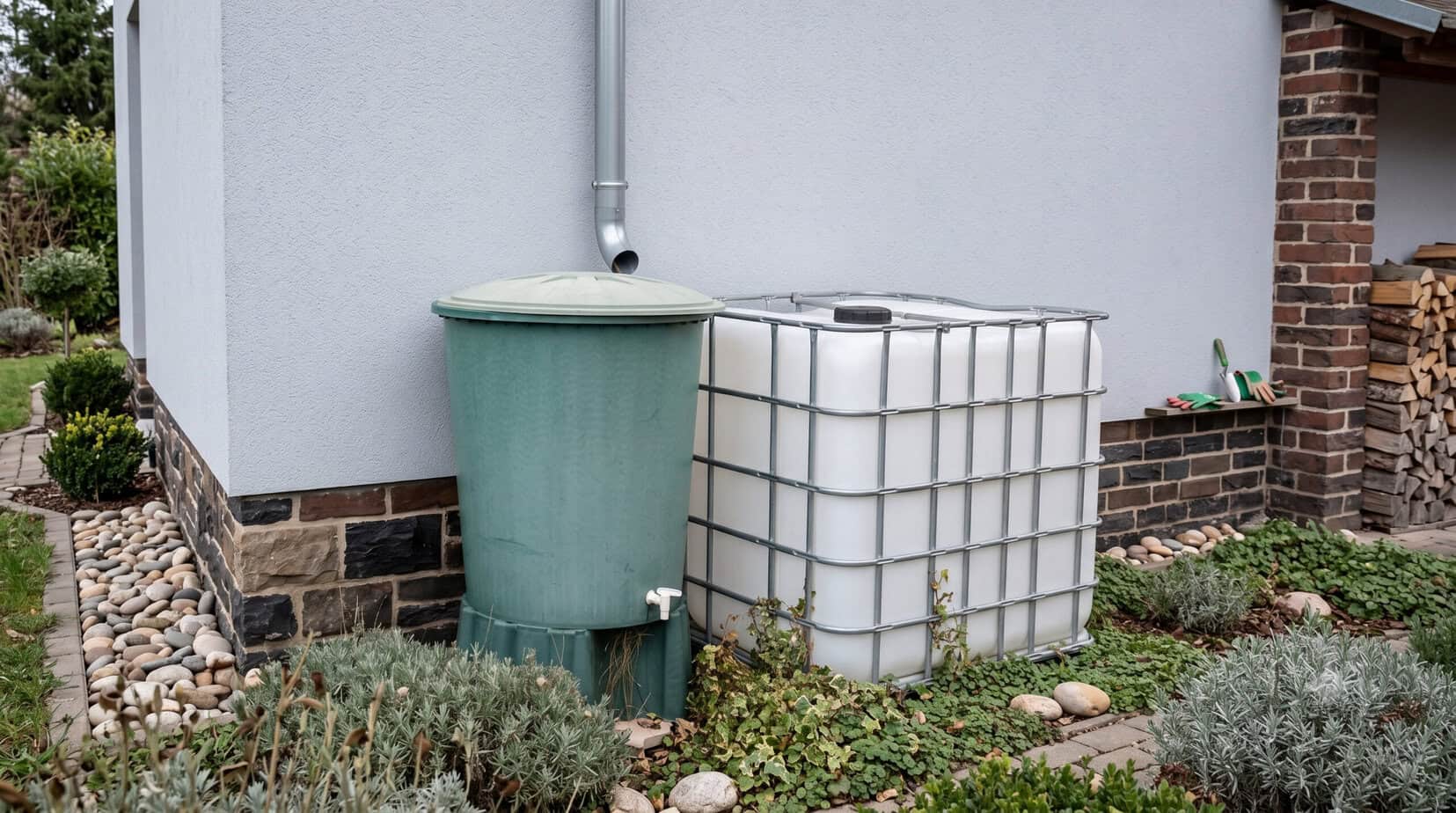
Homeowners across the American West have been quietly setting rain barrels under their gutters for years, often without realizing that in some counties this small act sits in a strange legal limbo.The gray zone of rainwater collection is real, and it becomes especially confusing once you cross into states that are simultaneously battling drought and clinging to water rights laws written more than a century ago.
On one hand, state agencies plead with residents to conserve water, offer rebates for efficient fixtures, and publish glossy brochures about sustainability. On the other hand, some of those same states technically restrict how much rain a person can legally store on private property, a contradiction that leaves plenty of people scratching their heads.
This article walks through why that contradiction exists, which states have loosened their rules and which ones still cling to outdated water doctrines, and what a homeowner actually needs to know before installing a rain barrel or cistern.
We will look at Colorado’s famous rain barrel ban and its eventual repeal, Texas’s remarkably generous incentives, and the patchwork of permits and caps found in places like Utah and Nevada. We will also touch on homeowners associations, local ordinances, and the practical steps you can take to stay on the right side of the law while still making the most of every storm that rolls through your neighborhood.
Drought conditions are not going away anytime soon, and understanding the rules before you buy equipment will save you time, money, and a fair amount of frustration down the road.
Understanding the Gray Zone of Rainwater Collection in America
There is no federal law that governs rainwater harvesting in the United States, which means every state gets to write its own rulebook, and many of those rulebooks contradict each other in ways that surprise newcomers.
Some states treat rain that falls on your roof as entirely yours to keep, while others still apply old water rights doctrines that were designed for rivers and streams, not rooftop runoff. This patchwork is exactly what creates the gray zone of rainwater collection that so many people stumble into without meaning to.
A family that moves from Georgia to Colorado, for example, might assume their new state treats rain barrels the same way their old one did, only to discover storage limits, mandatory lids, and restrictions on how the water can be used once it is collected.
The confusion is rarely about whether collecting rain is illegal outright, since outright bans are almost nonexistent, but rather about the specific conditions, caps, and paperwork attached to the practice in a given jurisdiction. That distinction matters enormously, because a homeowner who assumes the worst might avoid an activity that is perfectly legal, while another who assumes total freedom might build a system that violates a cap they never knew existed.
Understanding the gray zone of rainwater collection at a general level, before diving into any single state’s statutes, gives you the vocabulary and context needed to read those statutes correctly when you finally do sit down with them.
It also helps to remember that these laws were not written with climate change or suburban sprawl in mind. Many of the statutes governing water rights in the West predate indoor plumbing in some rural counties, let alone rooftop cisterns and modern irrigation drip lines.
Legislators today are essentially trying to retrofit nineteenth century property law onto twenty-first century conservation goals, and that mismatch is a big part of why the gray zone of rainwater collection continues to generate confusion even as public support for the practice keeps growing.
Why Drought States Regulate Rain Differently
The reason western states behave so differently from the rest of the country traces back to a legal framework called the prior appropriation doctrine, sometimes summarized as first in time, first in right.
Under this system, water rights were historically granted to the earliest users of a stream or river, and those rights are treated as property that can be bought, sold, and inherited. Because rain eventually feeds into those same waterways, some courts and legislatures have argued that capturing it before it reaches the ground technically interferes with rights that belong to someone downstream.
The National Agricultural Law Center offers a thorough breakdown of how this doctrine varies from state to state and why prior appropriation jurisdictions tend to be the ones with the tightest restrictions.
This is the historical root of the gray zone of rainwater collection that persists in drought prone states today. Eastern states generally rely on riparian rights, a system tied to owning land adjacent to a water source, which rarely creates conflicts over rooftop rain barrels. Western states inherited a scarcity mindset from mining camps and early agricultural settlements, and that mindset still shapes legislation more than a hundred years later, even as climate patterns shift and drought becomes a near permanent condition in parts of the Southwest.
Recognizing this history helps explain why a practice as small as catching rain in a barrel can still spark genuine legal debate in Denver or Salt Lake City while barely registering as a topic of conversation in Atlanta or Boston.
Colorado’s Rain Barrel Rules: A Case Study in the Gray Zone of Rainwater Collection
Colorado spent more than a century as the only state in the country with an outright ban on residential rain barrels, a policy rooted in the belief that homeowners collecting rainwater were essentially taking water away from farmers and other senior water rights holders downstream.
That changed in 2016 when the legislature passed House Bill 16-1005, which finally allowed single family homes and small multi-family properties to install up to two rain barrels with a combined storage capacity of 110 gallons.
Colorado State University Extension publishes a detailed factsheet explaining the specific rules, including the requirement that barrels have sealable lids and that the collected water only be used for outdoor irrigation on the same property where it was captured.
Even with the new law in place, Colorado remains a textbook example of the gray zone of rainwater collection because the state engineer retains authority to suspend the practice entirely if it is ever found to harm senior water rights, which means the rules could tighten again depending on future drought conditions.
Residents on private wells face a separate set of provisions under a different statute, adding yet another layer that a casual homeowner would never guess exists just by looking at a rain barrel sitting in a neighbor’s yard. Anyone shopping for equipment in Colorado should keep that 110-gallon combined limit firmly in mind before purchasing a tank that exceeds it.
Texas: The Opposite End of the Spectrum
If Colorado represents caution, Texas represents outright enthusiasm. The state actively promotes rainwater harvesting as a conservation strategy, and the Texas Water Development Board even hands out an annual Rain Catcher Award to recognize homeowners, businesses, and municipalities that build impressive systems.
Texas Tax Code Section 151.355 exempts rainwater harvesting equipment and installation labor from state sales tax, and Texas Property Code 202.007 specifically prohibits homeowners associations from banning the practice outright. The Texas Water Development Board maintains a full page of resources covering these incentives along with technical guidance for anyone planning a system of their own.
There is essentially no gray zone of rainwater collection to speak of within Texas itself, since the state has gone out of its way to remove ambiguity through explicit statutes rather than leaving the matter to interpretation. New state buildings are even required to incorporate rainwater harvesting into their design where feasible, a level of institutional support that few other states come close to matching.
Individual counties and municipalities can still layer on their own permitting requirements for larger cisterns, particularly when a system is intended to serve as a primary water source rather than a supplemental one, so it remains worth a quick call to your local building department before installing anything beyond a basic barrel.
Utah and Nevada: Permits, Limits, and Confusion
Utah legalized residential rainwater harvesting statewide in 2010, but the practice still comes with strings attached that trip up a lot of new homeowners. Systems above a certain size generally require registration with the state’s Division of Water Rights, and while small containers under a couple hundred gallons are typically exempt, anyone planning a larger cistern needs to check current thresholds before installing one.
Nevada takes a similar approach, generally allowing collection for personal, non-commercial use while reserving the right to require permits for larger systems, particularly those tied to a well or intended for anything beyond simple garden irrigation.
Neither state bans the practice, yet the layered permitting creates real friction for residents who simply want to reduce their water bill during dry summer months. This is another version of the gray zone of rainwater collection, where the activity is technically legal but the paperwork and thresholds are specific enough that a casual homeowner can accidentally cross a line without realizing it.
Because both states revisit their water statutes periodically as drought conditions intensify, it is worth checking directly with your state’s water resources division rather than relying on secondhand information from a neighbor or an outdated online forum post.
Nevada’s rules also depend heavily on which water district a property sits in, since some districts have adopted their own local guidance on top of the state framework. A rancher outside Las Vegas collecting rain for livestock may face a completely different set of expectations than a suburban homeowner in Reno collecting for a vegetable patch, even though both are technically operating under the same state statute.
This kind of regional variation inside a single state is one more reminder that reading the actual text of your local water district’s guidance matters more than relying on a general summary written for a national audience.
Arizona’s Encouraging but Inconsistent Approach
Arizona has generally positioned itself as friendly toward rainwater harvesting, offering tax incentives for equipment purchases and supporting research into large scale, or macro, harvesting through legislative study committees. House Bill 2363 established a joint committee to study macro-harvested rainwater and its potential impact on existing water rights, while House Bill 2830 allows cities and towns to create dedicated funds for rainwater harvesting programs.
Tucson in particular has built a national reputation for its rainwater harvesting ordinances, requiring certain new commercial developments to source a portion of their landscaping water from harvested rain.
Despite this generally supportive stance, legal scholars have pointed out that Arizona’s underlying water statutes were never explicitly rewritten to address rooftop collection the way Colorado’s were, leaving some open questions about larger commercial or agricultural scale systems. That gap is precisely where the gray zone of rainwater collection lingers in Arizona, tucked beneath an otherwise welcoming surface of rebates and public encouragement.
For an ordinary homeowner installing a rain barrel or two, Arizona poses little practical risk, but anyone scaling up toward irrigation sized cisterns should recognize that the legal framework is still catching up with the technology and the drought pressures driving demand for it.
California’s Rainwater Capture Act and Its Limits
California passed the Rainwater Capture Act in 2012, formally legalizing residential, commercial, and government rain barrel and cistern systems statewide, provided they comply with State Water Resources Control Board requirements. A follow up bill in 2018 went a step further, excluding newly constructed rainwater harvesting systems from triggering a property tax reassessment, which removed a financial disincentive that had quietly discouraged some homeowners from building larger systems in the first place.
Even so, California’s water law includes both riparian and appropriative rights in a dual system that can get complicated for larger agricultural operations trying to harvest significant volumes during wet years to offset drought years later on. For the average residential user sticking to barrels and small cisterns for garden irrigation, the rules are about as clear as anywhere in the country, and the gray zone of rainwater collection barely touches typical suburban installations.
Larger scale collectors, however, still need to navigate a more layered set of requirements tied to the state’s broader water rights framework, especially if their property borders a natural waterway.
HOAs, Local Ordinances, and the Hidden Gray Zone of Rainwater Collection
Even in states where rainwater harvesting is fully legal at the state level, homeowners associations and city ordinances can introduce a second, quieter layer of restriction that catches people off guard. Some HOAs require rain barrels to be screened from street view, limit their size or color, or restrict placement to backyards only, while certain municipalities require permits once a system exceeds a specific storage volume, often somewhere between 500 and 1,000 gallons.
The Environmental Protection Agency’s Soak Up the Rain program offers general guidance on installing and maintaining rain barrels responsibly, including notes on preventing mosquito breeding and managing overflow, which is useful background regardless of which local rules apply to your property.
This local layer is really where the gray zone of rainwater collection becomes most personal, since two neighbors in the same city can face entirely different rules depending on whether their subdivision has a restrictive HOA or none at all. Reading your covenants before you buy equipment can prevent an awkward conversation with a board member later, and calling your city’s planning or building department directly is usually faster and more reliable than searching online for answers that may be years out of date.
It is also worth noting that new construction developments increasingly bake rainwater harvesting infrastructure directly into their design, particularly in drought conscious cities aiming for green building certifications.
Buyers shopping for a home in one of these developments may inherit a compliant system automatically, while buyers in older neighborhoods often have to retrofit everything themselves and navigate the approval process from scratch. Either way, a five-minute conversation with your property manager or HOA board before ordering equipment tends to prevent far more headaches than it costs in time.
The most reliable way to stay compliant is to start with your state’s water resources agency or department of natural resources, since these offices publish current rules and are far more trustworthy than outdated blog posts circulating online. From there, check with your county or city building department about permit thresholds, and if you live in a planned community, pull your HOA’s covenants to confirm there are no additional restrictions on tank size, placement, or screening.
The National Academies of Sciences published a detailed chapter on the legal and regulatory issues surrounding stormwater and rainwater harvesting that explains how prior appropriation states weigh these decisions, which is worth reading if you want a deeper understanding of the reasoning behind the rules.
Working through these steps in order is the simplest way to stay clear of the gray zone of rainwater collection altogether, rather than discovering after the fact that your system exceeded a limit you never knew existed. Keeping a simple paper trail of your system’s capacity, intended use, and any permits obtained will also protect you if regulations shift down the road, which they periodically do in states still adjusting their water law to modern conservation needs. A short phone call to a local water agency often resolves questions that would otherwise take hours of searching to answer with any real confidence.
Choosing the Right Equipment for Compliant Rainwater Harvesting
Once you know your local rules, picking the right equipment becomes a lot simpler, and starting small is usually the safest route if you are new to harvesting rain for the first time. A basic 50- to 55-gallon rain barrel with a screened, sealable lid keeps you under most state caps and satisfies mosquito control requirements in a single purchase. A downspout diverter kit routes water from your existing gutters into the barrel without any cutting or plumbing work, which makes installation approachable for most homeowners regardless of experience level. If you want cleaner water for garden use, a first flush diverter filters out the initial, dirtier runoff from your roof before it enters storage, which is a smart addition in almost any state.
For anyone planning a larger system in a state like Texas or California where bigger volumes are welcomed, a food grade storage tank in the 300- to 550-gallon range offers considerably more capacity while still fitting in most backyards. Finally, a simple water quality test kit is worth keeping on hand if you ever plan to use collected water near edible plants, since it lets you check for basic contaminants before applying it to a vegetable garden.
Matching your equipment to your state’s actual legal limits, rather than buying the biggest tank available, keeps you comfortably outside the gray zone of rainwater collection and avoids the hassle of having to scale back a system after the fact.
Concluding
After digging through all fifty states worth of statutes, tax codes, and extension office factsheets, my honest take is that the fear surrounding rainwater collection is almost always bigger than the actual legal risk.
Most people who run into trouble are not villains stealing water from farmers, they are homeowners who simply never checked their local rules before ordering a cistern online. If you live in a drought prone state, spend twenty minutes on your state water agency’s website before you spend money on equipment, and read your HOA covenants while you are at it.
The direction of travel across the country is clearly toward more permissive rules, not fewer, as legislatures slowly recognize that a family catching a hundred gallons off their roof is not the reason a river runs low. Drought pressure is only going to increase demand for these systems in the coming years, and states that make the process clear and welcoming will end up with more water conserved, not less. Do your homework, buy equipment sized to your actual legal limit, and you will likely find that collecting rain is one of the simplest, most rewarding habits a homeowner can build, gray areas and all.
Author Bio
Bob Rodgers is a lifelong outdoorsman, herbalist, and seasoned prepper with over 20 years of real-world survival experience. As the founder of PreppersWill.com, he shares practical advice on self-reliance, off-grid living, and disaster preparedness, no hype, just hard-earned lessons from decades of hands-on prepping.
Other Useful Resources:
Drinking Water Survival Myths You Should Know
How to obtain water from the air
The Impacts of Water Scarcity in Major Cities
Knowledge to survive any medical crisis situation during a major disaster
