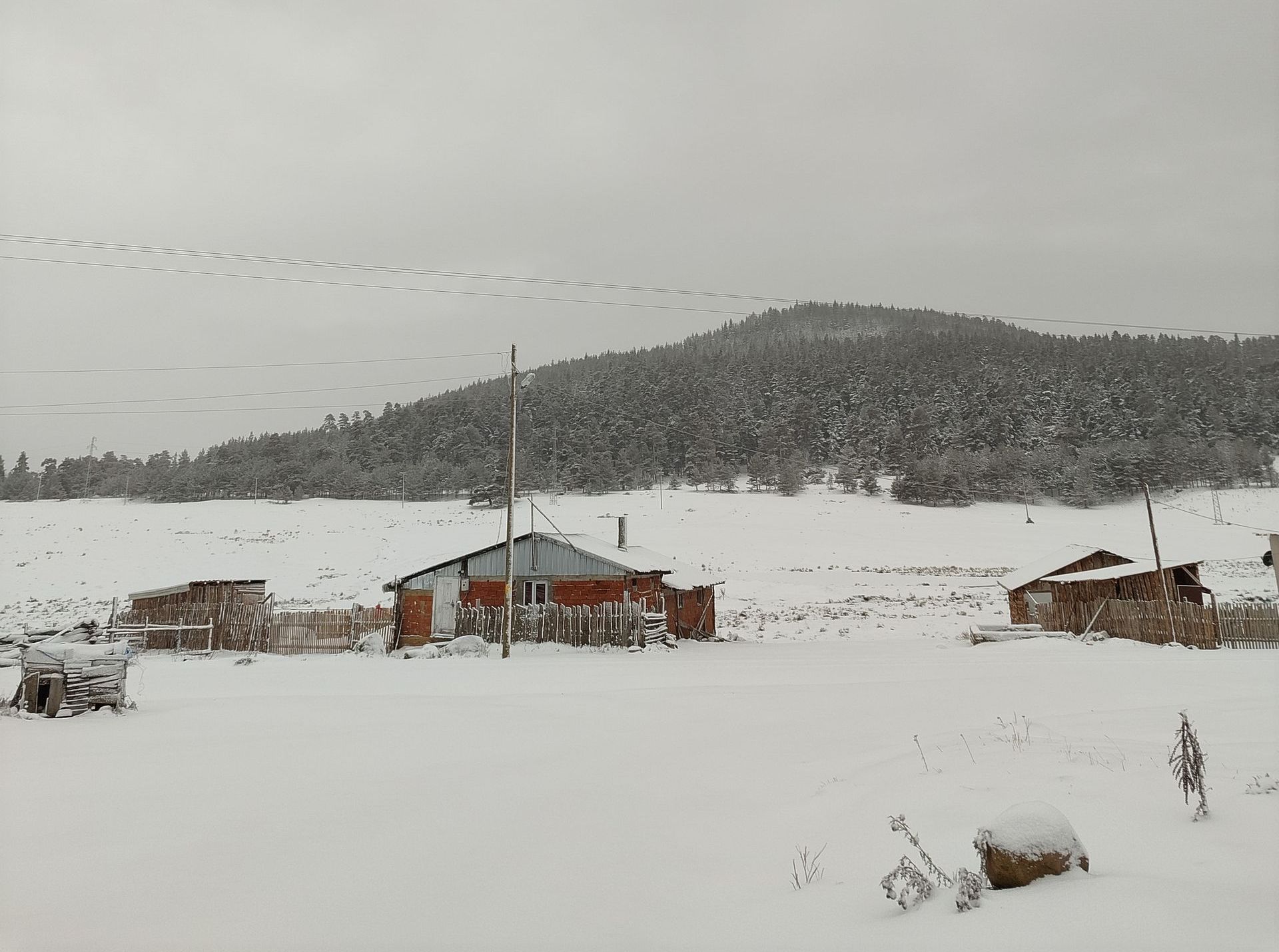
When the grid fails in the middle of winter, the first problems people notice are practical ones: the furnace goes quiet, the refrigerator stops humming, and the house starts losing heat at a rate that feels alarming by the second night. What gets far less attention is what the long dark does to the people inside the house.
Seasonal affective disorder, a recurring form of depression tied to the shortening of daylight, affects mood, energy, sleep and concentration for months at a time, and those are exactly the faculties a household needs when it is improvising its way through an emergency. A tired, withdrawn, foggy-headed adult is more likely to take shortcuts, and in a cold house the most dangerous shortcut is bringing a fuel-burning device indoors.
Carbon monoxide poisoning claims lives every winter because the gas cannot be seen or smelled, and because its early symptoms are easy to mistake for ordinary fatigue or a lingering cold. This article looks at seasonal affective disorder as a genuine survival variable, explains how darkness, blackouts, improvised heating and group morale feed into one another, and lays out a practical plan for keeping a household warm, lit, mentally steady and safe from carbon monoxide when the power is out for days instead of hours. Every recommendation below is tied to guidance from health and safety agencies, so you can check the reasoning for yourself.
Why Seasonal Affective Disorder Is a Survival Variable in Long Dark Months
Survival planning usually revolves around water, food, warmth and light, yet the person making all of those decisions is a human brain that responds to the amount of daylight it receives. The National Institute of Mental Health describes seasonal affective disorder as a recurring depression that follows a seasonal pattern, with symptoms lasting about four to five months of the year, and in its winter form it commonly brings oversleeping, carbohydrate cravings and social withdrawal. Anyone who has watched a group of tired people try to organize a simple task at ten o’clock on a dark January morning understands why that matters.
A survival variable is anything that changes the odds of getting through a difficult stretch, and mood qualifies because it shapes judgment, effort and cooperation. A person with untreated seasonal affective disorder may find it harder to concentrate, to follow a checklist, to keep a stove monitored, or to speak up when something looks wrong. Those lapses are minor on an ordinary evening and potentially fatal when the household is running a generator, a camp stove or a charcoal grill in conditions the equipment was never designed for.
I want to be open about the limits of what is known. I could not find research that directly measures how seasonal affective disorder changes outcomes during winter blackouts, so the argument here is an inference built from well-established pieces: the documented symptoms of the condition, the documented hazards of improvised heating, and the plain fact that winter emergencies feel longer when daylight is scarce. The inference is reasonable enough to act on, and acting on it costs very little compared with the downside of ignoring it.
What Shrinking Daylight Does to the Brain and the Body Clock
The leading explanations for seasonal affective disorder involve three overlapping systems. Mayo Clinic lists a disrupted circadian rhythm, a drop in serotonin and a shift in melatonin balance as the factors most likely at play, while noting that the exact cause remains unknown. Less winter sunlight can throw off the internal clock that tells the body when to sleep and wake, and the brain chemicals that steady mood appear to follow the light.
The same Mayo Clinic page names several risk factors, including being female, being a younger adult, having a family history of depression, already living with major depression or bipolar disorder, and living far from the equator. For emergency planning the geography point deserves a pause, because the regions with the longest winter nights are also the regions where ice storms and blizzards are most likely to knock out power during the lowest light exposure of the year.
A blackout adds a second layer of darkness on top of the seasonal one. Households that normally rely on bright indoor lighting to push back against gloomy evenings suddenly find themselves in dim rooms lit by a single lantern, with curtains drawn to hold in heat. Daytime light inside a closed-up house is usually a small fraction of what a person receives outdoors, even on an overcast day.
People who were already sensitive to the season may slide faster than they expect, and people who never thought of themselves as vulnerable can begin to notice the same sluggishness, irritability and urge to withdraw. None of this requires a diagnosis to be relevant, because the practical response stays the same: protect light exposure, protect sleep and protect the routines that keep a group functioning.
The Blackout Scenario: When Winter Darkness Meets a Dead Grid
Picture the third day of a widespread winter outage. The early sense of adventure has worn off, the house hovers just above a temperature people can tolerate, phones are low on battery, and the sun sets before five in the afternoon. Everyone is spending long hours in the same few rooms, sleeping more than usual or sleeping badly, and eating whatever requires no cooking. This is the point at which the practical stress of the emergency and the psychological weight of seasonal affective disorder begin to reinforce each other.
Cold itself erodes mood and patience, and the loss of screens, television and ordinary routines removes the distractions that normally carry people through gray weeks. Meanwhile the pressure to solve the heat problem keeps growing. This is the moment when people reach for whatever is in the garage, such as a propane camp heater, a charcoal grill, a gas range with the oven door open, or a gasoline generator tucked just inside the garage door to keep it out of the snow.
The Centers for Disease Control and Prevention is blunt about this pattern. During a power outage, generators, grills and other gasoline, propane or charcoal-burning devices must never be used inside a home, garage or carport or near doors, windows and vents, because they produce carbon monoxide, an odorless and colorless gas that kills more than 500 Americans each year. The agency also advises against heating a home with a gas oven. Many of the people harmed in these situations are ordinary households making a tired decision in a cold house, which is precisely the state that a long dark outage tends to produce.
How Improvised Heating and Cooking Turn Into a Carbon Monoxide Problem
Carbon monoxide forms whenever a fuel burns without enough oxygen to finish the job. The Consumer Product Safety Commission explains that it comes from the incomplete burning of fuels such as coal, wood, charcoal, oil, kerosene, propane and natural gas, and it describes the gas as colorless, odorless and poisonous. In a sealed, winterized house, where every gap has been closed to hold in heat, the gas has very little room to escape, and anyone dealing with seasonal affective disorder may be spending even more hours than usual in those closed rooms.
Portable generators deserve special mention. The CPSC notes that one portable generator can produce as much carbon monoxide as hundreds of cars, that a generator should never run inside a home or garage even with doors and windows open, and that it belongs outdoors at least 20 feet from the house with the exhaust pointed away from the building. Those distances matter because a generator placed beside a window can draw exhaust straight into a bedroom.
Cooking creates a parallel risk. The Environmental Protection Agency advises against cooking indoors with unvented combustion appliances such as barbecues, hibachis and camp stoves, and against heating a home with gas stoves, ovens, grills or dryers, and it adds that a gas heater should never run in a poorly vented or closed room or in a room where someone is sleeping. Each of those warnings describes something that feels sensible at nine at night when the thermostat reads fifty degrees.
Warmth from insulation, layers, shared body heat in one small room and battery-powered devices carries no combustion risk at all, which is why those options should come first in any plan. Every flame, including a candle, is a reason to confirm that fresh air and a working alarm are present.
Seasonal Affective Disorder Symptoms That Look Like Carbon Monoxide Poisoning
One of the most worrying overlaps is that the early signs of carbon monoxide exposure resemble the everyday complaints of a gloomy winter. The CPSC lists headache, dizziness, weakness, nausea, vomiting, sleepiness and confusion as symptoms of carbon monoxide poisoning, and it advises anyone who suspects exposure to move to fresh air immediately and call 911. Compare that with the picture Mayo Clinic paints of seasonal affective disorder, which includes low energy, sluggishness and trouble concentrating. A person who is already slow and foggy can easily dismiss a new headache or a wave of fatigue as one more bad winter day.
This is where the idea of a survival variable becomes concrete. In a house with a running fuel-burning device, a family member who says they are exhausted and wants to lie down might be reacting to the season, to the cold, to a poor night of sleep, or to rising carbon monoxide levels, and the household has no way to tell which without an alarm. The rule I would adopt is simple: any new headache, dizziness or nausea that appears in more than one person at once, or that fades when someone steps outside, should be treated as carbon monoxide until proven otherwise.
Children and pets deserve particular attention because they may be unable to describe what they feel. Practical habits help, such as checking on the sleepiest person in the house every few hours, asking everyone to report headaches out loud, and keeping a battery-powered alarm in each room where people sleep. Treating mood symptoms and physical warning signs as part of one picture lets a household avoid both errors, which are ignoring a real poisoning because it looked like low mood and missing a worsening depression because everyone assumed it was just the cold.
Morale in a household or a small neighborhood works like a shared fuel supply, and it drains faster when the nights are long. A single person with seasonal affective disorder can lower the energy of a room, but a cooperative group can also carry that person through the worst weeks, because shared tasks, conversation and physical presence are protective in ways that are well understood even outside of emergencies. Mayo Clinic specialists suggest staying social and getting regular exercise as part of managing winter mood, and both translate neatly into emergency routines.
Practical morale management starts with a schedule. Fix a wake-up time, a mealtime and a lights-out time, and keep them even when nothing seems to require it. Assign small, visible jobs such as checking the alarm batteries, rotating the lanterns or melting snow for water, and rotate them so nobody feels permanently stuck with the unpleasant ones. Place the people most affected by the dark near the best light during the day, and give them something to do with their hands.
Group conflict is the second risk. Irritability commonly accompanies low mood and also grows naturally out of cold and hunger, so arguments about who gets the warmest spot or whether to run the generator a little longer can escalate quickly. Agree on safety rules before the emergency and write them where everyone can see them, so that a tired adult cannot talk the household into moving a heater into the bedroom at midnight. Rules set in daylight with a clear head are far easier to defend than decisions negotiated in the dark at three in the morning.
Shared meals and shared light are the easiest morale tools to protect during an outage. A pot of hot food prepared safely outdoors, or a cold meal eaten together under one lantern, gives the day a recognizable shape, and that rhythm matters a great deal to anyone whose seasonal affective disorder makes the hours feel shapeless. A deck of cards, a book read aloud or a simple board game costs nothing and keeps people in the same room talking.
Building a Safe Warmth and Light Plan Before the Next Outage
The best time to plan for a winter blackout is on a bright afternoon in autumn, and the first purchase should be carbon monoxide alarms. The CPSC recommends battery-operated alarms, or alarms with battery backup, on every level of the home and outside sleeping areas, and it notes that interconnected alarms are best because when one sounds they all sound. The EPA adds that batteries should be checked or replaced when the clocks change in spring and fall. A basic battery model such as the Kidde KN-COB-LP2 runs on AA batteries and keeps working when the power is out, so buy one for each sleeping area and keep spare batteries beside them.
Lighting is the second pillar, and it is a safety item as much as a comfort item. The EPA recommends flashlights or battery-powered lanterns instead of candles. A floating LED lantern with 360 degree output, such as the Streamlight Siege, spreads even light across a room and includes red LEDs for nighttime use, which beats a single flashlight beam for keeping a group’s mood from sinking. Because seasonal affective disorder makes everyone’s energy dip after dark, I would buy good lights before buying anything more elaborate.
Next, build the warmth layer without combustion: sleeping bags rated for the local winter, wool layers, one small room closed off with blankets over doors and windows, and a plan to move to a warm shelter or a relative’s home if indoor temperatures keep falling. The CDC suggests staying with friends or family or going to a shelter when a home is damaged, and I would apply the same logic to a prolonged cold outage. Finally, store food that needs no cooking, plenty of water, medications and a battery or hand-crank radio, so that nobody feels pushed toward improvised cooking just to eat.
Seasonal Affective Disorder Tools That Still Work Without the Grid
Treatment for seasonal affective disorder is well established, and the encouraging part is that much of it can be adapted for a blackout. The National Institute of Mental Health identifies light therapy as the main treatment for winter-pattern SAD, typically a 10,000 lux light box used for 30 to 45 minutes a day, usually in the morning, and it reports that cognitive behavioral therapy adapted for SAD performed about as well as light therapy in a direct comparison. The same publication notes that evidence for vitamin D is mixed, so I would not treat a supplement as a substitute for light or for professional care.
A light box needs electricity, which is where a battery-based power source earns its place. The EPA points out that battery-powered generators and solar power stations produce no fumes, can be used indoors for small appliances, lights and fans, and are usually less powerful than fuel-burning units. A portable station such as the Goal Zero Yeti 1500 can run a therapy lamp and recharge phones and lanterns without any exhaust, and much, much more, and it also removes the biggest temptation of an outage, which is running a gasoline generator close to the house. It will not replace a furnace, so I would plan it around light, communication and morale and look elsewhere for warmth.
Pair the station with a UV-free, 10,000 lux lamp and set it where people gather for breakfast so the morning session becomes a shared habit. I am not a clinician, and anyone with an eye condition or a medication that increases light sensitivity should speak with a health care provider before starting, as NIMH advises. Anyone who is having thoughts of suicide should call or text 988, the Suicide and Crisis Lifeline, at any hour and without waiting for the power to return.
Warning Signs, Drills and Ground Rules for Households and Neighbors
Preparation holds up better when it is rehearsed, so I recommend one fifteen-minute drill each autumn in which the whole household practices what it would do if a carbon monoxide alarm sounded in the middle of the night. The guidance from the CPSC is to move to fresh air immediately and call 911 instead of hunting for the source, and a rehearsed exit is far easier to follow when everyone is groggy. Keep shoes, coats and a charged phone near the door of each sleeping area for that reason.
Beyond the drill, a few written ground rules can protect people when judgment is at its weakest:
- Fuel-burning devices stay outdoors, with generators at least 20 feet from the house and the exhaust facing away from it.
- Nobody sleeps in a room with an unvented heater, a grill or a camp stove, no matter how cold the night becomes.
- Every sleeping area has a battery-powered carbon monoxide alarm that gets tested at the start of each outage.
- Anyone who develops a headache, dizziness or nausea says so immediately, and the group responds before debating whether the weather is to blame.
- A designated person checks on the household’s quietest or most withdrawn member at set times each day.
Neighbors belong in the plan as well. Older adults living alone, people who rely on electrically powered medical equipment and anyone who has talked about struggling with winter are all worth a knock on the door or a phone call once the roads are safe. Seasonal affective disorder often hides behind a polite “I’m fine,” so ask a second question, such as how they are sleeping or whether they have been getting outside. If someone mentions hopelessness or thoughts of not wanting to live, that call to 988 should be made without delay.
Treat Mood and Air Quality as One Safety System
My honest view is that most winter emergency plans are written as if the people carrying them out will be rested, warm and clear-headed, which is rarely true by the third night. Seasonal affective disorder is common enough that at least one person in many households is already running on less energy and patience than the plan assumes, and a long dark outage will push everyone in the same direction. I would not file that under medical problems to be handled somewhere else, because it belongs on the same checklist as water, batteries and blankets.
If I had to boil it down to a short list of purchases and habits, it would be a battery-powered carbon monoxide alarm in every sleeping area, a bright lantern in every shared room, a fume-free power source for a light therapy lamp, a fixed daily routine and a standing agreement that nothing with a flame or an exhaust pipe comes indoors. None of that is expensive compared with what a single bad night can cost.
I would also keep the human side simple. Check on each other, say the headache out loud, get outside into daylight when it is safe, and treat low mood as useful information. I expect households that do those things to make better decisions, and better decisions are what keep a cold house survivable.
Author Bio
Bob Rodgers is a lifelong outdoorsman, herbalist, and seasoned prepper with over 20 years of real-world survival experience. As the founder of PreppersWill.com, he shares practical advice on self-reliance, off-grid living, and disaster preparedness, no hype, just hard-earned lessons from decades of hands-on prepping.
Suggested resources for preppers:
What you should know about survival foods with decades of shelf life
The Foods that helped the pioneers survive crop failures and hard times
Survival Foods of the Native Americans
If you plan to build a storage room and equip it with everything needed > Start Here!
