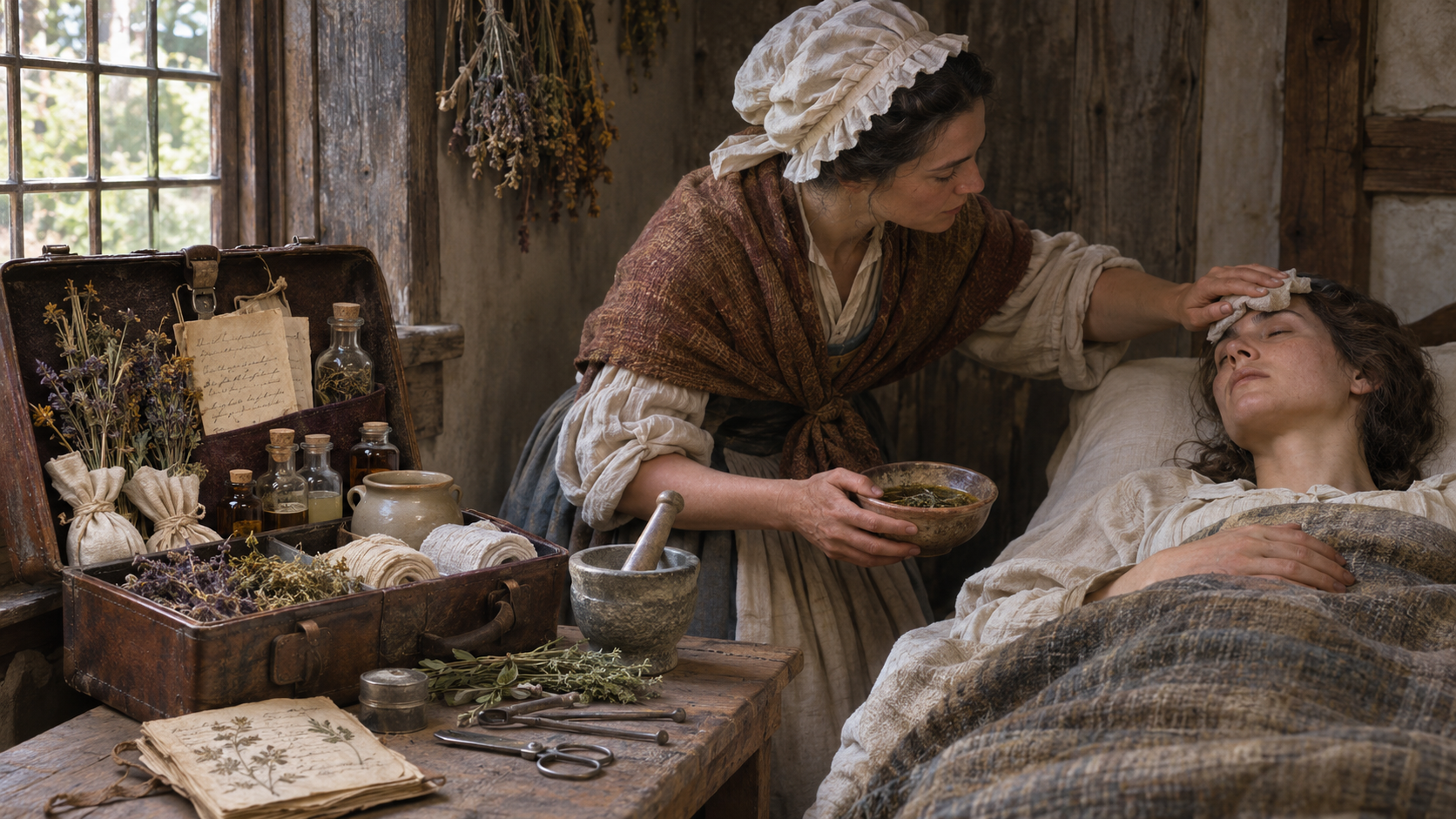
Every November, when the first hard frost settles in and the forecasts begin to mention ice storms, I find myself thinking about how people coped before electricity and pharmacies were a phone call away. For centuries, traditional healers walked from village to village with satchels, baskets, and cloth bundles that held everything they needed to treat fevers, wounds, coughs, and the aches that arrive with long cold months.
Those kits were shaped by necessity, by local plants, and by a deep familiarity with what winter does to the human body.
Today, when a storm knocks out the grid and families reach for candles, camp stoves, charcoal grills, and generators, we face a version of the same problem those healers understood well, which is staying warm and fed without hurting ourselves in the process. The difference is that we now deal with a hazard many of them never had to name, carbon monoxide, an odorless and colorless gas that builds up quietly whenever fuel burns in a closed space.
In this article I walk through what traditional healers really packed, how their habits around fire, ventilation, and warmth still make sense, and how to combine that older wisdom with modern safety gear so a winter blackout stays an inconvenience instead of a tragedy. Along the way I link to trusted public health sources and share a few practical products worth keeping on a shelf before the next storm arrives.
What Traditional Healers Really Packed Into Their Winter Kits
When people ask me what traditional healers actually carried, they usually expect something mystical, but the reality was far more practical and varied from region to region. A typical kit might include dried roots, barks, leaves, and seeds wrapped in cloth or stored in small clay pots, along with honey, animal fats, plant resins, and vinegar that served as carriers, preservatives, and remedies in their own right.
Many healers also brought small mortars and pestles for grinding, knives and bone needles for minor procedures, strips of linen or hide for bandaging, and cups or horns used in practices such as cupping. Winter changed what went into the bag, since cold weather brings coughs, chest congestion, chilblains, joint pain, and infections that spread when families crowd around a single fire.
The scale of this knowledge is easy to underestimate. A 2025 ethnobotanical study in Zimbabwe’s Chipinge district documented the plant and animal products used by traditional healers there, and its authors describe these practitioners as custodians of cultural and biological knowledge for rural communities with limited access to clinics.
That picture matches what historians describe across Europe, Asia, Africa, and the Americas, where healing knowledge passed from teacher to apprentice and stayed closely tied to local landscapes. The World Health Organization also maintains a dedicated team that works with member states on integrating evidence-based traditional, complementary and integrative medicine into national health systems, which shows how seriously the subject is now treated at the global level.
I want to be clear that folk and herbal remedies vary enormously in how well they have been studied, and nothing in a healer’s bundle replaces emergency medical care for a serious problem such as smoke inhalation or poisoning. What the old kits do offer is a useful lens, because they were light, resilient, and designed for situations where help was far away and the weather was unforgiving.
Why Winter Blackouts Turn Simple Warmth Into a Serious Risk
A winter blackout rarely arrives at a convenient time, and it tends to expose how much of modern life quietly depends on the grid. Even homes with gas furnaces often need electricity to run the blower, the thermostat, and the ignition system, so a power cut can leave a house cooling quickly while the people inside begin to improvise. Candles come out first, followed by camp stoves, portable propane heaters, charcoal grills dragged into garages, and generators started in the nearest sheltered spot. Each of these choices feels sensible in the moment, and each one carries a risk that grows when doors and windows are shut tight to keep the heat in.
Traditional healers working in cold regions would have recognized the pressure behind those decisions, because winter illness historically rose whenever families crowded together in poorly ventilated rooms around a single source of heat. Their advice often focused on keeping people dry, layered, fed, and hydrated, and on managing a fire so that warmth reached the sleeping area without filling the room with smoke. That balance between heat and fresh air is precisely what gets lost during a modern emergency, when frightened people seal every gap and run fuel-burning equipment close to where the family sleeps.
The statistics around home heating add weight to the concern. According to the National Fire Protection Association, nearly half of all U.S. home heating equipment fires occur between December and February, which means the coldest months are also the riskiest months for heating-related fires. Outages stretch the problem further, since people tend to run equipment for many hours at a stretch, often overnight, and often without the maintenance or inspection that a permanent heating system would receive. Understanding why improvised heating becomes dangerous is the first step toward choosing safer ways to stay warm, and the next section explains the single most underestimated threat in that category.
Carbon Monoxide: The Invisible Hazard Behind Improvised Heating
Carbon monoxide, usually shortened to CO, forms whenever carbon-based fuel burns without enough oxygen, and it has no smell, no color, and no taste to warn you. The Centers for Disease Control and Prevention describes it as a gas that kills without warning, and reports that more than 400 Americans die each year from unintentional CO poisoning not linked to fires, with over 100,000 emergency department visits and more than 14,000 hospitalizations. The same page notes that people who are sleeping can die from CO poisoning before they ever develop symptoms, which is exactly why nighttime blackouts are so dangerous.
CO comes from nearly every source people reach for when the power fails, including gas ranges, fuel-burning lanterns, grills, fireplaces, small engines, and generators. Charcoal, propane, kerosene, gasoline, and wood all qualify when they burn in a space with poor airflow. Infants, older adults, and people with chronic heart disease, anemia, or breathing problems are more likely to become seriously ill, so households with vulnerable members need to be especially cautious.
Traditional healers had no gas sensors, and many of the communities they served relied on hearths with smoke holes, chimneys, raised cooking platforms, and the habit of airing out sleeping spaces during the day. Those habits grew out of long observation that smoky rooms made people sick, well before anyone understood the chemistry. We now know that CO reduces the blood’s ability to carry oxygen to the brain and heart, and that knowledge lets us replace guesswork with detectors, distance rules, and simple discipline about where fuel is allowed to burn.
How Traditional Healers Handled Smoke, Fire, and Cold Exposure
Across many cultures, traditional healers treated cold as a condition that had to be managed from several directions at once. Layering came first, with wool, felt, fur, and quilted fabrics trapping warm air close to the body, and healers commonly advised covering the head, neck, hands, and feet because those areas lose heat quickly. Rooms were often kept small in winter so a modest fire could warm them, and bedding was arranged off the floor, since cold ground draws heat from a sleeping body faster than most people expect.
Heated stones, bricks, and sealed vessels of hot water were wrapped in cloth and tucked into beds, a method that delivered warmth without any flame in the sleeping area. That approach translates directly to modern emergencies, where a hot water bottle or a warmed and wrapped stone is far safer than a fuel-burning device at the foot of the bed. When someone showed signs of severe chill, healers generally favored gradual rewarming with warm drinks, dry clothing, and shelter from wind rather than sudden exposure to intense heat, an approach that matches current first aid advice for mild cold exposure.
Fire management mattered just as much. A hearth was usually built in a place where smoke could rise and escape, and healers often cautioned against burning damp wood or smoldering embers in tightly closed rooms. Some traditions burn herbs or resins for cleansing or ritual, and while those practices carry deep cultural meaning, burning anything in a sealed room produces smoke and potentially CO, so I would keep such rituals outdoors or in a well-ventilated space during an emergency. The principle worth borrowing from the old approach is to bring warmth to the body through insulation and radiant heat from safe sources while keeping combustion far from the places where people sleep.
Herbs and Remedies for Cold, Cough, and Winter Weakness
The remedies that traditional healers relied on during winter tended to cluster around a few themes, including soothing the throat, loosening chest congestion, encouraging sweating and rest, easing sore joints, and keeping appetite and strength up through the dark months. Honey was a staple in many traditions, used on its own, stirred into warm infusions, or mixed with herbs to make syrups and lozenges. Thyme, ginger, garlic, onion, juniper, horehound, elderflower, and elderberry appear again and again in folk herbals from different continents, usually prepared as teas, steams, broths, or poultices. Willow bark, which contains salicin, a compound chemically related to the active ingredient in aspirin, was a common choice for aches and fevers in parts of Europe and North America.
I find it fascinating that so many of these preparations overlap with what a cautious modern household would keep in a pantry anyway. Warm broth, honey, ginger tea, and plenty of fluids are sensible comfort measures when a blackout leaves everyone cold and run down. The evidence for individual herbs varies widely, and some, including willow bark, are unsuitable for children, pregnant women, people on blood thinners, or anyone with aspirin sensitivity, so it makes sense to check with a pharmacist or physician before relying on any plant remedy for more than simple comfort.
There is one more point worth stressing for this particular season. The early symptoms of carbon monoxide poisoning, which include headache, dizziness, weakness, upset stomach, and confusion, are often described as flu-like, so a person who feels unwell during a blackout while a stove, heater, or generator is running should never assume a cold is to blame and simply reach for a herbal tea. Many traditional healers paid close attention when several people in one household fell ill together, and that instinct lines up well with current medical advice. The right response is to get everyone outside, call emergency services, and save the herbs for comfort afterward.
Fuel-Burning Stoves, Grills, and Generators: What Never Belongs Indoors
Whatever kind of kit a family assembles, the rule that matters most is where fuel is allowed to burn. The CDC states plainly that people should never use a portable gas camp stove indoors, should never burn charcoal indoors, and should not use portable flameless chemical heaters inside the home. It also warns against heating a house with a gas oven and against cooking or burning anything on a stove or fireplace that is not vented. Charcoal deserves special mention because it burns quietly and seems harmless once the flames die down, yet red, gray, black, and white charcoal all give off CO.
Generators account for a large share of blackout poisonings. The CDC advises operating a generator outdoors and more than 20 feet from windows, doors, and vents, and never inside a home or garage even when doors and windows are open. FEMA’s guidance goes further by cautioning against using a generator in partially enclosed spaces such as crawl spaces, noting that running a fan will not stop CO from building up in the house, and advising families to fuel the generator outdoors and keep generator fuel out of the home. FEMA also recommends battery-powered CO alarms inside the home, which is advice I would treat as non-negotiable.
Traditional healers served communities where cooking and heating usually happened in the same place, so their advice about fire was really advice about ventilation and distance. We can honor that logic with modern equipment by cooking outdoors or on a properly vented appliance, keeping generators well away from the structure with the exhaust pointed away from windows, and using battery lights instead of flames for illumination. If you must use a fuel-burning heater designed for indoor use, read the manufacturer’s instructions closely, keep a battery CO alarm in the same room, and never run it while you sleep.
What Traditional Healers Teach Us About Preparing a Winter Emergency Kit
If you were to open a well-used healer’s bundle, you would notice that nothing inside was decorative. Every item had a job, and the whole kit was organized around the likely problems of the season, the distance from help, and the weight a person could carry. That way of thinking makes a useful template for a modern winter emergency kit, and I often suggest that readers sort their supplies into the same practical categories that traditional healers instinctively used.
Warmth comes first, which means wool blankets, insulated sleeping bags, hats, socks, and a way to retain body heat such as reflective emergency blankets. Light comes next, and battery lanterns beat candles for safety. Water and food follow, with shelf-stable items that need no cooking and a safe plan for any heating of meals. A first aid section should cover wound care, pain relief appropriate for the household, a week of backup for any prescription medicines, and simple comfort items such as honey and tea. Communication and power belong in the kit as well, including a battery or crank radio and a power bank, since information is a form of safety during storms.
The category that traditional healers never had to consider is detection. A kit built today should include battery-operated CO alarms, because the gas cannot be seen or smelled, and checking your smoke alarms should be part of the same preparation. Healers often built trust by explaining why each item was in the bag and when to use it, and I encourage the same habit at home, which means walking every adult and older child through the kit, showing them where it lives, and rehearsing what to do if an alarm sounds. Skills matter more than gear, and a family that has practiced moving outside quickly and calling for help will respond far better than one that owns plenty of equipment but has never discussed how to use it.

Spotting the Warning Signs of Carbon Monoxide Poisoning
Recognizing poisoning early can save lives, and the signs are easy to miss. The CDC lists the most common symptoms as headache, dizziness, weakness, upset stomach, vomiting, chest pain, and confusion, and it describes them as flu-like. The clue that should raise suspicion is context, such as several people feeling unwell at the same time, symptoms that ease when someone leaves the house, pets acting sluggish, or any illness that begins after a stove, heater, grill, or generator has been running. People who are asleep or intoxicated may never notice the warning signs, which is why detectors matter so much.
If you suspect CO poisoning, get everyone, including pets, into fresh air right away, call your local emergency number from outside, and do not go back in until responders say it is safe. In the United States, Poison Control at 1-800-222-1222 can also advise, and treatment usually involves breathing 100 percent oxygen through a mask, according to a JAMA patient page on the subject.
Placement and maintenance of detectors make the difference between a device that works and one that merely hangs on a wall. The NFPA recommends installing CO alarms in a central location outside each sleeping area and on every level of the home. The CDC advises battery-operated or battery backup models near every sleeping area, checking the batteries when the clocks change, and replacing the detector every five years or as the manufacturer directs. A digital readout is useful because it can show the highest CO concentration recorded, which helps you understand what happened if the alarm sounded while you were out of the room.
Traditional healers relied on careful observation of the patient, the household, and the environment, and the modern version of that skill is paying attention to small changes and trusting an alarm when it goes off. Silencing a CO alarm and assuming it is faulty is a risky habit, so treat every alarm as real until emergency responders prove otherwise.
A Modern Blackout Kit Built on Old Wisdom
Old wisdom works best when it is paired with reliable gear, so here is the short list of products I would put on the shelf before the first storm of the season. I focused on items that reduce the need for open flames and fuel-burning equipment indoors, since that is where most blackout injuries begin. As an Amazon affiliate I may earn a small commission from purchases made through these links at no extra cost to you, and the details below come from the product listings, so check current specifications before ordering.
The First Alert CO250 is a battery-operated carbon monoxide alarm that uses an electrochemical sensor, comes with a 9-volt battery, and includes two silence features for the alarm and the low battery chirp. Because it needs no outlet, it keeps working when the grid fails. A second option is the Kidde AA battery powered CO alarm with LED indicators, a test and reset button, and a low battery indicator, which is portable enough to move into whichever room you are sleeping in (). Owning one of each type in different rooms covers more ground, and the CDC suggests detectors near every sleeping area.
For light, go with a LED camping lantern that runs on AA batteries and collapses flat for storage, which makes it a handy flame-free substitute for candles. When you need to keep phones, a router, or a CPAP machine running, a portable power station is a far safer alternative to a gas generator, and the Jackery Explorer 300 Plus offers a 288-watt-hour battery with a 300-watt AC output and produces no exhaust. Check the wattage of any medical device before relying on one.
Finally, a bulk pack of Swiss Safe emergency Mylar thermal blankets is inexpensive insurance, since the listing says they reflect about 90 percent of body heat and each sheet folds small enough for a coat pocket or car kit. Traditional healers prized compact items that did several jobs, and these lightweight sheets fit that tradition well, although they work best layered over regular clothing and wool blankets.
My Two Cents on Warmth, Wisdom, and Staying Safe
The people who carried herbs, honey, and cloth bundles through the snow understood that survival depends on preparation, observation, and respect for the environment, and that respect now has to include an invisible gas they could never have measured. I admire the resourcefulness of traditional healers, and I think we can learn a great deal from their habits of layering, sharing warmth, keeping fire in the right place, and noticing how a household feels.
At the same time, I would not romanticize the past, because a battery CO alarm will outperform folk wisdom every time when the danger cannot be smelled or seen. Combine the two approaches by insulating your body and your bedding, cooking and generating power outdoors, lighting your home with batteries instead of flames, and putting alarms where you sleep. Then talk it through with everyone in the house before the weather turns, because a plan that exists only in your head will not help at three in the morning when the lights are out. Stay warm, stay curious, and keep the fresh air moving.
You may also want to check this:
Knowledge to survive any medical crisis situation during a major disaster
Avitaminosis (Vitamin Deficiency) Effects on Your Body During Isolation
The natural healing remedies out grandparents used on a daily basis
A Few Things To Know When Conventional Medical Care Is Unavailable
