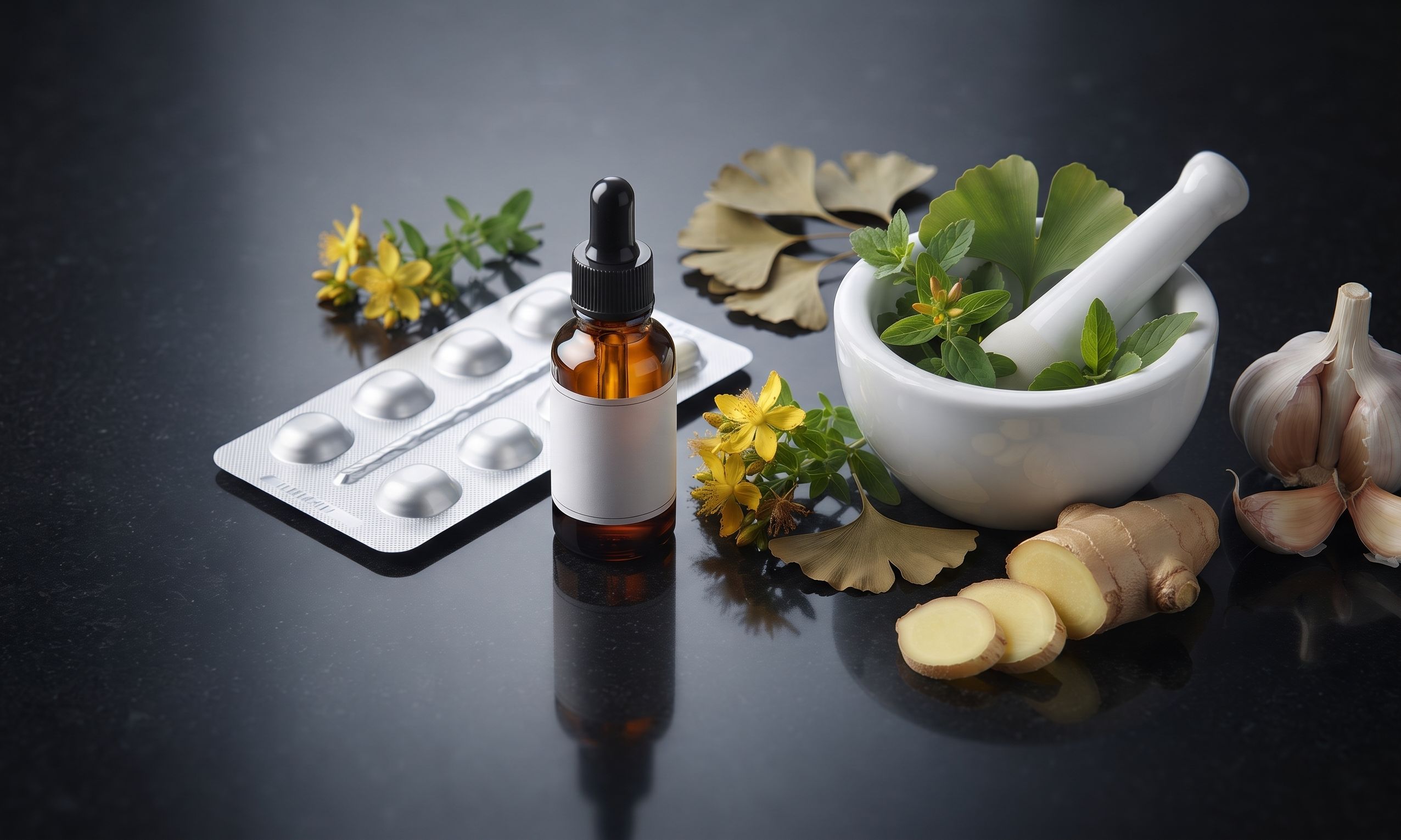
Walk into almost any pharmacy and you will find the supplement aisle sitting a few steps from the prescription counter, as though the two categories have nothing to do with one another. That physical separation mirrors a mental one most of us carry around without noticing.
Pills from the pharmacist feel like medicine, capsules from the health food store feel closer to food, and the possibility that the second group could sabotage the first rarely comes up at the kitchen table. Yet herbs that interact with medications are behind a steady stream of preventable emergency visits, treatments that mysteriously stop working, and lab results that leave both patient and physician puzzled.
The issue here has nothing to do with botanicals being useless. Plants gave us aspirin, digoxin, morphine, and a long roster of chemotherapy agents, which is exactly why they deserve respect rather than casual handling. A compound strong enough to lift a low mood or thin sticky blood is also strong enough to interfere with whatever you swallow every morning at seven o’clock. Some pairings quietly reduce a prescription to something close to a placebo. Others stack effects on top of each other until you are walking around with far more active drug in your bloodstream than your doctor ever intended.
This guide walks through the herbs that interact with medications most frequently, the drug classes that take the biggest hit, and the everyday habits that keep you out of trouble. There are no scare tactics in what follows, and nobody is going to tell you to throw away your turmeric. What you will get instead is a practical map of which combinations genuinely warrant a phone call to your pharmacist before the next capsule goes down.
Why Herbs That Interact With Medications Slip Past Almost Everyone
Start with the paperwork problem. When your doctor asks what you are taking, most people list prescriptions and stop there. Fish oil, ashwagandha, the elderberry syrup from last winter, the ginger capsules a coworker recommended, none of it feels like a medication worth mentioning. Surveys of patients consistently show that a large share never volunteer this information, and a fair number of physicians never think to ask. So, the conversation that would flag one of the herbs that interact with medications simply never takes place.
Then there is the regulatory gap. In the United States, supplements do not go through premarket approval for effectiveness the way prescription drugs do, and manufacturers carry the primary responsibility for safety and labeling. Potency varies between brands and even between batches, since the concentration of active compounds depends on the plant part used, the growing conditions, and the extraction method. Two bottles wearing the same label can behave quite differently inside your body.
The scale of the issue is easy to underestimate. A systematic review summarized by the National Capital Poison Center catalogued nearly fifteen hundred documented interaction types involving more than five hundred medicines and over two hundred herbal and dietary products, with warfarin alone tangled up with more than a hundred of them. Older adults sit at the center of this risk, because they take the most prescriptions and also buy the most supplements.
Keeping a written record of everything you swallow, including doses and timing, is the cheapest safety measure available, and a simple medication and supplement log notebook works better than memory ever will.
What Actually Happens Inside the Liver and Gut
Understanding one piece of biochemistry makes the rest of this article click into place. Most oral drugs are broken down by a family of liver enzymes called cytochrome P450, with CYP3A4 handling a remarkable share of the pharmacy. A second system, a transport pump named P-glycoprotein, sits in the intestinal wall and shoves absorbed compounds back out before they ever reach circulation. Together these two systems set the dose that truly arrives at its target.
Herbs meddle with this machinery in two opposite directions. An inducer speeds the enzymes up, clearing your medication faster and leaving less of it in the blood, which can turn an effective prescription into an expensive habit with no benefit. An inhibitor slows the enzymes down, letting the drug pile up toward toxic levels even though you never changed the dose. The federal drug regulator describes this plainly, noting that supplements can alter absorption, metabolism, or excretion, so you end up with either too much or too little of what you actually need.
There is a second category worth knowing, one that has nothing to do with enzymes. Pharmacodynamic interactions happen when the herb and the drug simply push on the same physiological lever. Two blood thinners produce more thinning. Two sedatives produce more sedation. Two blood sugar reducers produce hypoglycemia. Timing tricks do nothing here, because the effects meet in the tissue rather than in the liver.
The medications that suffer most are the ones with a narrow therapeutic index, meaning the gap between a helpful dose and a harmful one is thin. Warfarin, digoxin, lithium, phenytoin, cyclosporine, tacrolimus, and several thyroid and seizure drugs all live in that narrow lane. If you take any of them, herbs that interact with medications should be treated as a genuine medical question and not a lifestyle choice.
St. John’s Wort Leads Every List of Herbs That Interact With Medications
If you remember one plant from this entire article, make it this one. Among all the herbs that interact with medications, St. John’s wort has by far the widest reach. St. John’s wort is a potent inducer of both CYP3A4 and P-glycoprotein, which means it accelerates the breakdown of an enormous number of prescriptions at once. The National Center for Complementary and Integrative Health states outright that this herb can interact in dangerous and sometimes life threatening ways with a wide range of medicines.
The list of affected drugs reads like a hospital formulary. Birth control pills lose reliability, and unplanned pregnancies have been reported in women who combined the two. Cyclosporine levels can drop far enough to trigger organ rejection in transplant patients, a scenario documented in heart transplant recipients years ago. Digoxin, warfarin, simvastatin, phenytoin, carbamazepine, several HIV antiretrovirals, and cancer drugs including irinotecan and imatinib all lose potency in its presence.
The opposite danger appears with antidepressants. St. John’s wort raises serotonin activity on its own, so pairing it with an SSRI, an SNRI, a triptan for migraines, or tramadol can push serotonin levels toward the syndrome that carries that name. Agitation, sweating, tremor, racing heart, confusion, and dangerously high body temperature can develop within hours.
One more wrinkle catches people off guard. Because the enzyme induction takes roughly a week or two to build and a similar stretch to fade, stopping the herb abruptly causes drug levels to climb back up. Someone stabilized on a higher warfarin dose while taking St. John’s wort can drift into bleeding territory after quitting the supplement, which is why any change belongs in a conversation with the prescriber rather than a solo decision.
The Bleeding Cluster: Ginkgo, Garlic, Ginger, and Ginseng
Several popular botanicals share a common talent for discouraging platelets from clumping. On their own, in ordinary culinary amounts, they cause almost nobody any grief. Layered on top of an anticoagulant or an antiplatelet drug, they turn a controlled therapy into an unpredictable one.
Ginkgo biloba is the headline act, taken by millions for memory and circulation while also raising bleeding risk alongside aspirin, clopidogrel, and warfarin. Concentrated garlic extract behaves similarly and additionally lowers levels of drugs moved by P-glycoprotein, a group that includes digoxin, colchicine, and several statins. High dose ginger supplements, evening primrose oil, saw palmetto, feverfew, and dong quai belong in the same conversation. Fish oil and high dose vitamin E, though not herbs, pile onto the same effect and often sit in the same cabinet.
Ginseng deserves separate mention because it pulls in a confusing direction. Rather than amplifying warfarin, it has been shown to reduce how well the drug works, which means an INR that has been stable for years can drift downward and leave a patient underprotected against clots. That is the quieter face of herbs that interact with medications, since nothing feels wrong until a clot forms.
Turmeric and curcumin extracts round out the group. Culinary turmeric in a curry poses little threat, but the high potency supplements sold today deliver doses no kitchen ever produced, and they carry both antiplatelet activity and enzyme effects. Anyone taking a blood thinner should treat bruising that appears without explanation, gums that bleed while brushing, dark stools, or nosebleeds that will not quit as reasons to call a clinician promptly.
Heart and Blood Pressure Prescriptions Need Extra Vigilance
Cardiovascular drugs sit in a category where small shifts produce big consequences, and the herbal world contains several plants with genuine cardiac activity. The herbs that interact with medications in this group tend to work quietly, showing up on a monitor long before you feel anything unusual. Mayo Clinic maintains a plain language rundown of the worst offenders, and it is worth reading before you add anything new to a heart regimen.
Hawthorn is marketed for heart health and does have measurable cardiac effects, which is exactly the problem. Combined with beta blockers, calcium channel blockers, nitrates, or digoxin, it can amplify their action and drop blood pressure or heart rate further than planned. Danshen, a staple of traditional Chinese medicine, raises bleeding risk with warfarin and clopidogrel, deepens the effect of blood pressure medication, and adds to digoxin activity in a way that invites arrhythmia.
Licorice root creates a different mess. It promotes potassium loss and sodium retention, which raises blood pressure, works directly against diuretics and antihypertensives, and makes digoxin toxicity considerably more likely once potassium falls. Real licorice root shows up in teas and traditional formulas far more often than in candy, so reading tea blends matters more than reading the sweet aisle.
Coenzyme Q10, technically not a herb but a constant companion in the same cabinet, can blunt warfarin and lower blood pressure alongside antihypertensives. Given how many of these effects show up as numbers rather than symptoms, keeping a validated home blood pressure monitor on the counter gives you an early warning system that guesswork cannot match. Bring those readings to appointments, because a trend tells a far better story than a single measurement taken in a waiting room.
Blood Sugar, Thyroid, and Hormone Treatments
Diabetes management runs on precision, and a surprising number of botanicals nudge glucose downward on their own. Bitter melon, fenugreek, gymnema, cinnamon extracts, chromium, berberine, and American ginseng all have some glucose lowering activity. Stacked on metformin, a sulfonylurea, or insulin, they can produce hypoglycemia that arrives without warning, particularly if a meal gets skipped or a workout runs long.
Goldenseal illustrates the opposite failure mode. Research funded by federal health agencies found that healthy adults given goldenseal extract alongside metformin showed metformin levels roughly a quarter lower than expected, enough to undermine glucose control in someone who genuinely depends on the drug. Nothing about that experience feels dramatic in the moment, which is precisely why it goes unnoticed until an A1C result comes back worse than anyone predicted.
Thyroid patients face their own version of the problem. Levothyroxine absorption is famously fragile, and kelp, bladderwrack, and other iodine rich seaweed products can shift thyroid function outright. Ashwagandha, marketed heavily for stress, has been reported to raise thyroid hormone levels and has caused thyrotoxicosis in isolated cases. Calcium, iron, and magnesium supplements bind levothyroxine in the gut and should be separated by at least four hours.
Hormonal therapies deserve a note as well. Beyond the contraceptive failures already mentioned, phytoestrogen rich products such as red clover, black cohosh, and concentrated soy isoflavones raise questions for anyone on tamoxifen or hormone replacement. Black cohosh has also been linked to reduced effectiveness of certain statins and other drugs. The pattern that emerges across this whole category is that herbs that interact with medications rarely announce themselves, they just move numbers.
Calming Herbs, Sedatives, and Psychiatric Prescriptions
The sleep and anxiety shelf is the fastest growing corner of the supplement market, and it overlaps heavily with one of the most sensitive prescription categories. Valerian, passionflower, hops, lemon balm, chamomile, and kava all depress the central nervous system to some degree. Add a benzodiazepine, a Z drug such as zolpidem, an opioid, gabapentin, or an antihistamine, and the sedation compounds. Excessive drowsiness, impaired coordination, and slowed breathing become real possibilities, especially in older adults whose fall risk is already elevated.
Kava carries an additional burden. Beyond sedation, it inhibits several liver enzymes including CYP2C9, which raises levels of warfarin, phenytoin, and diazepam, and it has been associated with serious liver injury severe enough that multiple countries restricted its sale. Anyone taking a hepatotoxic medication, drinking regularly, or living with existing liver disease should stay away from it entirely.
Chamomile is worth a second look because it feels harmless. The plant contains coumarin compounds, and case reports describe bleeding problems when chamomile products were combined with warfarin. Nobody expects a bedtime tea to alter an INR, which is exactly why it slips through unexamined.
Anything that raises serotonin belongs on your radar if you take an antidepressant. St. John’s wort leads the group, but 5-HTP, SAM-e, and high dose tryptophan follow closely behind, and syrian rue and yohimbe carry their own cardiovascular and psychiatric risks. Herbs that interact with medications in the psychiatric space can also mask progress, since a supplement that blunts a mood stabilizer may look like relapse rather than interference.
Herbs That Interact With Medications Around Surgery and Procedures
Surgical teams have learned this lesson the hard way, which is why herbs that interact with medications become an urgent topic once an operation gets scheduled. The standard advice is to stop most supplements two to three weeks before the date to avoid dangerous swings in heart rate, blood pressure, or bleeding during the procedure. The window matters because enzyme effects and platelet effects both take time to wash out of the system.
The bleeding cluster from earlier tops the list of things to discontinue, since surgical bleeding is far harder to manage than a bruise on your arm. Kava and valerian create a second problem by potentiating anesthetics, which can extend sedation and complicate recovery. Ginseng may affect both blood glucose and blood pressure during a procedure where anesthesiologists are already working to keep those values steady. Ephedra containing products, still sold in some traditional formulations, can trigger dangerous cardiac instability under anesthesia.
Studies of preoperative assessments across multiple countries have found that a striking share of surgical patients use herbal products and that treatment teams frequently have no idea. Patients tend to skip the disclosure because a supplement does not register as medicine, and the surgical checklist rarely prompts the question directly. The fix is entirely in your hands, which means volunteering the information at the pre-op appointment even if nobody asks for it.
Emergency care presents a harder version of the same challenge, because you may not be conscious enough to explain anything. A medical ID bracelet engraved with your conditions and key medications, or a card in your wallet listing everything including supplements, gives responders a starting point when you cannot speak for yourself.
Grapefruit, Green Tea, and the Rest of the Kitchen
The line between food and pharmacology is blurrier than most people assume, and a few kitchen staples behave a great deal like the herbs that interact with medications discussed above. Grapefruit is the classic example. Its furanocoumarins inhibit intestinal CYP3A4, which raises blood levels of certain statins, some calcium channel blockers, several immunosuppressants, and a number of other drugs. A single glass can matter, and the effect lingers for many hours, so drinking it at breakfast does not protect an evening dose. Seville oranges and pomelos act similarly.
Green tea at high doses, meaning extract capsules rather than a cup with lunch, has been shown to lower blood levels of nadolol and to reduce the effectiveness of atorvastatin. Its vitamin K content also nudges warfarin in the wrong direction when consumption is heavy. Leafy greens raise the same warfarin question, though the modern advice favors consistency over avoidance, since a steady intake lets the dose be calibrated around it.
Cranberry juice, licorice tea, pomegranate, and even large amounts of ginger all appear in case reports involving anticoagulants and blood pressure drugs. Alcohol belongs in the discussion too, given how many prescriptions it amplifies or destabilizes.
None of this means eating in fear. The reasonable approach is to treat concentrated extracts differently from whole foods, to keep intake of anything relevant fairly consistent rather than swinging between none and enormous amounts, and to read the interaction warnings that come with any narrow index drug. Your pharmacist can tell you in thirty seconds whether grapefruit matters for your particular statin.
Building a Routine That Catches Problems Before They Escalate
Practical defense starts with a single, complete list. Write down every prescription, over the counter product, vitamin, and botanical, with the dose and the reason you take it, and carry that list to every appointment. Filling all your prescriptions at one pharmacy adds a second layer of protection, because the software checks interactions across your whole profile and a pharmacist reviews the flags.
Before you buy anything new, look it up. The catalogue of herbs that interact with medications is far too long for anyone to hold in their head. Memorial Sloan Kettering maintains a free evidence based database covering hundreds of herbs and supplements, with sections on adverse effects and drug interactions written for both patients and clinicians. Ten minutes with a reliable reference beats a marketing page every time, and keeping a printed herbal interaction handbook on the shelf makes the habit easier to sustain.
Introduce one new supplement at a time and give it several weeks before adding another, so that any change in how you feel has an obvious suspect. Watch for the signals that suggest something has shifted: unusual bruising or bleeding, dizziness on standing, a resting heart rate that seems off, unexplained fatigue, nausea, yellowing of the skin or eyes, or a sudden change in how well a familiar prescription seems to work. Report those promptly rather than waiting for the next scheduled visit.
One rule outranks all the others. Never stop a prescription on your own because you read that a herb might interfere with it, since abruptly halting an antidepressant, a blood thinner, a seizure medication, or a thyroid drug can cause more harm than the interaction you were worried about. Sorting the daily routine into a weekly pill organizer with separate morning and evening compartments makes it much easier to spot a missed dose or an accidental double, and consistency is half the battle when a clinician is trying to figure out what changed.
Concluding
The wellness crowd tends to treat plants as inherently gentle, which ignores the pharmacology sitting inside them. The medical crowd sometimes dismisses supplements as worthless, which conveniently sidesteps the fact that something worthless could not possibly cause an interaction. Both positions let people down.
My honest take is that herbs deserve exactly the same respect you give a prescription, and that the herbs that interact with medications are simply plants doing what active compounds do. That means knowing the dose, knowing the mechanism, telling your doctor, and accepting that a plant with real effects can also cause real problems. I have no interest in talking anyone out of their evening chamomile or their turmeric capsules. I would simply like people to stop treating the supplement aisle as a consequence free zone.
If you take nothing else from this article, take the habit of asking one question before every new bottle: what does this do inside my body, and does anything else I swallow do the same thing?
That question catches most of the dangerous combinations before they ever start. Write the list, keep one pharmacy, ask the pharmacist, and give any new addition a few weeks of honest attention before piling on another. Plants have earned their place in the cabinet, and the danger lives almost entirely in the silence around them.
This article has been written by James H. Redford MD for Prepper’s Will.
You may also want to check this:
Knowledge to survive any medical crisis situation during a major disaster
Avitaminosis (Vitamin Deficiency) Effects on Your Body During Isolation
The natural healing remedies out grandparents used on a daily basis
A Few Things To Know When Conventional Medical Care Is Unavailable
