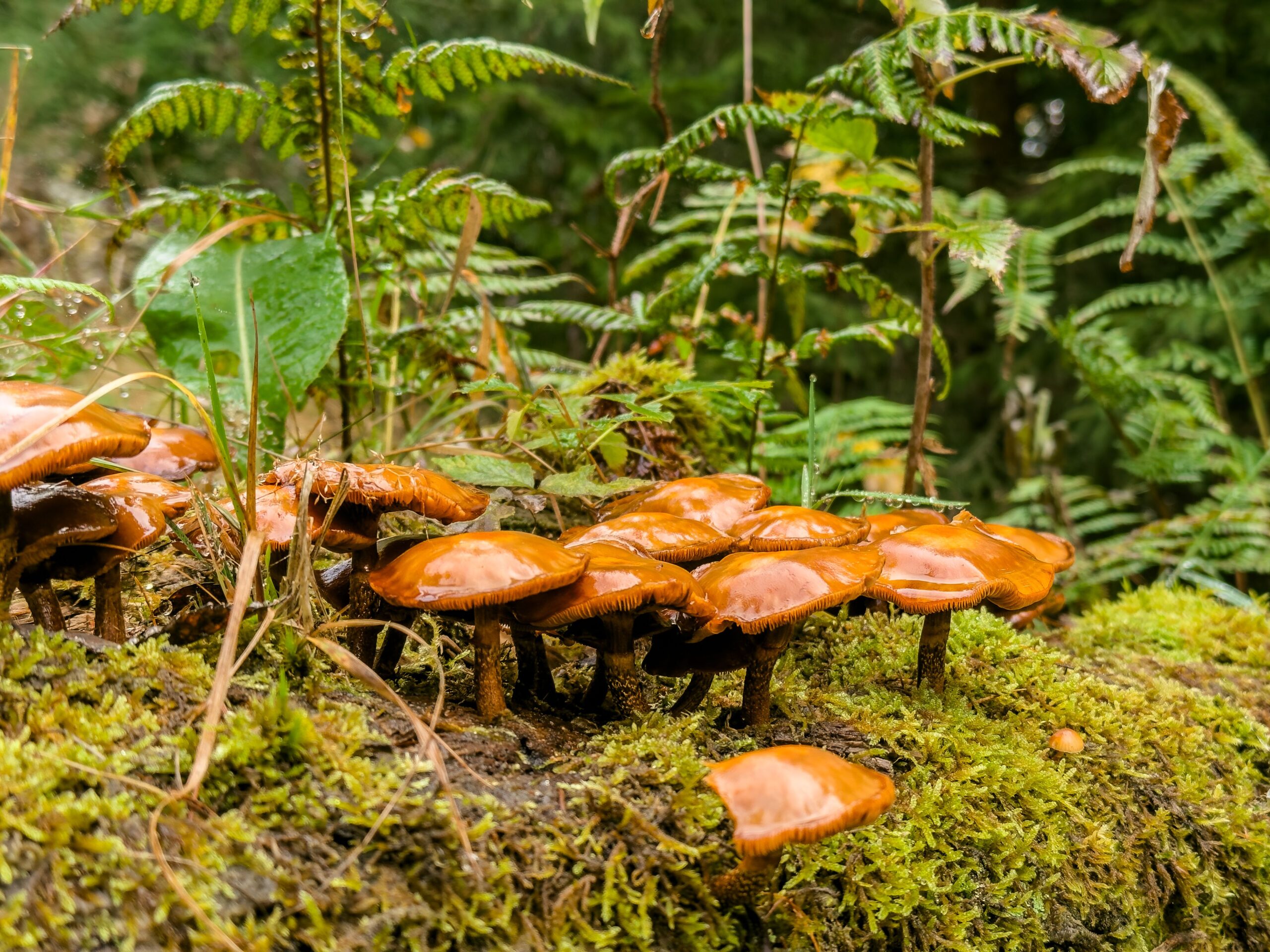
I have spent years writing about foraging and self-taught skills, and I still believe most people badly underestimate what they can learn from books, videos, and stubborn repetition. You can teach yourself sourdough, basic wiring, bike repair, conversational Spanish, or the guts of a tax return.
The feedback arrives quickly, the mistakes are cheap, and a bad outcome usually costs you an afternoon and some ingredients. Foraged mushrooms sit in a completely different category, and the advice that serves people so well everywhere else becomes genuinely dangerous the moment it gets applied to fungi.
The reason has very little to do with intelligence or effort. It has everything to do with how the feedback loop is built. When you misjudge a wild mushroom, the punishment for being wrong can arrive ten or twelve hours later, long after the toxin has started irreversible work on your liver. There is no warning bitterness, no visible spoilage, no smell that flags the danger. Several of the deadliest species on the continent are described by survivors as tasting good. That combination of high stakes and slow, unreliable feedback makes wild fungi close to the worst possible subject for learning by trial and error.
None of this is an argument against foraging. Wild fungi are a real food source, a fantastic excuse to spend hours in the woods, and one of the most interesting subjects a curious person can pick up. This is an argument about method. Learning to identify foraged mushrooms safely requires structures that solo study does not naturally provide, including correction from experienced people, repeated contact with physical specimens, and a pace far slower than the internet encourages.
The Learning Curve for Foraged Mushrooms Has No Beginner Difficulty Setting
Most self-taught skills come with a built-in easy mode. A beginner guitarist starts with three chords and a slow song. A beginner cook starts with scrambled eggs. Consequences stay small at the beginning and grow only as ambition grows, which gives people room to develop judgment before the stakes rise.
Fungi refuse to cooperate with that structure. The North American Mycological Association points out that of roughly ten thousand larger fungi on the continent, fewer than a hundred are dangerously poisonous, and fewer than a hundred are distinctive, worthwhile edibles. Those two short lists sound comfortably far apart until you spend a season in the woods and notice that they occupy the same logs, the same oak groves, and the same three weeks of weather. A cluster of honey mushrooms and a cluster of deadly galerina can erupt from the same rotting stump on the same afternoon, in dappled light that flattens every subtle color difference between them.
Anyone who wants to collect foraged mushrooms therefore does not get to start on a safe setting and work upward. From the very first basket, the deadly species are already present in the environment, already fruiting, already resembling the thing being hunted. The skill that separates a safe forager from an unlucky one is not some late-stage refinement reserved for advanced practitioners. It sits right at the entry point, on day one, before any confidence has been earned.
That inversion is the thing newcomers consistently fail to grasp. In almost every other pursuit, the beginner’s biggest risk is boredom or wasted money. Here the beginner’s biggest risk is a liver transplant. When someone in a comment thread tells a curious newcomer to grab a book and figure it out, they are applying a rule of thumb that works beautifully for woodworking and disastrously for mycology.
Why Self-Teaching Works Almost Everywhere Else and Fails Here
Effective self-teaching depends on a specific mechanism. You attempt something, you observe the result, and you adjust. The tighter and more honest that loop, the faster you improve. Chess gives you a lost game. Baking gives you a flat loaf. Programming gives you a stack trace within seconds. Each failure is informative, survivable, and repeatable, which is exactly why motivated people can reach a high level without ever hiring a teacher.
Wild fungi break every part of that mechanism. The loop is slow, since amatoxin symptoms often start six to twelve hours after a meal, and kidney-damaging orellanine can stay silent for one or two weeks. The loop is also dishonest, because a great many people eat misidentified species and feel completely fine, either because the specimen was a harmless lookalike, or because the dose was small, or because individual sensitivity varies enormously. Those uneventful meals feel like confirmation that the identification skill is sound. They quietly build confidence that has no basis in accuracy.
Then there is the matter of survivorship. A forager who has eaten questionable foraged mushrooms fifty times without incident becomes a walking testimonial, and often a loud one online. The forager who got it wrong once is not posting about it. The visible evidence available to a beginner is therefore skewed toward false reassurance, which is close to the worst possible information environment for a self-directed learner.
Finally, the correction signal is missing entirely. In a normal skill, being wrong feels like being wrong. Here, being wrong feels exactly like being right until the moment it does not. Deliberate practice cannot function without timely, accurate feedback, and this is one of the very few everyday domains where that feedback simply does not exist.
The Lookalikes That Fool Confident Amateurs Every Season
Every autumn, poison centers field calls from people who were not reckless and were not guessing. They had a book. They had checked several features. They were wrong anyway, because the pairs of species involved are separated by details that photographs flatten and that memory distorts.
The classic traps repeat year after year. Young death caps and destroying angels, still buttoned up and half buried, look remarkably like edible puffballs until they are sliced open. Mature specimens of the same genus resemble the field mushrooms that many families grew up picking in Europe and Asia, which is why immigrant communities show up disproportionately in poisoning statistics.
Deadly galerina grows in dense clusters on wood alongside honey mushrooms, sharing habitat, season, and general silhouette. The green-spored parasol, cheerfully nicknamed the vomiter, fruits in suburban lawns and is regularly mistaken for the genuinely edible shaggy parasol. Jack-o’-lantern mushrooms glow orange at the base of hardwoods and get carried home as chanterelles by people who never learned that chanterelles have blunt false gills and grow from soil rather than wood.
What makes these pairs so effective at fooling people is that the distinguishing features are often invisible in the position where the mushroom is found. Gill attachment requires cutting. Volvas require digging out the base rather than snapping the stem. Spore color requires several hours on paper at home. A forager working from a phone photo, in a hurry, with a basket already half full of foraged mushrooms, will skip exactly the steps that matter most.
Experienced identifiers describe the same discipline over and over. They do not identify to a name and then look for confirmation. They actively try to rule out the dangerous candidates first, and they treat any specimen that resists that process as firewood rather than dinner.
Delayed Symptoms Turn a Small Mistake Into a Medical Emergency
The timing of mushroom poisoning is what converts an ordinary error into a catastrophe. Amatoxin poisoning follows a pattern that is almost cruelly designed to delay treatment. Violent gastrointestinal symptoms begin many hours after the meal, then fade. The patient feels better, sometimes well enough to be discharged or to decide against going in at all. During that apparent recovery, liver damage continues quietly, and by the time jaundice and clotting problems appear, the window for the most effective interventions has narrowed considerably.
The numbers behind this are not trivial. CDC researchers analyzing national health data found roughly 1,328 emergency department visits associated with accidental poisonous mushroom ingestion in a single year, with serious adverse outcomes including liver failure, kidney failure, arrhythmia, rhabdomyolysis, and seizures occurring in about 8.6 percent of patients who sought care. Their conclusion was blunt, and it is the same conclusion reached by essentially every public health body that has looked at the question: wild mushrooms should not be eaten unless an expert has identified them.
Two details from that work deserve repeating to anyone considering foraged mushrooms. First, cooking does not neutralize the toxins that matter. Amatoxins survive sautéing, boiling, drying, and freezing without meaningful loss of potency. Second, the majority of these cases involved people eating wild fungi as food rather than for any other purpose, which means these were foragers, not thrill seekers.
A delayed poison also complicates diagnosis. Emergency physicians outside a handful of regions may see one such case in a decade. Without a specimen, a photograph, or a clear timeline, they are working blind, and treatment protocols for amatoxin exposure differ sharply from those for the far more common gastrointestinal irritants.
Identification Apps Sound Certain and Are Wrong Often Enough to Matter
The obvious modern response to all of this is that technology has closed the gap. Point a phone at a mushroom, get a name, proceed with confidence. The evidence says otherwise, and it says so with uncomfortable specificity.
Australian poison researchers tested three widely used identification applications against dozens of real specimens. The best performing app returned an accurate identification from a digital photograph slightly less than half the time and correctly flagged toxic species in about 44 percent of cases, while the other two hovered around a third. In several instances, toxic mushrooms were labeled as edible ones, and regional bias caused Australian species to be tagged with the names of similar looking North American edibles. A detailed consumer report on these tools also documents cases of people hospitalized after trusting an app, including an Ohio man who required emergency treatment following an amatoxin exposure and later said plainly that he would never have picked the mushrooms without his phone telling him they were fine.
The deeper problem is tone rather than accuracy. A knowledgeable human identifier hedges. They say the specimen looks like a certain species, then list what would need to be checked before anyone eats it. Software rarely communicates that texture of doubt, and an app that returns vague answers feels broken to users, so the design pressure runs toward confident output. Automation bias does the rest.
Photographs also throw away most of the information that identification depends on. A camera cannot record smell, texture, the way flesh bruises over ninety seconds, the substrate beneath the leaf litter, or the sensation of a stem snapping cleanly versus fibrously. Anyone assessing foraged mushrooms from images alone is working with a fraction of the available evidence, and the fraction that got discarded is frequently the decisive part.
Field Guides Are Necessary but Nowhere Near Sufficient for Foraged Mushrooms
None of this means books are useless. A good regional field guide is the backbone of a serious foraging education, and beginners who skip that step never build the vocabulary needed to ask sensible questions. Something like Mushrooms of the Northeast by Teresa Marrone and Walt Sturgeon, or the equivalent volume for your own region, belongs in the bag before anything gets picked.
The limitation is that guides describe idealized specimens under ideal conditions. Real fungi are chewed by slugs, bleached by sun, waterlogged, deformed by crowding, and frequently caught at a growth stage the photographer never bothered to shoot. A book showing a mature, textbook cap gives you almost nothing when you are holding a young button or a rain-battered veteran.
Taxonomy compounds the problem. Species that guides treated as single entities have been split into complexes of a dozen or more by DNA work, and edibility does not always travel with the old name. Morels illustrate this beautifully. A review in Toxins documents that true morels themselves are only conditionally edible, causing gastrointestinal and neurological syndromes when eaten raw, undercooked, or in large quantities, while the false morels that resemble them contain gyromitrin, a hydrazine derivative that the body converts into monomethylhydrazine. Two mushrooms sharing a common name in casual conversation can therefore sit in entirely different families with entirely different consequences.
Books also cannot correct you. They present information, and you decide whether you have matched it. Everyone who has misidentified foraged mushrooms and read the description afterward reports the same thing, which is that the text seemed to fit perfectly at the time. Confirmation bias is not defeated by having the right book on the shelf.
Folk Rules and Kitchen Tests That Deserve to Disappear
A remarkable amount of dangerous folklore circulates as practical wisdom, and it circulates most freely in exactly the self-taught spaces where beginners go looking for shortcuts.
The silver spoon test, which claims that toxic species tarnish silver, has no basis whatsoever. The idea that anything animals eat must be safe collapses the moment you learn that squirrels and slugs happily consume species that would kill a person. The claim that toxic mushrooms are brightly colored while edible ones are drab is contradicted in both directions, since chicken of the woods is brilliant orange and edible while the death cap is a modest greenish tan. The belief that peeling the cap removes danger, that mushrooms growing on wood are always safe, or that boiling and discarding the water renders anything harmless has been disproven repeatedly and lethally.
Cooking deserves its own note because it is the most persistent myth. Heat destroys some compounds, including the ones that make morels and honey mushrooms unpleasant when raw, and that partial truth is what keeps the myth alive. It does nothing to amatoxins. A death cap simmered for an hour is still a death cap.
The tasting test is worse still. Small tastes are a legitimate identification technique that experienced mycologists use for certain groups, spitting rather than swallowing, and it is not a safety screen. Deadly species are not reliably bitter or acrid, and multiple accounts from survivors describe the meal as delicious. Any rule that promises to sort foraged mushrooms into safe and unsafe piles without species-level identification is selling comfort rather than safety.

What Actually Works: Mentors, Clubs, and Slow Accumulation
The people who forage for decades without incident tend to share a similar path, and it looks nothing like a weekend of internet research.
They join a local mycological society, which exists in most regions and typically charges less per year than a decent dinner. Club forays put a beginner in a field with a dozen people who have been doing this for twenty years, handling real specimens, hearing why a particular find was rejected. That correction, delivered in the moment with the mushroom in hand, is the missing feedback loop, and nothing else substitutes for it.
They also narrow their focus aggressively. Rather than trying to learn everything, they pick two or three unmistakable species for the first year, often starting with groups that have no deadly lookalikes in their region. Chicken of the woods, giant puffballs cut open and checked, morels approached with genuine caution, and chanterelles learned alongside their jack-o’-lantern impostor are common starting points. Everything else goes into a basket for study and then into the compost.
They build habits that look excessive until they save someone. Collecting the entire mushroom including the base, taking spore prints overnight, photographing habitat and substrate before picking, keeping a small reference specimen in the refrigerator for a few days after any meal of foraged mushrooms, and refusing to eat anything a second person could not confirm. A folding hand lens costs very little and reveals gill attachment, pore structure, and stem texture that the naked eye simply misses.
Above all, they treat uncertainty as an answer rather than an obstacle. The oldest rule in the hobby remains the best one, which is that when there is doubt, there is no doubt.
Gear That Supports Good Identification of Foraged Mushrooms
Equipment cannot make anyone safe, and no purchase substitutes for a mentor. What good gear does is make the correct process convenient, which matters more than it sounds, because most identification failures happen when someone skips a step out of awkwardness or haste.
A ventilated basket is the traditional choice for a reason. Plastic bags sweat, turning a firm specimen into slime within an hour and destroying the very features an identification depends on, while an open basket keeps everything intact and separated. Keeping species in separate paper bags inside the basket prevents a single unidentified find from contaminating an entire haul.
A proper mushroom knife with a curved blade and a brush on the handle encourages clean harvesting and lets you clear soil in the field without gouging the stem base. That base is where volvas hide, and a volva is the single feature that most often separates a pleasant dinner from a hospital admission.
A dedicated notebook or a habit of thorough photography rounds out the kit. Recording the tree species nearby, the substrate, the date, and the weather turns each outing into data rather than an isolated event, and that record is what experienced identifiers will ask for first when you bring them a question. For anyone who ends up with a genuine surplus of correctly identified foraged mushrooms, a simple dehydrator preserves the harvest far better than freezing and takes almost no attention.
Buy the basket and the loupe before the cookbook. The order says something about how the hobby should be approached.
What to Do If You or Someone You Know Eats the Wrong One
Accidents happen even to careful people, and the response in the first hours makes an enormous difference to the outcome.
Call a poison center immediately rather than waiting for symptoms. In the United States, that means dialing 1-800-222-1222 or using the online tool run by America’s Poison Centers, which operates free and around the clock. Waiting to see whether anything develops is the single most common mistake, and with amatoxin exposure it is also the costliest, since the early hours are when treatment works best.
Save physical evidence. If any uncooked portion remains, refrigerate it in paper rather than plastic. If the whole batch was eaten, go back to the collection site and pick more of the same thing, taking care to include the base of the stem. Photographs of the specimen from several angles, of the underside, and of the growing site are all useful. Note the time of the meal, the quantity consumed, how the foraged mushrooms were prepared, and whether anyone else ate them.
Do not induce vomiting, do not administer anything at home, and do not rely on internet identification during an emergency. A mycologist can often be reached through the poison center or through a local mycological society, and many clubs maintain volunteers specifically for this purpose.
Finally, take pets seriously. Dogs are far more likely than people to die from mushroom poisoning, largely because they eat first and because owners rarely see it happen. A dog vomiting after a walk through a wooded yard deserves a phone call rather than a wait-and-see approach.
Concluding
I want to be clear that I am not telling anyone to stay out of the woods. Foraging has given me some of the best meals and best afternoons of my life, and the people I have met through it are among the most generous and curious I know. What I am arguing against is the reflex that treats every skill as equivalent, as though identifying fungi were just another thing to learn from a video at your own pace.
The self-teaching instinct is a good one, and it has served most of us well. It fails here for a structural reason that has nothing to do with capability. Skills improve through correction, and this hobby withholds correction until the correction can no longer help you.
So, take the slow path. Find your local mycological club and go on a foray this season, even if you feel like the least knowledgeable person there, because everyone in that field was once exactly that person. Learn three species properly instead of thirty vaguely. Ask someone to look at your foraged mushrooms before they hit the pan, every single time, until the day you become the person others ask. That habit will cost you nothing except a little pride, and it is the only part of this whole discussion that has ever reliably kept anyone alive.
Author Bio
Bob Rodgers is a lifelong outdoorsman, herbalist, and seasoned prepper with over 20 years of real-world survival experience. As the founder of PreppersWill.com, he shares practical advice on self-reliance, off-grid living, and disaster preparedness, no hype, just hard-earned lessons from decades of hands-on prepping.
Other Useful Resources:
Drinking Water Survival Myths You Should Know
How to obtain water from the air
The Impacts of Water Scarcity in Major Cities
Knowledge to survive any medical crisis situation during a major disaster
