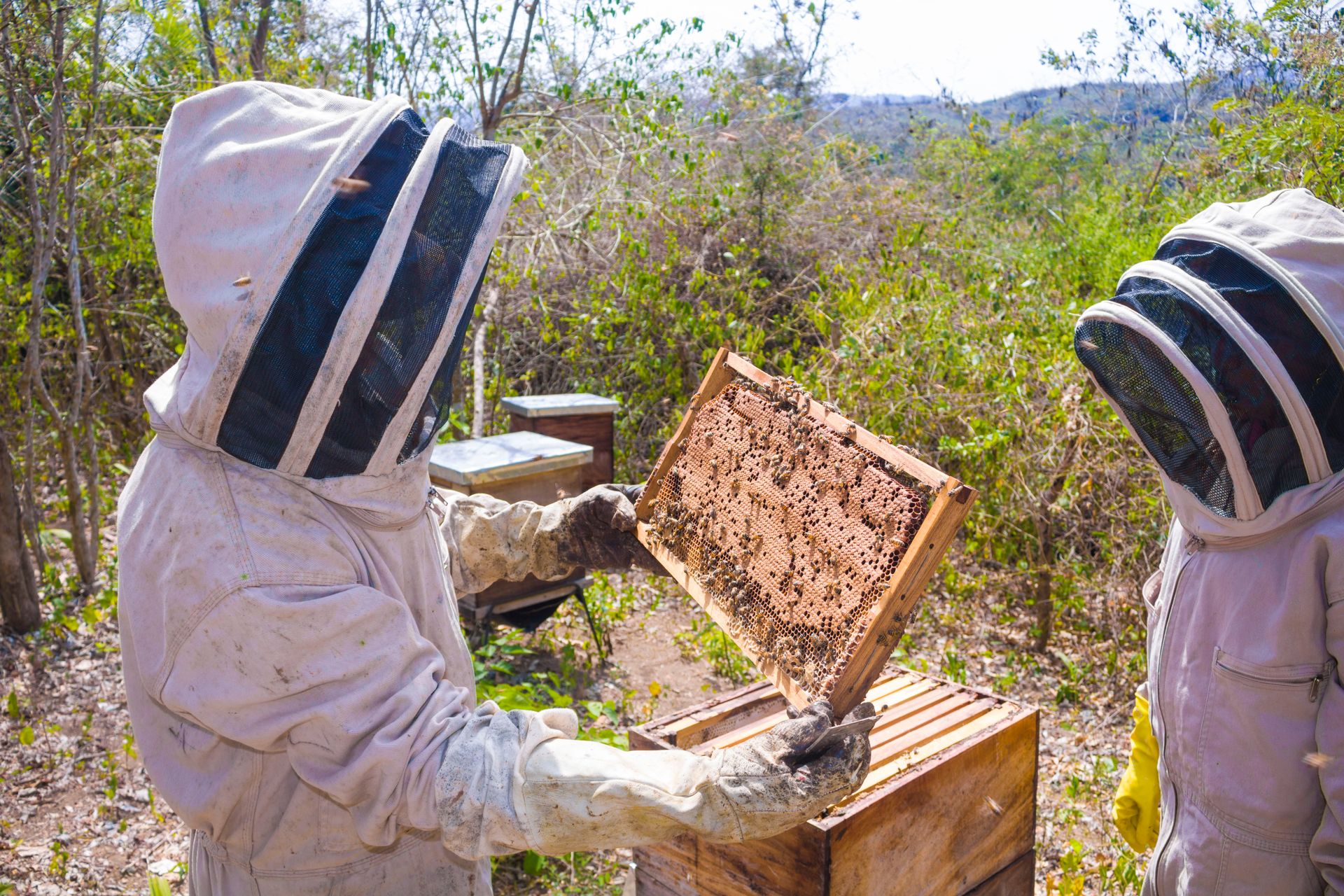
Most preparedness plans cover water, calories, medicine, and security, yet very few of them include a renewable source of sweetness that also happens to be one of the most dependable trade goods in history.
Keeping bees fills that gap in a way that few other homestead projects can match. A single healthy colony can produce a surplus of honey, wax, and pollination value every season, and the honey itself stores for years in a plain jar on a pantry shelf. For anyone who lives off grid, runs a small homestead, or simply wants a buffer against supply chain trouble, a hive is closer to an investment account than a hobby, provided you understand the numbers going in.
This article takes a practical look at those numbers. We will walk through what honey production and pricing really look like according to USDA data, what it costs to get started, how much work and risk are involved, and how the output of an apiary translates into barter value when cash is scarce or useless.
I will also be honest about the weak points, because bees die, seasons fail, and a poorly planned apiary can drain your budget just like any other livestock project. By the end you should be able to decide whether keeping bees fits your property, your skills, and your long-term resilience strategy, and you will have a realistic budget framework to start from.
Why Keeping Bees Belongs in a Serious Preparedness Plan
Preppers tend to think in terms of consumables that eventually run out, which is why stored food gets so much attention and why people sooner or later ask what happens in year two or year five. Bees answer that question differently because a colony replaces its own labor force. Once a hive is established in a good location, the workers gather nectar from a radius of a couple of miles on their own schedule, and your main job is to keep the colony healthy and to take only the surplus. The forage costs you nothing if your land and your neighbors provide flowers, which makes keeping bees one of the few food projects where the feedstock is free.
The food value is real, though it deserves honest framing. Honey is an energy dense sweetener and a useful calorie source, but nobody lives on it alone, and a hive will never replace a garden or a freezer full of meat. What honey does is improve everything else you store. It sweetens oatmeal and tea, preserves fruit, feeds fermentation projects like mead, and makes bland long-term staples such as rice and beans easier to eat month after month. Morale matters in a long emergency, and a spoonful of something sweet carries more weight than most people expect until they have gone without it.
Pollination is the second dividend. According to the USDA Agricultural Research Service, pollination by managed honey bee colonies adds at least 18 billion dollars to the value of American agriculture each year, and about one mouthful in three of the average diet benefits from it.
On a homestead that translates into better fruit set on apples, squash, berries, and beans, which raises the yield of the very crops you are counting on. Add beeswax for candles, balms, and tool protection, and a single apiary starts to cover several shelves of your preparedness inventory at once. The rest of this article puts numbers on that promise, starting with what the market data shows.
The Real Numbers Behind Honey Production and Pricing
The most trustworthy figures come from the USDA National Agricultural Statistics Service, which publishes an annual honey report. The March 2025 release covering 2024 shows that American producers with five or more colonies harvested 134 million pounds of honey from 2.60 million colonies, an average of 51.7 pounds per colony. The national average price was 2.69 dollars per pound, but that blended number hides a wide gap between sales channels. Honey sold through cooperatives and private bulk channels averaged 2.27 dollars per pound, while honey sold at retail averaged 5.74 dollars per pound.
Those two prices tell a homesteader where the money is. Selling in bulk to a packer yields roughly 117 dollars from an average colony, while selling in jars directly to neighbors at something near retail pricing yields closer to 297 dollars from that same colony, before you subtract packaging and labor. Those are national averages, so a first-year colony in a poor location may give you nothing, and a well-managed hive on abundant forage can easily beat the average. Treat the figures as a planning baseline and never as a promise.
The same report lists what beekeepers pay for stock, which is useful when you build a budget. In 2024 the average price paid was 89 dollars for a package of bees, 109 dollars for a nucleus colony, and 18 dollars for a queen. Nationwide, beekeepers spent about 45 million dollars on feed and about 16.6 million dollars on Varroa control, a reminder that colonies carry recurring costs. When you work out the economics of keeping bees on a small scale, the sensible way to frame it is cash cost versus pantry value. A pound of honey you never buy at the store is a pound of money you never spend, and in a barter economy the same pound becomes currency. For a household that already buys honey, even a modest harvest offsets a real grocery line item.
Startup Costs and the Gear You Actually Need
Startup costs are the part of keeping bees that surprises people, because the bees themselves make up only a fraction of the first-year budget. Based on the USDA prices above, a package or nucleus will run roughly 90 to 110 dollars, and you will need a hive to put them in, protective gear, a smoker, and a hive tool. Most beginners should plan on a few hundred dollars for a single hive and closer to a thousand if they want two colonies and decent equipment. Two hives make a better plan than one, because a weak colony can be strengthened with resources from a strong one, and comparing the two teaches you faster than a single hive ever could.
A complete Langstroth starter kit is the simplest way to avoid piecing together mismatched parts. Search for a ten-frame kit that includes boxes, frames, foundation, and a bottom board. Protective clothing matters more than most newcomers admit, since a nervous beekeeper makes more mistakes, so a ventilated suit with an attached veil is worth the money. A stainless-steel smoker with a heat shield will last for decades if you keep it clean, and it is the tool that lets you work the hive calmly.
Training deserves a line in the budget as well. Penn State Extension offers research based beekeeping courses, printed guides, and a field guide to honey bee maladies, and its beekeeping resources page is a good place to start. A local beekeeping club is often cheaper still and sometimes loans equipment. Buying used gear can cut costs, though you should only accept used boxes and frames that an experienced beekeeper has checked for disease, since old comb can carry spores that outlast the bees that built it. Finally, check local zoning and any state registration rules before you order anything, because those requirements vary and are far easier to handle before the hive is sitting on your property.
Honey as the Ultimate Shelf Stable Calorie Reserve
Storage is where honey outperforms nearly every other homestead product. The National Honey Board states that honey in sealed containers can remain stable for decades and even centuries, although it tends to darken, lose some aroma and flavor, or crystallize over time. For practical purposes the board notes that a shelf life of two years is often stated, which works as a quality guideline and never as a safety cliff. That gives a household that is keeping bees a long runway to use or trade each harvest without refrigeration, canning equipment, or electricity.
Crystallization worries beginners, but it is a natural process in which glucose separates out of the liquid. Placing the jar in warm water and stirring until the crystals dissolve restores the texture, and the board also points out that you can simply scoop crystallized honey onto toast. Avoid boiling or scorching, since excess heat degrades flavor. Moisture is the real storage enemy, so use clean, dry, airtight containers and keep them away from damp basements.
Weight is useful to know when you plan inventory. A cup of honey weighs about 12 ounces and a gallon weighs close to 12 pounds, so a few five-gallon food grade buckets with gasketed lids hold a surprising amount of reserve. Glass jars in one pound and half pound sizes are better for barter because they create convenient units of trade.
Two practical notes belong in your plan. Honey should never be given to infants under one year old because of the risk of infant botulism, which matters if there are babies in your household or among the people you trade with. Honey can also stand in for sugar in cooking, and the board suggests replacing up to half the sugar in a recipe at first while lowering the oven temperature slightly for baked goods. Learning those conversions now will make a stored honey supply far more useful later.
Beeswax, Propolis, and Other Products That Pay Their Way
Honey gets the attention, yet an apiary produces several other goods that matter in a tight economy. Beeswax is the most useful of these because it has dozens of practical roles. It makes long burning candles, waterproofs leather and canvas, protects wooden tool handles, lubricates drawers and zippers, and forms the base of lip balms and salves. Anyone who has priced a beeswax candle at a craft fair knows it commands a premium, and the raw wax is a durable trade good that does not spoil. The USDA honey report groups beeswax and propolis with queen sales in another income line that totaled 51.3 million dollars across American beekeepers in 2024, a sign that these side products add up even if the hobbyist version is much smaller.
Cappings, the thin wax caps you slice off honeycomb before extraction, are the main source of clean wax for a small operation. Rinse them, melt them gently in a double boiler, strain the liquid through cloth, and let it cool into blocks. A single season of keeping bees at two or three hives can yield enough wax for candles, a batch of salve, and a few blocks to trade.
Propolis, the resinous material bees collect from trees, is used in tinctures and balms, though its value depends on local demand and on how comfortable you are making products people will apply to their skin. Mead is another route worth considering. The University of Minnesota Bee Lab offers a free poster on basic mead making alongside its other beekeeping posters and manuals. Fermented honey keeps well, trades well, and also serves a morale role in many communities. Check your local laws before selling any alcohol or skin care product, since rules differ widely, and remember that in a barter setting your neighbors may care less about labels than about quality and trust.
Building a Barter Economy Around Your Apiary
A barter economy runs on goods that are compact, durable, divisible, and wanted by many people, and honey scores well on all four counts. It does not spoil, it can be portioned into half pound or pound jars, and almost everyone values it. Because sweeteners are hard to produce at home without bees or a sugar crop, local demand tends to rise quickly when supply chains are disrupted. Those traits make keeping bees one of the more strategic investments for anyone planning to trade with neighbors.
To use honey as currency, you need to think about unit values before you need them. If retail honey averaged 5.74 dollars per pound in 2024, then a pound jar is worth a known amount of ordinary groceries today, and you can use that figure as an anchor when negotiating trades. In a real disruption values will shift, so keep a list of what your household would want in exchange, such as ammunition, medical supplies, fuel, tools, seed, meat, eggs, labor, or repairs. Skills trade as well, and offering a jar of honey for a day of help splitting wood or fixing a fence is a standard arrangement in rural communities.
Pollination services are an underrated bartering tool. Orchard owners and market gardeners often welcome hives on their land, and many will pay in produce, rent, or a share of the harvest. Placing a few colonies at a neighbor’s orchard builds goodwill and expands your forage, and it creates a relationship that extends well beyond honey.
Avoid putting all your trade goods in one basket. Diversify among honey, wax, nucleus colonies, and lessons. Splitting a strong hive in spring creates a new colony that a beginner would gladly buy or trade for, and at 109 dollars for a nuc in the USDA data that is a meaningful item of exchange. Knowledge also counts as a trade good, since a patient beekeeper who teaches others builds a network that supports you when things turn difficult.
Keeping Bees Alive: Pests, Losses, and Honest Risk
Every economic model needs a loss line, and keeping bees carries a large one. The USDA Agricultural Research Service reports that Varroa mites, which arrived in the United States in 1987, are what beekeepers identify as their single most serious problem, and that annual colony losses have averaged around 30 percent in recent years. Small hive beetles, wax moths, viruses, poor nutrition, and pesticide exposure add to the pressure. A plan that assumes every hive survives every winter is a plan that will disappoint you.
Build losses into your budget. If you start with two colonies and lose one, you should have the ability to replace it with a package or nuc, which is another reason to keep a small cash reserve or to produce your own splits. Strong colonies that make splits in spring can replace winter losses without paying market prices. The 2024 USDA figures show beekeepers spending roughly 16.6 million dollars on Varroa treatment and about 45.4 million dollars on feed, which tells you where recurring costs cluster. Monitor mite levels with regular sampling, treat according to the label and local guidance, and feed sugar syrup or a protein patty when natural forage runs short, as ARS research recommends for periods of nectar scarcity.
Think about the grid down scenario honestly. If you cannot buy treatments or sugar, your odds depend on good genetics, strong forage, and low mite pressure going in. Beekeepers in that situation often rely on selecting hygienic, mite tolerant stock, leaving more honey on the hive, and planting more forage nearby. Stockpile supplies now that you will need later, such as spare frames, a few treatments with long shelf lives, and a printed manual. Allergies deserve serious attention too, because a severe reaction to stings is dangerous when medical help is far away. Anyone in the household who has never been stung should be treated cautiously, and an epinephrine plan from a physician is sensible for those at risk. Honest risk assessment is the difference between a resilient apiary and an expensive failure.
What Keeping Bees Looks Like When the Grid Goes Down
A hive is mostly a low-tech system, which suits off grid living well. Langstroth boxes, frames, a smoker, and a hive tool all work without electricity, and the bees themselves require no power, water pump, or fuel. The few things that depend on modern supply chains are miticides, sugar, and some plastic or metal components, which you can partly replace with stored stock, local sugar sources, and woodworking skills.
Extraction can be done by hand. A hand crank extractor makes the job quick and preserves the comb for reuse, which saves the bees a great deal of energy, since they must consume a lot of honey to build new wax. Without an extractor you can crush and strain comb through cloth, though you lose the comb and the bees must rebuild it. Buckets with honey gates and fine strainers are inexpensive and last for years.
Siting your apiary matters even more in a long emergency. Place hives where they get morning sun, have wind protection, and sit close to water. Keep them out of sight of casual passersby, because theft and vandalism become real concerns when goods are valuable, and screen or fence them accordingly. Position entrances away from walking paths and livestock. If you live in a cold climate, plan for winter wrapping and ventilation, which northern extension programs document in detail.
Think about forage as infrastructure. Planting clover, borage, lavender, bee balm, and fruit trees increases the nectar supply for years. Keeping bees alongside a garden means the bees raise the yield of the garden and the garden improves the bees’ nutrition, a feedback loop few other livestock systems can offer. Maintain a water source with stones or floating wood so bees can land safely, and set it out before spring so they form the habit of using it rather than visiting a neighbor’s pool.
Scaling Up Without Wrecking Your Budget
Growth should follow skill. A common mistake is to buy five hives in the first year, which multiplies costs and mistakes at the same time. A sounder path is to begin with two colonies, learn through a full annual cycle, and expand by splitting your own strong hives. A split costs a queen, which averaged 18 dollars in the 2024 USDA data, plus a few frames and boxes, a far lower cost than buying a nuc at 109 dollars. Over three years a careful beekeeper can reach six to eight colonies with modest outside spending.
Track your economics with a simple notebook or spreadsheet. Record equipment purchases, treatments, feed, bees, and every pound of honey and wax harvested. Compare the cost per pound of honey against the retail price of 5.74 dollars, and add side income from wax, nucs, or pollination. Many hobby beekeepers discover that the first year runs at a loss and the second year roughly breaks even, with real profit arriving only in year three or four once the equipment is paid off. Counting your own labor at zero is a common choice for homesteaders, but it is worth knowing what the number would be.
Equipment can be built at home to reduce costs. Basic woodworking skills allow you to make hive boxes, stands, and frames from lumber, and bulk purchases of foundation or shared orders through a club bring savings. Keep a buffer for emergencies such as replacing queens or a lost colony. Resist the temptation to buy gadgets, since the core equipment list is short and has changed little in a century.
Keeping bees as a source of income has limits as well. The USDA report counts about 26,000 apiary workers nationally, and most of the money in the industry flows to pollination and bulk honey, where scale and mobility matter. A homesteader competes best in local direct sales and in barter, where relationships and trust outweigh price. Matching your scale to your market is the quiet secret behind a sustainable apiary.
My Honest Opinion
My two cents after looking at all of this is that keeping bees deserves a place in the plans of anyone serious about long term self-reliance, as long as you go in with a clear picture of what it can and cannot do. It will never feed a family by itself, and it punishes neglect quickly. What it delivers is a renewable source of sweetener, wax, and pollination that stores well, trades well, and improves the other things you grow. The USDA numbers show a decent harvest per colony and a large premium for honey sold in jars, and the same numbers show real costs for bees, feed, and mite control.
If I were starting from scratch, I would take a local class, join a club, buy two colonies, and spend the first-year learning rather than harvesting. I would set aside honey, wax, and a split or two for trading, and put the rest on the shelf. I would also plant forage before I bought a single box, since the bees can only be as productive as the land allows. A hive that is already thriving when you need it is worth far more than a pile of equipment you plan to figure out later.
Author Bio
Dan Mowinski is a lifelong outdoorsman, hunter, and homesteader with Native American (Piqwacket), English, and Polish roots. With decades of off-grid survival and traditional land stewardship experience, he teaches sustainable living and works closely with the Prepper’s Will community to preserve practical wilderness skills.
Other resources worth checking out:
Drinking Water Survival Myths You Should Know
How to obtain water from the air
The Impacts of Water Scarcity in Major Cities
Knowledge to survive any medical crisis situation during a major disaster
