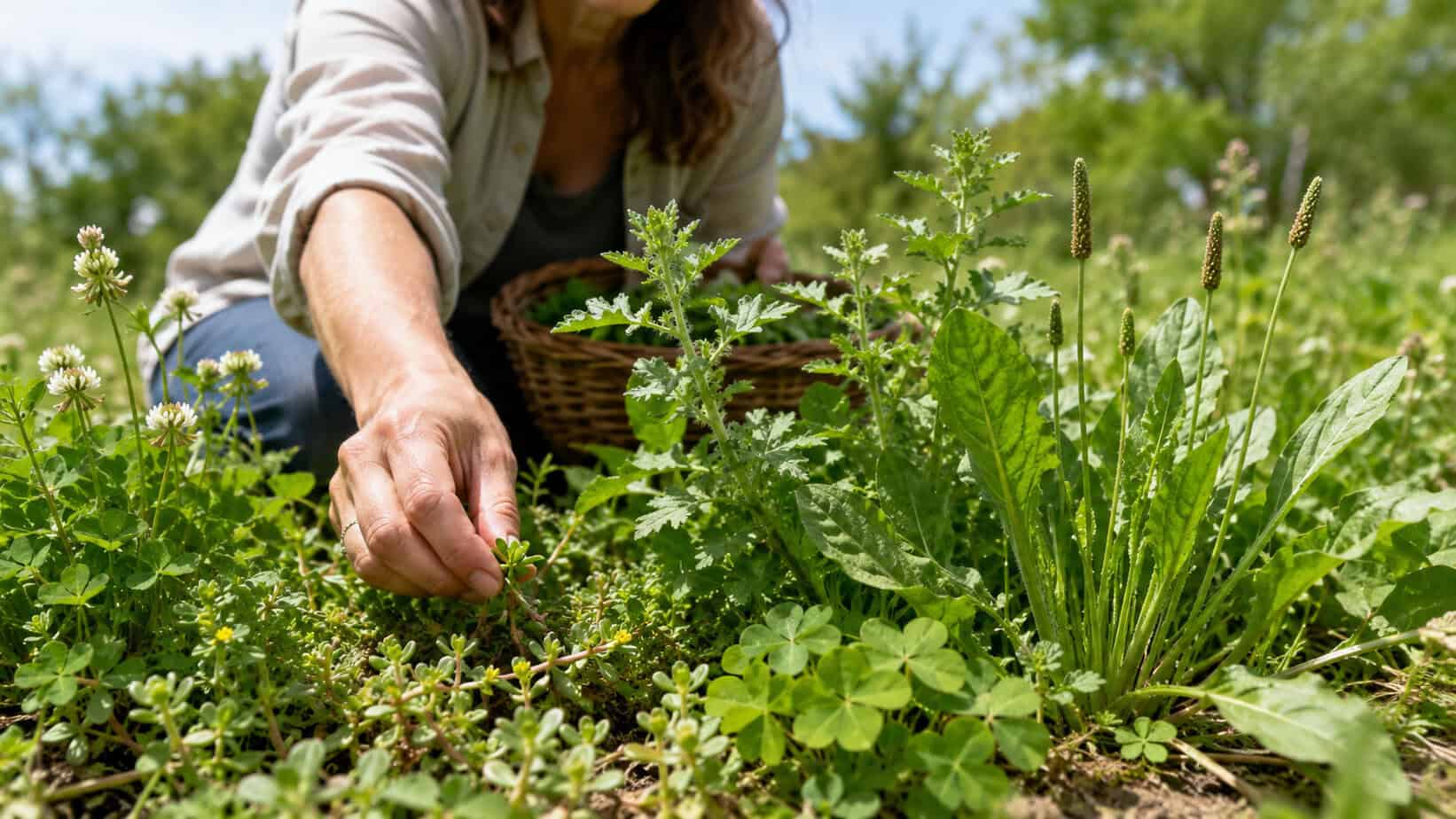
Something shifts in the way you see the world when you start looking at plants as food rather than background noise. That patch of “weeds” along the trail edge, the low-growing leaves spreading across a sunny garden bed, the berry-covered brambles lining the fence at the edge of a park, they stop being scenery and start being a pantry.
Foraging has been part of human life for thousands of years, and while grocery stores have made wild plants optional rather than essential, the practice is seeing a genuine comeback. More and more people are heading outside with a basket and a curiosity, ready to reconnect with the land in one of the oldest ways possible.
If you are just getting started, the best advice anyone can give you is to begin with plants that are easy to identify, hard to confuse with anything dangerous, and genuinely widespread. There is no need to chase rare or exotic species when the easy wild edibles to forage this summer are already growing near you, whether you live in a rural area, a suburb, or even a city.
The five plants in this guide were chosen specifically with beginners in mind. Each one is common across most of North America, recognizable with a little practice, and versatile enough to use in real meals rather than just as a curiosity.
Before heading out, always check local regulations regarding foraging on public land, and make absolutely sure of your identification before tasting anything new. A good field guide, a foraging app as a secondary reference, and a healthy respect for the “when in doubt, leave it out” rule will serve you well. Now, let’s dig in.
Why Summer Is the Best Season for Foraging Easy Wild Edibles
Summer is genuinely the sweet spot for beginner foragers. The growing season is in full swing, plants are at their most identifiable because leaves, stems, flowers, and sometimes fruit are all visible at once, and the sheer abundance of material means you rarely need to search far.
When it comes to easy wild edibles to forage this summer, the calendar is on your side in a way it simply is not in early spring or late fall.
Longer daylight hours mean more time to explore before the light fades. Warm soil means plants are producing at their peak. And many of the species best suited to beginners, dandelions, wild blackberries, purslane, lamb’s quarters, and wood sorrel, are at their most productive and flavorful during the summer months.
You also have the advantage of being able to cross-reference leaf shape, stem color, flower, and fruit all at the same time, which makes identification considerably more reliable than trying to ID a bare-stemmed plant in early spring.
The USDA’s best practices guide for foraging and harvesting wild plants emphasizes the importance of understanding both plant identification and the ecological context in which plants grow. Reading that kind of foundational material before heading out makes a real difference, especially for those new to the practice.
One important note: always forage in areas where pesticides and herbicides have not been applied. Roadsides, heavily manicured parks, and agricultural field edges are all suspect. Backyards you control, nature preserves where foraging is permitted, and undisturbed woodland edges are generally your best bets.
Dandelion (Taraxacum officinale): The Beginner’s Best Friend
There is almost no plant more forager-friendly than the humble dandelion, and yet most people spend considerable energy trying to eradicate it from their lawns. Once you understand just how useful this plant is, that impulse starts to feel a little ridiculous.
Dandelions are one of the most accessible easy wild edibles to forage this summer, available in virtually every climate zone across North America and identifiable with confidence by even complete beginners.
The bright yellow flower, the hollow leafless stalk, the deeply toothed lance-shaped leaves arranged in a rosette at the base, and the iconic white puffball seed head when the flower matures, these are among the most recognizable plant features in the world.
The University of Minnesota Extension notes that dandelions were actually brought to North America in the 1600s specifically as an edible and medicinal plant, and their status as a “weed” only developed later when manicured lawn culture took hold.
Every part of the dandelion is edible. The young leaves, best harvested before the plant flowers, have a pleasantly bitter flavor similar to radicchio or chicory and work well in salads, sauteed in olive oil with garlic, or blended into a simple pesto. The flowers, when picked just before or immediately after opening, taste mildly sweet and can be used in fritters, mixed into pancake batter, or steeped into tea and wine. Even the roots are edible, roasted to make a caffeine-free coffee substitute with a rich, slightly bitter profile.
Nutritionally, dandelions punch well above their weight. They are packed with vitamins A and C, iron, calcium, and fiber. The leaves in particular are more nutrient-dense than many cultivated greens you would find in a grocery store.
For harvesting, a simple foraging knife and a mesh bag or basket for breathability are all you need. For a reliable tool kit, consider the Opinel No.08 Carbon Steel Folding Knife, a classic forager’s choice that is sharp, easy to clean, and comfortable in the hand. Avoid harvesting dandelions from areas near roads or where lawn chemicals might have been applied.

Wild Blackberries (Rubus allegheniensis): Summer Foraging at Its Most Rewarding
If dandelions are the intellectual gateway to foraging, wild blackberries are the emotional one. There is something deeply satisfying about filling a container with berries you found yourself, and blackberries make that experience accessible to virtually anyone.
They ripen throughout summer, typically from late June through August depending on your latitude and local climate, and they grow in thick, thorny canes along woodland edges, old fence lines, roadsides (away from traffic), and disturbed ground across most of the eastern and central United States.
Identification is straightforward. Wild blackberry canes are thorny and arching, the leaves are compound with three to five toothed leaflets, and the berries progress from green to red to deep glossy black as they ripen. A ripe wild blackberry comes off the stem easily with a gentle tug. If you have to pull hard, give it another day or two. The flavor of a sun-warmed wild blackberry picked at peak ripeness is genuinely something that no commercial berry can fully replicate.
Wild blackberries are rich in antioxidants, vitamin C, and fiber, and they are incredibly versatile in the kitchen. They can be eaten raw, folded into yogurt, turned into jam, baked into cobblers, or frozen for later use. The National Park Service reminds foragers to check local regulations before harvesting on public land, as rules vary considerably from park to park.
One practical note: wear long sleeves and sturdy pants when harvesting from dense canes. The thorns are no joke, and reaching into the middle of a productive bramble patch without protection is a decision you will regret quickly.
For berry picking, a wicker or woven basket works beautifully, but a collapsible silicone foraging bowl is also handy because it collapses flat in a pack. Consider the Collapsible Silicone Berry Picking Container by SAMMART because it’s lightweight, easy to rinse, and spacious enough for a serious haul.
Purslane (Portulaca oleracea): The Surprising Nutritional Powerhouse in Your Garden Bed
Most gardeners have pulled purslane from their beds without a second thought, which is a genuine shame, because this low-growing succulent is one of the most nutritious leafy plants you can eat.
Purslane is among the easy wild edibles to forage this summer that require almost no searching, it grows in garden beds, between sidewalk cracks, along disturbed ground, and in any sunny spot where the soil has been loosened. Its preference for warm, dry conditions makes it perfectly suited to peak summer foraging.
Identification is easy once you know what you’re looking for. Purslane forms a flat, spreading mat close to the ground, with thick, paddle-shaped succulent leaves and reddish-pink stems. The leaves and stems have a fleshy, slightly slippery texture when you bite into them, and the taste is mild, a bit lemony, and faintly salty. Small yellow flowers appear in summer and are also edible.
The one look-alike to watch out for is spurge (Euphorbia species), which also grows low and spreading but has much thinner stems, smaller leaves, and bleeds a milky white sap when broken. Purslane’s sap, by contrast, is clear. Break a stem and if the sap is white and latex-like, put it down. If it is clear, you have purslane.
From a nutritional standpoint, purslane is genuinely remarkable. Healthline notes that it contains high levels of omega-3 fatty acids, antioxidants, vitamins A, C, and E, as well as potassium, magnesium, and calcium. For a leafy green you can forage for free from your garden, that nutritional profile is hard to beat.
Purslane works raw in salads, where its slight crunch and lemony brightness add texture, or cooked briefly in a stir-fry, soup, or egg scramble. It is popular in Mediterranean cuisine and has been eaten across Europe, Asia, and the Middle East for centuries. Harvest it before flowering for the best flavor, using scissors or a sharp knife and snipping stems above the root.
Lamb’s Quarters (Chenopodium album): The Wild Spinach Nobody Talks About
Lamb’s quarters is one of those plants that experienced foragers tend to keep to themselves, not because it is rare (it is absolutely everywhere), but because it is genuinely that good. Also called goosefoot or white goosefoot, this annual weed grows in garden beds, along roadsides, in compost piles, and across any disturbed ground with decent soil. It is one of the best easy wild edibles to forage this summer if you have any interest in leafy greens, and it outperforms spinach on a number of nutritional metrics.
The plant grows upright, typically reaching one to four feet tall in summer, with diamond-shaped leaves that have a distinctive mealy, powdery coating on their undersides that rubs off on your fingers and appears almost silvery-white in the right light. Young leaves are diamond or goosefoot-shaped, soft, and slightly waxy. The plant produces small green flower clusters that are also edible and, once dried, the seeds can be used like quinoa (to which lamb’s quarters is actually related, both being members of the Amaranthaceae family).
The flavor of young lamb’s quarters leaves is mild and earthy, very similar to spinach but without any of that slightly metallic edge. They can be eaten raw in salads when young and tender, or cooked by wilting in a pan with butter and garlic, blanching for soup, blending into green smoothies, or folding into quiche and frittatas. Like spinach, they reduce considerably in volume when cooked, so gather generously.
The Chicago Botanic Garden’s blog on eating weeds confirms that lamb’s quarters is high in vitamins A and C, and that the powdery white coating on the leaves is one of the clearest identifying features that sets it apart from lookalikes. Harvest the top six inches of growth and new side shoots regularly to keep the plant producing all summer long.
Wood Sorrel (Oxalis stricta): The Lemony Trail Snack You Walk Past Every Day
Wood sorrel is the plant that turns a forest walk into a snacking adventure. It is small, low-growing, and easy to overlook, but once you know it, you will spot it everywhere, along shady trails, at the base of trees, in garden borders, and tucked into mossy corners.
The leaves look remarkably like clover (three heart-shaped leaflets arranged on a thin stem), but the key difference is flavor: wood sorrel has a bright, tart, distinctly lemony taste from the oxalic acid it contains, while clover is mild and grassy.
This easy wild edible is perfect for summer foraging because the tiny yellow flowers (or occasionally purple, depending on the species) and the distinctive three-leaflet formation make it identifiable with confidence. Interestingly, even if you mix it up with common clover, both are edible, though the flavor difference is significant. Some people describe wood sorrel as tasting faintly of green apple or lemonade, which makes it a wonderful trail snack eaten straight off the plant.
In the kitchen, wood sorrel works as a garnish, a salad component, a sauce brightener, or steeped into a light herbal tea. The delicate flavor fades with prolonged heat, so it works best used fresh or added at the very end of cooking. The leaves and flowers are the parts most commonly eaten, and small quantities are perfectly safe for most people. That said, the oxalic acid content means you should avoid eating large amounts regularly, particularly if you have a history of kidney stones. A small handful as part of a varied foraged meal is no cause for concern.
Essential Gear for Easy Wild Edibles to Forage This Summer
You do not need a lot of gear to forage successfully, but a few key items make a real difference in safety, comfort, and how much you can carry home. Here is what actually matters for beginners working with easy wild edibles to forage this summer.
A reliable field guide is non-negotiable. Foraging apps are useful as secondary references, but printed guides with detailed photographs and botanical descriptions are more trustworthy for final identification.
A good foraging basket or bag keeps your harvest from getting crushed and allows airflow to prevent wilting. Wicker baskets are traditional and work beautifully, but a breathable mesh tote or a reusable cotton produce bag works just as well. Avoid plastic bags, which trap moisture and accelerate wilting.
A folding knife or small pair of foraging scissors handles most harvesting tasks cleanly and reduces damage to the parent plant. Clean cuts heal faster and cause less stress to the plant than pulling or tearing.
Finally, a good pair of lightweight gardening or foraging gloves is worth having for blackberry and nettle harvesting. The Bamllum Cut Resistant Gloves offer puncture and cut resistance while remaining flexible enough to handle delicate plant material comfortably.
Safety Rules Every Beginner Forager Needs to Know
Foraging is genuinely safe when approached with the right mindset, but it does require a commitment to accuracy that cannot be shortchanged. The plants on this list were selected precisely because they are among the most distinctive and least dangerous for beginners to learn. Still, a few foundational rules apply regardless of experience level.
Never eat anything you cannot identify with complete certainty using at least two independent sources, ideally a field guide, a second field guide or reliable website, and ideally confirmation from someone with direct experience. The “when in doubt, leave it out” rule sounds simple, but it saves lives. Even experienced foragers occasionally encounter plants that require a second look before harvesting.
Only harvest from locations where you can be confident no pesticides, herbicides, or industrial runoff are present. This eliminates most roadside verges, heavily manicured public parks, and any ground near agricultural spray areas. Private land where you control what goes on it, or areas with documented clean soil, are ideal.
Practice sustainable harvesting by taking no more than a third of any given plant or patch, leaving the root system undisturbed unless the root itself is what you need, and spreading your harvesting across multiple locations rather than stripping any one spot. This is not just ethical, it ensures the patch will be productive the next time you visit.
Always check local and state regulations before foraging on public land. National parks generally prohibit commercial foraging and regulate personal gathering. State parks and municipal parks vary widely. Contact local ranger stations or parks departments if you are unsure.
How to Start Identifying Easy Wild Edibles to Forage This Summer with Confidence
One of the biggest mental barriers for beginner foragers is the fear of getting something wrong. That fear is healthy in small doses, but it becomes paralyzing if you let it. The good news is that confident plant identification is genuinely learnable, and the five plants in this guide are as forgiving as beginners could hope for.
Starting with easy wild edibles to forage this summer means choosing species that have been safely identified and harvested by millions of people across centuries, plants whose features are distinctive enough to eliminate most reasonable doubt.
The best way to build identification confidence is to spend time with a single plant at a time rather than trying to learn twenty species at once. Choose one plant from this list, dandelion is ideal for obvious reasons, and spend a few weeks observing it in multiple locations, at different stages of growth, and in different lighting conditions.
Notice the details: how the hollow stalk looks when snapped, the white milky sap that appears, the way the leaves are arranged at the base of the plant, the structure of the yellow flower, and the puffball that forms later. These multi-sensory observations build a picture that sticks in memory far more effectively than reading a description once.
Local foraging groups and guided walks are also an underrated resource. Learning alongside someone who can point directly at a plant and confirm your identification in the field accelerates the learning curve dramatically. Many botanical gardens, nature centers, and regional foraging organizations run beginner-friendly sessions throughout the summer, and the community around foraging tends to be genuinely welcoming to newcomers.
A dedicated field notebook helps too. Photographing plants at every stage, noting where you found them, what they smelled like, and how the texture felt gives you a personal reference that becomes more useful over time. The National Audubon Society Field Guide to North American Wildflowers is a classic companion for exactly this kind of systematic learning, with thorough photographs and clear regional guides.

Cooking and Preserving Your Foraged Summer Finds
Foraging does not really complete itself until the food reaches the table. Getting comfortable cooking with wild plants expands what you can do with each harvest and helps you understand the flavor profile of each species in a way that reinforces your identification skills. Each of the five plants covered in this guide has its own culinary personality, and learning to work with that personality is part of the pleasure.
Dandelion greens are worth blanching briefly if bitterness is a concern, a 30-second dip in boiling water followed by an ice bath softens the bite considerably and keeps the leaves bright green. They then work beautifully sauteed with garlic, lemon zest, and a pinch of red pepper flakes, or tossed while still slightly warm with a sharp vinaigrette over grilled bread.
Wild blackberries are summer’s most versatile foraged ingredient. They freeze exceptionally well, spread them on a sheet pan to freeze individually before bagging them, and you will have summer berries well into winter. Fresh, they work in everything from a simple bowl of yogurt and granola to a slow-cooked blackberry compote, a cocktail shrub, or a rustic free-form tart.
Purslane holds up well to quick cooking and is excellent pickled. A simple brine of vinegar, salt, sugar, and a clove of garlic turns purslane stems into a bright, tangy condiment that keeps in the refrigerator for weeks and pairs well with grilled meats or grain salads.
Lamb’s quarters can be treated almost exactly like spinach in any recipe. It wilts quickly with heat and has a neutral, earthy flavor that adapts to nearly any cuisine. It is excellent in pasta, in rice dishes, scrambled into eggs, or used as the green in a savory hand pie. Blanched and squeezed dry, it also freezes well for use through the colder months.
My Two Cents
Foraging changed the way I move through the world, and I genuinely think it does that for most people who give it an honest try. There is something that happens when you stop seeing the landscape as decoration and start recognizing it as a living pantry, a subtle but real shift in attention, in presence, in the feeling of being genuinely located somewhere rather than just passing through.
The five plants in this guide are just the beginning, but they are a genuinely good beginning. Dandelions, wild blackberries, purslane, lamb’s quarters, and wood sorrel are all plants you will likely encounter within walking distance of wherever you are right now. They are safe, delicious, nutritious, and abundant. They will teach you the fundamentals of plant identification in a way that is low-stakes and high-reward.
My honest advice?
Start with one plant this weekend, go outside and find it. Confirm the identification twice. Harvest a small amount and cook it simply to see how it tastes. Then come back and find it again, and again, until you know it the way you know your own backyard.
That is how foraging knowledge actually builds, through repetition, patience, and the kind of attention that only comes from slowing down long enough to look at what is actually growing around you. Summer is here, the plants are waiting, and all it takes is one confident step outside your front door.
About the Author:
Rhonda Owen is a 60-year-old homesteader, off-grid gardener, and long-time contributor to PreppersWill. For over a decade, she has shared practical, no-nonsense advice on food preservation, self-sufficiency, and rural living. Living partially off-grid in the Ozarks, Rhonda grows, cans, and preserves nearly all her own food while mentoring families on how to build sustainable, long-term preparedness systems. Her writing blends hard-earned experience with tested survival principles you can trust.
Other resources:
What you should know about survival foods with decades of shelf life
The Foods that helped the pioneers survive crop failures and hard times
Survival Foods of the Native Americans
If you plan to build a storage room and equip it with everything needed > Start Here!
