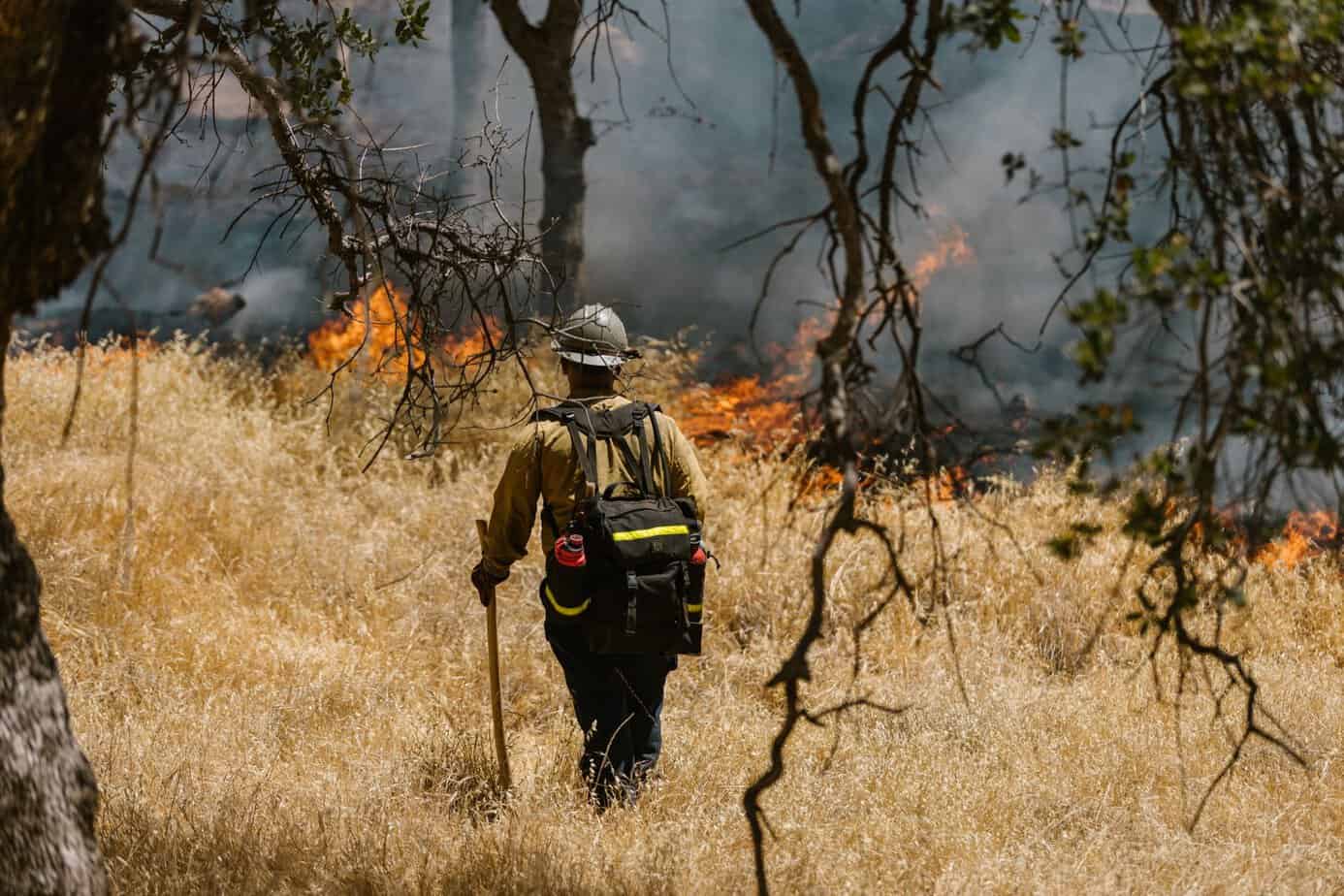
Ask a crew coming off a twelve-hour shift on a wind driven fire what they wish the public understood better, and the answer almost never has anything to do with hose lays, retardant drops, or aircraft. The answer has to do with clocks.
Wildfire evacuation timing sits underneath nearly every close call these crews describe, and the gap between a calm departure and a genuinely dangerous one usually comes down to the twenty or thirty minutes a household spent debating whether the situation was serious enough to act on yet.
That hesitation is completely understandable. Leaving your home feels enormous. It costs money, it disrupts work and school, it means asking a relative for a spare bedroom, and it carries the quiet embarrassment of coming back the next afternoon to a house that was never touched. Firefighters know all of this. They also know that the people who wait for certainty are the ones who end up in stalled traffic under a smoke column, or standing in a driveway watching an ember cast land in the gutter while the only road out is already blocked by a downed pole.
What follows is an attempt to translate the professional instinct behind wildfire evacuation timing into language that makes sense for someone who does not spend their working life around fire behavior. It covers how quickly conditions change, why official notifications lag reality, what really happens on rural roads when a thousand vehicles move at once, and how to build a personal set of triggers so the decision is already made before the smoke shows up on your ridge. None of it requires special equipment or expertise and it mostly requires deciding in advance.
Why Wildfire Evacuation Timing Is the Decision That Matters Most
Firefighters spend their careers managing variables they can influence, and they are painfully aware of the ones they cannot. They can cut line, protect structures, and coordinate air support. They cannot manufacture road capacity, and they cannot rewind the twenty-five minutes a family spent looking for the cat. When crews review incidents where civilians were hurt or killed, the failure point is rarely a lack of information reaching the public. It is the interval between receiving that information and physically moving.
This is why wildfire evacuation timing gets treated as the single highest leverage choice a household makes. Everything else on a preparedness checklist matters, but it matters in a supporting role. Defensible space improves the odds your house survives. Ember resistant vents reduce ignition points. Insurance protects your finances. None of those things protect the people inside if departure happens forty minutes too late on a road that only holds so many cars per minute.
There is also an asymmetry that professionals internalize early and civilians tend to learn the hard way. Leaving too early costs you an inconvenient night and possibly a hotel bill. Leaving too late can cost everything, with no partial credit and no second attempt. When the downside on one side of a decision is a wasted evening and the downside on the other side is fatal, the rational move is obvious even though it rarely feels that way in the moment.
Crews also want people to understand that their own tactical options shrink dramatically when civilians are still in the area. Resources that would otherwise be building containment line get pulled into traffic control, rescue, and door to door contact. A neighborhood that clears out quickly is a neighborhood firefighters can actually defend.
The Gap Between a Warning and an Order That Trips Up Households
Most jurisdictions use a two-stage system. An evacuation warning means conditions could deteriorate and you should be ready to go. An evacuation order means leave now. In practice, a very large share of the public treats the warning as background noise and waits for the order, which is precisely the behavior that produces gridlock and burnovers. CAL FIRE is blunt about this in its public guidance, which explicitly advises residents not to wait for a mandatory order if they already feel at risk.
There are structural reasons an order arrives later than you might expect. Incident commanders need situational awareness before they can define an evacuation zone, law enforcement needs to be positioned to manage traffic, and the notification system itself takes time to push through carrier networks. On a fire that doubles in size every hour, the order can be issued while it is already partially obsolete. Officials are working from the best picture available, and that picture is always a little behind the flame front.
This is why experienced responders think of wildfire evacuation timing as something you own personally rather than something the county hands you. The warning stage is your window. That is the period when roads are clear, gas stations still have fuel, cell networks still work, and you can load the car without panic. Households that leave during the warning stage generally describe the experience as boring. Households that leave during the order stage describe something closer to a chase scene.
A useful reframe: treat an evacuation warning as an order aimed specifically at anyone with children, animals, mobility limitations, medical equipment, or a single road out of the neighborhood. If that describes you, the warning was your order.
How Fast a Fire Actually Moves When the Wind Takes Over
People underestimate fire spread because their mental model comes from campfires and news footage, both of which show flames moving at a human scale. A wind driven fire in cured grass or dense chaparral behaves like a different phenomenon entirely. Under strong offshore or downslope winds, head fire can advance several miles per hour, and spotting from ember cast routinely lands a mile or more ahead of the main front. That means the fire you can see on the far ridge is not the one that will reach you first.
NIST research into recent catastrophic fires has pushed this understanding into official planning. Their updated evacuation guidance was built specifically around no notice events, where fires invade neighborhoods with only minutes of advance warning and outrun the notification systems designed to alert residents. The engineers behind that work found that traditional evacuation assumptions break down badly against aggressive fire behavior, which is a technical way of saying the old advice about waiting for instructions was never designed for what we are seeing now.
Terrain compounds everything. Fire moves uphill far faster than across flat ground because flames preheat the fuel above them, so a canyon home with a slope below it has a shorter clock than a neighbor a quarter mile away on a bench. Narrow drainages funnel wind and act like chimneys. If you live above a slope, in a saddle, or at the head of a canyon, your personal wildfire evacuation timing should run well ahead of whatever the broader community is doing.
Firefighters would rather you plan for the fast version and be pleasantly surprised than plan for the slow version and get caught by the fast one.
What Happens to Roads When an Entire Neighborhood Leaves at Once
This is the part most people never think through, and it is the part that turns a survivable situation into a lethal one. Road capacity is finite and surprisingly small. A two-lane rural road handles somewhere in the range of eighteen hundred to two thousand vehicles per hour per lane under ideal conditions, and evacuation conditions are the opposite of ideal. Add smoke, darkness, panicked drivers, livestock trailers, emergency vehicles moving the other direction, and one stalled sedan blocking a lane, and effective throughput collapses.
The U.S. Fire Administration addresses this directly in its evacuation outreach, warning residents that late departures mean heavy traffic and that smoke, blowing embers, and debris reduce visibility and can compromise vehicle engines. That same guidance discourages towing trailers or driving large recreational vehicles during an evacuation, because a stalled or abandoned vehicle blocks everyone behind it and prevents responders from getting in.
Run the arithmetic for your own community. If four hundred households sit on a single outbound road, and each household takes one vehicle, you are looking at a best case of roughly fifteen minutes to clear if everyone moves simultaneously and nothing goes wrong. Two vehicles per household doubles that. A single breakdown at a bottleneck can add half an hour. Now imagine the fire is spotting a mile ahead of itself while that queue sits idling.
Good wildfire evacuation timing is partly a traffic strategy. Leaving thirty minutes before your neighbors is not selfishness, it is the only version of the plan where the road actually works. Learn your primary and secondary routes, drive both of them in daylight, and know which one goes away first if the fire comes from the north versus the west.
The Hidden Cost of Packing at the Last Minute
Every firefighter has a story about the person who was ready to leave and then went back inside. Photo albums, a grandmother’s ring, tax documents, a laptop with three years of work on it. These are not irrational attachments, and nobody in the fire service thinks less of anyone for having them. The problem is that searching for scattered items under stress takes vastly longer than people estimate, and stress degrades exactly the cognitive functions you need for searching.
Realistic packing time for an unprepared household runs between forty-five minutes and two hours, and that is before anyone accounts for a spouse who disagrees about what matters or a teenager who cannot find their charger. Households with a genuine go bag are typically out the door in under ten minutes. That difference is the entire margin, and it is created weeks or months earlier on a quiet Sunday afternoon rather than during the emergency itself.
Build the bag once and stop thinking about it. A dedicated emergency backpack per person keeps everything consolidated instead of scattered across closets. Copies of deeds, insurance policies, passports, birth certificates, and medical records belong in a fire-resistant document pouch that lives by the door rather than in a filing cabinet you will not have time to open.
The psychological benefit is larger than the logistical one. When the bag already exists, wildfire evacuation timing becomes a single yes or no decision instead of a cascade of small decisions made badly under pressure. You are no longer negotiating with yourself about what to save. You grab, you load, you drive.
Keep a written list on the bag for the handful of items you genuinely cannot pre pack, such as prescription medications and the laptop you use daily. Three lines on an index card beats a frantic mental inventory every time.
Wildfire Evacuation Timing for Households With Kids, Pets, and Livestock
The standard advice assumes an adult who can hear an alert, walk to a car, and drive away. Most households do not look like that. Small children need to be gathered, changed, buckled, and reassured. Pets hide under beds precisely when the household energy shifts, and cats in particular seem to develop a sixth sense for carriers. Horses and other livestock require trailers, and trailers require hookup time, loading time, and a destination that has already agreed to take them.
Federal guidance is explicit that people with small children, pets, livestock, physical challenges, or other needs requiring additional lead time should leave early rather than waiting alongside everyone else. That is not a courtesy suggestion. A household with two horses and a toddler realistically needs ninety minutes of lead that a single adult in a sedan does not, which means their wildfire evacuation timing threshold has to sit an entire stage earlier than their neighbors.
Practical moves that pay for themselves: keep carriers assembled and accessible instead of stored in the attic, teach pets to load into carriers with treats during calm weather so the association is not purely traumatic, arrange your livestock destination and a backup destination before fire season, and identify a neighbor or nearby friend who can move your animals if a fire starts while you are at work.
Households caring for someone with limited mobility, oxygen equipment, dialysis needs, or dementia should register with their county’s access and functional needs program if one exists, and should treat any evacuation warning as an immediate departure trigger without further deliberation. There is no version of this where waiting improves the outcome.
Why Firefighters Would Rather You Left for Nothing
One of the most persistent barriers to good decisions is the fear of overreacting. People worry about looking foolish, about burning a vacation day, about being the family that panicked while the street stayed calm. Crews want to retire that worry permanently. Nobody in the fire service is keeping score, and no firefighter has ever complained about a neighborhood that emptied out too efficiently.
Consider what an early departure actually buys the people working the incident. Empty homes mean engines can be positioned for structure protection instead of being tied up escorting residents out. Clear roads mean apparatus can move where it is needed rather than crawling against outbound traffic. Fewer civilians in the fire environment means fewer rescues, and rescues are the operations that get firefighters killed. Every household that leaves during the warning window is a small gift to the crews assigned to that street.
There is a broader preparedness culture that supports this, built around the idea that residents and responders share responsibility for outcomes rather than one group waiting on the other. The NFPA’s wildfire program frames community preparedness in exactly those terms, with resources aimed at helping residents understand their role before the fire ever starts. Good wildfire evacuation timing is part of that shared responsibility, and it is the part that only you can execute.
If you leave and nothing happens, you had an unremarkable night somewhere else and came home to an intact house. Reframe that as a successful drill rather than a false alarm. Every uneventful evacuation makes the next real one faster, because the route is familiar, the bag is packed, and the family already knows the routine.
Smoke, Power Outages, and the Small Problems That Steal Your Lead Time
The complications that actually derail evacuations are rarely dramatic. They are mundane and cumulative. Power goes out and the electric garage door will not open because nobody in the household knows where the manual release cord is. The gate at the end of the private road runs on a motor. Cell service degrades as towers lose power or get overwhelmed, so the alert never arrives and the group text never sends. Smoke drops visibility to a car length and turns a familiar road into something unrecognizable.
Public safety power shutoffs add another wrinkle, since utilities deliberately de energize lines during high risk weather. That means you may be dealing with an outage before any fire exists, and your normal information channels may already be compromised when conditions turn. A battery or hand crank NOAA weather radio keeps working when the grid and the network do not, and a charged power bank keeps a phone alive long enough to matter.
Smoke also arrives well before flame and creates its own hazards, particularly for anyone with asthma, COPD, cardiac conditions, or a pregnancy. Keeping properly rated respirators in the vehicle is worth the small expense, though they should be understood as protection during a departure rather than a reason to stay.
Weather itself is the earliest signal available. Red flag warnings and fire weather watches from the National Weather Service exist precisely to flag the conditions under which small ignitions become fast moving disasters. On those days, adjust your wildfire evacuation timing threshold downward across the board. Keep the tank above half, park facing out, and sleep with shoes and keys within reach.
Building a Personal Trigger List That Removes Wildfire Evacuation Timing Guesswork
The most effective thing any household can do is decide in advance, in writing, what specific observable conditions cause them to leave. Firefighters use trigger points constantly in tactical planning, identifying a landmark that, once the fire reaches it, commits the crew to a predetermined action. The same logic works perfectly at the household level, and it removes the burden of judgment at the exact moment judgment is worst.
A workable trigger list is short, concrete, and phrased as observations rather than feelings. Examples worth adapting: any evacuation warning issued for our zone, any fire visible on the ridge to our west, any fire within five miles during a red flag warning, sustained winds above thirty miles per hour with an active incident in the county, ash falling in the yard, or the smell of smoke waking anyone at night. Write these on paper, put them on the refrigerator, and agree that any single trigger means departure without a family debate.
The key discipline is that triggers are not subject to renegotiation once conditions arrive. The whole point of setting wildfire evacuation timing rules in advance is that your calm self is smarter than your stressed self, and your calm self gets to overrule the version of you that wants to wait and see how it develops. Households that treat their triggers as binding leave earlier and arrive calmer.
Pair the list with a communication plan. Designate an out of area contact everyone checks in with, since local networks fail first and long-distance texts often get through when local calls will not. Agree on a meeting point outside the risk area for households whose members may be at work or school when a fire starts. Practice the whole sequence once a year, ideally at an inconvenient hour, because that is when real fires tend to arrive.
When Leaving Is No Longer an Option and What Comes Next
There is a scenario nobody wants to discuss, and firefighters discuss it constantly because it happens. Sometimes the road is already cut, the fire has already crossed the only route out, or the alert simply never reached anyone in time. Driving into a smoke column with zero visibility on a road you cannot confirm is open has killed a great many people, and at some point staying put becomes the less bad option.
Modern guidance has formalized this thinking through pre designated refuge areas, which are open spaces identified in advance where fire intensity will be lower. Parking lots, cleared athletic fields, wide roadways, and large irrigated areas all qualify. During one recent catastrophic fire, improvised versions of these spaces saved more than a thousand people whose escape routes had already been severed. Communities that map these locations ahead of time give residents a fallback when wildfire evacuation timing has already failed.
If you are caught in a vehicle, park in the largest clear area available away from vegetation, close windows and vents, get low, cover exposed skin with a wool blanket or natural fiber clothing, and call for help. If you are on foot, move to a ditch, a burned area, or open flat ground and lie face down. If you are trapped at home, close all windows and doors while leaving them unlocked for responders, move to a room away from exterior walls, fill sinks and tubs, and keep the household together in one place.
Every one of these actions is a last resort with worse odds than simply having left earlier. They exist as a floor under a bad situation, not as an alternative strategy. Understanding them should reinforce rather than replace the core message about leaving early.
My Two Cents
After sifting through incident reports, agency guidance, and a lot of blunt commentary from people who do this work, the pattern is hard to miss. The households that come through these events well are almost never the ones with the best equipment or the most defensible space. They are the ones who decided ahead of time what would make them leave, and then actually left when it happened.
My honest advice is to stop treating evacuation as a judgment call made in the moment and start treating it as a rule you set in advance. Write down three or four triggers this week, pack a bag this weekend, drive both routes out of your neighborhood next month, and tell your family that a warning means everyone goes. That project takes maybe four hours spread across a season, and it converts the hardest decision you will ever make into something you already handled.
Give yourself permission to overreact. Leave for a fire that turns out to be nothing, more than once if necessary, and let the neighbors think whatever they want. The people who fight these fires are unanimous on this point, and their reasoning comes from watching what happens to the people who waited. Wildfire evacuation timing is the one variable in this whole hazard that stays entirely under your control, right up until the moment it does not.
Author Bio
Bob Rodgers is a lifelong outdoorsman, herbalist, and seasoned prepper with over 20 years of real-world survival experience. As the founder of PreppersWill.com, he shares practical advice on self-reliance, off-grid living, and disaster preparedness, no hype, just hard-earned lessons from decades of hands-on prepping.
Suggested resources for preppers:
What you should know about survival foods with decades of shelf life
The Foods that helped the pioneers survive crop failures and hard times
Survival Foods of the Native Americans
If you plan to build a storage room and equip it with everything needed > Start Here!

Thank you for the informative article. Would you consider writing an article about what to have/do when stuck in an elevator for a very long time because the building/neighborhood had a blackout. I have always wondered if people stuck in elevators would run out of oxygen because the fire dept had too many emergency calls to attend during the blackout. Living on the 20th floor, not able to use the stairs.