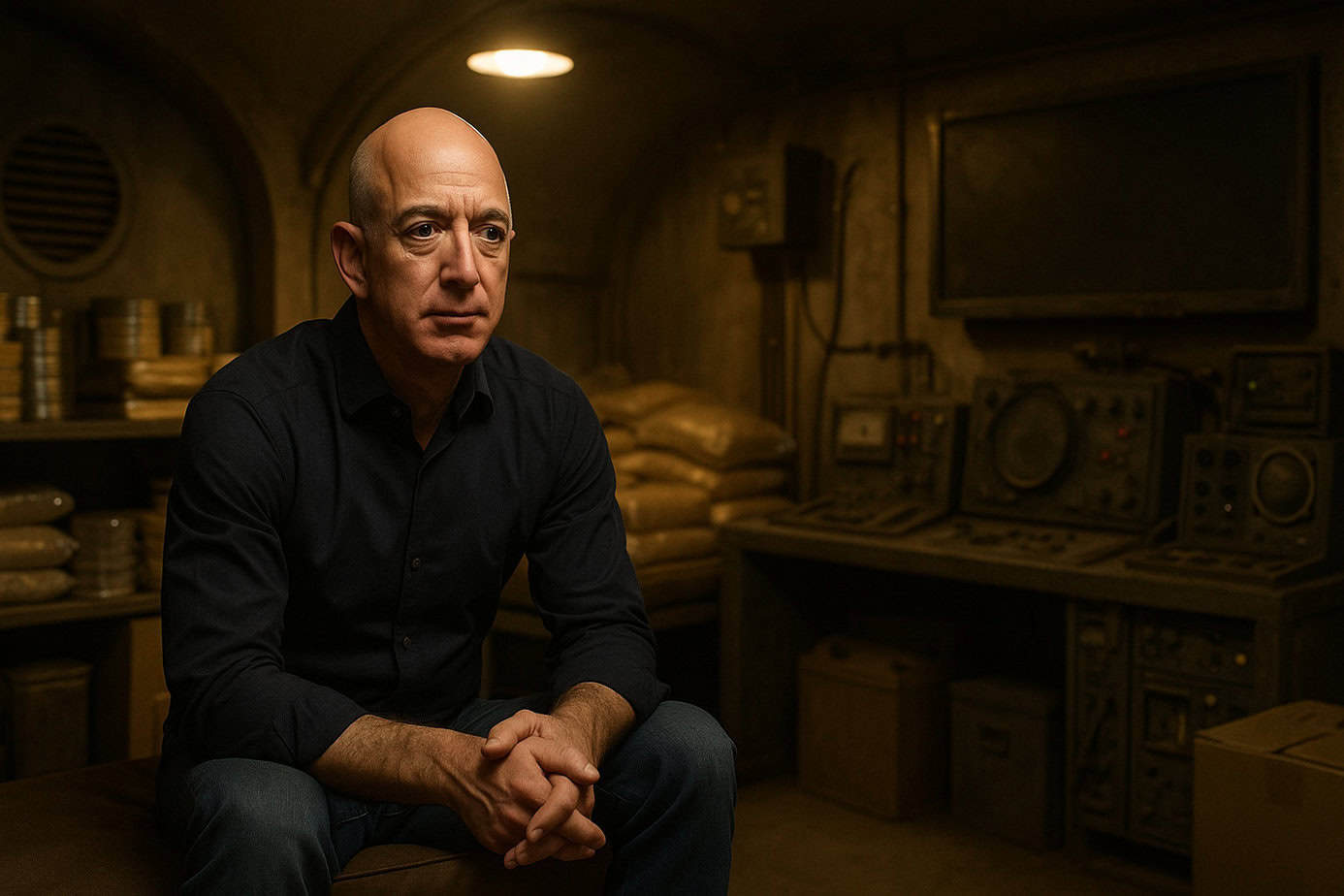
When everything hums along the markets are buzzing, jets idling on the tarmac, assistants scheduling the next private retreat and money feels like magic. It buys silence, loyalty, comfort, and distance from the dirtier parts of living. But when the power grid flickers out and the trucks stop rolling, that magic fades fast.
The billionaire’s credit line, his stock portfolio, his offshore accounts, all of it turns into numbers that mean nothing. Try handing a gold card to a man guarding the last tank of diesel and see how far that gets you.
The Illusion of Power: When Money Stops Working
That’s the core truth behind why billionaires can’t survive the apocalypse: their entire world depends on someone else doing the work. They’re insulated from the mechanics of living. They don’t fix engines, grow food, or patch roofs. They pay other people to do those things, and when the world stops paying, those people stop showing up. Money’s value is a shared illusion, and illusions don’t keep you warm in January or hydrated in August.
The power they thought they had, the kind that makes people jump when they walk into a room, isn’t power at all. It’s borrowed authority, granted by systems that crumble when the shelves empty. When that day comes, the farmer who knows how to coax tomatoes from poor soil will matter more than a hedge fund titan who knows how to coax profits from poor souls.
And here’s the kicker: most billionaires sense it. That’s why they build bunkers in New Zealand or Montana, why they stock up on gourmet freeze-dried meals and satellite internet. Deep down, they know their wealth is a fragile story told by electricity and Wi-Fi. When the story ends, so does the kingdom.
The Bunker Fantasy: Silicon Valley’s Expensive Delusion
You’ve seen the photos, sleek concrete bunkers buried under Wyoming hills, stocked with imported air filters and designer water systems. Some of the biggest tech names on the planet have their escape routes already mapped. They call it “resilience planning.” You and I would just call it panic shopping for the apocalypse.
Take a walk through one of those doomsday compounds, and it looks impressive: biometric locks, hydroponic gardens glowing with LED light, a garage packed with electric ATVs, maybe even a shooting range. But look closer and you’ll see what they can’t last, that every part of that setup depends on specialists. Electricians to keep the lights humming. Mechanics to keep the generators running. Farmers who actually understand crop cycles and security guards who know how to handle a rifle and their nerves when things go sideways.
When the billionaire retreats into his bunker, he’s not entering safety, he’s entering a pressure cooker built on fragile human loyalty. He thinks money will keep the crew obedient, but what happens when there’s no bank, no wire transfers, no outside world to enforce the deal? The guards and cooks and engineers become the real owners of the bunker, because without them, all that fancy tech turns into expensive scrap.
Silicon Valley loves to believe that technology solves everything. They think a smart system can replace human skill, that automation can substitute for trust. But no matter how many algorithms you write, you can’t code loyalty. You can’t automate morale. You can’t replace the simple human truth that in a survival situation, respect and usefulness outrank status and cash every time.
So, when people ask why billionaires can’t survive the apocalypse, here’s one answer: they’ve mistaken control for capability. You can’t buy your way out of entropy. You can only work your way through it, with your hands, your head, and your will. And most of these people haven’t had to use any of those in decades.
Dependence Disguised as Power
Billionaires love to talk about being “self-made.” They build their mythology on that phrase, as if grit and genius alone took them from a garage to a Gulfstream. But peel back the branding, and you’ll see what’s really there: a vast web of dependency. Teams of workers, factories overseas, logistics chains spanning oceans. They didn’t build it with their own hands; they just learned how to make other people do the building.
In everyday life, that dependence looks like power. You can call someone and have your entire house fixed, catered, and cleaned in a day. You can command a thousand workers with a single email. But in a collapse scenario, that “power” turns to dust the moment those people realize they don’t need to listen anymore. When the internet’s gone and the trucks stop running, there’s no one left to call. No delivery coming. No subcontractor answering the phone.
That’s the thing, billionaires have mistaken access for ability. They can get anything done because they pay others to make it happen. But when the pay stops, when society’s glue melts away, the billionaire is left holding the blueprint with no idea how to build the structure.
Most preppers understand this instinctively. You can’t just “buy” security, you have to earn it through skill, knowledge, and relationships. You know how to fix a busted pipe, grow food, or wire a backup power system because you’ve done it yourself. A billionaire might own a hundred generators, but if he can’t even change the oil in one, he’s just a rich man sitting in the dark.
That’s the hidden irony behind why billionaires can’t survive the apocalypse, their so-called independence is built entirely on other people’s sweat. And when the world stops cooperating, they’ll finally meet the one person they’ve spent their whole lives avoiding: the man who can’t pay his way out.
The Skill Gap That Kills
Let’s be honest, most billionaires can’t fix a leaky faucet, let alone a broken water pump. They’ve spent their lives delegating, not doing. The closest many of them come to “manual labor” is tapping a touchscreen or flipping through a pitch deck. That’s fine when the grid’s alive and Amazon Prime delivers on time. But when the system breaks down, ignorance becomes deadly.
Survival isn’t theoretical. It’s physical. It’s knowing how to get your hands dirty without hesitation. When your water tank springs a leak or your solar inverter dies, there’s no “call a guy” option. You are the guy. You either fix it or you go thirsty and sit in the dark. Billionaires, even the smart ones, have no muscle memory for that kind of work. Their instincts are to manage, not mend. Basic off-grid water safety is covered by the CDC’s emergency water guide, is worth saving offline.
Picture a bunker full of million-dollar equipment, perfectly stocked, perfectly planned, until one small system fails. The air filtration stops. The hydroponics light timer shorts out. The humidity spikes. Suddenly, the billionaire’s survival plan hinges on whether someone in the room can use a wrench, a voltmeter, or a basic understanding of plumbing. And if that person isn’t him, he’s not in control, he’s a dependent.
This is the raw truth why billionaires can’t survive the apocalypse: without real-world competence, they’re tourists in a world that demands craftsmanship. When things break and everything breaks eventually, survival depends on people who can make something work with nothing but tools, grit, and experience.
That’s what separates preppers from pretenders. You might not have a hundred acres or a helicopter pad, but if you know how to repair a generator, purify water, or grow potatoes from scraps, you’re already ahead of every man hiding behind his money. You’re rich in the one thing that will still matter when the lights go out, capability.

Servants or Survivors? When the Crew Turns
Here’s a question most billionaires never stop to ask: what happens when the people you pay to protect you realize you’ve got nothing left to offer?
In a collapse, loyalty runs on survival, not salary. Those private security teams and maintenance crews, the ones being promised safety and comfort in exchange for service, they’ll quickly figure out who’s really valuable. The billionaire might have paid for the bunker, but it’s the men and women running the generators, cooking the food, and keeping the air clean who actually own the future inside it.
Imagine it: weeks into a crisis, tensions rising, supplies running thin. The billionaire starts barking orders, trying to “manage” the situation like it’s a board meeting. But the guards have families. The mechanic hasn’t slept and the cook’s getting resentful. And the person who signs their checks no longer has any checks to sign. All that authority built on money collapses under the weight of hunger and fear.
When that happens, the bunker stops being a safe haven, it becomes a pressure cooker. One spark of arrogance or paranoia, and suddenly the crew realizes they’re better off without the boss. There’s no law, no HR department, no offshore account waiting to pay them later. Just raw survival. And in that moment, the billionaire turns from leader to liability.
That’s one of the ugliest but most realistic reasons why billionaires can’t survive the apocalypse: they can’t lead without leverage. Their only tool of control, money, disappears the second the system does. And when they try to rule by attitude instead of respect, it’s just a matter of time before the crew decides to “restructure management” the old-fashioned way.
Preppers don’t face that problem. You don’t rely on hired loyalty since you build real trust through shared work and skill. You’re part of your team, not above it. And that’s what keeps a group alive when the world outside burns.
Paranoia, Power, and the Breakdown of Trust
The thing about power is that it breeds fear, the kind that never really sleeps. Most billionaires live paranoid lives even before the world collapses. They hide behind security gates, encrypted phones, and bodyguards with dead eyes. Every meeting, every handshake, every friendship comes with a silent question: What does this person want from me?
Now imagine that paranoia cranked up inside a bunker, cut off from the world. No news feed to control, no PR team to filter reality, no entourage to keep up appearances, just a handful of people, armed, exhausted, and watching your every move. For someone used to total control, that’s psychological hell.
At first, they’ll try to tighten their grip. Maybe they hoard the keys to the armory, or limit access to supplies “for safety reasons.” Maybe they start accusing others of plotting against them. That’s how it starts, a trickle of suspicion that soon poisons the whole group. People stop trusting each other. Conversations turn quiet and the guns get cleaned more often.
The irony is brutal: the billionaire’s paranoia, the same trait that kept him “safe” in business, becomes the very thing that destroys his chance of survival. Fear turns into division, and division is death when you’re sealed underground with the same dozen faces.
Preppers understand trust differently because you build it through shared hardship, fixing things together, standing watch together, surviving storms together. Trust isn’t bought; it’s earned. A billionaire can’t fake that. Their instincts are to protect their ego, not their tribe.
And that’s another piece of why billionaires can’t survive the apocalypse: they’re wired for suspicion, not solidarity. When the lights go out and every heartbeat echoes in the dark, that mindset doesn’t save them, it isolates them. And in survival, isolation kills faster than hunger.
Arrogance Meets Reality
Arrogance is easy when you’ve always been the one giving orders. Billionaires are used to walking into rooms where people nod, smile, and scramble to please. They mistake obedience for respect. But in a crisis, when everyone’s cold, hungry, and desperate, that kind of posturing just paints a target on your back.
You can’t talk your way through a busted water main. You can’t “incentivize” morale when people are exhausted and scared. And you sure as hell can’t motivate anyone with stock options when there’s no market left to trade them. In an apocalypse, attitude becomes currency and the billionaire’s is bankrupt.
When the billionaire starts barking commands, he’s not dealing with employees anymore. He’s dealing with survivors, people who have skills, grit, and just enough resentment to see through the illusion of authority. One wrong tone, one power move too many, and suddenly the crew’s patience runs out. That’s when order breaks down.
Some of these elites already show it, snapping at staff, micromanaging everything, treating people like walking tools. Now put that same personality in a sealed bunker where tempers are flaring and resources are shrinking. That arrogance turns radioactive. Every command sounds like an insult. Every complaint sounds like a threat.
And when arrogance meets desperation, the balance of power flips fast. The ones who know how to repair the generator, grow lettuce in artificial light, or keep the ventilation running, they stop taking orders. They start making decisions. And the billionaire? He becomes the weakest link in his own survival plan.
That’s another brutal truth about why billionaires can’t survive the apocalypse: survival isn’t about dominance, it’s about cooperation. You can’t bully entropy into obedience. The apocalypse doesn’t care how many zeros used to sit in your bank account, only whether you can pull your weight when it counts.
The Psychological Collapse: When the King Has No Kingdom
When you strip away the layers, the assistants, the headlines, the entourage, the endless noise of importance, what’s left of a billionaire? For most, not much. Their entire sense of worth is built on motion: deals closing, markets shifting, people orbiting around their influence. But take that all away, lock them underground with a dozen strangers, and the silence gets loud fast.
They’ve spent decades being the sun in their own solar system. Everyone else just revolved around them. In a collapse, that system dies overnight. No one’s watching. No one’s listening. Their “power” no longer feeds back into anything. It’s like watching a performer onstage after the lights cut, still talking, still gesturing, but to an empty room.
That’s when the real breakdown begins. Some of them will spiral into control mania, obsessing over routines, rationing, schedules. Others will retreat inward, drifting into depression or denial. They’re not wired to handle powerlessness; they’ve spent too long mistaking attention for stability. When that attention’s gone, their identity cracks.
Meanwhile, the crew, the workers, guards, or whoever’s stuck in that bunker with them, sees it happening. The trembling hands, the erratic decisions and the sleepless pacing. That’s when respect disappears completely. No one follows a broken leader in a survival situation. And without a leader, chaos grows like mold in the dark.
It’s a strange sort of justice, really. For years they ruled through control, and now they’re undone by their own need for it. That’s another reason why billionaires can’t survive the apocalypse, they’re emotionally untrained for humility. Preppers, on the other hand, live with limits every day. You plan around them, accept them and you work with them. You know how to bend without breaking. Billionaires? They only know how to command and the apocalypse doesn’t take orders.
Meanwhile, the True Survivors
While billionaires are busy hoarding land in New Zealand and installing biometric bunker doors, real survivors are out here doing the quiet work that actually matters. The mechanic who can rebuild an engine with spare parts. The farmer who knows the soil like family. The nurse who can patch wounds without fancy gear. (The American Red Cross First Aid app and CERT community training program, both teach vital emergency-response skills that preppers already practice every day.) The single mom who’s learned to stretch a bag of rice and still share with her neighbors.
These are the people who make it through collapse, not because they’re rich, but because they’re useful. Survival favors the capable, not the comfortable. It rewards adaptability, endurance, and humility, the traits you can’t buy at any price.
Ask any prepper worth their salt and they’ll tell you: it’s not about what you own, it’s about what you know. You might not have a million-dollar bunker, but if you’ve got a Berkey water filter, a solid multi-tool, a reliable firearm, and the knowledge to use them well, you’re ahead of 99% of the elite class. They’ve built kingdoms on money; you’ve built competence out of necessity.
And when everything falls apart, the balance shifts. The people billionaires once ignored, the welders, the carpenters, the electricians, the truck drivers, become the backbone of the new order. Money loses meaning, but skill turns into the new currency.
That’s why communities like yours matter. Preppers, homesteaders, off-gridders, you’re not just preparing for collapse; you’re already living in the mindset that keeps people alive after collapse. You’ve faced hardship, adapted, learned, rebuilt. And while billionaires are still arguing over who gets the master suite in the bunker, you’re outside planting food, maintaining gear, and building relationships that actually count.
So, when people ask why billionaires can’t survive the apocalypse, the answer is simple: they’ve spent their lives insulating themselves from struggle, while you’ve learned to live through it. The future doesn’t belong to the richest. It belongs to the ready.
Community Over Capital: The Real Currency of Survival
When the economy collapses, the only real currency left is trust. You can’t eat gold, and you can’t trade a stock portfolio for clean water. But a neighbor who knows how to smoke meat, a friend who can sew up a wound, or a small group that stands watch while you sleep, that’s wealth in the new world.
Billionaires don’t get that. They’ve spent their entire lives separating themselves from the people who make life possible. They buy isolation and call it luxury. But when things fall apart, isolation turns into a cage. Without community, they’re just one scared person sitting on a pile of stuff no one wants to guard anymore.
Preppers already understand the flip side. You build your survival around connection. You know who you can count on when things go bad, the guy down the road with the chainsaw, the lady who bakes for half the county, the neighbor with the HAM radio setup. That web of cooperation is what gets people through collapse, not piles of cash or fancy bunkers.
It’s also what keeps people sane. Shared work, shared meals, shared protection, those are the things that hold morale together. Billionaires think hierarchy builds order, but real preppers know it’s mutual respect that holds a group steady when fear hits. You don’t have to like everyone, but you’ve got to trust them enough to hand over a rifle or a meal.
And here’s the truth that cuts deepest into why billionaires can’t survive the apocalypse: survival is communal by nature. Humans only make it through the hard times by relying on each other. Billionaires have built entire empires by avoiding that truth. Preppers live by it every day.
So, when the grid goes dark, the rich man’s vault becomes a tomb and the prepper’s porch light, flickering on from solar backup, becomes the new center of civilization.

The End of the Billionaire Era
Every empire ends. Some collapse under their own greed; others fade when the people finally stop believing in them. The billionaire era, this modern pantheon of self-proclaimed visionaries and “world changers” is no different. It’s built on fragile systems: digital wealth, public perception, and other people’s labor. None of that holds up when the grid dies and the trucks stop moving. For an overview of how federal agencies define critical infrastructure collapse and household readiness, see Ready.gov’s guide to power outages.
When the world strips down to bare essentials, water, food, shelter, fire, money loses its spell. The man who once owned fleets of private jets becomes no different than anyone else scrounging for clean water. His title means nothing. and his followers are long gone. His bunker, just another concrete tomb unless someone keeps the lights on.
And yet, there’s something poetic about it. The very people who spent their lives escaping discomfort will be forced to confront it at last. The apocalypse doesn’t care about your status, your brand, or your net worth. It measures worth in usefulness, in who can grow, build, heal, and defend. The billionaire class has no real place in that equation.
Meanwhile, the people they overlooked, preppers, tradesmen, small farmers, off-gridders, homesteaders, will become the backbone of whatever comes next. They’ll rebuild from the ashes, not because they’re rich, but because they’re ready. They know how to turn chaos into order with nothing but willpower, tools, and a bit of shared faith.
So, when the final chapter of this era is written, it won’t be about who had the biggest yacht or the deepest bunker. It’ll be about who kept their hands steady when everything else fell apart. That’s why billionaires can’t survive the apocalypse, they’ve spent their lives avoiding the one skill that matters most: being human when it counts.
🪶About the Author
Bob Rodgers is an lifelong outdoorsman, herbalist and seasoned prepper with over 20 years of real-world survival experience. As the founder of PreppersWill.com, he shares practical advice on self-reliance, off-grid living, and disaster preparedness, no hype, just hard-earned lessons from decades of hands-on prepping.
Other resources:
The Survival Medicine Secrets That Could Save Your Life When Help Never Comes
The Best Long Shelf Life Foods in 2025 (Staples That Outlive You)
Build Your Own Independence: DIY Projects That Make Any Home Self-Sufficient
Dealing With Dental Emergencies When There’s No Dentist
