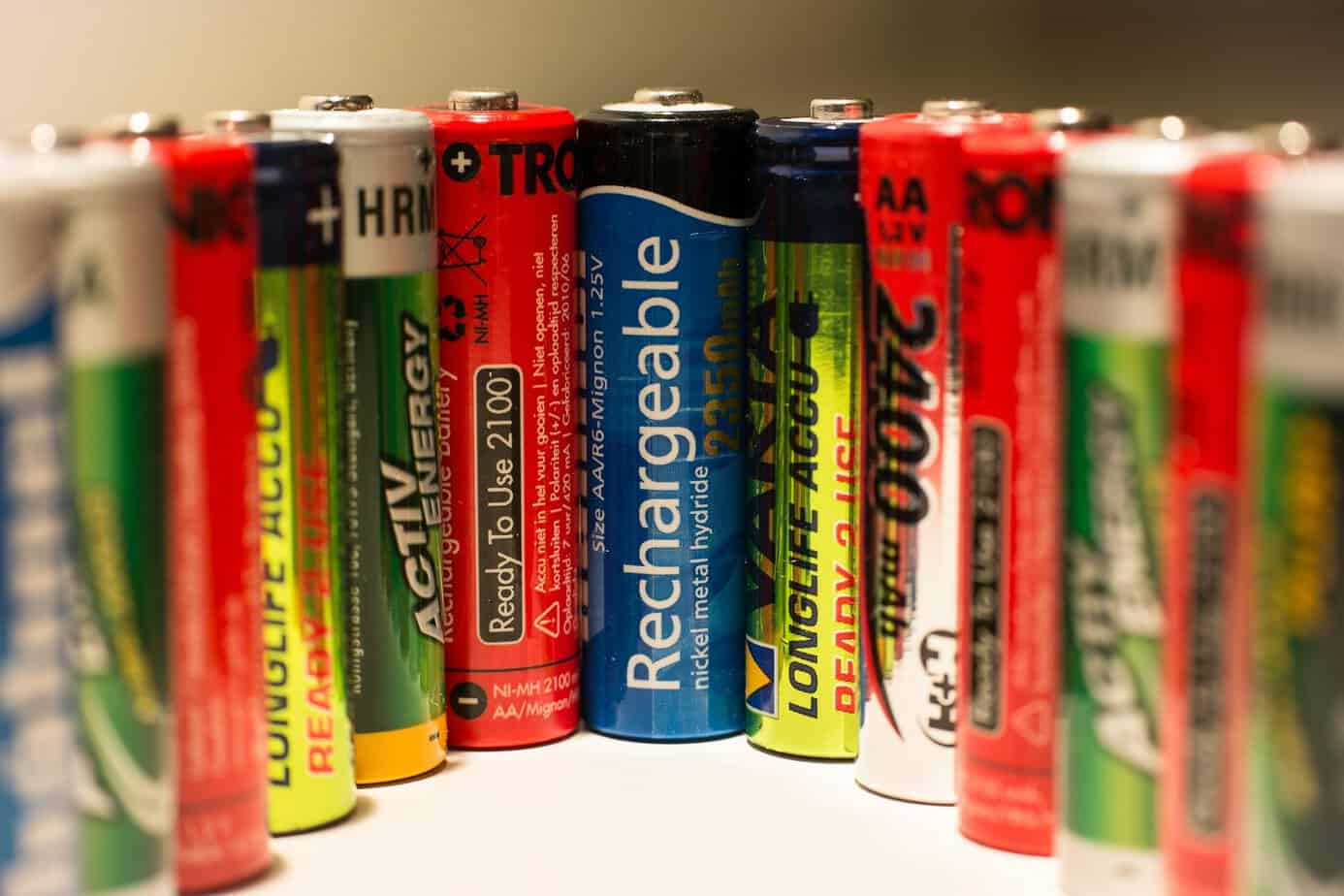
Most of us assume a battery wears out because we use it. You charge the phone every night, you drain the drill pack building a deck, you run the laptop down to single digits on a long flight, and somewhere in all that activity the capacity quietly disappears. The story is comfortable, familiar, and only half true.
When researchers separate the two clocks running inside every cell, the one tied to charging and discharging and the one tied to nothing more than elapsed time, they keep landing on the same awkward finding. Under a lot of ordinary conditions, batteries degrade faster sitting untouched on a shelf, in a drawer, or in a parked vehicle than they do in the hands of somebody who actually puts them to work.
The reason comes down to chemistry that never fully stops. A lithium cell at rest still hosts slow side reactions at the electrode surfaces, still thickens the passivation layer on its anode, and still consumes a small share of the lithium inventory it will never get back. Warmth accelerates all of it. A high state of charge accelerates it further. Park a fully charged pack in a hot garage through a long summer and you have built yourself a small accelerated aging chamber without meaning to.
What follows is a walk through the actual numbers, drawn from published calendar aging experiments, national laboratory modeling work, and fleet telematics covering tens of thousands of vehicles. You will see how much capacity disappears per year at different temperatures and charge levels, why the answer changes depending on chemistry, and what you can reasonably do about it in a garage, a warehouse, or a kitchen drawer full of spare cells.
Calendar Aging Explained: Why Batteries Degrade Faster When Nothing Is Happening
Every rechargeable cell loses capacity along two separate paths. Cycle aging tracks the wear that comes from moving lithium back and forth between electrodes, and it scales with how many times and how deeply you charge and discharge. Calendar aging tracks everything else, meaning the chemical drift that continues while the pack sits in a box doing absolutely nothing.
Researchers at the National Renewable Energy Laboratory model both mechanisms in their battery lifespan work, noting that predictive models have to account for storage environment and temperature alongside cycling patterns because degradation happens with use and with storage.
The dominant driver of calendar loss in a graphite anode cell is the growth of the solid electrolyte interphase, usually shortened to SEI. That film forms during the first charge and it protects the anode from further electrolyte breakdown, which is genuinely useful. The trouble is that the film keeps growing slowly for the entire life of the cell, and every bit of new film consumes lithium that used to be available for storing energy. Capacity loss from this mechanism tends to follow a square root of time relationship, so it front loads. You lose a meaningful chunk in the first year, less in the second, and progressively less after that, but the meter never resets to zero.
Two knobs control the rate. The first is temperature, which follows Arrhenius behavior and roughly doubles reaction speed for every ten degrees Celsius of increase. The second is the potential of the anode, which is a direct consequence of state of charge. Both knobs stay in whatever position you left them when you walked away, and neither one cares whether the pack is doing useful work. That combination is exactly why batteries degrade faster in storage than most owners expect, because storage is precisely the condition in which those two variables sit pinned at unfavorable values for months at a time.
The Actual Data: Capacity Loss Measured Across Temperature and Charge Level
The single most useful storage experiment in the public literature comes from a team at the Technical University of Munich. Peter Keil and colleagues stored three types of commercial 18650 cells, covering NMC, NCA, and LFP cathodes, at sixteen different states of charge from empty to full and at several temperatures, then measured capacity fade after roughly nine to ten months of pure storage with no cycling at all. Their headline conclusion is that capacity fade during storage is driven mainly by the graphite anode, and that lower anode potentials at high charge levels aggravate electrolyte reduction and push SEI growth along.
The scale of the effect is what surprises people. Battery University’s widely cited storage tables put an average lithium-ion cell stored at 25 degrees Celsius and 40 percent charge at roughly 4 percent capacity loss over a year. Take that same cell, store it fully charged at the same temperature, and the annual loss jumps to something closer to 20 percent. Raise the temperature to 40 degrees Celsius and a fully charged cell can shed roughly a third of its capacity in twelve months of doing nothing whatsoever. Those figures vary by manufacturer and chemistry, but the ratios hold up across independent studies.
Now compare that against cycle life. A decent modern lithium-ion cell handles somewhere between 500 and 3000 full equivalent cycles before dropping to 80 percent of rated capacity, depending on chemistry and depth of discharge. A power tool pack that gets used hard every working day might see 250 cycles in a year. The numbers explain why batteries degrade faster when parked at a high charge in a warm space than they do under a moderate daily workload, because the storage penalty accrues every hour of every day while the cycling penalty only accrues while you are pulling current.
State of Charge Is the Lever Almost Nobody Bothers to Adjust
If you only change one habit after reading this, change the charge level you leave things at. The recommended storage window for lithium ion sits around 40 to 50 percent state of charge, which corresponds to roughly 3.8 volts per cell on a rested pack. Battery University recommends that partially charged state for both lithium and nickel chemistries, and the shipping regulations back it up, since IATA and the FAA require removable lithium packs to travel at 30 percent state of charge rather than full.
The mechanism is straightforward once you think in terms of electrode potential rather than percentage. A fully lithiated graphite anode sits at a very low potential against lithium metal, and at that potential the electrolyte is thermodynamically unstable, so it keeps reducing and keeps building film. Drop the charge level and the anode potential rises, the electrolyte calms down, and the parasitic reaction slows dramatically. This is the physical reason batteries degrade faster when they are stored at the top of their voltage window instead of the middle.
There is a wrinkle worth knowing. The Munich work found that capacity fade does not climb smoothly as you raise the charge level. Instead, it forms plateaus that span 20 to 30 percent intervals, because graphite lithiates in distinct stages and the anode potential holds steady across each stage. Practically speaking, dropping a pack from 90 percent to 75 percent may buy you almost nothing, while dropping from 75 percent down to 45 percent moves you into a genuinely gentler regime. Aim for the middle of the pack rather than shaving a few percent off the top and calling it done.
Heat Is the Multiplier: How Batteries Degrade Faster in a Hot Garage
Temperature deserves its own section because it multiplies everything else. The Arrhenius relationship means that a cell stored at 35 degrees Celsius ages roughly twice as fast as the same cell at 25 degrees, and something like four times as fast as one kept at 15 degrees. Battery University lists 15 degrees Celsius, about 59 Fahrenheit, as the sweet spot for most chemistries. Very few people store anything at 15 degrees. They store things in garages, sheds, attics, and vehicle trunks, all of which spend summer afternoons well north of 40 degrees Celsius.
Run the arithmetic on a typical scenario. A contractor finishes a job in June, tops off four tool packs so they are ready for next time, and leaves them in a metal job box in an uninsulated garage until October. Interior temperatures in that box regularly hit 45 to 50 degrees Celsius in the afternoon. Four months at full charge under those conditions can plausibly cost 15 to 20 percent of capacity, which is more damage than a full season of daily cycling would have caused. That is the clearest everyday illustration of the principle that batteries degrade faster in hot storage than in ordinary hard use.
Cold gets an easier ride, though not a free pass. Lithium cells stored at low temperature age extremely slowly, which is why refrigerated storage shows up in laboratory practice and in some manufacturer recommendations. The caveats matter, however. Never charge a lithium cell below freezing, since that promotes lithium plating, and never store a discharged lead acid battery where it can freeze, because the diluted electrolyte in a flat battery will turn to ice and crack the case. A basement shelf or an interior closet beats a garage in almost every climate, and an inexpensive room thermometer takes the guesswork out of choosing the spot.
Cycling Damage Has Been Overrated for a Long Time
The flip side of the storage argument is that using a battery is nowhere near as destructive as folklore suggests, provided you avoid the extremes. Depth of discharge dominates cycle wear, and shallow cycles are remarkably cheap. Running a pack from 80 percent down to 40 percent and back repeatedly can deliver several times the total energy throughput of the same pack cycled from full to empty, because the punishing part is dwelling at the voltage extremes rather than the act of moving charge in the middle band.
Fleet data supports this. Geotab’s analysis found that vehicles with higher daily utilization degraded only about 0.8 percent per year more than the least used group, a difference the company considers a fair trade for the productivity gained by keeping those vehicles in service. In other words, driving the car more barely moved the needle. What did move the needle was how the pack spent its idle hours, which is the whole thesis of this article compressed into a single telematics finding.
None of this means cycling is free. High power DC fast charging generates heat and mechanical stress, deep discharges strain the electrodes, and hammering a small pack at high current will shorten its life regardless of how carefully you store it. The honest summary is that batteries degrade faster in storage than in use under a specific and very common set of conditions, namely warm temperatures combined with a high resting charge, while aggressive fast charging in the heat can flip the ranking back the other way. Both clocks run, and your job is to slow whichever one is currently running fastest.
Chemistry Matters: Alkaline, Nickel, Lead Acid, NMC, and LFP Compared
Storage advice falls apart when applied across chemistries without translation, so it pays to be specific. Primary alkaline and primary lithium cells are the champions of the shelf, holding usable capacity for around ten years when kept cool and dry with moderate humidity. Keep them out of the equipment they power, since a device left with cells installed can trickle current and eventually leak potassium hydroxide across a circuit board that costs more than the batteries did.
Nickel metal hydride is a different animal. Conventional NiMH self-discharges quickly, sometimes losing a fifth of its charge in the first month, which means nickel-based batteries degrade faster in the sense of arriving flat rather than permanently damaged. Low self-discharge cells solved most of this, holding a large majority of their charge after a year on the shelf, and they are the obvious default for anything you buy and forget about, such as remotes, headlamps, and smoke alarm backups.
Lead acid demands the opposite treatment from lithium. Store it fully charged, never partially, because a lead acid battery left at low charge grows hard sulfate crystals on the plates that permanently reduce capacity. Self-discharge runs a few percent per month and climbs with temperature, so a vehicle parked for a season needs either a periodic top up or a smart maintainer that floats the battery without cooking it.
Within lithium, cathode choice changes the calculus. Nickel rich NMC and NCA chemistries deliver excellent energy density and tolerate a high resting charge poorly. Lithium iron phosphate sits at a lower cell voltage, handles being left near full considerably better, and generally shows flatter calendar fade, which is a large part of why it has taken over stationary storage and entry level electric vehicles.
Fleet Evidence From Vehicles That Spend Most of Their Lives Parked
Passenger vehicles are the ideal natural experiment for this question, because the average car is parked something like 95 percent of the time. Geotab’s updated battery health study analyzed real world telematics from more than 22,700 electric vehicles across 21 make and model combinations, and reported an average annual capacity loss of 2.3 percent, which projects to about 81.6 percent of original capacity after eight years.
The detail buried inside that study is the part worth memorizing. Vehicles that spent under 80 percent of their total time at very high or very low charge levels clustered tightly around 1.4 to 1.5 percent annual degradation. Vehicles that spent more than 80 percent of their cumulative time parked at those extremes averaged 2.0 percent. Climate added roughly 0.4 percent per year for hot regions compared with mild ones. Set those against the 0.8 percent penalty for heavy use, and you get a clear picture that resting conditions and ambient heat carry comparable or greater weight than the driving itself.
Recurrent reached a similar conclusion from a different dataset built on hundreds of millions of miles of connected vehicle data, reporting typical range degradation of 1 to 2 percent annually and identifying heat, high voltage, and extreme state of charge as the fastest routes to a tired pack. Neither dataset paints electric vehicle batteries as fragile. What both show is that batteries degrade faster when a vehicle habitually sits at 100 percent in a hot climate than when a comparable vehicle simply gets driven a lot, which reverses the intuition most buyers bring to the showroom.
The Storage Habits That Make Batteries Degrade Faster Than Daily Use
Certain habits show up again and again in packs that fail early, and almost all of them come from good intentions. Charging every tool battery to full before putting the kit away for the winter tops the list, since readiness feels responsible while it quietly maximizes anode potential for months. Leaving a laptop permanently docked at 100 percent belongs in the same category, as does topping up an electric vehicle to full the night before a two-week vacation and then leaving it plugged in and idle in the driveway.
Deep discharge causes a different and nastier failure. A lithium cell drained flat and forgotten can drift below roughly 2 volts, at which point copper from the current collector begins to dissolve and can form internal shunts. A pack in that condition may look revivable, but it carries a genuine safety risk and belongs in a recycling bin rather than a charger. Seasonal equipment is the usual victim, particularly mowers, e-bikes, drones, and camera gear rediscovered eighteen months after being packed away.
Location choices do quiet damage too. Attic storage in summer, a spare pack living permanently in a car door pocket, or a bin of loose cells rattling against coins and screws all create predictable problems, whether that means accelerated fade, a short circuit, or both. Storing loose cells with terminals exposed is a real fire risk rather than a theoretical one, and a compartmented case with insulating dividers solves it for the price of a takeaway meal. The uncomfortable summary is that batteries degrade faster under these storage habits than they would under a punishing work schedule, which means the fix costs nothing but attention.
A Practical Storage Protocol You Can Set Up in One Afternoon
Start by sorting whatever you own by chemistry, because the instructions diverge. For lithium ion in any form, bring each pack to somewhere between 40 and 60 percent before it goes into storage. Most tool packs show a fuel gauge with three or four LEDs, so half the lights lit is close enough. For bare cells or hobby packs, a resting voltage near 3.8 volts per cell is the target, and a plain digital multimeter is all you need to verify it.
Next, choose the coolest stable spot in the building that stays dry. An interior closet, a conditioned basement, or a cabinet on an interior wall all beat the garage by a wide margin. Aim for moderate humidity around 50 percent, avoid anywhere that swings between extremes across the day, and keep packs off concrete floors where condensation collects. Label every pack with the date it went into storage and the charge level it went in at, using ordinary masking tape and a marker.
Then set a recurring reminder every three to six months. At each check, measure voltage, look for swelling or corrosion, and bring anything that has drifted below roughly 30 percent back up to the storage window. Lead acid batteries either come out for a top up charge or live on a smart maintainer through the off season. Rotate stock the way a shop would, using the oldest cells first.
One habit worth adopting permanently is refusing to store anything at full charge unless you intend to use it within a few days. Because batteries degrade faster in that state than in almost any other resting condition, the small inconvenience of running a pack down before shelving it pays back several times over across a five-year ownership window.
Measuring What You Actually Own Instead of Guessing
Estimates are useful, but measurement ends arguments. The cheapest meaningful test is open circuit voltage on a rested pack, taken with a multimeter after the cell has sat unloaded for a few hours. Voltage alone gives a rough state of charge and flags anything that has fallen dangerously low, though it says little about remaining capacity because a badly degraded cell will still read a healthy voltage right up until you put a load on it.
For real numbers you need a capacity test, which means discharging a fully charged cell at a known current and counting the amp hours that come out. Hobby grade analyzers and smart chargers do this automatically for common cell sizes and report a measured milliamp hour figure you can compare against the printed rating. Running that test once a year on a set of stored cells turns vague suspicion into a clean data series, and it will show you quickly whether your batteries degrade faster in the garage than the identical set kept indoors.
For vehicles, the tooling is easier than it used to be. Most electric cars report state of health through the manufacturer app or through an OBD dongle paired with a diagnostic app, and third-party services build health estimates from telematics without touching the pack. Internal resistance is the other metric worth tracking, since rising resistance often shows up before capacity fade becomes obvious and it explains complaints about sagging power under load.
Whatever tools you use, keep a simple log. Date, storage location, resting voltage, and measured capacity in four spreadsheet columns will tell you more about your own equipment than any published average can.
Concluding
A pack sitting at 100 percent in a warm room is quietly dissolving its own capacity, and that meter runs whether you touch it or not.
The practical version of everything above fits on an index card. Store lithium near half charge, store lead acid full, keep everything cool and dry, check twice a year, and use the oldest stock first. That is the whole program, and it costs an afternoon plus a couple of calendar reminders.
I would also push back gently on cycle anxiety in general, because the fleet data is genuinely reassuring about using your equipment. Drive the car, run the tools, cycle the packs, and spend your worry budget on the months when nothing is happening. If you take one number away from this article, make it the gap between roughly 4 percent annual loss at moderate charge in a cool room and something near 20 percent at full charge in a warm one. That gap is entirely within your control, and closing it requires no new hardware and no compromise on how hard you work what you already own.
Author Bio
Bob Rodgers is a lifelong outdoorsman, herbalist, and seasoned prepper with over 20 years of real-world survival experience. As the founder of PreppersWill.com, he shares practical advice on self-reliance, off-grid living, and disaster preparedness, no hype, just hard-earned lessons from decades of hands-on prepping.
Suggested resources for preppers:
What you should know about survival foods with decades of shelf life
The Foods that helped the pioneers survive crop failures and hard times
Survival Foods of the Native Americans
If you plan to build a storage room and equip it with everything needed > Start Here!
