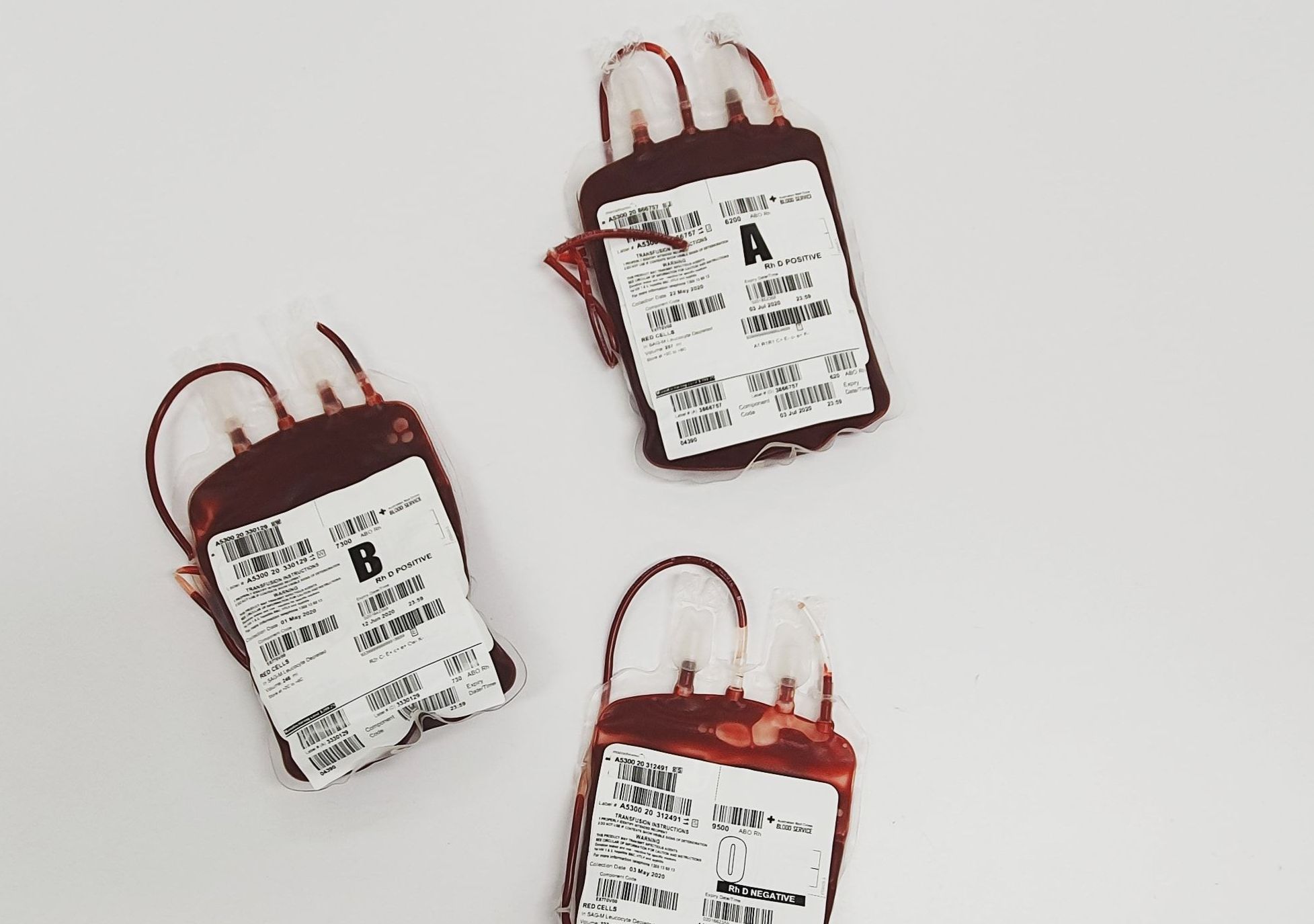
Ask anyone in the preparedness community what their blood type is and you will get an answer inside of two seconds. It is stamped on a dog tag, written in permanent marker on the inside flap of a trauma kit, listed on a laminated card in the go bag, and in more than a few cases tattooed on a rib cage.
That single letter and the little plus or minus sign next to it have become part of the culture, sitting right alongside caliber preferences and water storage math as a thing serious people are supposed to know cold.
The problem is that the answer almost everyone gives is only a fragment of the real picture. There is a second layer to your blood type that hospitals, military blood programs, and transfusion services treat as mandatory information before a single milliliter moves from one human being into another, and it is a layer that civilian preppers almost never test for.
This has nothing to do with the wellness industry nonsense about eating for your blood type. It is ordinary, boring, well documented transfusion medicine, and in an austere medical emergency it can be the difference between a transfusion that buys somebody another forty years and a transfusion that shuts down their kidneys while you watch.
What follows is a walk through the parts of your blood profile that never make it onto the dog tag: the antibody titer sitting in your plasma, the four Rhesus antigens hiding behind the plus sign, the minor antigen systems that ruin otherwise perfect matches, and the paperwork problem that turns a group of willing donors into a functional walking blood bank. Some of this you can arrange for free at your next donation appointment. Some of it takes a phone call and a lab order. All of it is worth knowing before the day you need it.
Why “O Negative” Is Only Half of Your Blood Type Answer
The eight familiar categories that everyone learns in school describe two things and only two things: whether the A and B sugar antigens sit on the surface of your red cells, and whether the D antigen of the Rhesus system is present or absent.
The American Red Cross lays this out plainly and also notes something most people skim right past, which is that there are more than three hundred additional known red cell antigens beyond A and B, and a person is considered to have a rare type when they lack an antigen that ninety nine percent of the population carries.
So, when a prepper says their blood type is O negative, they have accurately reported the results of a test that was designed to answer one narrow question quickly during a hospital admission. That test was never meant to be a complete immunological passport. It tells a receiving clinician which units to pull off the shelf as a starting point, after which the blood bank runs an antibody screen and a crossmatch to catch everything the letter does not cover.
In a functioning hospital, those follow up steps happen automatically and invisibly, usually inside of forty-five minutes. In a grid down scenario, a remote expedition, a rural clinic during a mass casualty event, or any situation where a blood bank technologist is not standing behind you, those steps disappear and you are left holding nothing but the letter. That is the gap this article is about. Knowing your blood type in the schoolbook sense is genuinely useful, and it is also the shallowest possible version of the information a transfusion decision actually requires.
Antibody Titer: The Number Behind the Letter on Your Dog Tag
Here is the piece nobody tests for. If you are group O, your red cells carry neither the A nor the B antigen, which is why your cells can be given to almost anyone. Your plasma, however, is a completely different story. From roughly three months of age onward, every group O person manufactures anti-A and anti-B antibodies in response to environmental exposure to similar sugars found in food and gut bacteria. Those antibodies stay in circulation for life, and they are the reason a group O person can only receive group O red cells.
The titer is simply how concentrated those antibodies are, expressed as the highest dilution at which they still cause visible clumping in the lab. A result of 1:16 means the plasma still reacted after being diluted sixteen-fold. A result of 1:512 means it was still reacting after a five hundred- and twelve-fold dilution, which describes a donor whose plasma is loaded. Two people can both be honest, healthy, tattooed O negatives and have titers that differ by a factor of thirty.
This matters enormously when whole blood is transfused rather than separated components, because whole blood carries the donor plasma along with the red cells. A high titer O donor giving whole blood to a group A recipient is delivering a payload of anti-A antibodies straight into a bloodstream full of A antigen. The recipient’s own red cells become the target. Your blood type letter gives no hint whatsoever about where you fall on that spectrum, and the only way to find out is a titer test.
What the Ranger O Low Titer Program Proved About Emergency Transfusion
This is not theoretical hand wringing. It is the exact problem the United States military solved with a program worth studying closely. The 75th Ranger Regiment, working with the Trauma Hemostasis and Oxygenation Research network, built what became known as the Ranger O Low Titer whole blood program specifically to enable point of injury transfusion when there is no laboratory anywhere nearby.
The method is elegantly simple. The unit identifies every group O member in advance, tests those candidates for anti-A and anti-B IgM antibody levels, and keeps only the ones who come in below a defined threshold on the donor roster. The Regiment adopted a cutoff of IgM titers below 1:256, and the published rationale is that whole blood carrying low anti-A and anti-B titers presents a low to negligible risk of a catastrophic acute hemolytic reaction when given to a recipient of a different blood type.
Read that sequence again, because the order of operations is the whole lesson. The screening happens months or years before the casualty exists. Nobody is running titer assays with a headlamp in the back of a vehicle. The roster is built during peacetime, the risky donors are quietly filtered out, and what remains is a pool of people whose blood can go into a stranger without a crossmatch. Civilian preparedness groups have copied the tourniquets, the chest seals, the hypothermia wraps, and the tranexamic acid protocols from military trauma care with real enthusiasm, and then skipped the single administrative step that makes emergency transfusion defensible. The titer screen is the cheapest and least glamorous part of the entire model, which is probably exactly why it gets left behind.
Rh Positive and Rh Negative Barely Scratch the Rhesus System
The plus or minus after your letter refers to one antigen, the D antigen, and the Rhesus system contains a great deal more than that. Using the Fisher-Race naming convention, the primary Rh antigens involved in typing are C, c, D, E, and e, each with a corresponding antibody that can be produced against it. There are also variants such as weak D, where the D antigen is present in reduced quantity and a fast bedside test can read the sample as negative when a reference laboratory would call it positive.
Zygosity adds another wrinkle that matters for families rather than for the person being transfused. Roughly forty percent of Rh-positive individuals are homozygous for D and the remaining sixty percent are heterozygous, which determines the odds of passing the antigen to a child. None of this appears anywhere on a standard blood type report, and none of it appears on a home typing card.
Where it bites in practice is alloimmunization. A person exposed to a foreign Rh antigen through transfusion or pregnancy can develop a permanent antibody against it, and anti-E and anti-c are among the more commonly encountered examples. Once that antibody exists, every future transfusion needs units that lack the offending antigen, and the person’s practical blood type has narrowed considerably even though the letter on their chart never changed. Somebody who received units during a car wreck in 2019 may be walking around today with an antibody nobody has ever mentioned to them, and they will keep giving the same two second answer they always have.
Kell, Duffy, and Kidd: The Minor Antigens That Wreck a Good Match
Beyond ABO and Rh sit the systems that blood bankers actually lose sleep over. Kell, Duffy, and Kidd are the three that come up most often, and each fails in its own irritating way. Anti-K, usually produced after a previous transfusion, is capable of causing severe hemolytic disease in a fetus with profound anemia rather than the jaundice pattern seen with anti-D. Duffy negative phenotypes cluster in populations of African ancestry and create matching difficulties for patients with sickle cell disease who need repeated transfusion. Kidd antibodies are notorious for fading below the detection limit over time and then roaring back on re-exposure, which produces delayed hemolytic reactions days after a transfusion that appeared to go perfectly.
These are the antibodies that the routine antibody screen and crossmatch exist to catch, and they are also the reason blood transfusion is described as a common and safe procedure only in the context of a system with a laboratory attached to it. Strip the laboratory out and the safety profile changes character.
For anybody planning around austere medicine, the useful takeaway is a shift in expectation. A blood type match on paper does not equal compatibility, and the gap between the two grows with every prior transfusion or pregnancy in a person’s history. A previously untransfused, never pregnant adult is a low-risk recipient. Somebody with a surgical history and three children is carrying an unknown antibody profile, and their blood type letter is doing very little work at that point. Recording transfusion and pregnancy history alongside the blood type on your roster costs nothing and tells you who the higher risk recipients are before the emergency.
The Blood Type Problem That Shows Up Nine Months Later
Every discussion of prepper transfusion focuses on trauma, and trauma is the wrong place to look for the most likely serious consequence of getting a blood type wrong. Hemolytic disease of the fetus and newborn happens when maternal antibodies cross the placenta and destroy fetal red cells, and it is the reason Rh negative status in a woman of childbearing age is a genuinely urgent piece of information rather than a trivia fact.
The scale of the sensitizing event is startlingly small. As little as one tenth of a milliliter of fetal blood entering the maternal circulation is enough to trigger alloimmunization, and between fifteen and fifty percent of pregnancies involve enough fetomaternal hemorrhage for that to happen.
The prevention is anti-D immune globulin, commonly known by the brand name RhoGAM, given as a standard 300 microgram dose around twenty-eight weeks and again after delivery if the newborn types as Rh positive. Since its introduction in 1968, that single intervention has driven an eighty to ninety percent decline in Rh hemolytic disease, and the source material is explicit that Rh alloimmunization remains a serious problem in places where access to anti-D immune globulin is limited.
Anti-D immune globulin is a refrigerated, prescription only, short shelf life biologic that no household can meaningfully stockpile. That leaves knowledge as the available preparation. Knowing the Rh status of every woman of childbearing age in your group, and knowing the status of their partners, tells you which pregnancies carry risk and which do not, and it tells you which situations warrant getting to a functioning clinic no matter how inconvenient the trip is.
How to Get Your Full Blood Type Profile Tested Right Now
The good news is that most of this is obtainable today, cheaply, without any drama. Start by donating blood at an established center. Donation gets you a confirmed ABO and Rh type performed by a licensed laboratory, which is already more reliable than a card you spotted yourself at the kitchen table, and many centers will tell you your type through their donor app within a week or two.
From there, ask specifically for an extended red cell phenotype or antigen profile. Some centers run these routinely on repeat donors so they can match units for chronically transfused patients, and they are often willing to share results with the donor on request. If your local center will not do it, a direct access laboratory service can order a red blood cell antibody screen and, in many regions, an antigen typing panel without a physician visit. Expect to spend somewhere in the range of a modest restaurant bill rather than a car payment.
Anti-A and anti-B titer testing is the hardest item on the list to obtain as a private individual, since it is normally ordered for transplant workups, plasma donor qualification, or pregnancy monitoring rather than curiosity. It is worth asking anyway, particularly if you are group O and you have any relationship with a physician who understands why you are asking. Whatever you manage to get, request the actual printed report rather than a verbal summary, because a blood type recorded secondhand from a phone call is a blood type nobody should transfuse on. Store the paperwork somewhere it will survive water and time, such as a sealed document pouch.
Home Typing Cards: Useful, Cheap, and Easy to Get Wrong
Home typing cards such as the widely sold Eldoncard have earned their place in a lot of kits, and they do a real job. For under fifteen dollars you get a lancet, a card with dried antibody reagents, and a result in a few minutes. As a way to sanity check what somebody has been telling you for thirty years, or to get a working answer for a person who has never been tested, they are far better than nothing.
The limitations deserve equal billing. These cards perform forward typing only, meaning they test the patient’s red cells against known antibodies. A clinical laboratory also performs reverse typing, testing the patient’s plasma against known red cells, and the two results have to agree before the blood type is considered confirmed.
Discrepancies between forward and reverse typing are exactly how weak subgroups and other oddities get caught. Home cards also miss weak D, they degrade if stored in a hot vehicle, and they are unforgiving of user error involving smeared drops, insufficient blood, or misread timing.
Treat a card result as a strong hypothesis rather than a finding. Run two cards on the same person, ideally on different days and by different people, and confirm through a laboratory whenever the opportunity presents itself. Keep a few spares in the kit for the person who shows up with no history at all, since a probable blood type beats a complete blank, and store them indoors at room temperature rather than in the truck where they will cook through August.
Building a Group Donor Roster Before the Lights Go Out
A roster is where all of this stops being trivia and becomes a capability. The military version identifies donors in advance, screens them, and keeps the list current. A family or neighborhood version can follow the same logic on a kitchen table. For each adult, record the confirmed ABO and Rh type with the date and the laboratory that produced it, any extended phenotype or antibody screen results, titer results if you were able to get them, complete transfusion history, pregnancy history, and known infectious disease testing with dates.
Keep it on paper. A blood type registry that lives only on a phone is a registry that vanishes the moment the phone does, and photographs of laboratory reports stored in a cloud account are not much better. Print it, laminate it, put one copy in the household medical binder and another in whatever bag actually leaves the house. Individual dog tags or bracelets are worth having as a redundant layer for the person who gets separated from everything else.
Two maintenance rules keep a roster honest. Re-screen anybody who has received a transfusion or completed a pregnancy since their last workup, because both events can create new antibodies that invalidate the earlier picture. Second, remember that the roster is a planning document rather than a license, and its most common real-world use will be handing accurate information to paramedics or an emergency department in the first sixty seconds of a bad night. That alone justifies the afternoon it takes to build. Pair it with a properly stocked trauma kit, since stopping the bleeding remains the intervention that saves the overwhelming majority of people who would otherwise need blood.
The Legal and Practical Ceiling on Walking Blood Banks
It is worth being blunt about where the line sits. Collecting, processing, and transfusing blood is a heavily regulated manufacturing activity in the United States, governed by current good manufacturing practice requirements that cover personnel, equipment, records, labeling, and quality control for every blood establishment. Donor units are screened for HIV, hepatitis B, hepatitis C, syphilis, HTLV, and other agents, collected into sterile closed systems containing precisely formulated anticoagulant, and tracked through a documented chain from vein to vein.
None of that is reproducible in a basement, and pretending otherwise does real harm to an otherwise sensible preparedness conversation. Transfusing improperly collected blood risks clotting in the line, bacterial contamination, citrate toxicity, volume overload, transfusion related acute lung injury, and transmission of chronic infection to a person who was going to survive anyway. Knowing a donor’s blood type does not neutralize a single one of those hazards.
What is achievable for a civilian is the preparation layer: accurate typing, documented antibody and titer status where obtainable, a maintained roster, aggressive hemorrhage control training, and a realistic plan for reaching definitive care. Some organizations run legitimate emergency donor panels under medical direction, and rural volunteer programs in various countries do maintain pre-screened walking donor lists with physician oversight.
If that model appeals to you, the productive path runs through your local blood center and a sympathetic physician rather than through equipment purchases. Bring your blood type paperwork to that conversation and you will be taken considerably more seriously than the person who arrives with a tattoo and an opinion.
Concluding
After years of watching this topic circulate in preparedness circles, my honest read is that the blood type conversation has been stuck at the shallow end for a long time because the shallow end is satisfying. A letter and a symbol feel like a complete answer, they fit on a dog tag, and they close the loop on a question that would otherwise stay uncomfortably open. The deeper layers, the titer and the phenotype and the antibody screen, require phone calls, mild embarrassment at a lab counter, and the willingness to learn that something you were confident about was only partly right.
If you do one thing after reading this, donate blood and ask for your full report in writing. You will help somebody, you will get a laboratory confirmed type at no cost, and you will open the door to asking about extended typing later. If you do a second thing, find out the Rh status of every woman of childbearing age in your household, because that single fact carries more real-world consequence in a degraded medical environment than any transfusion scenario most of us will ever face.
Everything else is bonus. The goal was never to turn your garage into a blood bank. The goal is to be the person in the room who can hand a paramedic a piece of paper that is actually correct, which is a genuinely rare and genuinely useful thing to be.
This article has been written by James H. Redford MD for Prepper’s Will.
You may also want to check this:
Knowledge to survive any medical crisis situation during a major disaster
Avitaminosis (Vitamin Deficiency) Effects on Your Body During Isolation
The natural healing remedies out grandparents used on a daily basis
A Few Things To Know When Conventional Medical Care Is Unavailable
