The difference between starving slowly and surviving winter wasn’t protein, it was fat. Every old European culture knew this long before electricity, supermarkets, or the idea that “lean meat” was somehow noble.
Across the continent, from Viking traders to French shepherds, from Scottish crofters to Polish refugees fleeing winter fronts, survival hinged on a brutally simple truth: without fat, the human body burns out fast.
The Old-World Calorie That Decided Who Starved and Who Survived
Meat might fill your stomach for an hour, but fat kept you alive for the night. Fat warmed you from the inside when the wind turned vicious and it fed your brain when flour stores were empty. Fat even kept your gear working, your candles burning, your boots soft enough to walk in. Once you start studying European survival fats, you realize that entire communities treated fat like currency. They stored it, traded it, hid it, carried it across borders, and rationed it with more care than any sack of grain.
Americans today tend to think of fat as just a cooking ingredient. Europeans of the old world thought of it as fuel. They burned it in iron lamps, smeared it on cracked skin, softened leather with it, preserved meat under it, and swallowed it straight when the snow came early or stayed too long. Hunters might return with a huge stag, but families didn’t cheer until they saw how thick the kidney fat was. Even soldiers judged a winter campaign by the fat supply, not the meat.
That’s the part most modern preppers miss. We obsess over protein, carbs, and “balanced calories,” but protein alone won’t keep you alive through a dark February grid-down event. Rice and beans without fat will fill you with cold, hollow misery. That’s prison food, not survival food. The old Europeans understood that fat wasn’t optional. It was the core of staying warm, staying sane, and staying mobile.
In the next sections, we’ll walk straight through the most important forms of European survival fats and why they mattered so much. But more importantly, we’ll turn those old techniques into modern prepper tools you can store on a shelf, seal in a jar, or carry in a pack when everything else falls apart.
Tallow Bricks and Northern Grit: The Oldest European Survival Fats
When people talk about cold, they usually mean uncomfortable. When the old Northern Europeans talked about cold, they meant the kind that split wood, killed livestock, froze water inside the house, and forced entire families to live off whatever they had put away before the first blizzard. That’s why tallow wasn’t just another kitchen ingredient and it was one of the earliest and most dependable European survival fats, shaping life from Viking longships to the stone cottages of medieval Scotland.
Up in Scandinavia, where winter campaigns could last months, crews carried tallow bricks as their emergency ration. Not jerky and certainly, not bread. Tallow was the survival currency and it was packed tight into blocks that didn’t crack easily, didn’t freeze solid, and didn’t spoil unless you treated it carelessly. A single fist-sized chunk delivered more useful energy than a whole slab of lean meat, and men who lived by the oar or axe knew it. When storms pinned ships against the coast or when hunts failed, tallow was the difference between sluggish exhaustion and the strength to keep working.
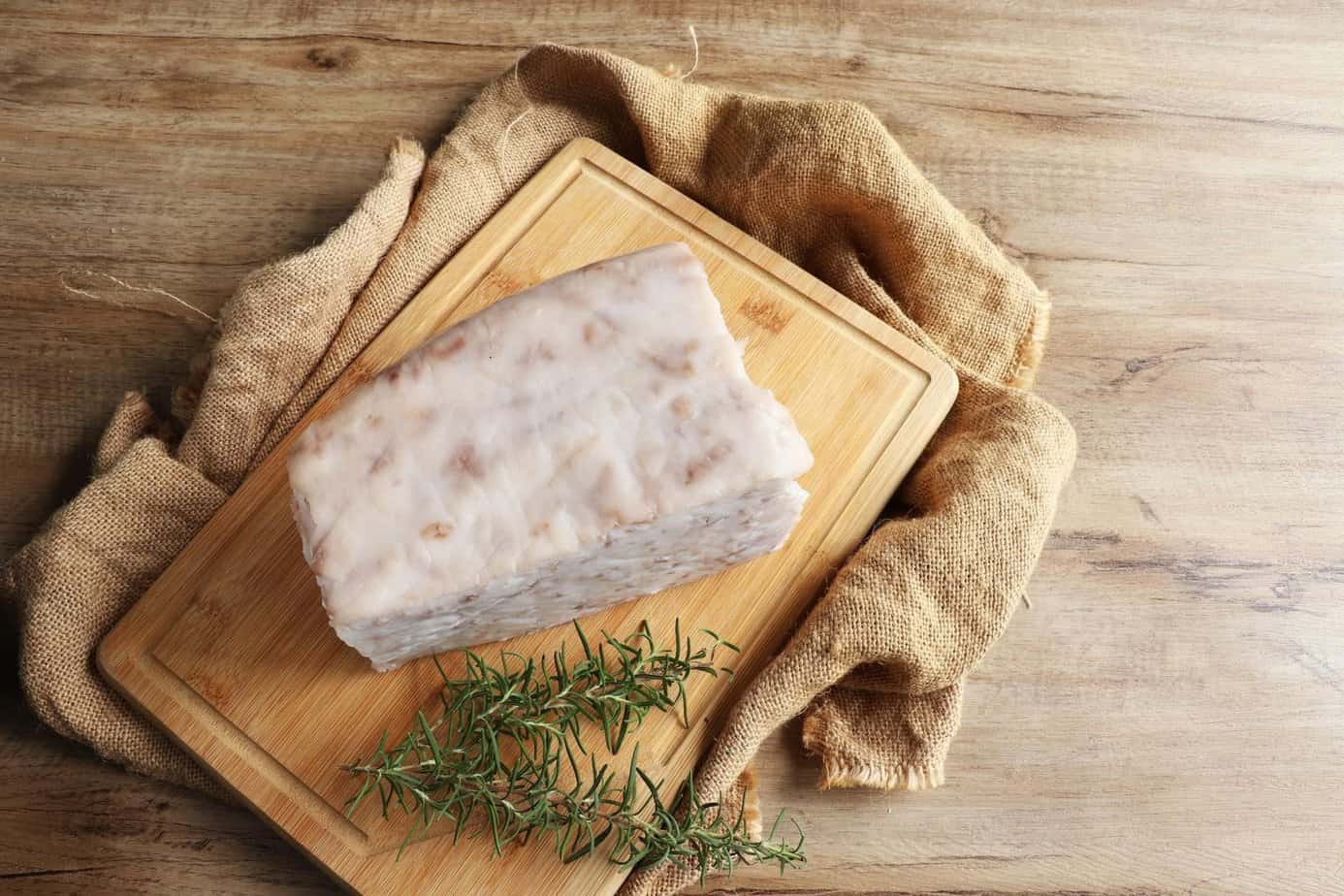
The Scots had their own version. Highland crofters relied on cattle not for the cuts of meat but for the dense seam of fat that framed the kidneys. That fat, once rendered down, was poured into wooden molds or simple cloth-lined pans. As it cooled, it hardened into those familiar off-white bricks. People ate it straight during harsh winters, spread it on bannocks, or mixed it with dried venison to create something close to European pemmican. And when things grew desperate during the Little Ice Age, whole families rationed tallow by the spoonful.
But tallow wasn’t just food and every homestead used it as fuel. Blocks were shaved into crude candles, ladled into iron lamps, or melted to waterproof boots and soften leather tack that had stiffened in the cold. More than a few travelers kept a sliver of tallow wrapped in cloth for cracked heels or wind-burned cheeks because it soothed skin better than anything else they had. These practical uses mattered as much as the calories. One brick of fat could light a room, treat a blister, feed a worker, and keep a pack of gear functional.
For modern preppers, this old-world fat is still one of the easiest and most forgiving to store. Render beef or sheep suet low and slow in a heavy pot, strain it through cheesecloth, and pour it into mason jars or silicone molds. Once cooled, it becomes a shelf-stable block you can tuck away in a pantry or root cellar. In colder states, it keeps for ages with minimal effort and if you want extra insurance, vacuum sealing the bricks or storing them in smaller jars limits exposure to moisture and air.
Urban preppers aren’t left out because tallow renders cleanly on a stovetop with no special equipment, and even a small apartment kitchen can turn trimmings from the butcher into months of emergency calories. Rural homesteaders can push it further by producing larger seasonal batches, then storing them in bins or cellar crocks the way Scandinavian families did for centuries.
Whether you burn it, eat it, trade it, or stash it for a hard winter, tallow stands at the foundation of European survival fats. It’s simple, durable, and brutally effective, which is probably why cultures across the northern latitudes kept relying on it long after they had access to “better” food.

Schmaltz and Cellar Storage: How European Survival Fats Survived Without Refrigeration
If tallow kept the northern reaches alive, schmaltz held down the center of the continent. Germany, Poland, Hungary, and the Czech lands all developed their own variations on poultry fat, and for good reason: birds were easier to raise than cattle, easier to slaughter in tight urban spaces, and their fat rendered cleanly at lower temperatures. For many families, schmaltz was the most reliable of all European survival fats, especially in regions where winters were long but not as brutally cold as Scandinavia.
The technique was simple, but the discipline behind it was impressive. Farmers and town families collected every scrap of poultry fat from market days or slaughter seasons. They heated it low and slow, usually in thick iron pots that kept the temperature steady. As the fat melted, it separated from the browned cracklings that would later become a prized snack. The liquid gold was strained through cloth, sometimes twice, then poured into crocks that were sealed with cloth, wood, or even a layer of more fat on top.
Old European kitchens didn’t depend on refrigeration to keep schmaltz safe. They depended on habit, cool cellars, and smart chemistry. Onions and salt weren’t just flavor additions; they acted as microbial barriers. Many Eastern European families swore the schmaltz lasted longer when rendered with a handful of chopped onions, and modern food historians have pointed out that sulfur compounds in onions helped slow bacterial growth.
If you look into records from early twentieth-century German households, you’ll see that fat storage in crocks and cellars was standard practice well into the industrial era. The German Food History archives at the Deutsche Forschungsgemeinschaft note that poultry fat remained a core staple in many regions even after refrigeration became available, simply because families trusted the old methods.
Culturally, schmaltz carried enormous weight. Jewish communities used it as their daily cooking fat when butter and lard were off-limits, while Polish and Hungarian peasants kept it because pigs were expensive and cattle were for market, not slaughter. During the Second World War, when rationing hit cities hard, schmaltz often became the hidden reserve that got families through the worst weeks of winter. A spoonful spread on coarse bread, topped with pepper or pickled vegetables, was sometimes the only warm calorie a worker got before walking miles in the cold.
For the modern prepper, schmaltz has two major advantages. First, it renders at a much lower temperature than beef or sheep fat, which means fewer risks of scorching or producing off flavors. Second, poultry fat is easier to source consistently, even in suburban or urban areas. A few weekends of collecting trimmings from rotisserie chickens or butcher counters will give you enough raw material to build a solid stash.
Storage remains as straightforward as it was centuries ago. After rendering and straining, you can keep schmaltz in mason jars, crock-style containers, or vacuum-sealed pouches. Urban preppers can store it in apartment pantries, while rural folks can tuck larger batches into basements or outbuildings. Some preppers add a pinch of salt, just as their European counterparts did, not for taste but for confidence in long-term keeping.
Schmaltz might not have the mythic weight of Viking tallow bricks, but as a practical, versatile, and incredibly resilient member of the European survival fats lineage, it’s every bit as valuable. And for anyone prepping without much space, it might be the smartest starting point.
England’s Dripping Cakes and the Wartime Art of Stretching Fat
If the northern Europeans relied on tallow and the central regions trusted schmaltz, the English leaned hard on dripping. Beef and mutton roasts were the pride of Sunday tables, but the real treasure wasn’t the meat. It was the fat left at the bottom of the pan. That slow-rendered layer of golden or pale-white dripping became one of the most unpretentious yet essential European survival fats, especially during times when the empire’s reach didn’t guarantee full bellies back home.
In the Tudor period, household cooks collected dripping after every roast. Nothing went to waste. They poured it into shallow pots, let it firm up, and sometimes mixed it with leftover bits of bread or barley to form makeshift “cakes.” These early dripping cakes weren’t desserts. They were utilitarian ration bricks meant to stretch calories through cold months and hard farm seasons. Workers heading into the fields often carried one in a cloth wrap. A single cake offered enough slow-burning energy to get through hours of damp wind, mud, and physical labor.
Fast forward a few centuries and dripping became even more critical. During the First and Second World Wars, British kitchens had to stretch every ounce of fat they could get their hands on. With butter and lard rationed, many families returned to the old methods almost instinctively. The Imperial War Museum notes that wartime posters encouraged households to save and reuse dripping as both a cooking fat and a spread for bread. And if you’ve ever read civilian diaries from the ration era, you’ll see that dripping on toast was sometimes the only hot breakfast a person had for weeks.
What made dripping so valuable wasn’t just nostalgia or flavor. It was practicality. You could press it into slabs, chill it in cold pantries, and slice off what you needed for frying. You could mix it with crumbled stale bread to create high-calorie “filler” foods. You could melt it into porridge to fortify a thin meal. Dripping turned the scraps of yesterday’s roast into tomorrow’s survival ration. Even in the industrial age, when England had access to imports from every corner of the globe, the cold months still forced people to respect this simple fat.
For preppers today, dripping is one of the easiest fats to reclaim from everyday cooking. You don’t need a farm, a flock, or a butcher’s shop. You just need to save what you already produce. Every roast chicken, every pot roast, every pan of stew leaves behind fat that can be strained, cooled, and packed away. With a little salt and clean storage, you can build up a supply of your own ration bricks over time.
Urban preppers can freeze or refrigerate the cakes if they want maximum shelf life, while rural preppers with cooler basements can store jars or parchment-wrapped blocks at cellar temperatures for shorter-term emergencies. Some people mix dripping with coarse oats, forming a portable bar similar to the crude ration cakes English families used during the Blitz. And if you want a touch of tradition, adding a pinch of black pepper or rosemary won’t hurt a thing.
Dripping may not sound glamorous, but when you stack it next to the other European survival fats, it holds its own just fine. It’s accessible, simple, calorie-dense, and almost impossible to waste. And when your pantry is low, your options are thin, and winter is working against you, that’s exactly the kind of fat you want within arm’s reach.
Butter Powder and the Lost French Craft of Portable Fat
Of all the old European tricks for preserving calories, powdered butter might be the one modern preppers overlook the most. France wasn’t always the land of fresh cream and daily dairy deliveries. Rural families, especially in the mountain regions and along old trading routes, needed fat that wouldn’t turn rancid on a long journey or during a late freeze. That’s where butter powder came in. Long before commercial dehydrators, villagers figured out how to take one of the richest European survival fats and turn it into something you could carry in a pouch for weeks.
The process was surprisingly clever. Fresh butter was melted gently, then poured into shallow trays filled with clean sand or sifted ash. These fine materials acted like primitive desiccants, pulling moisture out of the fat without cooking it. After several hours or a full day, depending on the temperature, the butter was lifted out, brushed clean, and set aside to continue drying. Repeated cycles produced a crumbly, almost cheese-like texture that could be broken down further into powder. Travelers packed it into linen bags or waxed pouches, tucking it into saddlebags or coat pockets before heading out on winter roads.
French shepherds in the Pyrenees made similar preparations before seasonal migrations. Some Napoleonic supply officers even noted powdered butter in early nineteenth-century travel kits, especially for scouts who needed lightweight, high-calorie food. And rural families used it as a kind of emergency reserve. When fresh dairy was scarce or snow blocked access to neighboring farms, a spoonful of powdered butter stirred into hot water or porridge added the warmth and fullness people needed to keep working.
What made this form of fat so valuable wasn’t just portability. It was stability. Removing moisture slowed spoilage dramatically, and keeping the powder in tightly wrapped pouches meant it didn’t oxidize quickly. If kept cool and dry, it could last far longer than standard butter, even before refrigeration was common. And unlike blocks of tallow or crocks of schmaltz, powdered butter didn’t require a vessel. That mattered in a world where clay, glass, and metal were resources you didn’t waste casually.
For today’s preppers, powdered butter offers a bridge between old-world ingenuity and modern convenience. You can replicate the traditional sand-or-ash method for the sake of practice, but most people will prefer using low-heat dehydrators or freeze-dry machines for consistent results. Once you’ve rendered the butter to remove milk solids and moisture, you can spread thin layers onto dehydrator sheets and run at low temperatures until fully dry. Grind it, store it in vacuum-sealed mylar bags, and you have a high-calorie, pack-ready fat source that takes almost no space.
Apartment preppers can make small batches from grocery-store butter and build a quiet reserve over time. Rural preppers with access to their own dairy animals can produce significant quantities seasonally, using powdered butter as an “overflow solution” when fresh butter production outpaces fridge space. And in a grid-down or blizzard situation, powdered butter becomes a simple way to enrich rice, potatoes, soups, or oats without using up your core fat stores.
Powdered butter faded from most French kitchens because refrigeration made it unnecessary. But for anyone thinking like a survivalist, the logic behind it is still rock solid. Lightweight. Calorie rich. Shelf stable. Easy to hide, carry, or barter. And unlike many modern emergency foods, you can produce it yourself without fancy tools if you’re willing to put in the time.
Why Fat Outlasts Flour When the Temperature Drops
When you study how Europeans survived winter after winter, century after century, one thing becomes obvious: flour runs out fast, but fat holds the line. This was true in medieval monasteries, during the Little Ice Age, and even in the trenches of the First World War. And if you’re building a modern pantry that can actually carry you through a long emergency, you need to understand the same thing the old-timers knew about European survival fats: they don’t just store well; they store smart.
Carbohydrates give quick energy, but they’re short-lived. Flour spoils with moisture, attracts pests, and oxidizes faster than people assume. Protein is important, sure, but the body burns through it without giving you warmth, especially during cold-weather stress. Fat sits in a different category entirely. It burns slow. It burns hot. It’s dense enough that a few spoonfuls can carry you for hours, and it doesn’t send your blood sugar crashing afterward. That’s why European farmers, soldiers, and refugees prioritized fat during snowbound months. Without it, everything from physical work to mental clarity and even mood, drops off a cliff.
A big part of this comes down to basic biology. In freezing temperatures, your body leans on fat metabolism to keep your core temperature stable. Your brain depends heavily on lipids, and your endocrine system responds better when calories are steady rather than spiking and crashing. Archaeologists studying skeletal remains from early northern Europe found that populations with consistent access to animal fat showed fewer signs of winter malnutrition compared to groups relying mostly on grain.
And if you read cold-weather physiology research, such as the materials published by the US National Library of Medicine, you’ll see the same conclusion echoed in modern science: fat supports the body’s thermogenesis far more effectively than protein or refined carbohydrates.
Spoilage is another overlooked angle. Fat can go rancid if mishandled, but compared to flour, it’s shockingly resilient. Protein-based foods rot quickly because bacteria love them. Carbs mold fast because fungi thrive on them. Pure fat, properly rendered, offers almost nothing for microbes to feed on. That’s why a jar of clean tallow or schmaltz can sit untouched for months or even years in the right conditions. Medieval families stored crocks of fat in cellars, monasteries kept sealed pots near winter kitchens, and French farmers carried fat pouches on long trips without losing sleep over spoilage.
And then there’s morale and anyone who has worked in the cold knows there’s a psychological lift that comes from warm, rich food. It settles your nerves, steadies your thinking, and helps you push through that bone-deep chill. European diaries from famine winters repeatedly mention that people could endure thin soups or watery porridges as long as they had a little fat to stir in. Without it, meals felt hollow, energy faded faster, and tempers worsened. It wasn’t just fuel. It was comfort in a season that offered very little.
Modern preppers often stock mountains of rice and beans while forgetting the ingredient that actually makes those calories usable. But if you’re planning for grid-down winters, long-term supply shocks, or simply a rough patch where grocery shelves run thin, fat must be part of the equation. Not as an afterthought, but as a deliberate, central piece of your food strategy.
Building a Modern Fat Vault at Home Using Lessons From European Survival Fats
If you’ve read this far, you’ve probably noticed a pattern: every old European culture treated fat like gold because it behaved like gold. It stored well, it could be traded, it fueled work, and it kept people alive through the kind of winters that froze livestock standing up. You can build the same reliable buffer at home today, using a mix of traditional techniques and modern tools. And you don’t need a root cellar or a barn to do it. Whether you live in the suburbs, on a few acres, or in a small apartment, a “fat vault” is completely doable. The old ways behind European survival fats simply give you the blueprint.
Start with the basics: clean rendering. Any fat you store should be rendered low and slow until the impurities separate. Once strained through a fine cheesecloth or coffee filter, you’re left with a clean, stable fat that resists spoilage far better than whatever dripped off the pan during dinner. Beef tallow, pork lard, poultry schmaltz, goat fat, even clarified butter all follow this same principle. Rendering is the only real “processing” you need, and it’s the part that makes the difference between fat that lasts months and fat that lasts years.
Once rendered, storage is the next fork in the road. Mason jars remain the classic choice because they seal tightly and resist odors. For long-term storage, you can pour fat into wide-mouth jars while still warm, let it cool, then add an oxygen absorber before sealing. If you want another layer of protection, slip the sealed jar into a mylar bag to guard against light and moisture. Rural preppers with basements or outbuildings can store dozens of jars without much trouble.
Apartment dwellers can go a different route: vacuum-sealed pouches. When fat is poured into silicone molds and allowed to harden, you can cut the blocks into small portions and vacuum seal them individually. These compact packets slide easily into kitchen drawers, bug-out bags, or plastic totes. You’re essentially recreating the old tallow or dripping bricks, just in a more compact and portable form. In a small space, this method is hard to beat.
Re-rendering is another smart trick. If you have fat that’s been sitting for a year and you’re unsure about quality, melt it down again, strain it, and repack it. Old European households did this routinely. Every few seasons, they’d heat stored fat to clarify it, which helped push the shelf life even further. This method works just as well for modern preppers and costs nothing but a little time.
If you have refrigeration or a chest freezer, you can extend shelf life even more, but the key is that you don’t need those appliances. A true fat vault should survive a power outage. That means cool, dark, airtight storage. A pantry, closet, basement corner, or insulated cabinet can all work if you keep temperatures consistent. Heat and humidity are the real enemies. Light, too, will oxidize fat over time, which is why old households stored crocks in cellars or wrapped jars in cloth.
One detail worth noting is portion control. Store fat in multiple small containers rather than one large one. Every time you expose fat to air, moisture, or utensils, you shorten its life. Many preppers divide their supply into “daily use” jars and “deep storage” jars, similar to how medieval families kept a working crock in the kitchen and the long-term supply in the cellar.
Finally, consider redundancy and don’t rely on one type of fat. A strong modern fat vault usually includes some mix of tallow, schmaltz, lard, clarified butter, and powdered butter. Each behaves differently in cooking and storage, and each thrives under different conditions. This mirrors what old European communities learned over centuries: no single fat does everything, but the right mix can carry you through almost anything.
Building a fat vault isn’t glamorous. It’s practical, old-fashioned, and quietly powerful. And when winter hits hard, or the freezer dies, or the lights stay off longer than expected, you’ll be grateful you listened to the same logic that kept whole cultures alive.

Stock Fat, or You’re Planning to Suffer
If there’s one lesson that echoes across the old continent, it’s this: people who stored fat survived, and people who didn’t… didn’t. Grain kept the belly full, meat lifted spirits, but fat kept families warm, working, and alive when the cold stole everything else. Europeans didn’t treat fat like a luxury. They treated it like insurance. Like firewood. Like a survival tool as essential as a blade or a good pair of boots.
Modern preppers talk endlessly about protein buckets and 25-year rice. That’s fine for numbers on a spreadsheet, but your body doesn’t run on spreadsheets. It runs on dense calories that deliver heat, focus, and endurance when conditions get brutal. The old families understood that a jar of tallow or a crock of schmaltz could outwork any sack of flour, and that powdered butter in a pouch could mean the difference between powering through a storm or collapsing halfway up the hill.
So, build your fat vault. Render your scraps and save your drippings. Dry what you can, store what you can’t, and rotate it like any other critical supply. When you stack jars in your pantry, you’re not just imitating medieval kitchens. You’re putting the same weapon in your arsenal that farmers, soldiers, refugees, and explorers relied on for centuries.
Because if you stock rice and beans but no fat, you’ve stocked prison food, not survival food. And no matter where you live or what you’re preparing for, that’s a mistake you never want to discover in the middle of winter.
FAQ: Practical Questions About Storing and Using European Survival Fats
How long can rendered fat actually last?
Properly rendered fat can last anywhere from several months to multiple years, depending on how clean it is and how you store it. Pure tallow or clean schmaltz kept in airtight jars away from heat and light can often outlast flour, nuts, and just about anything except honey. Re-rendering once a year extends life even further.
Do I need a fridge to store fat long-term?
No. Refrigeration is helpful, but the entire history of European survival fats proves you don’t need it. Cool, dark, stable temperatures are far more important. A pantry, basement corner, root cellar, or insulated cabinet will do the job as long as temps don’t swing wildly.
How do I know if fat has gone bad?
Rancid fat smells sharp, sour, or almost metallic. You’ll know. It may darken slightly or develop odd flavors. If mold appears (rare but possible if moisture was present during storage), discard it. If it smells clean and mild, it’s good.
Can I store fat in plastic containers?
You can, but it’s not ideal. Plastic absorbs odors and slowly lets air in. Glass jars, sealed crocks, or vacuum bags are better. For long-term deep storage, glass always wins.
Does seasoning or adding onions hurt shelf life?
Sometimes. Onions and herbs add flavor, but they also introduce moisture and organic material. Traditional European families used onions as a kind of microbial aid only when storage conditions were naturally cold. For modern preppers in warmer regions, pure rendered fat lasts longer.
Is pork fat safe to store at room temperature?
Yes, if it’s fully rendered and strained. Lard has a long history of room-temp storage across Europe and North America. Keep it tightly sealed and away from heat. If you want extra insurance, store it in smaller jars so opening one doesn’t expose your entire supply.
Can I mix different fats together?
You can, but it’s not always helpful. Each fat has its own texture, flavor, and melting point. Mixing them won’t hurt anything, but for cooking versatility and long-term rotation, storing them separately gives you more options.
What’s the best fat for bug-out bags?
Powdered butter or small tallow bricks. Schmaltz and lard are better for home storage unless temperatures are consistently cold. Weight and spoilage risk both matter when you’re mobile.
Can I use stored fat for candles or leather treatment?
Absolutely. That’s part of why old European households treated fat like a multi-tool. Tallow makes great candles and a reliable leather conditioner. Lard can soften boots. Schmaltz even works as an emergency fire starter.
What’s the easiest fat for beginners to store?
Schmaltz, hands down. It renders at low temps, doesn’t require special gear, and is easy to source. But tallow is the king of long-term stability if you’re thinking in years instead of months.
About the Author:
Rhonda Owen is a 60-year-old homesteader, off-grid gardener, and long-time contributor to PreppersWill. For over a decade, she has shared practical, no-nonsense advice on food preservation, self-sufficiency, and rural living. Living partially off-grid in the Ozarks, Rhonda grows, cans, and preserves nearly all her own food while mentoring families on how to build sustainable, long-term preparedness systems. Her writing blends hard-earned experience with tested survival principles you can trust.
Other resources:
What you should know about survival foods with decades of shelf life
The Foods that helped the pioneers survive crop failures and hard times
Survival Foods of the Native Americans
If you plan to build a storage room and equip it with everything needed > Start Here!