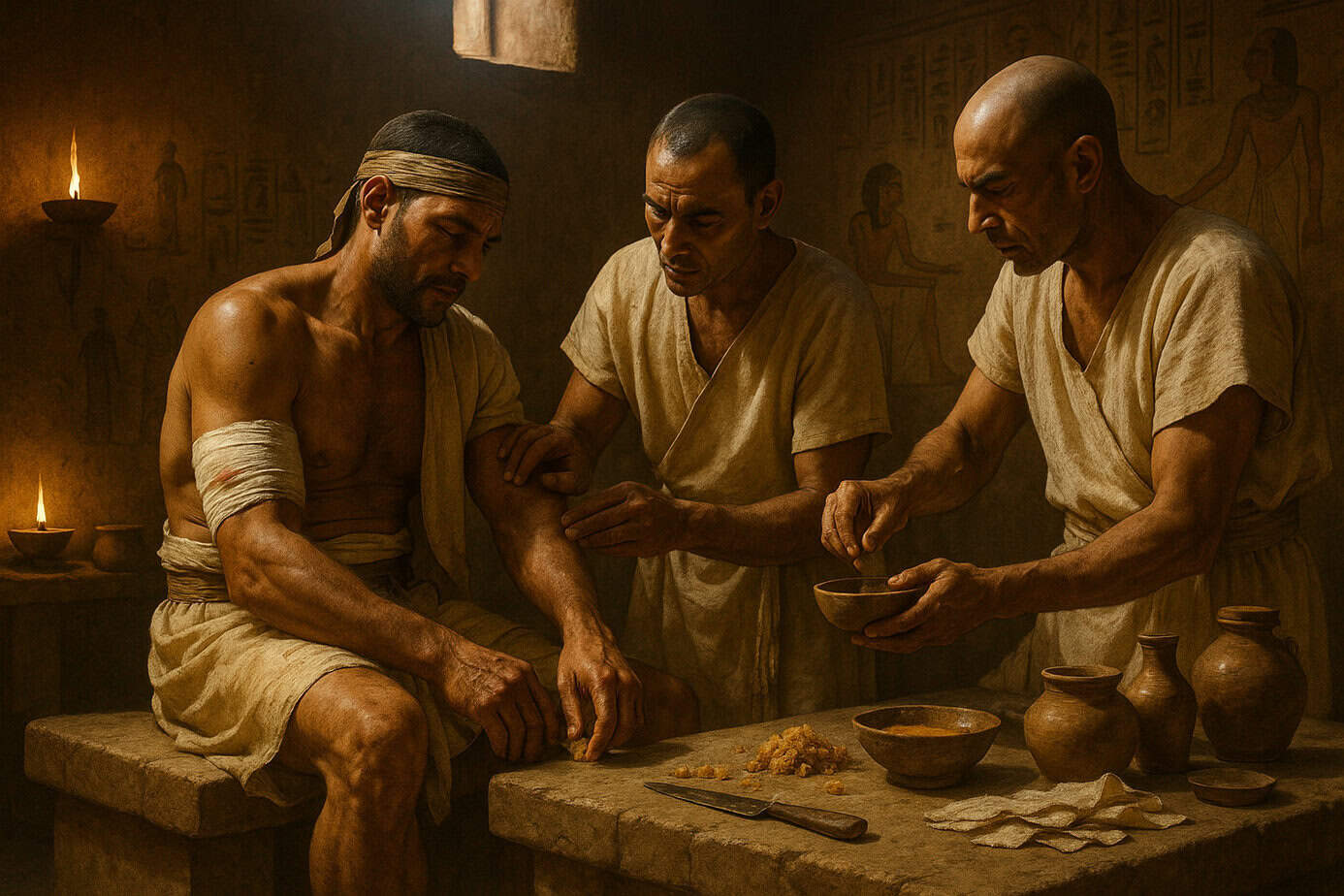
Frankincense has this way of slipping through history almost unnoticed, except by the people who depended on it the most. Long before hospitals, penicillin, or even the idea of a sterile bandage, healers along the Nile kept small jars of this golden resin close at hand. They did not have the language of chemistry, but they understood something important. Frankincense for wound healing helped damaged skin settle down, stay cleaner, and heal a little faster than it would on its own.
Today, anyone living off the grid or bracing for the kind of emergency where medical care is delayed knows the uncomfortable truth. Sometimes you are on your own. And when you are, you start looking at old remedies with fresh eyes. Not because ancient people were mystical or wiser than modern science, but because they learned what worked in the harshest conditions imaginable.
Frankincense’s story sits right at that crossroads between ancient practice and modern practicality. It is rugged, shelf stable, easy to store, and surprisingly versatile. And if the system ever hiccups, breaks, or goes dark for a while, this simple resin becomes more than a historical footnote. It becomes a tool worth understanding.
Why Frankincense for Wound Healing Still Matters When Medical Care Fails
Grid outages, disrupted supply chains, hospital backlogs, and pharmacies running short on basic antibiotics are no longer rare events. They remind us that medical access can fail without warning. For people who prepare on purpose, the question becomes simple. What do you do when you have an injury that cannot wait for the world to steady itself?
That is where frankincense for wound healing earns a second look. Not as a miracle cure or a mystical cure all, but as a practical, time tested tool with real staying power. Once you strip away the religious symbolism and the ancient trade routes, you find something surprisingly straightforward. A resin that stores well, needs no refrigeration, mixes easily into salves or oils, and offers mild antimicrobial and anti inflammatory behavior that supports minor injuries. In rough conditions, that matters.
Most preppers already keep common items like gauze, tape, alcohol pads, sutures they may never use, and tubes of antibiotic ointment that often expire before they are needed. Frankincense for wound healing fits into a different category altogether. It is not about replacing modern care. It is about having a fallback when the cupboard is thin and the nearest urgent care clinic is either too far away or not functioning.
There is real value in diversifying your medical kit with items that do not depend on a working factory, a steady supply chain, or a pharmacy with full shelves. Frankincense resin has been traded and stored for thousands of years because it does not spoil. It hardens, cracks, or gets sticky in heat, but it never rots. For anyone living rural, off grid, or in a grid down setting, that level of reliability is not a small detail. It is everything.
Another modern concern is the uncertainty of antibiotics. Shortages, resistant strains, and limited availability in long emergencies all widen the gap between help arriving and you being on your own. Frankincense for wound healing cannot replace antibiotics, but it can support skin recovery and help you avoid simple infections from spiraling.
This makes frankincense a quiet but valuable standby. It still earns its keep when modern medicine falls out of reach. And history shows the Egyptians understood its worth long before we did.
How the Ancient Egyptians Used Frankincense for Wound Healing
When you look at Egyptian medicine, you start to notice a pattern. Their healers relied on ingredients that were shelf stable, easy to transport, and useful in several different preparations. Frankincense checked every box. Resin was harvested from Boswellia trees along ancient trade routes, then shipped into the Nile Valley where it became part of both ritual and first aid. To the Egyptians, a substance with spiritual significance could also pull its weight in practical medicine. They saw no conflict between the two.
The Ebers Papyrus, which is one of the oldest medical documents ever found, lists frankincense in recipes for treating minor injuries, swollen tissue, and skin irritation. The resin was usually ground into a fine powder, warmed gently with animal fat or plant oil, and applied directly to the skin. The goal was simple. Calm the wound. Keep it clean. Support natural healing. They paired it with honey quite often because honey has strong antimicrobial behavior on its own. Together, these ingredients created a salve that held up in desert heat and stayed usable for long periods of time.
Egyptian healers blended practical experience with observation. They noticed that powdered frankincense helped wounds dry out a little faster and reduced the foul smell of infected tissue. They used it around the edges of deeper injuries, never inside them, relying on the resin to soothe irritated skin and discourage flies. It was not a cure, but it was a tool that helped people survive in a world where infection was an everyday threat.
What stands out is how methodical they were. They recorded mixtures, proportions, and specific uses for different conditions. Frankincense appeared in ointments meant for bruises, cuts, cracked heels, and even burns. For a civilization that cooked under the sun and worked with stone, metal, and livestock, injuries were constant. They needed ingredients that did not spoil quickly, did not require complicated preparation, and traveled well across long distances. Frankincense became one of their quiet workhorses.
For preppers today, the Egyptian approach offers a blueprint. Use what stores well, learn how it behaves on real skin, and build practical remedies from simple materials.
The Science Behind Frankincense for Wound Healing: What Modern Research Says
Modern research on frankincense for wound healing often focuses on the resin’s active compounds, especially the boswellic acids. These compounds influence inflammation pathways by slowing down certain enzymes that drive swelling and irritation. For wound care, that matters because calmer tissue usually heals more steadily and feels less aggravated. Scientists also point to mild antimicrobial behavior. It is not strong enough to handle a serious infection, but it can help create a cleaner environment on the surface of the skin.
Frankincense resin is rich in terpenes too. These compounds give the resin its sharp scent, but they also appear to play a small role in discouraging bacterial growth. Studies suggest that frankincense essential oil shows more antimicrobial potential than raw resin. This is because the oil concentrates certain compounds that are present only in small amounts in the hardened resin. Even so, the essential oil must be diluted before touching skin. Straight essential oil can irritate tissue, which is the last thing you want when you are trying to support wound healing.
Another interesting point from modern studies is the way frankincense for wound healing may support the formation of new tissue. Researchers have examined how boswellic acids interact with fibroblasts, the cells responsible for closing small wounds. The effect seems modest but consistent. In simple terms, frankincense may encourage the body to organize healing tissue in a slightly more efficient way. It is not a miracle effect, but it lines up with what traditional cultures observed.
There are clear limits. Frankincense for wound healing does not replace antibiotics or sterile medical care. It cannot stop the progression of a deep or aggressive infection. Its value appears strongest in the early stages of a mild injury when the goal is to keep skin calm and discourage bacteria from taking hold. In survival situations, that is often the first line of defense.
For preppers, the modern science supports something practical. Frankincense for wound healing is not a cure, but it is a steady companion. It provides gentle, predictable support for minor wounds when modern supplies are limited or unavailable.

Preparing Frankincense for Wound Healing in Survival First Aid
Working with frankincense for wound healing in a survival setting comes down to keeping things simple. The resin is naturally versatile. You can grind it, melt it, infuse it, or combine it with ingredients already stored in a prepper medical kit. The goal is not to create a complicated herbal blend. It is to make something that supports the skin and stores well when modern supplies are unavailable or delayed.
Raw resin is the easiest form to carry. It keeps for years without losing usefulness. To turn the hard chunks into something workable, place a small amount in a cloth bag and tap it with a clean hammer or stone until it becomes a coarse powder. This powder can be mixed with clean honey to make a simple salve. Honey offers strong antimicrobial behavior on its own, and adding frankincense for wound healing brings a calming, supportive effect. This mixture works well for small scrapes, cracked skin, and minor irritation.
If you want something smoother, you can prepare an infused oil. Warm a stable oil like olive, jojoba, or coconut in a small pot. Do not boil it. Add crushed resin and let it steep on very low heat for about thirty minutes. Strain the mixture through clean cloth once it cools. The result is a mild oil that can be dabbed onto the outer edges of a wound. It helps the skin stay flexible and reduces irritation. For long term storage, keep it in a dark bottle.
Some preppers prefer salves because they stay in place more effectively. To make one, melt a bit of beeswax with your infused oil. A simple ratio is one part beeswax to four parts oil. Stir while warm, let it cool, and you have a shelf stable ointment that can be used sparingly on small injuries or chapped skin.
Essential oil adds another option. Use only a diluted mix, such as two drops of frankincense essential oil in a teaspoon of carrier oil. This works for spot applications when you want a clean, quick treatment without preparing larger batches. It still supports frankincense for wound healing while keeping irritation risk low.
These methods require minimal equipment. They rely on ingredients that store well, travel well, and remain usable even when normal medical care is out of reach.
When Frankincense for Wound Healing Helps and When It Does Not
Frankincense for wound healing works best as a supportive ingredient. It is useful for mild wounds, daily wear and tear, and the kinds of injuries that come from working with tools, tending animals, or spending long hours outdoors. Small to medium cuts, scrapes, minor burns, chapped skin, and general irritation often respond well to the calming nature of resin based salves. Its mild antimicrobial behavior helps keep the surface of the skin cleaner, and its anti inflammatory qualities help reduce redness and swelling.
When medical care is unavailable or delayed, even a small wound can turn into a larger problem if it is not treated early. Frankincense for wound healing adds a gentle layer of support that works alongside whatever supplies you have. If your kit includes honey, coconut oil, or beeswax, frankincense blends easily with all of them and it becomes a flexible tool rather than a single purpose item.
There are limits every prepper needs to respect. Frankincense for wound healing cannot treat deep puncture wounds, animal bites, large burns, or anything showing signs of a spreading infection. If you notice red streaks moving away from the injury, thick discharge, rising pain, or fever, frankincense is not the answer. Those situations require professional medical attention, antibiotics, or evacuation as soon as possible.
It is also not appropriate for deep tissue or internal use. Keep it on the surface and avoid applying it directly inside open or heavily bleeding wounds. Use it around the edges or on nearby skin if you want to support comfort, but do not depend on it for anything serious or fast moving. Another point to remember is that frankincense for wound healing is a supplement to wound care, not a replacement for cleaning. You still need to flush the area with clean water, use antiseptics when available, and cover the wound with sterile materials. Resin can help the skin recover, but it cannot do the job of basic hygiene.
In short, frankincense for wound healing fills an important gap and it shines in the early hours of a minor (and even a medium) injury and helps the body stay ahead of problems. Respect its limits and it becomes a steady, reliable companion in your off grid medical kit.
Building a Frankincense for Wound Healing Kit for Off Grid Life
A solid off grid medical kit is built on reliability. Every item needs to store well, handle temperature swings, and stay useful even if months pass between injuries. Frankincense for wound healing fits neatly into that mindset, and it works best when paired with a handful of practical tools that preppers already keep close.
Start with the basics. Raw frankincense resin belongs in a small airtight container. It takes up little space and lasts for years without losing much of its scent or usefulness. Many preppers choose to keep both resin and essential oil. Resin is the long term storage item, while essential oil provides quick access to concentrated compounds for diluted spot treatments that support frankincense for wound healing.
Next come the carrier materials. Coconut oil is a strong choice because it resists spoilage, stays semi solid in moderate temperatures, and blends easily with powdered resin. Olive oil works well too and has a long history of use in traditional medicine. Beeswax is another valuable staple because you can melt it with infused oil to create firm salves that hold their shape even in warm weather. Small metal tins from Amazon pair nicely with these mixtures and protect them from rough handling.
Your wound kit should also include complementary items that cover what frankincense for wound healing cannot. Sterile gauze, adhesive bandages, povidone iodine, alcohol pads, and medical tape form your first line of defense. Frankincense based salves work best after the wound is cleaned, dried, and properly protected. Honey is worth storing as well. It is stable, antimicrobial, and blends smoothly with powdered resin for quick field ready repairs.
If you have space, add a small mortar and pestle for grinding resin into powder. A compact double boiler or a simple metal cup placed inside a pot of hot water will help you prepare infused oils without risking burned ingredients.
Once you have these tools organized, frankincense for wound healing becomes easy to use. You can mix small batches on the fly or prepare larger quantities during calm seasons. Every item in the kit supports the next, and together they create a practical system that does not depend on a functioning pharmacy.
Safety Notes Every Prepper Should Keep in Mind When Using Frankincense for Wound Healing
Frankincense for wound healing is generally safe on the skin, but it still requires some basic precautions. In survival situations, small mistakes can turn into bigger problems, so it helps to follow a clear set of rules. The first step is watching for skin sensitivity. Some people react to essential oils or resins, especially if they already have sensitive or damaged skin. Always dilute essential oil before using it. A simple guideline is two drops of frankincense essential oil in a teaspoon of carrier oil. Apply a small amount to clean skin first and watch for redness or itching before using more.
Raw resin is usually gentler, but even then, keep it away from deep or heavily bleeding wounds. Frankincense for wound healing belongs around the edges of a wound or on the surrounding skin, not inside the wound channel. Anything applied directly into a deep wound can trap debris or make cleaning more difficult later.
Another key safety point is proper wound cleaning. Do not rely on frankincense for wound healing to replace water, antiseptics, or pressure cleaning when those options are available. Rinse the injury with clean water, flush out dirt, pat it dry with sterile gauze, and only then apply any resin based preparation. Frankincense works best when the area has already been properly cleaned.
Watch for the warning signs of infection too. Increasing heat, growing redness, thick yellow or green discharge, red streaks moving away from the wound, or fever all signal that you need medical help. Frankincense for wound healing cannot stop a serious infection, and delaying proper care can lead to complications.
Pregnant individuals or those with chronic medical conditions should treat frankincense with extra caution, especially the essential oil form. When in doubt, it is always safer to keep use limited to the outer skin only.
Storage matters as well. Keep resin, oils, and salves in sealed containers away from direct sunlight or high heat. Heat can thin salves and degrade essential oils over time.
A short disclaimer is worth stating clearly. Frankincense for wound healing is a supportive tool for minor injuries. It is not a substitute for professional medical care when the situation becomes serious.
Bringing Ancient Frankincense for Wound Healing Into Modern Preparedness
It is easy to think of ancient remedies as relics, but frankincense for wound healing proves that some old ideas still carry practical value. When you look at how the Egyptians approached medicine, you see a culture that worked with what the land and trade routes provided. Their tools had to be stable, simple, and effective under harsh conditions. That mindset fits neatly into the world of modern preppers who understand that resilience comes from adaptability, not complexity.
Frankincense for wound healing earns a place in this conversation because it bridges two worlds. Historically, it served as a trusted ingredient for calm, clean healing. Scientifically, modern research supports its ability to soothe irritated tissue and discourage unwanted microbes. When you combine those two angles, you get a tool that feels grounded and practical instead of trendy or speculative.
For anyone preparing for a breakdown in medical services, these qualities matter. You may not have access to a hospital. Supply chains may falter. Pharmacies may run short of antibiotics. In those moments, your medical kit becomes a reflection of your planning. A resin that stores for years, mixes with common ingredients, and offers predictable support becomes more than a historical curiosity. It becomes a quiet advantage in real world preparedness.
This does not mean leaning on frankincense for wound healing as a cure all. Its role is supportive, not primary. It works best beside clean water, basic antiseptics, sterile dressings, and sound judgment. That was true for the Egyptians and it remains true now. They did not use frankincense to replace proper care. They used it because it helped the body stay ahead of trouble.
When you place frankincense for wound healing into a modern preparedness strategy, it becomes a reminder of something bigger. Human beings have always solved problems with what they had on hand. Technology changes and tools evolve, but the core idea remains steady. Prepare with intention and choose items that hold value across time.
Frankincense has been doing its job for thousands of years. In a future where medical access may be uncertain, it still has a clear role to play.
Conclusion
Frankincense for wound healing is not a miracle and it is not a replacement for modern medicine. What it offers is something more practical. It is a steady, reliable helper that survives heat, time, and rough storage. The ancient Egyptians relied on frankincense for wound healing because it made sense in their environment. Preppers and off grid families can appreciate it for the same reasons today. When resources are thin and medical care is delayed, having a stable resin that supports the skin and helps small wounds stay under control is worth more than it seems. Blended with modern knowledge, frankincense for wound healing becomes one more tool that strengthens your overall readiness.
FAQ
1. Can frankincense for wound healing replace antibiotic ointment?
No. Frankincense has mild antimicrobial qualities, but it cannot match the strength of antibiotic ointments. Use it to support minor wounds, not as a substitute for the more powerful stuff.
2. Is frankincense for wound healing safe on sensitive skin?
Usually yes. However, frankincense essential oil should always be diluted. Test a small amount on clean skin first to check for redness or itching.
3. Can I put frankincense for wound healing inside a deep cut?
Yes and no. It’s recommended to keep it on the edges or surrounding skin only. Deep wounds need professional cleaning and medical evaluation whenever possible.
4. How long does frankincense resin last for wound healing use?
Properly sealed resin can last for many years. It may harden or become brittle, but that does not reduce its usefulness.
5. Is frankincense for wound healing better as resin or essential oil?
Both forms have value. Resin is ideal for long term storage and simple salves. Essential oil offers more concentrated compounds but must always be diluted before use.
Author Bio
Bob Rodgers is a lifelong outdoorsman, herbalist, and seasoned prepper with over 20 years of real-world survival experience. As the founder of PreppersWill.com, he shares practical advice on self-reliance, off-grid living, and disaster preparedness, no hype, just hard-earned lessons from decades of hands-on prepping.
Other Survival and Preparedness solutions you may like:
Top 5 Plants The First Pioneers Used For Pain Relief
The vital self-sufficiency lessons of the first pioneers