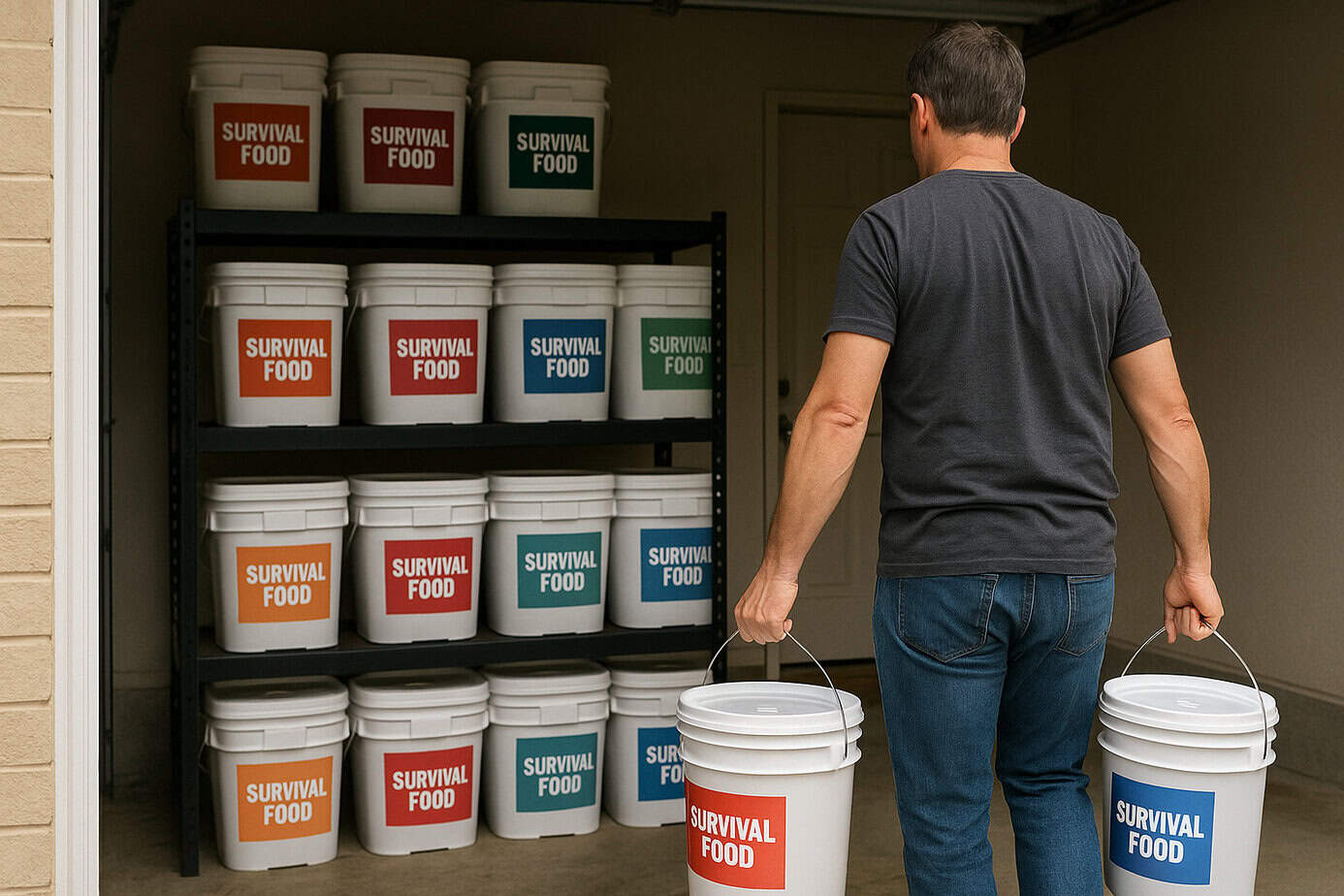
From personal experience I can tell you that most people have no clue how to buy survival food that actually holds up. They see a big, shiny bucket with “25-Year Shelf Life!” slapped on it and think they’re set for the apocalypse.
But if you’ve ever cracked one open after a couple years in a hot garage, you already know how that story ends: stale, rancid, and barely edible. The truth is, most “emergency food” on the market is made to sell fast, not last long.
Why Most Folks Get It Wrong When Figuring Out How to Buy Survival Food
The prepping world’s full of marketing fluff. You’ll see freeze-dried meals that look gourmet in the photos, but the reality? Half of them are overloaded with sodium, low on protein, and taste like wet cardboard. Sure, they might keep you alive, but survival isn’t just about existing. It’s about keeping your strength, your energy, and your sanity when things go sideways.
Most folks also buy wrong because they don’t understand the three enemies of food storage: heat, moisture, and oxygen. According to the USDA, even shelf-stable foods have strict limits when it comes to heat and humidity exposure. Those fancy plastic tubs aren’t magic shields, if they’re sitting in a humid basement or a hot shed, that “25-year” claim drops fast to maybe 5 or 6. And if the packaging isn’t truly airtight, oxidation will kill your food’s lifespan long before a crisis even starts.
Then there’s the calorie con. Companies love throwing big numbers on the label, “2,000 calories a day!”, but take a closer look. You’re often getting empty carbs, sugar-heavy drink mixes, or soups that won’t fuel a day’s worth of work. Real preppers know better: it’s about nutrient density, not just calories. You want fat, protein, and fiber, not just instant potato flakes.
And here’s the kicker: too many beginners buy survival food like they’re shopping for camping trips. That’s fine for a weekend outing, but when the grid’s down and you’re rationing propane, you’ll want food that cooks fast, wastes nothing, and gives you real staying power. Long cook times mean wasted fuel. Bulky meals mean wasted space. It’s not just about what’s in the bag, it’s about what it costs you to prepare it when every calorie and ounce of water matters.
So yeah, figuring out how to buy survival food isn’t about brand loyalty or flashy packaging. It’s about knowing what’s real, what’s hype, and what’ll still feed you when everyone else is staring at empty shelves. If you don’t know the difference yet, you’re about to.
Understanding What “Long-Term” Really Means When You’re Buying Survival Food
A lot of folks toss around the term “long-term food storage” like it’s some magical guarantee. The problem? Most people don’t actually know what that means. When you’re figuring out how to buy survival food, “long-term” doesn’t come from what’s printed on the label, it comes from how you store it, what it’s made of, and how it’s sealed.
See, there’s a big difference between food that can last 25 years and food that will. Freeze-dried meals are the gold standard for a reason: the process removes nearly all moisture, which is what bacteria and mold thrive on. Properly packed in Mylar bags with oxygen absorbers and sealed inside a food-grade bucket, those can truly push two decades. But toss those same bags in your attic where it’s 110°F in July, and you’re lucky if they make it ten.
On the flip side, dehydrated foods, beans, grains, rice, pasta, are cheaper and easier to store, but they’re not quite as forgiving. They hold a bit more moisture and break down faster if your humidity or temperature fluctuates. Still, they’re a core piece of any layered food plan because you can buy them cheap, rotate often, and build bulk calories fast.
The Utah State University’s extension program outlines exactly how temperature, oxygen, and packaging impact true long-term storage.
Now, a lot of survival food companies brag about “nitrogen flushing.” Sounds fancy, right? All it really means is they’ve replaced oxygen in the packaging with nitrogen gas to slow spoilage. It helps, but only if the seal holds. One pinhole, one broken seam, and oxygen sneaks back in. That’s why thick Mylar and a secondary container (like a bucket or ammo can) matter more than the gas itself.
And don’t ignore the fat factor. Fats and oils are the first thing to go rancid in any food stockpile. That means those creamy pasta dishes or cheese sauces are your weak link. Even freeze-dried versions will degrade faster because fats oxidize over time. The trick? Store your fats separately, things like coconut oil, ghee, and peanut butter powder and rotate them every year or two.
Here’s the real kicker though: shelf life is a moving target. You control it. A bucket in a cool basement might last 20 years; the same one in your garage could spoil in five. So, when you’re thinking about how to buy survival food, you’re really buying time, and how much time you actually get depends on where you store it, not what the label says.

How to Buy Survival Food That Actually Tastes Good and Keeps You Alive
Here’s the hard truth: most so-called “emergency meals” taste like regret. Sure, they’ll technically fill your stomach, but when you’re eating that same chalky stroganoff three nights in a row, morale tanks fast. And that’s dangerous because survival isn’t just physical. It’s mental. The right food keeps you sharp. The wrong food makes you careless.
When you’re figuring out how to buy survival food, you’ve got to think past calories and shelf life. Ask yourself one question: Can I actually eat this for a month without hating life? That’s not a joke, food fatigue is real. If every meal tastes identical, you’ll start skipping them, and that’s a fast path to weakness and mistakes.
Here’s where most preppers mess up, they chase numbers on a label instead of actual nutrition. The human body runs on three things: protein, fat, and micronutrients. As Harvard’s nutrition research confirms, protein and healthy fats are what sustain muscle, energy, and long-term function. But too many survival kits are 80% carbs, 15% sugar, and maybe a sprinkle of vitamins if you’re lucky. You need protein for muscle repair, fats for sustained energy, and salt for electrolyte balance. Cut any of those, and you’re setting yourself up for a crash.
You don’t need fancy “tactical” meals to get it right. A bag of freeze-dried chicken, some powdered eggs, and rice or pasta can do better than a whole tub of overpriced instant stew. Add spices, hot sauce, or a few packets of bouillon to boost morale, flavor is as critical as function. You’d be amazed how much a little taste variety keeps your head straight when days start blending together.
Now, here’s something most beginners don’t realize: comfort foods are survival foods too. A jar of instant coffee, some chocolate, or a pack of instant mashed potatoes can turn a bad day into something bearable. Those little boosts matter. They remind you that life’s still worth fighting for.
If you’re stocking up, build a mix: hearty meals for fuel, high-protein options for strength, and a few morale boosters for sanity. Don’t just buy what lasts, buy what you can live on. When the time comes, your future self will thank you for it.
The Smart Prepper’s Checklist: How to Buy Survival Food for Short-, Mid-, and Long-Term Use
Most people panic-buy in bulk and call it a day. That’s not prepping, that’s wishful thinking. Real preppers know that how to buy survival food isn’t about hoarding; it’s about layering. You build it in stages so no matter what hits, a power outage, job loss, or full-blown collapse, you’re covered for every timeline.
Let’s break it down into three parts: short-term, mid-term, and long-term. Each layer has a purpose. Each one buys you time.
Short-Term (0–30 Days): The Eat-What-You-Use Zone
This is your first line of defense. Think pantry food, shelf-stable, familiar, and easy to rotate.
We’re talking canned meats (Spam, tuna, chicken), rice, pasta, instant potatoes, soups, and peanut butter. You can eat this stuff daily, and that’s the point, rotation keeps it fresh.
Rule of thumb: store what you eat, eat what you store. Rotate cans every six months. Buy extra each grocery trip and stash it in bins labeled by date. When a storm hits or the grid flickers, this is what you’ll actually grab first.
Mid-Term (1–12 Months): The Bridge Supplies
Now you’re building bulk. This is where affordability meets resilience. Focus on staples that can last a year or two with minimal upkeep:
- Dry beans, lentils, and grains (stored in Mylar with oxygen absorbers)
- Dehydrated veggies (for soups, stews, and calories that stretch)
- Powdered milk and eggs (protein boosters)
- Instant oats, flour, and sugar (comfort plus calories)
This layer is ideal for inflation-proofing your diet. Even if nothing goes wrong, you’re protected against price spikes. Keep this stash in a cool, dark space, a closet, under-bed containers, or basement shelves if you’re lucky enough to have them.
The Department of Homeland Security encourages stocking familiar foods, items your family already eats and can easily rotate
Long-Term (1–25 Years): The Endurance Stockpile
Here’s where the big guns come out, freeze-dried meals and sealed bulk goods. This is your fallback if everything else fails. You’re buying time in sealed form.
Trusted U.S. brands like Nutrient Survival, Augason Farms, Mountain House, Valley Food Storage, and ReadyWise have proven themselves. Each offers full meal kits and individual ingredients you can actually cook with.
Pro tip: diversify. Don’t dump all your trust in one brand. Buy small quantities from a few, cook-test them, and note what your family actually enjoys. Nothing’s worse than discovering your “25-year food supply” tastes like salty drywall when you finally open it.
Top 5 Survival Food Brands That Actually Deliver
Nutrient Survival: Military-Grade Nutrition, Built for Performance
Try the Nutrient Survival MRE Southwestern Medley a complete, nutrient-dense meal loaded with high protein and omega-rich calories. It’s built for tactical endurance and has one of the cleanest ingredient lists you’ll find.
Augason Farms: Reliable Staples for Serious Storage
Start simple with the Augason Farms Emergency Food Supply 30-Day Pail. It’s affordable, versatile, and covers all the basics like soups, oatmeal, potatoes, and drink mixes, making it ideal for beginners building bulk.
Mountain House: Field-Tested Freeze-Dried Meals
The Mountain House Classic Bucket is a long-time prepper favorite. The meals cook fast, taste decent, and require minimal water. Perfect for urban preppers or bug-out kits where weight and convenience matter.
Valley Food Storage: Clean Ingredients, Low Sodium, No Junk
Their Valley Food Storage 175-Serving Long-Term Food Kit is ideal for preppers focused on health and longevity. Real ingredients, balanced sodium, and consistent taste, no weird aftertastes or sugar bombs.
ReadyWise: Budget-Friendly, Easy-to-Store Kits
A great starter option is the ReadyWise Emergency Food Supply 120-Serving Bucket. It’s not gourmet, but it’s affordable, easy to stack, and dependable if kept cool and dry. Perfect for building a quick reserve on a tight budget.
A true prepper’s pantry isn’t built overnight. It’s a living system, one that evolves with your needs and your skills. Start small, stay organized, and make sure your “emergency stash” isn’t just collecting dust. Test it, taste it, trust it.
Urban vs. Rural Prepping: How to Buy Survival Food Based on Where You Live
Here’s the deal, where you live decides how you prep. A rural homesteader in Montana and an apartment dweller in Dallas might both be stocking up, but they’re fighting two very different battles. If you want to master how to buy survival food, you have to plan for your terrain, not someone else’s YouTube setup.
Urban Preppers: Making Every Inch Count
City living doesn’t mean you can’t store serious calories, it just means you’ve got to be smarter about it. You’re working with limited space, fluctuating temperatures, and sometimes shared walls. That means compact, high-calorie, low-prep food wins every time.
If you’re in an apartment, focus on dense, low-bulk options: freeze-dried meals, vacuum-sealed grains, and canned meats that can handle inconsistent temps. Store vertically, closets, under beds, behind furniture and rotate religiously. Every cubic foot counts.
And watch your heat sources. Avoid stashing food near hot water heaters, radiators, or upper cabinets that bake under the sun. If your AC goes out for a week in July, that storage closet can hit 95°F easy, and there goes your “20-year shelf life.”
For urban folks, stealth matters too. You don’t need neighbors asking why you’ve got a year’s worth of beans and tuna under your bed. Keep it low-key, labeled like normal household supplies. Prepping isn’t paranoia, it’s privacy.
Rural Preppers: Bigger Space, Bigger Risks
Now, rural preppers have the opposite “problem”, lots of room, but new enemies: moisture, pests, and complacency. Just because you’ve got a basement or barn doesn’t mean you can stack buckets and forget about them. Rural humidity, especially in the South and Midwest, can ruin packaging fast.
If you’ve got the space, build a dedicated food room or root cellar. Use shelving to keep supplies off the ground. Label and date everything. Mice and rats love survival food, double-seal grains and dry goods in Mylar before they go into plastic bins or buckets.
Rural preppers can also lean heavier on bulk staples like wheat berries, beans, and oats. These are cost-effective when stored in cool, dry places and easy to replenish if you’ve got local farm access. Bonus points if you grow or raise some of your own food, nothing beats supplementing stored goods with real protein and produce.
One trap rural folks fall into is laziness, “I’ve got a basement full of buckets; I’m good.” Maybe. But when’s the last time you checked those buckets? Seals fail. Temps fluctuate. Rodents chew through plastic. Long-term doesn’t mean set-and-forget, it means inspect and maintain.
Bridging the Two Worlds
At the end of the day, urban or rural, the same rule applies: you can’t just buy food and hope it lasts. You have to build a system. Whether that’s a closet rotation in the city or a dedicated bunker in the woods, your setup is only as good as your discipline. FEMA’s emergency food guide echoes the same principle, store what lasts, rotate what you eat, and rely on proven methods.
How to Buy Survival Food Without Wasting Money on Junk
Let’s not sugarcoat it, this market’s full of garbage. You can waste a small fortune “prepping” if you don’t know what you’re looking at. Every week, some company slaps a “patriot” label on cheap soup mix, tosses it in a bucket, and calls it “25 years of peace of mind.” Yeah, right. What you’re really buying is starch, salt, and false comfort.
If you’re serious about how to buy survival food, start by ignoring the buzzwords. “Tactical,” “patriot,” “military-grade,” “survival-approved”, they mean nothing. What matters is the ingredients list and calorie breakdown. If the first three ingredients are “rice, sugar, corn syrup solids,” you’re not buying survival food; you’re buying a diabetic coma in a pouch.
Another trap? Low-calorie kits that look like a deal until you realize you’d starve on them. Some brands count drink mixes or powder calories just to inflate the numbers. You’ll see “2,000 calories per day!” in bold, but when you actually divide the servings, it’s closer to 1,200. Always do the math: divide total calories by total days. If it’s under 2,000, that’s not survival, that’s slow starvation.
Then there’s the junk filler game, pancakes, sugar drinks, and empty carbs. Sure, they bulk up a kit, but they don’t give you what your body needs. You need fat and protein. Real survival food should keep you working, hauling water, chopping wood, staying alert, not crashing by noon because all you had was powdered oatmeal and sweet tea mix.
And let’s talk about overpriced “premium” brands. Some of these companies sell repackaged bulk goods from the same factories that supply grocery chains, but charge three times as much because they threw a flag on the label. You want to know how to buy survival food right? Do your own math. Check serving sizes, calorie density, sodium content, and cost per meal. Most of the time, you can build a better, cheaper, healthier setup yourself with bulk items from Costco, Walmart, or a local farm supply store.
Don’t get me wrong, not all branded kits are scams. Some, like Nutrient Survival or Mountain House, actually hold their weight in quality. But plenty of others sell fantasy. They’re banking on panic, not performance. And when things go sideways, that shiny bucket won’t save you, your judgment will.
Bottom line? Spend money where it matters: quality packaging, diverse nutrition, and proven brands. Don’t pay extra for logos or slogans. Every dollar you waste on junk food is a dollar you don’t have for water filters, ammo, or medicine, the things that’ll actually keep you alive.
Hidden Gems: How to Buy Survival Food from Regular Grocery Stores
Here’s a truth most survival companies don’t want you to hear: you can build a better emergency pantry at your local Walmart than you can from half the “tactical” suppliers online. You don’t need to mortgage your house for branded buckets, you just need to know what lasts, what’s versatile, and how to store it right. That’s the real secret to how to buy survival food that works.
Start with the forgotten heroes of the grocery aisle, the foods that stay good for years if you treat them right.
Canned meats: Tuna, chicken, Spam, and roast beef are cheap, protein-dense, and ready to eat cold if you have to.
Dry staples: Rice, beans, lentils, oats, and pasta, they’re the backbone of survival nutrition. Stored in Mylar with oxygen absorbers, they’ll last a decade easy.
Shelf-stable fats: Peanut butter, coconut oil, ghee, and shortening. These are calorie powerhouses and a must for real energy.
Canned fruits and veggies: Not just filler, they keep your vitamin intake steady and morale up when fresh food’s long gone.
Now here’s where grocery shopping beats the pre-made kits: rotation. You’re already eating this stuff. You can test it, cook with it, and replace it without wasting a dime. Every time you hit the store, grab one or two extra items from your prepper list. Over a few months, you’ll have a serious backup supply without blowing your budget or dealing with marketing hype.
And don’t sleep on spices, salt, and flavor. When the world gets small and every meal starts to taste the same, those little bottles of seasoning are sanity-savers. Salt isn’t just for flavor, it’s a preservative and a barter item. If you’ve ever eaten plain rice for three days straight, you know what I’m talking about.
You can also find hidden survival gear right there in the grocery aisles, things like instant coffee, powdered drink mixes, honey, and baking supplies. Honey never spoils. Coffee keeps spirits up. A pack of drink mix can make bad water bearable. Every item you grab should have more than one use, that’s real prepper logic.
If you’re storing all this in an apartment, use stackable bins or 5-gallon buckets with Gamma Seal lids. Label everything with a date and keep it in the coolest, darkest part of your home. Rotate it just like you would your regular groceries. Survival food doesn’t have to look fancy, it just has to be there when you need it.
And here’s the kicker: when you learn how to buy survival food from regular stores, you take the power back. You’re not relying on anyone’s supply chain but your own. You know what you have, where it came from, and how to stretch it. That’s real prepping, quiet, consistent, and on your own terms.

How to Test, Rotate, and Actually Eat Your Survival Food
Here’s the uncomfortable truth: most folks who think they’re ready aren’t. Their “emergency stash” is just a pile of sealed bags they’ve never opened. They don’t know how it tastes, cooks, or feels after three days of eating it. That’s not preparedness, that’s a gamble. And if you’re serious about learning how to buy survival food, you’d better learn how to live with it too.
Food storage isn’t about buying and forgetting. It’s about building trust with your supply. You should know how every item in your stash behaves, how much water it needs, how long it takes to cook, what spices make it bearable, and how it holds up after months in storage.
The best preppers treat their pantry like a workshop. Once a month, they pull a few items from storage, cook with them, and replace them with fresh stock. That’s rotation, the backbone of real food security. It’s simple: first in, first out. New items go to the back, older ones move forward. That system alone will save you from 90% of “oops, it went bad” moments.
Testing matters just as much. Try different freeze-dried meals from various brands. Compare texture, taste, and energy. Cook them during camping trips or power outages to simulate stress conditions. The last place you want to discover that your “favorite” chili mix turns your stomach is day four of a blackout.
Keep a food log, nothing fancy, just a notebook or phone app listing what you’ve got, when you bought it, and how long it should last. You’ll catch patterns fast: what your family eats, what goes untouched, and what needs adjusting. That kind of awareness turns a stockpile into a system.
And don’t forget the psychological side. Eating your survival food once in a while keeps it familiar. When a real crisis hits, the taste, texture, and cooking process won’t feel foreign. Your body and mind will already know what to expect. That familiarity lowers stress, something most people overlook until it’s too late.
When you understand how to use your food, not just store it, you’re light-years ahead of the average prepper. You’re training for reality, not fantasy.
Final Prepper’s Verdict: How to Buy Survival Food That’ll Still Be Good 20 Years from Now
If you’ve made it this far, you already know, figuring out how to buy survival food isn’t about chasing expiration dates or brand promises. It’s about understanding the game, mastering the environment, and staying consistent long after everyone else gets lazy.
The preppers who last are the ones who treat food like a system, not a stash. They know what’s in their bins, they’ve cooked it, rotated it, and replaced it. They don’t buy hype; they buy reliability. When a slick commercial says “25 years of security,” they don’t hear peace of mind, they hear a challenge: We’ll see.
Here’s the truth most folks never admit, food storage isn’t sexy. It’s repetitive, it takes space, and it demands patience. But the moment you hear the wind pick up outside, or the power cuts off, and you know you’ve got weeks of solid food ready to go… that’s real peace. That’s not panic. That’s control.
The trick to buying food that truly lasts decades isn’t a secret. It’s a formula:
- Cool, dry, dark storage. Always. Temperature swings are silent killers.
- Quality packaging. Mylar bags, oxygen absorbers, sealed buckets.
- High-fat and high-protein balance. Fuel for real work, not just calories.
- First in, first out. Always moving, never stagnant.
- Testing and trust. Eat it. Cook it. Know it.
If you follow those principles, it doesn’t matter whether you’re living in a studio apartment or a cabin in the Rockies. You’ll have food that lasts, because you made it last.
And here’s the last piece people forget: prepping isn’t fear-based. It’s about independence. Every can you stack, every bag you seal, every meal you test, that’s one less thing you owe to anyone else. It’s your insurance policy against chaos.
So, when someone asks you why you’re spending weekends sealing rice and labeling buckets, you can tell them the truth:
Because when everything goes quiet, you’ll still eat.
🪶About the Author
Bob Rodgers is an lifelong outdoorsman, herbalist and seasoned prepper with over 20 years of real-world survival experience. As the founder of PreppersWill.com, he shares practical advice on self-reliance, off-grid living, and disaster preparedness, no hype, just hard-earned lessons from decades of hands-on prepping.
Resources worth checking out:
The Best Long Shelf Life Foods in 2025 (Freeze-Dried, Storage Secrets, and Real Prepper Math)
How to grow food when you lack gardening space
The Best Long Shelf Life Foods in 2025 (Staples That Outlive You)
How to become self-sufficient on 1-acre
