The morning of December 24, 1971, dawned bright in Lima, but beneath the surface tension hummed a quiet anxiety. Juliane Koepcke and her mother, Maria, were on edge. Juliane had refused to miss her graduation ceremony on December 23, she insisted on walking across that stage in Lima and they delayed their return to the Amazon for just one more day.
Her mother, naturally, had preferred they fly earlier, but all flights were booked except one: LANSA Flight 508.
Her father, Hans-Wilhelm, had warned strongly against using LANSA. The airline had earned a reputation for risky practices, multiple crashes, and thin safety margins. But holiday demand left no choice: the LANSA Electra was one of the few remaining seats.
At Lima’s Jorge Chávez Airport, Juliane and her mother boarded Flight 508 just before midday, bound for Iquitos with a scheduled stop in Pucallpa.
The Electra climbed, with its engines humming against the background of a Peruvian summer. Initially, all seemed normal: flight attendants attended to routine service; passengers settled in with holiday expectations. But as the aircraft penetrated deeper into Amazon airspace, the sky darkened.
Cloud buildups loomed in the distance towering cumulonimbus cells, unpredictable updrafts, and volatile turbulence. Weather forecasts in that region were rudimentary. Pilot reports were often the only data, and radar coverage was limited across the Andes-to-jungle corridor.
Flight crew now faced a critical decision: bypass or penetrate the storm cell. The pressure was real, Christmas demand, connections, schedules. In many retellings, the choice to continue pressing into the cumulonimbus system has been judged as hubris or desperation. Nevertheless, the Electra pushed on.
Roughly twenty minutes into the storm zone, at about 21,000 feet, the aircraft encountered violent turbulence. Structural loads mounted; the electromechanical systems groaned under shifting air masses. The worst moment arrived when lightning struck, reports suggest it hit the right wing or fuel tank, triggering a fire that weakened the wing structure.
With flaming damage and aeroelastic stress, the right wing detached. Simultaneously, portions of the left wing and fuselage fractured. In midair, the plane disintegrated. Passengers and crew were cast into fragments. The catastrophic failure occurred over a remote swath of forest, tens of kilometers from habitation.
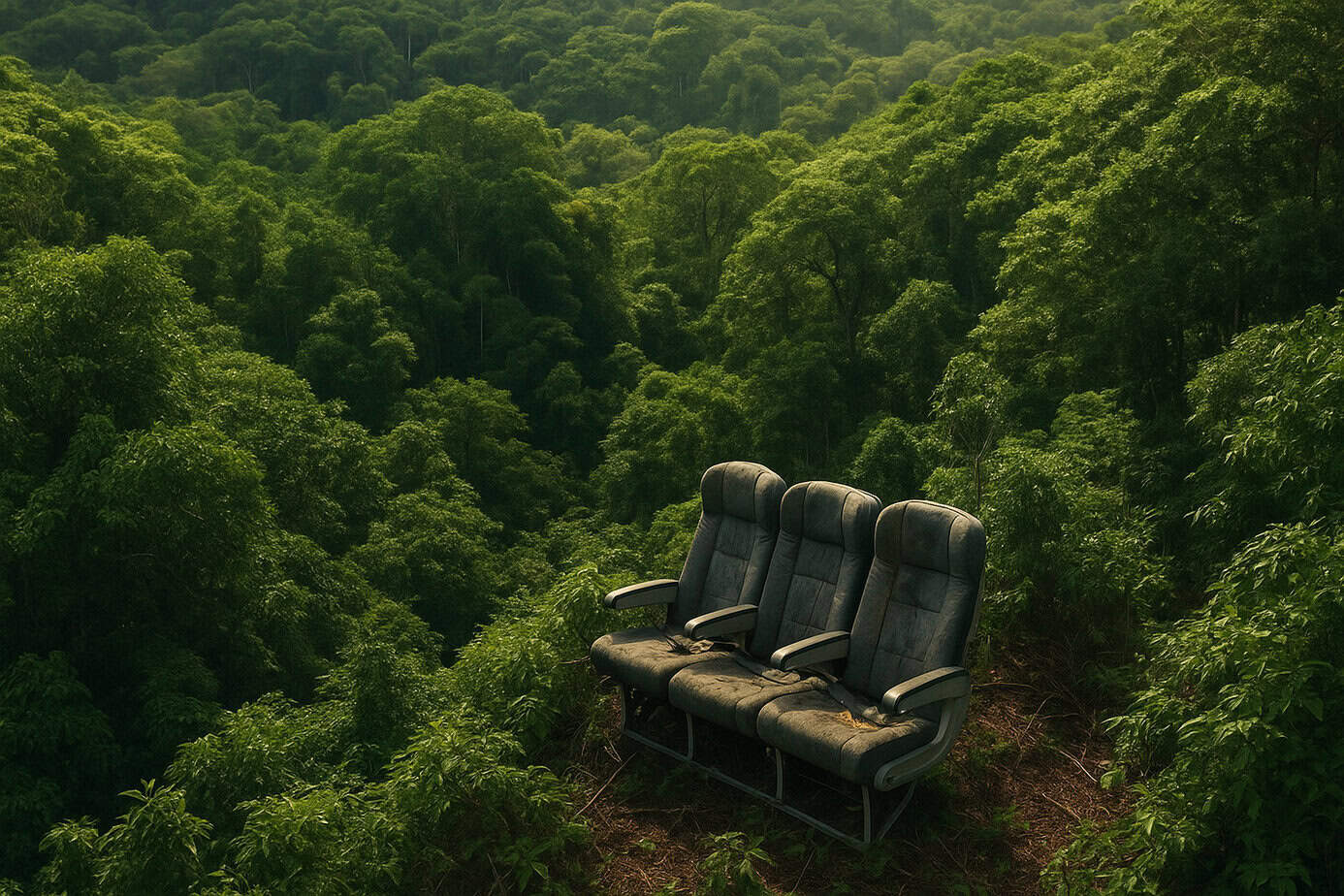
Juliane later recounted that at the moment of separation, she was still buckled in her row of seats. The sudden decompression, the twisting stress, the roar of air, all merged into a violent breakup. She was flung downward, the seat acting as a crude “pod” as she plunged through the sky.
It was in those fear-warped seconds that she glimpsed the green below, “like broccoli,” she would later say, and lost consciousness.
The fall was from about 10,000 feet (approx. 3,000 meters), a height from which survival seems mathematically impossible. Yet the seat, her body position, forest canopy, and possibly updrafts all intervened in some unknowable combination to soften the blow.
When she awoke, she was alone among the wreckage, in the depths of the Amazon jungle, injured but very much alive.
Christmas morning on the forest floor: waking hurt, half-blind, and alone

Juliane awoke in fragments. Her first impressions came like shards of memory: a dense, humid smell of earth and leaves, the high-pitched drone of insects, and a brightness above her that was not sky but a woven ceiling of green. She blinked, disoriented. She was lying at an awkward angle, still belted into a row of seats that had crashed into the ground with her.
Pain flooded back quickly. Her collarbone throbbed, broken clean through. A deep cut along her arm was sticky with blood. Her right eye was swollen nearly shut, leaving her half-blind, and her head rang with the dull fog of concussion. Every movement sent new waves of nausea through her body. She tried to shift her weight, but one knee refused to bend, and each breath felt like it rattled her bones.
Reaching instinctively for her glasses, she found nothing. They were gone, torn away during the fall. Without them, the world blurred cruelly, leaving her vulnerable in a forest where sharp eyes often meant survival.
The silence struck her next. No voices, no cries, no engines, only the living rhythm of the Amazon: the buzz of mosquitoes, the trill of birds, the crack of branches in the distance. She called out, her voice ragged. “Mama!” she shouted into the trees. No answer came back. She tried again, and again, but the forest swallowed every sound.
Around her lay wreckage: twisted aluminum, scraps of luggage, torn clothing. But there were no other people, no movement, no sign of life. Slowly, a terrible certainty crept in. She was alone.
That morning, Juliane understood the unthinkable. To endure would demand everything she had ever learned from her parents, and everything she could find within herself. From that moment, the Juliane Koepcke survival story truly began.
Reading the jungle like home: what her scientist parents had already taught her
Juliane’s parents were not ordinary academics. Both were zoologists who had built their lives around the Amazon, founding a research station called Panguana deep in the rainforest. From childhood, Juliane had walked its trails, slept under its canopy, and listened carefully as her parents explained which plants healed, which ones poisoned, and how the veins of creeks always led to rivers, and rivers to people. Those lessons, taught almost casually during family life, became her compass the moment she realized she was alone.
Her injuries were serious, but not instantly fatal. She knew she couldn’t sit still and wait for a miracle. The jungle demanded movement, careful, deliberate steps guided by memory and instinct. The first priority was water. Dehydration could kill faster than hunger, and in the Amazon, streams always offered both direction and life. Juliane remembered her father’s words: “If you find running water, follow it. It will take you to civilization.”
So, she began to listen. Through the wall of insects and birdsong, she strained her ears for the sound of trickling water. When she finally stumbled across a shallow creek, she waded directly into it rather than trying to force a path through the dense foliage. Walking in the water reduced her chance of snakebite, and the open path helped her conserve strength.
Food was another matter. The forest was full of edible plants, but it was also full of deadly lookalikes. Here, her caution saved her life. With nothing but a bag of candy scavenged from the crash, she resisted the temptation to experiment with wild fruits or leaves. Hunger gnawed at her, but she knew a single mistake could end everything.
This balance of knowledge, instinct, and restraint became the heartbeat of the Juliane Koepcke survival story, shaping each decision she made in those crucial first days.
Follow the water: creeks to rivers, mid-stream choices, and piranha logic

Juliane pressed on, her steps unsteady but purposeful, the sound of water guiding her through the maze of green. The narrow creek she had found became her lifeline. She remembered her father’s lessons clearly: “Waterways are highways in the forest. People live by rivers, and rivers always lead somewhere.” Those words carried her forward.
Wading in the creek served more than one purpose. The cool water soothed her aching body, while the stream itself carved a natural path through otherwise impenetrable jungle. She knew that dense undergrowth could exhaust her in minutes, and the mud could easily hide venomous snakes. By staying midstream, she cut down her risks.
But the water carried its own dangers. Piranhas, caimans, and parasites lurked in its depths. Still, Juliane recalled another piece of practical wisdom: piranhas rarely attack if you’re moving in shallow, flowing water. That knowledge gave her the courage to keep walking, her bare feet pressing into gravel and mud as she shuffled forward with each slow, painful step.
Nights were the hardest. With no shelter but the canopy above, she lay on the damp ground or perched awkwardly against tree trunks, listening to the rainforest come alive in the dark. The buzz of insects became a torment, mosquitoes swarmed her mercilessly, and without repellent or protection, she was left to swat and endure.
Every hour demanded persistence. Hunger sharpened her awareness, but the fear of poisonous plants and venomous creatures kept her cautious. She drank from the stream, walked in its shallow bed, and told herself over and over that following the water was her only chance.
This strategy, simple, logical, and rooted in lessons from her parents, became one of the defining threads in the Juliane Koepcke survival story, proof that knowledge can make the difference between despair and direction.
What she ate (and didn’t): a small stash of sweets, poisonous plants, and restraint
In survival lore, food often dominates the imagination. But Juliane knew hunger was not the first enemy. She had been taught that a healthy person can endure weeks without solid food, while dehydration or infection can kill in days. That lesson gave her clarity when her stomach began to clench with emptiness.
Among the wreckage, she had found almost nothing, only a small bag of candies. For the first several days, those few sweets were her only nourishment. She rationed them carefully, sucking on one when she needed strength and hiding the rest away. It wasn’t much, but it kept her moving.
The forest itself was deceptive. Vines dripped with fruit, berries glistened on low branches, and countless plants seemed edible. But Juliane had grown up hearing her parents warn that most of what looked tempting in the jungle could be fatal. A single bite of the wrong fruit or leaf could bring violent illness or worse. She resisted the urge to experiment, even as hunger gnawed at her. That restraint, the refusal to gamble with unknown plants, was one of the most vital decisions she made.
At times, she came across signs of other food sources: birds darting through the canopy, insects buzzing in swarms, even the occasional frog startled into motion. But with her injuries and exhaustion, hunting or trapping was impossible. Juliane understood her limits, and that wisdom likely saved her life.
So, she pressed on, conserving energy, sipping water, and accepting hunger as part of her reality. For a teenager alone in the Amazon, this was not just endurance but discipline, the kind of discipline that marked the Juliane Koepcke survival story as more than luck. Knowledge and restraint carried her farther than instinct ever could.
Heat, rain, insects, infection: managing injuries while the jungle tests you
The Amazon is relentless, and Juliane felt its full weight from the very first day. The heat was punishing, the air so thick with humidity it felt like breathing through a wet cloth. Sweat poured constantly, leaving her skin raw and sticky. By afternoon, sudden downpours turned the world into a flood, soaking her clothes, chilling her body, and reminding her that the rainforest gave no comfort, only challenges.
Her injuries complicated everything. The broken collarbone left her arm nearly useless, hanging awkwardly against her chest. The deep gash on her arm festered quickly in the damp heat, attracting swarms of flies. At night, she could feel insects crawling over her wounds, and by the second day, maggots were writhing inside the cut. It was horrifying, but in a strange twist of biology, they may have saved her from deadly infection by consuming the decaying tissue. Still, the pain was nearly unbearable.
Mosquitoes were another torment. With no protection, Juliane was covered in bites that swelled and itched until her skin was raw. She knew malaria and other diseases were a real risk, but there was no choice but to endure. Ants, gnats, and wasps all left their mark, making rest nearly impossible.
Her swollen right eye left her vision blurred, and each step with her injured knee sent sharp pain up her leg. Yet she forced herself forward. She leaned on the lessons her parents had taught her, conserve energy, stay near water, and focus on the next step rather than the entire journey.
These struggles revealed that survival is never one single battle but a thousand small ones. Each day Juliane endured, despite agony and exhaustion, added another chapter to what would become one of the most remarkable accounts of resilience ever told: the Juliane Koepcke survival story.
Signs of others: vultures overhead, wreckage below, and the search for her mother
As Juliane pushed deeper into the forest, she began to notice traces of the catastrophe that had scattered across miles of jungle. One of the most haunting sights came from above. Vultures circled in the sky, riding thermals in lazy loops. She knew what they meant. Carrion drew them, and carrion could only mean one thing: bodies.
Driven by both fear and hope, she followed their path, scanning the forest floor for signs of life. Instead, she came upon twisted remnants of the aircraft: a section of fuselage here, an engine lodged into the mud there. The wreckage looked alien, shards of humanity scattered in a place where it didn’t belong. Among the debris, she found victims of the crash. Some were still strapped into their seats, their lives ended instantly when the plane had torn apart.
Juliane searched desperately for her mother. In her fog of pain and exhaustion, she still clung to the belief that perhaps Maria had survived somewhere nearby, waiting to be found. But everywhere she looked, the jungle gave her only silence and the grim evidence that few had been as fortunate as she was.
The sight of the dead forced Juliane into a terrible realization. Rescue, if it came at all, would not arrive soon. The crash site was fragmented across the forest, hidden under thick canopy. Aircraft searching overhead might never spot it. She could not rely on being discovered.
That sobering truth strengthened her resolve. She turned away from the wreckage, more determined than ever to keep following the waterways that promised a path to safety. Each haunting discovery hardened her spirit, adding weight to the extraordinary journey that would forever define her survival story.
A hut in the rain: gasoline, maggots, and pain with a purpose
Days blurred together in a haze of exhaustion, hunger, and pain. Juliane’s broken collarbone still throbbed with every movement, and the cut on her arm had grown unbearable. Maggots writhed inside the wound, feeding on dead flesh. Each glance at it filled her with dread, but she lacked the strength or tools to do anything about it. Still, she pressed forward along the water, repeating her father’s instructions like a mantra: follow the streams, find the rivers, find people.
Then, after what felt like an eternity of walking, she saw something that didn’t belong to the jungle, a small hut tucked against the riverbank. At first, she thought it was a mirage, a cruel trick of her mind. But as she drew closer, she realized it was real: a simple wooden shack built by lumbermen or fishermen.
Inside, the hut was sparse, but it held something that would change everything, a can of gasoline. To most, it was fuel. To Juliane, it was medicine. She remembered a lesson she had once heard: gasoline can kill maggots. Trembling with both fear and determination, she poured the liquid directly into her wound. The pain was beyond words, searing through her arm like fire. Yet when it subsided, she saw that the maggots were dead, floating in the foul-smelling liquid that trickled from her cut.
That moment marked a turning point. For the first time since the crash, Juliane was no longer only enduring, she was actively fighting back. The jungle had nearly broken her, but this improvised act of survival proved she could still shape her fate.
It was another astonishing chapter in the Juliane Koepcke survival story, a reminder that survival sometimes means embracing pain as the price of life.

A ghost on the river: the men who found her and the canoe out to safety
Juliane lingered at the hut, her strength nearly gone. Days of hunger, nights of torment from insects, and the weight of her injuries had pushed her to the brink. She could barely stand, her body thin and trembling, when she heard something that jolted her back to life: voices.
At first, she thought it was a dream, another cruel trick of exhaustion. But then she caught sight of three men approaching along the riverbank. They were local lumber workers, rough and weathered from life in the rainforest. To them, the sight of a pale, wounded teenager emerging from the jungle was almost supernatural. One later said she looked like a spirit walking out of the trees, gaunt, filthy, barely human.
Juliane mustered the last of her energy and spoke in Spanish, explaining who she was and what had happened. The men listened, stunned, but they believed her. They carried her to their canoe, laying her gently inside, and pushed off into the river. For Juliane, the sound of the paddles striking water was the sweetest sound she had ever heard.
The men treated her with kindness, cleaning her wounds as best they could and giving her food and water. Over the next day, they navigated downstream toward civilization, toward a small settlement where she could finally find medical help. When she arrived, doctors were astonished. No one could believe that this thin, injured girl had survived eleven days alone in the Amazon after falling from the sky.
Her ordeal was over, but the world was just beginning to learn about her. News spread quickly, and what had begun as a private struggle in the rainforest soon became one of the most astonishing survival sagas ever recorded, the Juliane Koepcke survival story.
After the rescue: returning to the crash site, grief, and choosing a life in science
Juliane’s return to safety was bittersweet. While her survival stunned the world, it came at the cost of unimaginable loss. Of the ninety-two people aboard LANSA Flight 508, she alone had lived. Her mother, Maria, had perished in the crash, her body discovered days later. For Juliane, the relief of survival was tangled with grief too heavy for words.
Doctors treated her injuries, marveling that she had endured not only the fall but also eleven days of exposure in one of the harshest ecosystems on earth. In the weeks that followed, investigators asked her to guide them back into the jungle. With a small team, she retraced part of her path to the fragmented wreckage, pointing out sites where bodies still remained. That grim journey forced her to confront the reality of what she had survived, and what she had lost.
The media clamored for her story. To many, she became the “girl who fell from the sky,” a living miracle. But Juliane herself resisted sensationalism. She spoke plainly, without drama, emphasizing not luck alone but the years of experience that gave her the skills to endure. Her survival was extraordinary, yes, but it was also the result of calm thinking and the lessons her parents had instilled in her.
In time, Juliane returned to Germany, pursued studies in biology, and eventually devoted her life to the same Amazon rainforest that had nearly claimed her. She became a respected scientist, publishing research on bats and continuing the legacy her parents had begun in Peru.
This choice was more than career, it was a reconciliation. The jungle had been both her trial and her teacher, and dedicating her life to its study was her way of honoring both her family and the extraordinary journey that had become known worldwide as the Juliane Koepcke survival story.
Why she lived: seat geometry, canopy, updrafts, and calm thinking under shock
Many have wondered how it was possible. How could a seventeen-year-old girl fall nearly two miles from the sky and survive when ninety-one others did not? Over the years, scientists, investigators, and even Juliane herself have offered explanations, none conclusive on their own, but together they form a plausible picture of why she lived.
The first factor was the seat. Juliane remained strapped into a row of three seats, which may have acted like a crude parachute, catching the air and slowing her descent. The tumbling motion could have further disrupted airflow, reducing the terminal velocity that a free-falling body might have reached.
The second factor was the storm itself. Strong updrafts inside a massive cumulonimbus cloud can be violent enough to hold or lift an aircraft. It’s possible those same updrafts slowed Juliane’s fall just enough before she struck the forest.
Then came the canopy. The Amazon is one of the densest forests on Earth, with multiple layers of branches and foliage. Juliane’s seat likely clipped and snapped through those layers like a ladder, dispersing energy before she hit the ground.
But mechanics only explain part of it. Survival after the impact required a different kind of resilience. Juliane woke with broken bones, a concussion, and various wounds, yet she never surrendered to panic. Even at seventeen, she remembered her father’s instructions about following streams and her mother’s lessons about the dangers of unknown plants. That calm focus under shock may have mattered more than physics.
When all these pieces are considered together, her survival feels less like a miracle and more like the rare alignment of environment, preparation, and willpower. And it’s this combination that continues to fascinate people about the Juliane Koepcke survival story, decades later. If you want to learn more about Juliane and her survival story, I recommend reading her book, available on Amazon. It’s an international best seller and it’s a great read, regardless if you are a survivalist or not.
Other Useful Resources:
Drinking Water Survival Myths You Should Know
How to obtain water from the air
Decontamination Procedures and Sterilization of Water
Knowledge to survive any medical crisis situation during a major disaster