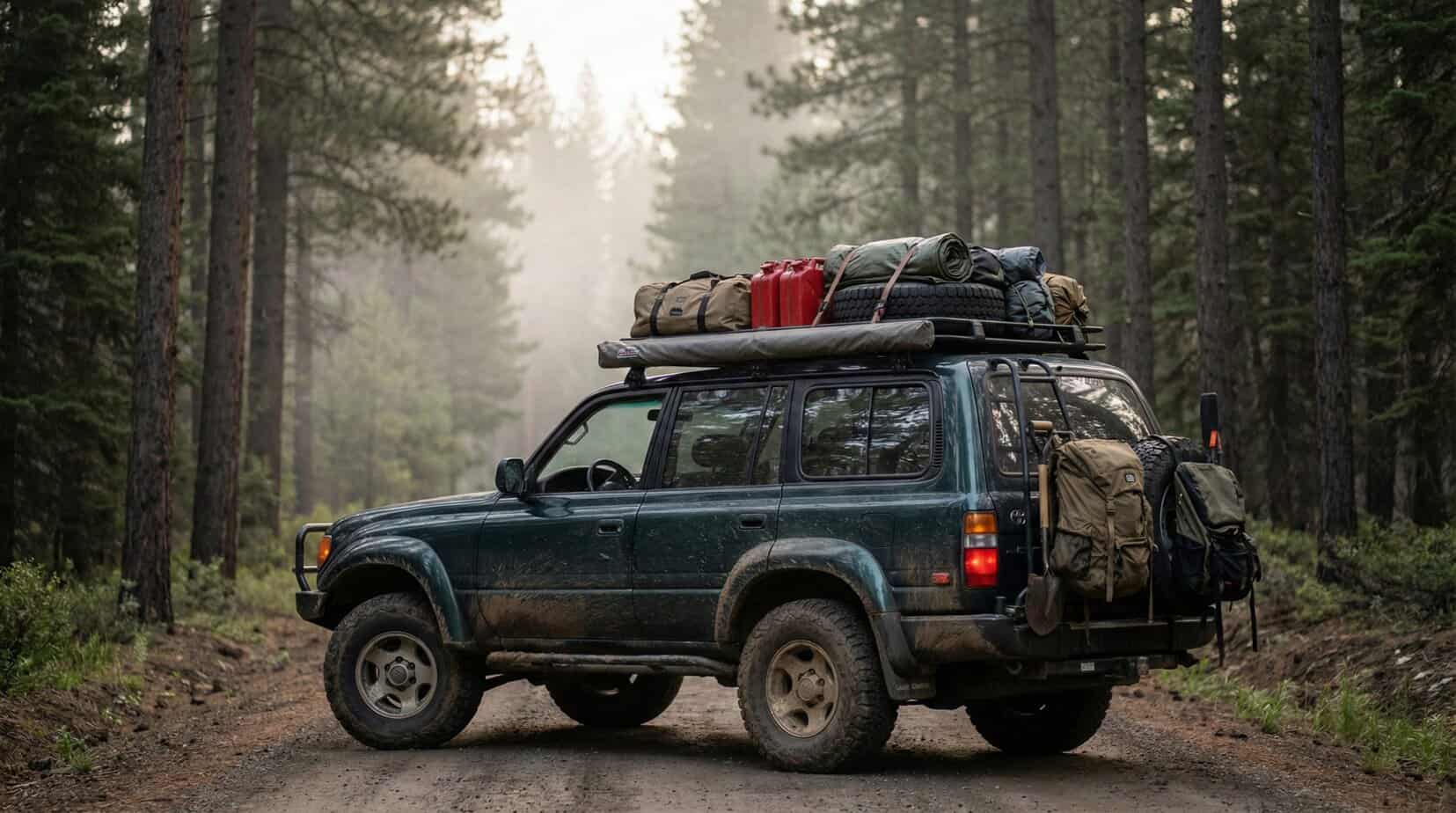
There’s a reason seasoned preppers treat long distance bug out planning with a different level of respect. Covering hundreds of miles isn’t just a longer version of a short evac; it’s a logistical gauntlet where fatigue, fuel, fear, and friction all stack up against you. Distance exposes weaknesses you never noticed when your bug out drills were local and comfortable.
The Hard Truth About Long-Range Bug Outs
If you look at official evacuation behavior during major U.S. disasters, the picture becomes clear fast. Even government emergency planners acknowledge the limits of infrastructure during mass movement. Ready.gov states outright that major evacuations lead to congested routes, fuel shortages, and disrupted services. That’s not fearmongering; that’s federal guidance in plain language.
That’s the world you’re stepping into when you lean on long distance bug out planning to save your skin. You might imagine rolling out early, staying ahead of the chaos, cruising through quiet small towns. Maybe, but more often, you’ll be dealing with half-functioning gas stations, unpredictable crowds, local tensions, and the constant question of how far you can push your group before someone breaks down physically or mentally.
When you stretch a bug out across hundreds of miles, the margin for error shrinks to nothing. A blown hose, a closed road, a town you can’t safely enter, or a storm front rolling in at the wrong time can shut your plan down in a heartbeat. Long-distance movement isn’t romantic. It’s survival under pressure.
Choosing a Destination That Actually Works in Real Life
A lot of folks treat their bug out location like a daydream with a compass bearing. But when you’re dealing with serious miles, long distance bug out planning forces you to get brutally honest about where you’re going and why. A destination isn’t “good” because it’s remote or because someone online said the county has a low population density. A destination is good because it has people you trust, resources you can actually use, terrain you understand, and a level of risk that drops once you arrive, not rises.
One of the biggest mistakes seasoned preppers still make is assuming rural equals safe. Plenty of rural towns in the U.S. already struggle with strained services, tight-knit social circles, and a well-earned suspicion of outsiders. If you show up exhausted, underfed, and towing a family behind you, you’re not blending in. That’s why planning always starts with relationships and if someone on the receiving end wouldn’t recognize your face or your name, the location is not a true bug out spot. It’s just a pin on a map.
And speaking of maps, it’s worth studying real demographic and infrastructure data. The U.S. Census Bureau publishes breakdowns of rural populations, housing density, and service availability. When you combine that info with your route and fuel realities, you start seeing which towns are viable and which are a gamble.
The bottom line: if you can’t clearly explain who’s waiting for you, what’s waiting for you, and why that location offers better odds than where you’re standing now, then your destination is just geography, not safety.
Mapping Your Movement: Long Distance Bug Out Planning That Doesn’t Get You Killed
If there’s one place seasoned preppers cut corners when they shouldn’t, it’s routing. People obsess over gear but treat mapping like a formality. In reality, the map is the mission when you’re working through long distance bug out planning, because hundreds of miles create opportunities for everything to go wrong at scale.
Highways funnel you into predictable traps and backroads can turn into dead-end farming lanes. Towns that look friendly on satellite images can feel very different when tensions are high and everyone’s watching strangers drive by.
That’s why old-school PACE routing still matters. Your Primary route is what you hope to use while your Alternate is what you’ll probably end up using. Contingency is what you use when things start breaking down and your Emergency route is the one that sucks but will keep you alive. When you’re deep into long distance bug out planning, those four layers aren’t theory; they’re the thin line between steady progress and getting boxed in by roadblocks, crowds, or local gatekeepers who don’t want more outsiders rolling through their town.
Preppers who rely too much on GPS usually learn the hard way that digital maps don’t show washed-out bridges, private roads, or real-time local moods. Paper maps and state atlases still earn their keep, especially when folded into a binder with notes on water sources, choke points, fuel stations, and small towns with limited sightlines. A laminated topographic map can tell you where to move when the terrain says “no thanks” to your original plan.
Solid routing isn’t about elegance. It’s about stacking enough proven paths that when one collapses, your group doesn’t collapse with it.

How You’re Really Moving: Vehicles, Bikes, Boots, and Hybrids
Most preppers like to imagine their movement method as a fixed choice: “We’re bugging out in the truck.” But once you start dealing with real mileage and real conditions, long distance bug out planning teaches you that mobility is dynamic. Your primary method might crumble halfway through, and you need backup options that your family can realistically execute. Vehicles give you speed and carrying capacity, but they also make you a rolling billboard announcing “We have supplies.” On long routes, even one disabled car on a narrow road can trap dozens of travelers behind it. That’s why relying solely on four wheels is a gamble.
Motorcycles and bicycles have their place in tight terrain, small towns, and rural choke points. They move fast, thread through blocked routes, and sip fuel. But they also expose you to cold, rain, and unwanted attention. If you stall out in a hostile patch, you’re standing there with all your gear visible. Even the Department of Energy’s emergency fuel disruption reports note how quickly stations fail during large-scale outages, which means your mobility plan must assume fuel scarcity.
When conditions degrade completely, you’re down to boots. That’s where reality hits hard for families. A group that thinks it can suddenly transition from vehicle travel to a 20-mile foot march is lying to itself. Weather, terrain, group fitness, and morale will dictate your pace far more than enthusiasm. Seasoned preppers know that long distance bug out planning must include hybrid movement: vehicle until you can’t, bikes if you have them, and a realistic foot fallback if everything else collapses.
Mobility choices aren’t about preference. They’re about adaptability under pressure, and the miles will punish anyone who pretends otherwise.
Fuel, Food, Water, and Cash: The Stuff That Actually Keeps You Moving
When you stretch a bug out across hundreds of miles, supplies stop being “gear choices” and turn into a throttle on your survival. Fuel burns quicker than you expect, food runs low at the worst possible times, water sources dry up or get contaminated, and cash becomes the only thing that cuts through chaos.
Anyone who’s done real long distance bug out planning knows that your map might say you can clear a state in a day, but your resources will decide whether that’s actually possible.
Fuel is the first choke point. Vehicles bleeding gallons on clogged highways burn through reserves faster than calm backroad cruising. That mismatch catches even experienced preppers off guard. And remember, during large-scale emergencies, gas shortages aren’t hypothetical; they’ve happened repeatedly.
The U.S. Energy Information Administration has documented how vulnerable fuel logistics are during crises, especially when trucking or electrical systems falter.
Food is another silent killer of morale and a long-range evac drains calories fast, especially if you’re bouncing between driving, walking, and hauling gear. Freeze-dried meals work, but they’re water-hungry. High-calorie ration bars are fine for short bursts but start feeling miserable on day three. This is where real long distance bug out planning separates fantasy from reality: you need a mix of calorie-dense foods, quick carbs for stress moments, and something warm for morale when everything feels like it’s unraveling.
Water planning is straightforward in theory and painful in practice. If you misjudge spacing between sources, your group pays for it immediately. That’s why I always keep a backup purifier like the Sawyer Mini tossed in an outer pouch; it weighs nothing and keeps mistakes from turning into emergencies.
Cash ties it all together and when the digital systems stall, cash still gets nods in small towns, fuel stops, and rural shops. You don’t need thousands. You just need enough to get someone’s attention when your day is circling the drain.
Daily Distance and Travel Tempo in Real Long Distance Bug Out Planning
Anyone who thinks they can crank out heroic mileage during a crisis hasn’t tested themselves under load, under stress, and under pressure. Seasoned preppers know that long distance bug out planning isn’t about how far you want to travel; it’s about how far your group can travel without degrading into exhaustion, mistakes, or conflict.
A family carrying gear, juggling kids, and fighting weather isn’t sustaining 20 miles on foot day after day. A vehicle fighting traffic, detours, and questionable fuel supplies isn’t covering 400 miles in one clean push. Reality trims the fat off every expectation.
Your travel tempo is controlled by bottlenecks, not ambition. If you’re in a vehicle, the slow points are fuel availability, choke-point towns, stalled traffic, and breakdown risks. If you’re on bikes, the slowdown comes from terrain, wind, fatigue, and the simple fact that you can’t sprint forever.
On foot, it’s everything: terrain, temperature, loadout, water points, blisters, morale, and daylight. This is where Long Distance Bug Out Planning forces you to map realistic stop points. Without them, your group ends up pushing too hard early and suffering for it later.
Families compound every variable. A kid’s blister might cost you an hour while an elderly parent’s joint pain might force a shorter day. Pets need breaks too. Everyone needs shade, calories, and water at awkward times. And travelers under stress make sloppy decisions. That’s why tempo must stay flexible. Think ranges, not absolutes. Ten to twelve miles on foot is often the real ceiling for multi-day movement. On bikes, maybe 30 to 50 miles if the terrain is kind. Vehicles can chew distance fast but crumble when fuel dries up or major corridors clog.
One trick that keeps groups steady is managing load weight. Small, repetitive discomfort becomes misery by day two. Daily distance is never about how tough you think you are. It’s about how long you can stay functional without burning out the entire group.
Family Factors Nobody Mentions Until It’s Too Late
Every seasoned prepper knows that a solo bug out is one thing, but throw in kids, elderly parents, or pets and the entire equation changes. Families don’t move at tactical speed; they move at the speed of the slowest, most stressed member.
This is exactly where long distance bug out planning goes from tough to unforgiving. It’s not just the miles that grind you down, it’s the constant balancing act between safety, morale, pace, and physical limits. And if you think you can simply “push through,” you’re setting yourself up for failure long before you reach your destination.
Kids, for example, can run hot and cold. They can cover distance when motivated but crash hard without warning. Elderly parents deal with joint pain, slower reflexes, and temperature sensitivity. Pets can panic in crowds or refuse to cross obstacles. These aren’t minor inconveniences; they’re tempo killers, and long distance bug out planning forces you to build margins around them. You plan shorter legs, more frequent rest stops, and backup shelter options in case someone hits a wall halfway between safe points.
Medical needs make things even more complicated. Prescription refills vanish in disasters, and certain fields have documented how quickly chronic conditions escalate when access to care disappears. FEMA’s guidance on preparing medically vulnerable family members highlights just how fragile stability becomes when the grid falters and travel is disrupted.
Then there’s morale. A group that’s dehydrated, hungry, or mentally worn down becomes unpredictable. Kids get scared and adults snap at each other. Someone decides they “just need five minutes,” and suddenly you’re burning daylight. Something as simple as a warm drink can shift the entire group’s mindset.
Staying Off the Radar: Security on Highways, Backroads, and Every Mile Between
Once you start moving over real distance, security becomes a rolling problem, not a one-time concern. Highways funnel you toward other desperate people, and backroads put you into territory where locals notice unfamiliar vehicles instantly.
Anyone who has done serious long distance bug out planning knows you’re never just traveling; you’re being observed, assessed, and sometimes targeted. Rural America may look empty on a map, but folks out there know every truck, every gate, and every stranger who doesn’t belong.
Your biggest advantage isn’t firepower but behavior. Security during long-distance travel is about avoiding patterns. Never stop where everyone else stops. Never advertise your loadout. Never discuss your plans with anyone who isn’t in your group. In fact, predictable behavior gets people hurt far more often than lack of gear. This is where the planning forces you to think like someone trying to not be memorable. Neutral-colored gear, quiet entries and exits from towns, short fuel stops, and keeping your group tight instead of wandering around all help lower your signature.
Roadblocks are another threat that seasoned preppers take seriously. Some are official, some are improvised by locals, and some are set up by people who don’t have anyone’s safety in mind. Your route needs alternatives, your timing needs flexibility, and your group needs discipline. The moment you see a stalled vehicle, a cluster of people on a narrow bend, or anything that forces you to slow down unnaturally, you treat it as a threat until proven otherwise.
Inside small towns, the danger shifts from ambush to scrutiny. Locals often size travelers up before you even exit your vehicle. Politeness matters, but speed matters more. Get what you need, pay, and leave. Don’t linger, don’t share stories, and don’t brag about where you’re headed. Security isn’t about paranoia. It’s about survival through quiet, disciplined movement.
When the miles start stacking up and the grid starts wobbling, navigation and communication stop being conveniences and turn into survival tools. Anyone who’s done real long distance bug out planning knows how fast GPS becomes unreliable when towers go down, batteries get low, or the system lags under overload. Paper maps aren’t nostalgic; they’re essential. And if you don’t know how to read terrain, follow contour lines, or estimate distance by landmarks, you’re gambling with your group’s safety.
Comms are the second pillar. We’re not talking about cinematic radio chatter, we’re talking about simple, disciplined communication inside your own group. Short check-ins. Quiet signals. No unnecessary chatter. Even modest handheld radios become priceless when you’re spread out on foot or navigating a stalled traffic corridor. And during Long Distance Bug Out Planning, redundancy is everything. You carry primary radios, backup radios, spare batteries, and a plan for what happens if everything electronic fails.
Authoritative sources have been warning for years that communication networks are fragile under disaster pressure. The FCC’s disaster impact reports make it clear how often cell sites fail during large-scale crises and how quickly emergency bandwidth gets saturated. If you haven’t reviewed how communication breakdowns actually play out in the real world, the FCC’s outage data page is an eye-opener.
That’s why experienced preppers rely on layered navigation and comms systems: GPS for convenience, offline maps for reliability, paper maps for certainty, and analog compasses because they don’t care whether the grid lives or dies. Same with radios. Start with FRS/GMRS for local chatter, add ham radios for reach, and keep whistle and hand signals for the moments when silence becomes your best friend.
Navigation and comms won’t win the fight for you. But without them, you’ll lose it before you even know you’re in trouble.

Training and Test Runs: Turning a Paper Plan Into Something You Can Survive
A lot of preppers build impressive binders full of maps, gear lists, and contingency notes, but when you ask how many miles they’ve actually covered under load, things get quiet. That gap between theory and execution is where long-range bug outs fail. Long distance bug but planning only becomes real when you take your group out and grind through the miles, the weather, the terrain, and the fatigue. You learn fast what works, what breaks, and what you forgot entirely.
Test runs don’t need to mimic a full-blown crisis, but they should be uncomfortable. Drive your primary and alternate routes. Take the backroads you penciled in and see which ones look good on paper but fall apart in person. Walk a ten-mile stretch with your full pack and note what rubs, what digs, and what feels heavier than it should. If you’re integrating bicycles or motorcycles, do a mixed-mode run and pay attention to how transitions slow you down.
This is the part of the planning where reality slaps you with the small details you overlooked, like how long it takes to reload a car, how quickly snacks disappear, or how morale shifts when your group hits that first unexpected obstacle.
Vehicles deserve special attention. A truck that feels reliable around town may reveal weak points once you put it through heat, hills, dirt, or long idle periods. Do shakedowns and test every piece of recovery gear you think you’ll rely on. A simple tow strap or tire patch kit can turn a dead stop into a minor delay. For foot travelers, test footwear in bad conditions, not just perfect weather. Blisters ruin plans faster than breakdowns.
Paper plans don’t save lives. Rehearsed ones do, and the only way to rehearse is to get out there, sweat a little, and learn what the miles have been trying to tell you.
Author Bio
Bob Rodgers is a lifelong outdoorsman, herbalist, and seasoned prepper with over 20 years of real-world survival experience. As the founder of PreppersWill.com, he shares practical advice on self-reliance, off-grid living, and disaster preparedness, no hype, just hard-earned lessons from decades of hands-on prepping.
Suggested resources for preppers:
Why Mapping Bug Out Routes Is Vital
The #1 food of Americans during the Great Depression