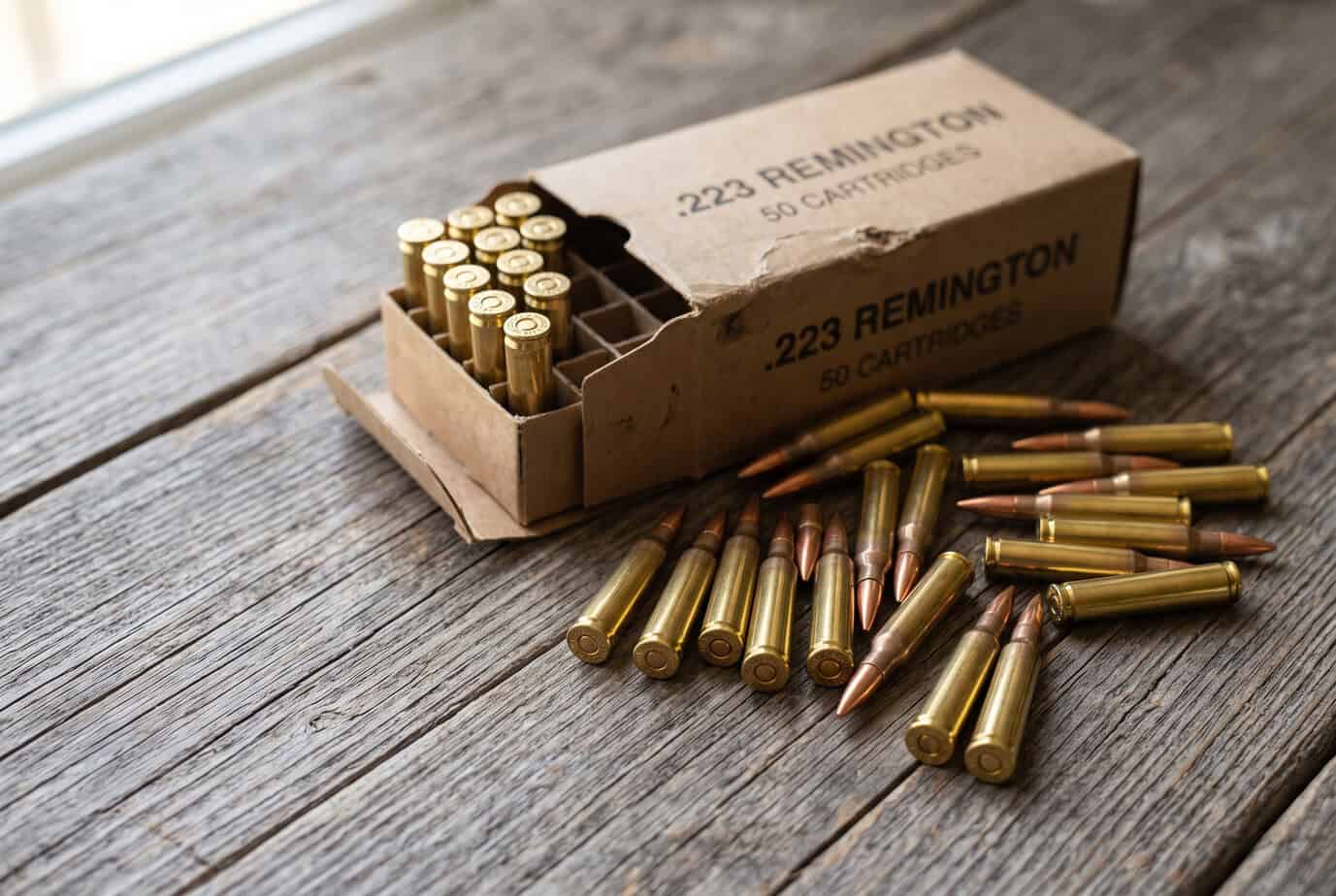
The best ammunition for your AR-15 depends on the rifle itself. Your intended shooting activity also affects the right choice. Some owners need affordable rounds for regular range practice. Others want accurate loads for competition or controlled hunting use. Before comparing bullet weights or case materials, check your rifle’s chamber marking. This simple step can prevent dangerous mistakes when choosing the best ammo for AR-15.
Start With Your AR-15 Chamber
Most AR-15 rifles use .223 Remington or 5.56 NATO ammunition. These cartridges have very similar outside dimensions. However, they are not completely interchangeable in every rifle. Their chamber designs and pressure standards have important differences.
A rifle marked .223 Remington should use .223 ammunition unless its manufacturer states otherwise. Do not assume 5.56 NATO rounds are safe because they fit inside the magazine.
An AR-15 marked 5.56 NATO can generally fire both cartridge types. Still, you should confirm this information inside the owner’s manual. Some rifles use a .223 Wylde chamber. This chamber is designed to accept both .223 Remington and 5.56 NATO ammunition.
The chamber marking is commonly stamped on the barrel. You may need to check near the muzzle or handguard. Contact the rifle manufacturer when the marking cannot be found. Guessing based on the rifle’s appearance is never a safe approach.
Why .223 Remington and 5.56 NATO Differ
Many shooters describe these two cartridges as identical. Their similar dimensions help explain the confusion. The main differences involve chamber design and pressure testing. A 5.56 NATO chamber generally has more space near the bullet. This extra space helps the cartridge operate under higher-pressure conditions. A .223 Remington chamber may have a shorter throat area.
Firing certain 5.56 loads through a .223 chamber can raise pressure. Excess pressure may damage the rifle or injure people nearby. Using .223 Remington inside a 5.56 rifle is generally accepted. Accuracy may still vary between individual rifles and loads.
Your owner’s manual provides the final answer. Manufacturer instructions should always take priority over online opinions.
Consider Your Barrel Twist Rate
The barrel twist rate will tell you how fast the rifling spins a bullet. This measurement is written as a ratio. A barrel marked 1:7 completes one full bullet rotation every seven inches. A 1:9 barrel completes that rotation every nine inches.
Faster twist rates can generally stabilize heavier projectiles. Slower twist rates may work better with lighter bullets.
Common AR-15 twist rates include:
- 1:7
- 1:8
- 1:9
- 1:12
A 1:7 twist barrel commonly supports heavier bullets. Loads between 62 and 77 grains are widely used with this twist rate.
A 1:8 twist offers broad bullet-weight compatibility. Many shooters use it with projectiles ranging from 55 to 77 grains.
A 1:9 twist commonly performs well with lighter and medium-weight bullets. Results with very heavy bullets can vary between barrels.
Older 1:12 barrels generally work best with lighter projectiles. A common example would be a 55-grain full metal jacket load.
These ranges are general guidelines rather than fixed rules. Your rifle may produce better groups with a different weight.
Choosing Ammunition for Range Practice
For regular target practice – many shooters choose full metal jacket ammunition. FMJ rounds are commonly available and generally cost less. A 55-grain FMJ load is a common starting point. It works well for basic drills at typical range distances.
Standard range ammunition can support:
- Sight adjustment
- Position practice
- Magazine-change drills
- Basic accuracy training
- Controlled follow-up shooting
Price still deserves attention when you shoot several hundred rounds. However, reliability should come before the lowest advertised cost. Cheap ammo provides little value when it causes repeated malfunctions. It may also be unusable at your local shooting facility.
Test several boxes before purchasing larger quantities. Your rifle and magazines should cycle the ammunition without repeated failures.
Brass Cases Versus Steel Cases
Case material can affect price, reliability, and range access. Most .223 ammunition uses brass or steel cases. Brass-cased ammunition commonly cycles well through AR-15 rifles. Shooters can also collect suitable brass for possible reloading.
Steel-cased ammunition may have a lower purchase price. However, steel cases are generally unsuitable for standard reloading. Some steel-cased loads use bullets containing steel components. Many indoor facilities prohibit these projectiles because they can damage backstops.
Outdoor ranges may also restrict steel-containing bullets. Dry conditions can increase concerns about sparks and fire risk. Ask your range about ammunition rules before ordering bulk quantities. A low price means little when the rounds cannot be used locally.
Ammunition for Accuracy and Competition
Basic FMJ ammunition works well for general practice. Competitive shooting may require greater manufacturing consistency. Match-grade loads commonly use heavier projectiles. Popular weights can include 69-grain and 77-grain bullets.
These rounds may group better through suitable barrels. However, higher prices do not guarantee better results in every rifle. Test accuracy from a supported shooting position. Use the same target distance and similar weather conditions. Record each group inside a range notebook. Your results should include the ammunition type and bullet weight.
A match bullet may have a hollow opening near its tip. This design does not automatically mean the projectile is built for defensive expansion. Many hollow-point boat-tail match bullets use the opening as part of their manufacturing process. Their main purpose is accurate flight rather than controlled expansion.
Reliability Testing Comes First
Every AR-15 can react differently to the same ammunition. Barrel design and magazine condition both affect performance. Begin testing with smaller boxes from several approved loads. Avoid purchasing a full case before checking the basic function.
During testing, watch for these problems:
- Failure to feed
- Failure to fire
- Failure to extract
- Failure to eject
- Damaged cartridge cases
- Unusual recoil or sound
Stop shooting after any unusual sound or weak report. Keep your muzzle pointed in a safe direction.
A bullet may become lodged inside the barrel after an incomplete discharge. Firing another round behind it can cause serious damage. Ask a qualified gunsmith to inspect repeated failures. Cleaning or magazine replacement may solve some problems.
Store Your Ammunition Properly
Ammunition will need a secure storage away from children and unauthorized people. You must use a locked container inside a dry area. Moisture can damage your cases and primers over time. Excessive heat may also reduce long term storage quality.
Keep every load inside its original packaging when possible. The box provides caliber details and manufacturing lot numbers. Label larger storage containers with:
- Cartridge type
- Bullet weight
- Manufacturer
- Purchase date
- Production lot number
Do not mix loose cartridges from unknown boxes. Similar-looking rounds can have different pressure levels or bullet weights.
What Is the Best Ammo for an AR-15?
No single load works best for every AR-15 shooter. The right option must match your rifle and planned lawful activity. General range shooters commonly start with 55-grain FMJ ammunition. Competitive shooters may test heavier match-grade loads.
Hunters need lawful expanding ammunition designed for their chosen game. Specialised training facilities may require frangible projectiles.
Your final choice should pass four important checks:
- The rifle manufacturer approves the cartridge.
- The bullet weight suits your barrel twist.
- The ammunition functions reliably in your rifle.
- Your local range permits every cartridge component.
Buy smaller quantities before considering bulk orders. Test reliability and accuracy under controlled range conditions. The best ammo for an AR-15 is not simply the cheapest box. It is the approved load your rifle can fire safely and consistently.
🪶About the Author
David Andrew Brown is a former law enforcement agent with over 30 years of experience in criminal investigations, personal defense, and tactical response. A certified firearm instructor and home protection counselor, he now shares his expertise to help others stay alert, capable, and confident under pressure. “Preparedness isn’t paranoia,” David says. “It’s respect for reality.”
