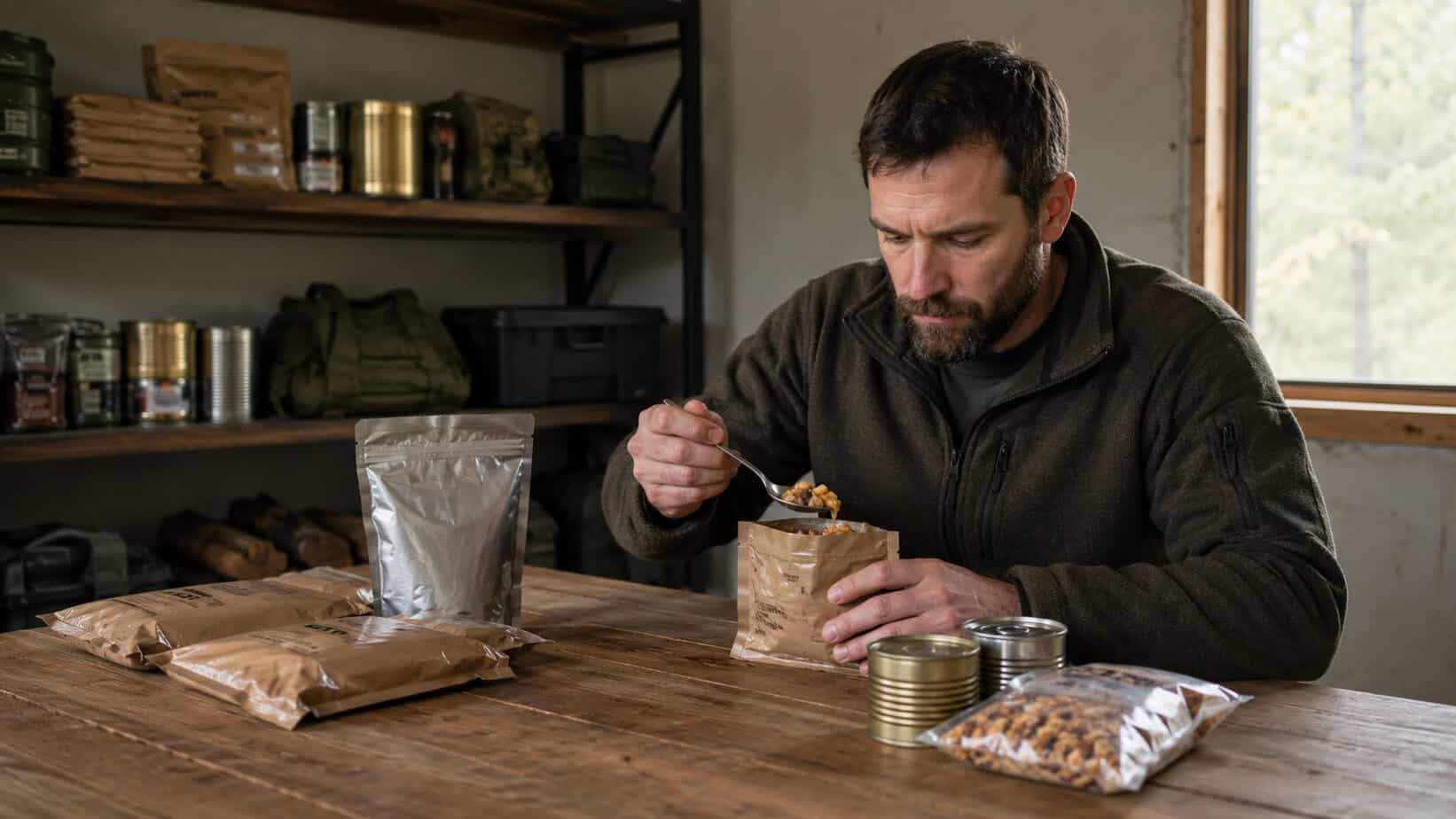
Most people build a survival pantry by asking one basic question: how long will the food last? That matters, but it is only half the story. The harder question is what happens when that pantry stops being backup food and becomes every meal, every day.
Eating survival food full time can keep you alive, but the body does not experience that switch as a neat spreadsheet of calories, servings, and expiration dates. It experiences it as a sudden change in fiber, sodium, water demand, meal volume, fat quality, protein pattern, gut bacteria, and micronutrient intake.
Freeze-dried meals, canned foods, white rice, pasta, powdered milk, instant potatoes, beans, oats, MRE-style pouches, and shelf-stable snacks all have a place in preparedness. The problem starts when a person goes from fresh foods, normal leftovers, vegetables, fruit, eggs, meat, and fermented foods to a narrow rotation of stored food overnight. The first signs are usually digestive. Bloating, constipation, loose stools, thirst, headaches, and appetite swings show up fast. The more dangerous problems often stay quiet for weeks. Vitamin C, thiamin, folate, iron, iodine, vitamin A, magnesium, potassium, and essential fatty acids can all become weak points long before true starvation enters the picture.
This is not an argument against storing food. It is an argument for building a pantry that understands the human body, not just the calendar.
Eating Survival Food Full Time Changes Your Gut Before Anything Else
The gut is usually the first system to complain when someone begins Eating survival food full time. That is because survival food is often shelf-stable by design, which means it has been dried, canned, salted, sweetened, refined, sealed, or stripped of water. None of that makes it useless. It does mean your digestive tract has to adjust quickly to food that behaves differently once it enters the body.
Freeze-dried meals can be surprisingly dense. A pouch that looks small may deliver a full plate of starch, sodium, and protein once rehydrated. Canned food often brings softer texture and more salt, but not always much fiber. White rice, pasta, flour, crackers, and instant potatoes are easy to store, yet they move through digestion differently than vegetables, beans, fruit, and whole grains. If a person eats mostly refined shelf-stable carbohydrates for several days, stool volume can drop, bowel movements can slow, and appetite can swing from hungry to overloaded in the same day.
The gut microbiome also notices the change. Beneficial gut bacteria feed on varied fibers from beans, oats, vegetables, fruit skins, resistant starch, and plant compounds. A stored-food diet can still provide those things, but only if they were stored on purpose. Eating survival food full time on a narrow menu of noodles, rice, canned meat, crackers, and sweet drink mixes gives gut bacteria less variety. Some people feel gassy when they suddenly add stored beans and lentils, while others get constipated when they eat almost none. Both reactions come from a body trying to adapt under pressure.
Constipation, Diarrhea, and the Fiber Shock Problem
Digestive disruption is the most common early effect of Eating survival food full time, and it can move in either direction. Some people become constipated because their stored diet is low in fiber and fluids. Others develop loose stools because they suddenly increase beans, powdered dairy, protein bars, sugar alcohols, oily canned meats, or unfamiliar freeze-dried meals. In a crisis, either problem can become more than an inconvenience because digestion affects sleep, hydration, morale, work output, and decision-making.
Constipation is especially common when people rely heavily on white rice, pasta, crackers, instant potatoes, cheese powder, canned meat, and low-fiber comfort foods. Mayo Clinic lists lack of dietary fiber, fluids, and exercise among the causes of constipation, which is exactly the combination many people face when stuck indoors, rationing water, and eating from storage. The body needs enough bulk and water to move stool. Shelf-stable food often requires extra water during digestion, not just during cooking.
Diarrhea can happen for different reasons. A person who rarely eats legumes may react badly when beans become the main protein. Powdered milk may bother people with lactose intolerance. Greasy canned meats and sudden high-fat meals can upset digestion, especially when stress is already high. Some emergency foods also contain additives, preservatives, or sugar alcohols that are tolerated in small amounts but unpleasant when eaten repeatedly.
The fix is not to avoid stored food. The fix is to build a transition plan. Store oats, lentils, split peas, beans, dehydrated vegetables, dried fruit, psyllium husk, chia seeds, and whole grains where practical. Add fiber slowly during normal rotations so the gut learns how to handle it. A simple fiber backup such as psyllium can be useful in a pantry. Just remember that fiber without enough water can make constipation worse, so it belongs with a water plan, not separate from it.
Sodium Load, Thirst, and Blood Pressure Creep
Stored food often leans salty because salt helps flavor, preservation, texture, and shelf stability. Canned soups, chili, stews, vegetables, meats, broths, ramen, bouillon, jerky, crackers, meal pouches, and many freeze-dried entrees can add sodium quickly. When eating survival food full time, sodium becomes a daily load rather than an occasional salty meal.
The body does need sodium. Nerves, muscles, blood volume, and fluid balance depend on electrolytes. The problem is that many stored diets push sodium high while potassium, magnesium, and fresh-food water drop. The CDC notes that too much sodium can increase blood pressure and raise the risk for heart disease and stroke, and that most sodium in the American diet comes from processed and restaurant foods. Emergency food can behave much like processed food when it becomes the whole diet.
The first sign may be thirst. Then come headaches, puffiness, heavy legs, or a strange sense of being dry even after drinking. For someone with hypertension, kidney disease, heart failure, or salt sensitivity, a high-sodium pantry can become a real liability. Even healthy people may feel worse if their meals are salty and their water supply is limited.
Preparedness planning should include low-sodium options. Store plain rice, oats, pasta, beans, lentils, potato flakes, unsalted canned vegetables, no-salt-added tomatoes, low-sodium broth, and spices that do not depend on salt. Keep electrolyte products around for sweat, heat, vomiting, or diarrhea, but do not treat salty meals and electrolyte drinks as the same thing. A balanced electrolyte powder can help during heavy sweating or dehydration risk, but it should not be used to justify an already salty diet.
Calories Stay High While Nutrient Density Falls
A survival pantry can contain plenty of calories and still leave the body underfed in important ways. This is one of the traps of eating survival food full time. Rice, pasta, flour, sugar, oil, instant potatoes, crackers, pancake mix, and powdered drink mixes can keep energy intake high, but they do not automatically cover the vitamins, minerals, fatty acids, and plant compounds that support tissue repair, immunity, hormones, nerves, and blood.
Historically, people often became disabled by deficiency before they ran out of calories. Sailors with scurvy were not always starving. Populations living on polished rice suffered beriberi because thiamin was removed with the rice bran. People living on narrow staple diets developed pellagra, anemia, goiter, night blindness, and weakness even when they had enough bulk food to fill the stomach. Modern stored food is better fortified in many cases, but a poorly planned pantry can recreate the same pattern at a smaller scale.
The danger is that calorie foods are comforting and cheap. A bucket of white rice looks like security. Flour and sugar feel like abundance. Pasta stacks neatly. Oil adds enormous calories in a small space. All of these are useful, but they need partners. Beans, lentils, canned fish, powdered eggs, dehydrated vegetables, freeze-dried fruit, tomato powder, fortified grains, nuts, seeds, and multivitamins are not luxury additions. They help turn stored calories into usable nutrition.

Eating Survival Food Full Time Can Quietly Drain Vitamin C
Vitamin C is one of the classic weak points when eating survival food full time. The reason is simple. Many of the best sources are fresh fruits and vegetables, and those are usually the first foods to disappear in a long emergency. Canned fruit, tomato products, potatoes, freeze-dried berries, drink powders fortified with vitamin C, and properly stored supplements can help, but they must be included intentionally.
Vitamin C supports collagen formation, wound healing, immune function, antioxidant activity, and iron absorption. The NIH Office of Dietary Supplements tells us that vitamin C deficiency causes scurvy, and signs can appear within about a month of consuming less than roughly 10 mg per day. That timeline matters for preppers. You may feel mostly fine during the first week of a crisis, then start noticing fatigue, gum tenderness, bruising, slow wound healing, joint pain, or mood changes later.
Scurvy is often treated like an old sailor story, but it is really a warning about dietary monotony. A person can have rice, flour, salted meat, and hard calories while still losing the ability to maintain connective tissue. In survival terms, poor wound healing and bleeding gums are not minor issues. They can turn small injuries into lingering problems and make hard labor more punishing.
Store vitamin C in multiple forms. Canned tomatoes, tomato paste, freeze-dried strawberries, freeze-dried bell peppers, dried rose hips, shelf-stable citrus drink mixes, and a basic vitamin C supplement all have roles. Freeze-dried fruit is useful because people will actually eat it, including children, and it adds variety when morale is low. Do not assume one dusty bottle of old tablets solves the problem forever. Supplements lose potency over time, and food variety is still the better backbone.
B Vitamins, Beriberi, and the Old Lessons People Forget
The old deficiency diseases are not just medical trivia. They are case studies in what happens when humans live too long on narrow staple foods. When sating survival food full time, B vitamins deserve serious attention because they are tied closely to energy metabolism, nerves, mood, appetite, and cardiovascular function.
Thiamin, also called vitamin B1, is the standout example. Diets based heavily on polished rice, white flour, sugar, and other refined carbohydrates can be weak in thiamin unless fortified foods or supplements fill the gap. The Merck Manual notes that early thiamin deficiency symptoms can include fatigue, irritability, poor memory, loss of appetite, sleep disturbance, abdominal discomfort, and weight loss, while severe deficiency can progress to beriberi affecting nerves, muscles, heart, and brain. Those early symptoms are easy to blame on stress, bad sleep, or the emergency itself.
That is the problem. Many deficiencies do not announce themselves clearly. A person may feel weak, foggy, short-tempered, clumsy, or uninterested in food without realizing the diet has become the trigger. In a crisis, that can reduce work capacity and judgment before anyone identifies the cause.
B vitamin coverage improves when the pantry includes fortified oats, fortified cereals, whole grains, beans, lentils, nutritional yeast, canned meats, fish, powdered eggs, and a basic multivitamin. A multivitamin is not magic and should not be used to excuse a junk pantry, but it is cheap insurance when the diet narrows for weeks. Nutritional yeast can also add B vitamins and flavor to rice, soup, beans, and pasta, which makes plain storage foods easier to eat.
Iron, Iodine, Vitamin A, and the Deficiencies That Disable Before Starvation
Some nutrient gaps do not cause dramatic symptoms right away, but they reduce human capacity over time. Iron, iodine, vitamin A, folate, zinc, and B12 matter because they support blood, vision, immunity, growth, thyroid function, pregnancy, nerve health, and mental performance. Eating survival food full time without variety can expose these weak spots, especially in children, pregnant women, older adults, menstruating women, and people who already eat restricted diets.
The World Health Organization identifies iron, vitamin A, and iodine deficiencies as among the most common micronutrient deficiencies globally and notes that micronutrient deficiencies can reduce energy, mental clarity, productivity, and resistance to disease. That description sounds clinical, but in a survival setting it translates into people who tire faster, think slower, get sick more easily, and recover poorly.
Iron deficiency can show up as fatigue, dizziness, shortness of breath with exertion, brittle nails, headaches, and poor cold tolerance. Vitamin A deficiency is associated with vision and immune problems, and night vision matters when lights are out and movement is risky. Iodine deficiency affects thyroid hormone production, which influences metabolism, energy, temperature tolerance, and development in children. Folate and B12 gaps can contribute to anemia and neurological problems.
A practical pantry needs animal foods, plant foods, fortified foods, and iodized salt. Canned sardines, salmon, tuna, chicken, beef, liver pate where tolerated, beans, lentils, fortified cereals, powdered eggs, dehydrated greens, carrots, sweet potatoes, pumpkin, tomato products, and seaweed snacks all add different nutrients. Iodized salt should sit beside plain salt because iodine can disappear from modern diets when seafood and dairy are limited. Canned fish is one of the better compact pantry foods because it brings protein, minerals, and fats in a ready-to-eat form.
Protein Quality, Muscle Loss, and Recovery Under Stress
Protein is often discussed in survival circles as a number of grams per day, but the real issue when eating survival food full time is whether the body receives enough usable amino acids, calories, and micronutrients to maintain muscle, repair tissue, and support immune function. Stress, cold, injury, infection, poor sleep, and physical labor can all raise the cost of living. A pantry that feels adequate during a calm taste test may feel thin when you are hauling water, clearing debris, walking more, sleeping poorly, or fighting a respiratory infection.
Canned meat, fish, beans, lentils, peanut butter, powdered milk, whey powder, powdered eggs, jerky, freeze-dried meat, and textured vegetable protein can all help. The mistake is relying on only one. Beans and rice are useful together, but they take fuel, water, and time. Canned meat is convenient, but expensive and salty. Peanut butter is calorie dense, but not a complete solution. Protein powders are compact, but they can upset some stomachs and depend on water.
Abruptly switching to low-protein storage food can lead to weakness, poor recovery, stronger cravings, and loss of lean mass over time. Older adults are especially vulnerable because they often need higher-quality protein spread through the day to maintain muscle. Children need protein for growth. Injured people need it for tissue repair.
The body also needs calories to use protein properly. If calories are too low, protein gets burned for energy instead of being used for repair. That is one reason survival diets should not be built only around lean protein. Fat and carbohydrate matter too. A balanced pantry should let you combine starch, protein, fat, and plant foods in normal meals: rice with beans and canned tomatoes, oats with powdered milk and dried fruit, pasta with sardines and dehydrated greens, soup with lentils and vegetables, or instant potatoes with canned chicken and peas.
Appetite Fatigue, Mood, Sleep, and Mental Performance
The body is not a machine that accepts any calorie source with equal enthusiasm. Eating survival food full time can affect mood, sleep, and mental performance because food variety, texture, meal timing, caffeine, sugar, sodium, and gut comfort all feed into how people feel and behave. In a crisis, that matters. A hungry, constipated, sleep-deprived person with a headache makes worse choices.
Appetite fatigue is real. People may think they can eat rice and beans every day because they like them now, then discover that repetition kills appetite when stress is high. Children are even more vulnerable to this. They may refuse unfamiliar foods at the exact moment parents need them to eat. Older adults can also lose appetite quickly, especially with dehydration, constipation, dental problems, or medications.
Mood can swing when the stored diet is heavy in refined carbohydrates and light in protein, fat, and micronutrients. Big starch meals can produce a short calm feeling followed by hunger or irritability later. Too much caffeine from instant coffee and energy drink powders can worsen anxiety and sleep. Too little magnesium, potassium, omega-3 fat, B vitamins, and iron may not create instant symptoms, but they can contribute to fatigue and poor resilience over time.
This is where flavor becomes survival equipment. Spices, vinegar, hot sauce, bouillon used carefully, dried herbs, powdered cheese, salsa, tomato powder, garlic, onion flakes, cocoa, cinnamon, and small comfort foods help people keep eating. Texture matters too. Crunchy foods, chewy dried fruit, creamy soups, and warm drinks break monotony. A pantry should include foods people already accept, not just foods that look efficient in a spreadsheet.
Eating Survival Food Full Time Needs a Rotation Plan, Not Just Buckets
The safest way to prepare for eating survival food full time is to stop treating emergency food as a sealed museum display. Food storage should be rotated, tested, cooked, adjusted, and eaten before the emergency. This does not mean burning through expensive freeze-dried meals every week. It means folding stored ingredients into normal meals often enough that your body, your kitchen, and your family know what to expect.
Start with a seven-day stored-food trial at home during normal conditions. Do not shut off your life completely. Just cook breakfast, lunch, dinner, and snacks from the pantry for a week while tracking water use, digestion, appetite, energy, blood pressure if relevant, and complaints from the family. You will learn more from that week than from reading labels for a year.
Then fix the weak points. If everyone gets constipated, increase fiber foods and water planning. If meals are too salty, add low-sodium staples and spices. If the children refuse half the menu, stop pretending they will change under stress. If cooking beans uses too much fuel, add lentils, canned beans, or a pressure cooker. If the diet lacks fruit and vegetables, add freeze-dried produce, canned tomatoes, canned pumpkin, dehydrated greens, and sprouting seeds. Sprouting seeds can provide fresh texture and some nutrient variety when stores are closed.
Keep a simple pantry health checklist: fiber, vitamin C, B vitamins, protein, fat, iodine, iron, vitamin A, electrolytes, and foods people actually eat. Put expiration dates where you can see them. Store supplements cool and dry. Keep a manual can opener in more than one place. Practice cooking without power.

My Two Cents: Build a Pantry Your Body Can Actually Live On
My two cents is simple: most survival food plans are too focused on storage life and not focused enough on human life. A bucket that lasts 25 years is not automatically a diet you can live on for 25 days without problems. The body needs water, fiber, electrolytes, protein, fats, vitamins, minerals, and enough variety to keep people eating when stress is already grinding them down.
I would rather see a family with a mixed pantry of rice, beans, canned meat, oats, tomato products, powdered milk, lentils, dehydrated vegetables, freeze-dried fruit, iodized salt, spices, comfort foods, and basic supplements than a garage full of one-note emergency meals. The second pantry may look more professional, but the first one is more livable.
Eating survival food full time should not be a theory you test for the first time during a crisis. Try a stored-food week now. Find the digestive problems, the flavor problems, the water problems, and the missing nutrients while stores are still open. Survival food should not merely delay hunger. It should keep your family clear-headed, mobile, regular, healing, and useful when normal food disappears. Build the habits while the stakes are still low.
Author Bio
Bob Rodgers is a lifelong outdoorsman, herbalist, and seasoned prepper with over 20 years of real-world survival experience. As the founder of PreppersWill.com, he shares practical advice on self-reliance, off-grid living, and disaster preparedness, no hype, just hard-earned lessons from decades of hands-on prepping.
Suggested resources for preppers:
Food preps when you lack money
The #1 food of Americans during the Great Depression
Survival Foods of the Native Americans
If you see this plant when foraging, don’t touch it!
